



South Korea
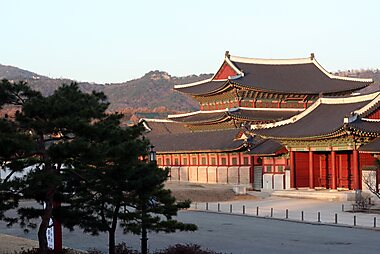
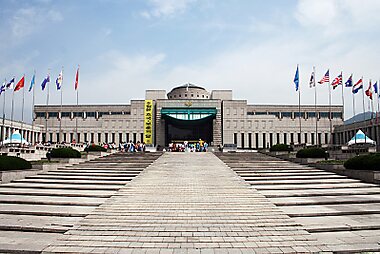
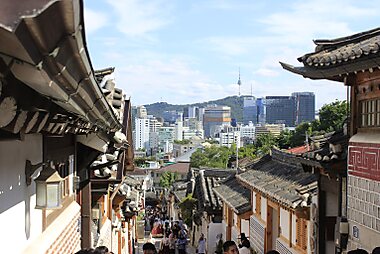
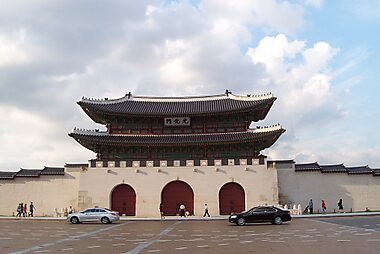
South Korea pairs modern, technology-driven cities with centuries-old palaces, temples, and mountains. Most first-time visitors build a trip around Seoul. It mixes royal palaces and traditional hanok neighborhoods with round-the-clock shopping and dining. Korean pop culture, from music to television, has made the country instantly familiar to many visitors before they even arrive.
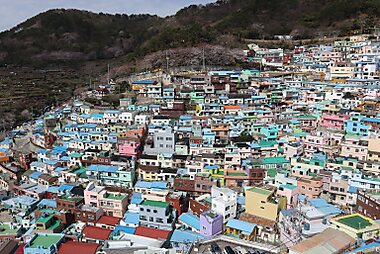
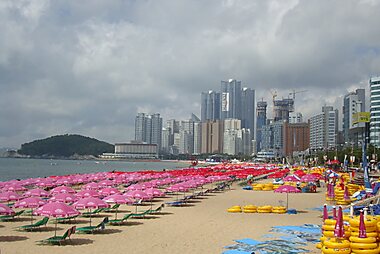
Beyond the capital, the coastal city of Busan offers beaches and a major port atmosphere. Gyeongju holds the tombs and temples of the ancient Silla kingdom. The volcanic island of Jeju Island draws visitors for hiking and coastline. The country works well as a single-city trip or as a base for exploring several regions. Fast rail connections make this easy.



South Korea – Planning a Trip?
Build your day-by-day itinerary in the Tripomatic app.


Money & payments
South Korea is highly card- and app-based, but small traditional markets, some street food stalls, and rural guesthouses may still expect cash. The T-money card covers public transit and works as a small prepaid card at many shops. Buy one at any convenience store or subway station. ATMs with English menus are common in cities. They are less reliable outside them, so withdraw cash before traveling to smaller towns.
Featured Lists


Editor's Choice
This selection highlights South Korea’s cultural and natural heritage, spanning from the historic Baekje and Silla dynasties to modern urban art districts. It features UNESCO World Heritage sites like the Seokguram Grotto and Namhansanseong fortress, alongside the National Museum of Korea’s extensive historical archives. The list also encompasses Jeju Island’s volcanic landscapes, including the Jusangjeolli hexagonal rock formations and Cheonjiyeon Waterfall, as well as Busan’s coastal landmarks like Gwangalli Beach and the historic Gukje Market.
18 places


Top Water Attractions
South Korea’s aquatic landscape ranges from the urban shores of Busan’s Haeundae and Gwangalli to the volcanic wonders of Jeju Island. Jeju features unique sites like Jeongbang Waterfall, which falls directly into the ocean, and the shallow, turquoise waters of Hamdeok Beach. On the mainland, Seoraksan National Park houses the dramatic Towangseong Waterfall, while Incheon’s Eulwangri offers expansive mudflats and sandy stretches near the capital.
14 places

Tours & Activities
South Korea — Map

 Open the interactive map
 Tipping
Tipping is not part of Korean culture and is not expected at restaurants, bars, taxis, or hotels. Some hotels add a service charge automatically to the bill. If so, no further tip is needed. Offering cash directly to service staff can cause confusion rather than appreciation.
not expected; a few hotels add an automatic service charge instead
not expected, rounding up is fine
porters and housekeeping do not expect tips
Electricity
South Korea uses Type C and Type F plugs at 220 V / 60 Hz, standard for continental Europe-style two-pin plugs.
Language
Korean is the official language, written in Hangul, a phonetic alphabet rather than a set of pictographic characters. It is easier to learn to sound out than Chinese or Japanese script. It is not related to English. Reading menus or signs without help is still hard for most visitors. English signage and announcements are common on Seoul's subway and in major tourist areas. Spoken English is rare outside the capital and Busan.
Staying connected
Prepaid tourist SIM cards are sold at airport kiosks and telecom shops and require a passport for registration. Most tourist-oriented data-only eSIMs, bought online in advance, do not. Google Maps and Waze do not offer usable driving directions in South Korea. Their transit routing is weak too. This is due to long-standing government limits on exporting detailed local mapping data. Those limits were eased only partially in 2026. Download Naver Map or KakaoMap before arrival instead. Both can be switched to English and cover transit, walking, and driving directions.
Safety & emergencies
South Korea is one of the safest countries for travelers, with very low rates of violent crime. Petty theft is uncommon but does happen in crowded nightlife districts. Police and fire/ambulance use different emergency numbers. The main seasonal risk is typhoons and heavy monsoon rain, mostly affecting the south coast and Jeju Island between June and September.
Health
Tap water is generally treated as safe, though many locals and visitors prefer bottled or filtered water for taste. Pharmacies, marked with a cross sign, are widespread in cities but often close in the evening and on Sundays in smaller towns. Convenience stores stock a small range of basic over-the-counter medication.
Visas & entry
Many nationalities, including the EU, the UK, the US, Canada, and Australia, can enter visa-free for stays of up to 90 days for tourism. The K-ETA (Korea Electronic Travel Authorization) is normally required for visa-exempt visitors. It is currently waived through the end of 2026, so check whether it has resumed before booking. Visa-exempt travelers must instead complete a free online e-Arrival Card within 72 hours of departure. Travelers from other countries typically need to apply for a visa in advance through a Korean embassy or consulate.
Visa and entry requirements change frequently. Verify current requirements with the official immigration authority or your country's embassy before travel.
Etiquette
- Remove shoes when entering homes, some traditional restaurants, and guesthouses. Look for a raised floor or a row of shoes by the door as a cue.
- Use both hands, or support your forearm with the other hand, when giving or receiving money, gifts, or business cards, especially with someone older.
- Do not stick chopsticks upright in a bowl of rice. It resembles a funeral ritual. Rest them on the provided spoon or a chopstick rest instead.
- When drinking with elders or seniors, it is polite to turn slightly away from them when taking a sip.
- Pour drinks for others rather than your own glass, and let others pour for you.
- Keep phone calls and conversations quiet on public transport; priority seating is reserved for elderly, pregnant, and disabled passengers.
- At Buddhist temples, cover shoulders and knees and keep your voice low inside prayer halls.
Holidays & opening hours
The two biggest domestic travel periods sell out trains, flights, and hotels, and close many small businesses for several days. Avoid long-distance travel during these weeks if possible.
Most restaurants and shops open daily, including Sundays, though department stores typically close one weekday per month. Convenience stores are open 24 hours in most cities and along highways, though some small-town and campus locations keep shorter hours.
Getting around
- By train: The KTX high-speed rail connects major cities quickly and comfortably. Book ahead on weekends and holidays via Korail – national rail booking. Seoul and Busan both have extensive, easy-to-use subway networks. A T-money card covers subways, buses, and most intercity transit nationwide.
- By air: Domestic flights are worth considering for reaching Jeju Island from mainland cities. This is one of the world's busiest air routes.
- By bus: A dense intercity coach network reaches towns the KTX doesn't, often at a lower price than the train.
Driving
- Key rules: The legal blood alcohol limit is low (0.03%) and enforced strictly. Winter tires or chains are recommended on mountain roads from December to February.
- Tolls: Expressways charge tolls, payable in cash at booths or automatically via a Hi-pass transponder. Most rental cars carry one.
- Congestion: Central Seoul has heavy traffic at rush hour. A small toll (~2,000 KRW) applies to cars with fewer than 3 passengers entering downtown through the Namsan Tunnels. Parking is limited and expensive downtown.
- Parking: Paid parking lots and multi-level garages are standard in cities. On-street parking is limited.
- Fuel: Stations offer both self-service and full-service. Petrol is sold as "휘발유" (hwibalyu) and diesel as "경유" (gyeongyu).
- Electric vehicles: Charging points are common in cities and along expressways, less so in rural mountain areas. Most chargers accept major Korean charging network cards or apps.
Food & drink
Korean meals are built around rice, soup, and a spread of small shared side dishes called banchan, with kimchi appearing at nearly every meal, including breakfast. Grilled meat cooked tableside (Korean barbecue) is a social, hands-on meal shared over multiple courses. Bibimbap (rice with vegetables and a fried egg, mixed at the table) and kimchi-jjigae (a spicy stew) are common everyday choices.
Street food is a big part of the culture: tteokbokki (spicy rice cakes), hotteok (sweet stuffed pancakes), and Korean fried chicken are all worth trying. Convenience stores also sell surprisingly good ready-made meals that locals rely on for a quick lunch. Soju and makgeolli (a milky rice wine) are the signature alcoholic drinks, usually shared over food. Cafe culture is enormous. Coffee shops are everywhere, even in small towns.
Where to explore
Seoul, the capital, is most travelers' starting point, combining royal palaces with round-the-clock city life. Busan, the country's second city, has beaches and a lively port atmosphere. Jeju Island offers volcanic scenery, hiking, and a slower pace off the southern coast.
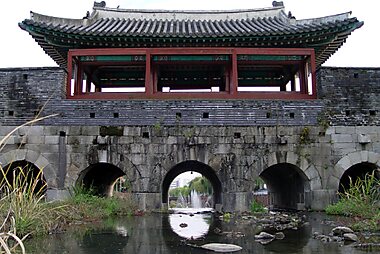
Gyeongju holds the tombs and temples of the ancient Silla kingdom. Jeonju is known for its hanok village and its food scene. Suwon, a short trip from Seoul, has a UNESCO-listed fortress worth a day trip. On the east coast, Sokcho sits at the entrance to Seoraksan National Park's hiking trails. Nearby Gangneung is known for its beaches and coffee culture. Inland, Andong preserves a centuries-old Confucian village.
South Korea – Plan Your Trip
Pick the places you want to see and Tripomatic turns them into a day-by-day route, with smart routing, time estimates, and everything you need for a perfect trip.




