



Split
Split is Croatia's second-largest city, built around and inside the ruins of a Roman emperor's retirement palace. Unlike most historic centers that grew up near ancient ruins, Split's old town is the ruins — houses, shops, and cafes fill the walls of Diocletian's Palace, still lived in after more than 1,700 years. The result feels less like a museum and more like a working Mediterranean city that happens to be a UNESCO World Heritage Site.
Split suits travelers who want beach time, boat trips to nearby islands, and a compact, walkable old town, all in one stop. It works well both as a short city break and as the main hub for exploring the Dalmatian coast and islands. The sculptor Ivan Meštrović, Croatia's best-known 20th-century artist, lived and worked here, and the city remains proud of the connection.

Split – Planning a Trip?
Build your day-by-day itinerary in the Tripomatic app.


When to visit
Summers are hot and dry, spring and autumn are mild, and winters are cool and rainy. Late spring (May, June) and early autumn (September) give the most comfortable weather for both sightseeing and swimming, without the peak-July crowds.
Plan around Ultra Europe, a major electronic music festival held over three days in July at the city's Poljud Stadium. It draws tens of thousands of visitors from across Europe, so book accommodation well ahead if attending, or expect higher prices and busier streets that week even if you are not.
Best time to visit: May, June, July, September, October
Top sights
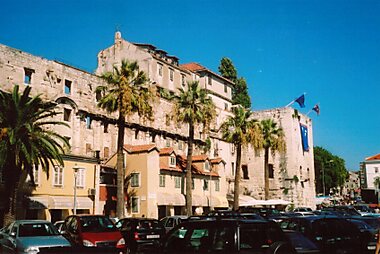
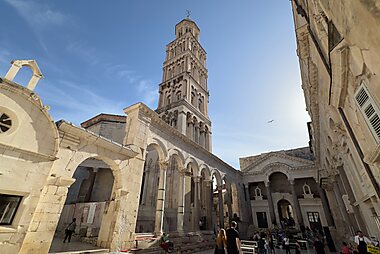




Diocletian's Palace is the reason to visit Split. Built as a retirement residence for the Roman emperor Diocletian around 305 AD, it now forms the entire core of the old town, with the cellars, squares, and walls open to wander freely.
Cathedral of Saint Domnius, built from Diocletian's own mausoleum, is one of the oldest cathedrals in the world still standing in its original structure. Climb the attached Bell tower of Saint Domnius for a view over the palace roofs and the harbor.
Jupiter's Temple, a small but well-preserved Roman temple tucked into a side street, shows how tightly the ancient and the everyday overlap here.
Golden Gate was the palace's ceremonial northern entrance. Just outside it stands Gregory of Nin, a towering bronze statue by Ivan Meštrović; touching its raised big toe is a popular local superstition for good luck.
Silver Gate opens onto the old green market and is the easiest route between the palace and the rest of the city center.
Ivan Mestrovic Gallery displays the sculptor's own home, studio, and collection, set in gardens west of the center.
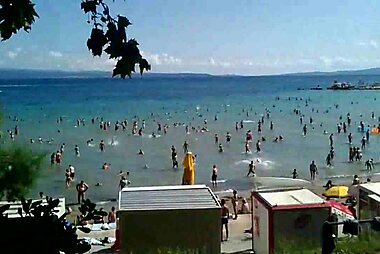
Bacvice Beach, a curved sandy beach five minutes' walk from the old town, is where locals actually go to swim.
Marjan Forest Park, the wooded hill west of the center, has walking trails, viewpoints, and small pebble coves for a break from the old-town crowds.
Featured Lists

Grad Split Essentials
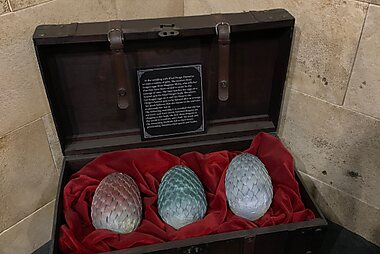
This collection centers on the 4th-century Diocletian's Palace, a UNESCO World Heritage site that forms the living heart of Split. The list covers the palace's four monumental Roman gates, the Cathedral of Saint Domnius, and specialized cultural sites like the Ivan Meštrović Gallery and the Game of Thrones Museum. Beyond the Roman ruins, it includes the vibrant Green Market and the Marjan peninsula, which offers limestone climbing routes and forested trails overlooking the Adriatic Sea.
15 places


Historic Sites
Split's historic center is anchored by the 4th-century Diocletian's Palace, a UNESCO World Heritage site that retains much of its original Roman layout. This selection includes the monumental Golden, Silver, and Bronze gates that served as the palace's primary defensive entrances. Beyond the walls, the 9-kilometer Roman aqueduct showcases ancient engineering, while Ivan Meštrović's sculptures of Gregory of Nin and Marko Marulić represent the city’s transition from Roman rule to its medieval and Renaissance identity.
7 placesWhat to experience
- Join a game of picigin at Bacvice Beach on a summer morning — a local paddleball game played standing in shallow water, invented on this beach and now a point of civic pride.
- Take part in the špica: on Sunday mornings, locals dress up and gather for coffee along the Riva waterfront before lunch. Join a café terrace and watch the city pass by.
- Walk up Marjan Forest Park in the early evening for sunset over the harbor and the islands, then follow the trail back down to a swim at one of the small coves.
Tours & Activities
Split — Map

 Open the interactive map
 Day trips
Split sits at the center of central Dalmatia, with historic towns, a national park, and some of Croatia's best-known islands all within reach.
- Klis Fortress — ≈25 min by car or local bus. A medieval fortress on a pass above the city, held in turn by Croatian dukes, Ottoman forces, and the Venetians who recaptured it; also a filming location for Game of Thrones.
- Trogir — ≈30 min by car or bus. A small walled island town with its own UNESCO-listed old core, easy to combine with a half day at the beach nearby.
- Omis — ≈40 min by car or bus. A former pirate stronghold at the mouth of the Cetina River gorge, good for river rafting or a short gorge walk.
- Brac — ≈50 min by ferry. Croatia's third-largest island, home to the famous Zlatni Rat beach near Bol.
- Hvar — ≈1 hour by fast ferry. A lavender-scented island known for its nightlife, vineyards, and a hilltop Venetian fortress above the main town.
- Krka National Park — ≈1.5 hours by car or organized bus tour. Turquoise river pools and waterfalls, with boardwalks through the park to the main Skradinski Buk falls.
Where to explore
Split is the capital of Split-Dalmatia County, a stretch of coast and islands that most visitors explore from here as a base.
- Along the coast, Trogir and Omis make easy half-day or full-day trips, while Makarska anchors the beach-lined Makarska Riviera further south.
- Offshore, Hvar, Brac, and Solta are all reachable by regular ferry from Split's harbor, each with a different character, from Hvar's nightlife to Brač's beaches to Šolta's quieter villages.
- Inland, Sinj is known for the Sinjska Alka, a centuries-old knights' jousting competition held every August.
Getting there
- By air: Split Airport (SPU) is about 20 km northwest of the city, near Kaštela. A shuttle bus runs to the main bus station near the harbor in about 30–40 minutes; a taxi takes about 25 minutes and costs roughly 30–40 €.
- By train: Direct trains connect Split to Zagreb (around 7–8 hours). There is no rail line south along the coast, so towns like Dubrovnik are reached by bus instead.
- By bus: Split's main bus terminal, next to the ferry port, has frequent long-distance connections along the whole Adriatic coast, including Zagreb, Zadar, and Dubrovnik, plus international routes.
- By ferry: Split's harbor is the main hub for ferries to the Dalmatian islands (Hvar, Brač, Vis, and more) and for seasonal international ferries to Ancona, Italy.
Getting around
- Public transit: City buses (Promet Split) cover the areas outside the old town, which is itself closed to most traffic. Buy tickets from the driver, at kiosks, or through the operator's app; a route planner is available at Promet Split.
- Taxi / ride-hailing: Uber and Bolt both operate in Split alongside metered local taxis.
- On foot: The old town and waterfront are entirely walkable and largely pedestrian-only; a car is not useful for sightseeing inside the palace walls.
Driving
- Is a car worth it?: Not inside Split itself — the old town is pedestrian and parking is scarce. A car is useful for exploring the wider Dalmatian coast and inland Krka at your own pace.
- Parking: Paid garages and lots ring the old town and harbor (metered street parking and the Bačvice and Sukoišan garages); pay by app, meter, or ticket machine.
- Restrictions: The historic core inside Diocletian's Palace is closed to general traffic, with access limited to residents and deliveries.
Food & drink
Split's kitchens lean on the same Dalmatian staples as the rest of the coast: fresh grilled fish, black risotto, and slow-cooked pašticada, usually paired with local wine.
For the best mix of everyday eating, head to the market area around Silver Gate, where the open-air green market (Pazar) sells fruit, vegetables, and street food each morning, with the covered fish market a short walk toward the harbor. Restaurants filling the palace's old cellars and courtyards charge a premium for the setting; a few streets back from the Riva usually costs less for the same quality.
Safety & health
Split is a safe city for tourists, with violent crime rare. The main risks are petty ones: pickpocketing on crowded buses and around the ferry port, and bag theft on the beach at Bacvice Beach and other busy swimming spots. Keep valuables with you rather than left on a towel.
Agree on a taxi fare or confirm the meter is running before you set off, particularly from the airport or ferry terminal, where overcharging tourists is the most commonly reported complaint.
History
Split exists because a retired Roman emperor wanted a palace by the sea. Diocletian's Palace was built around 305 AD for Diocletian, who spent his final years here after voluntarily stepping down from power, an almost unheard-of act for a Roman emperor.
The palace's second life began in the 7th century, when Slavic and Avar raids destroyed nearby Salona, then the Roman capital of the province. Survivors fled into the abandoned palace walls and simply moved in, adapting its halls and passages into homes, a pattern still visible today. Diocletian's own mausoleum was converted into Cathedral of Saint Domnius, an ironic twist given that Diocletian was one of the last Roman emperors to persecute Christians.
Centuries of Venetian, then Habsburg, then briefly French and Italian rule followed, each leaving traces in the city's architecture, before Split became part of Yugoslavia and then independent Croatia in 1991.
Country facts
Quick practical facts for Croatia at a glance:
- Currency
- Euro EUR € · Card payments · Widely accepted
- Emergency numbers
- 112
- Electricity
- 230 V · 50 HzType C / Type F
- Languages
- Croatian
- Tap water
- Safe to drink
- Driving side
- Right
- Calling code
- +385


Split – Plan Your Days
Turn the places from this guide into a real itinerary, with smart routing, time estimates, and everything you need for a perfect trip.




