


Stockholm
Stockholm is built across fourteen islands where the Baltic Sea meets Lake Mälaren. Water is never far away, and parts of the city are best reached by ferry rather than by road. The medieval lanes of Gamla Stan sit close to modern design shops and glass office towers. Old and new Stockholm are often only a few minutes' walk apart.
This suits a first-time visitor who wants history, design, and nature in one trip. A few days are enough to see the main sights and walk along the waterfront. You can also get a first taste of the archipelago, which starts right at the edge of the city. Stockholm is also the birthplace of the inventor Alfred Nobel, who gave his name to the Nobel Prizes, and the actress Greta Garbo.

Stockholm – Planning a Trip?
Build your day-by-day itinerary in the Tripomatic app.
When to visit
Summers are mild and bright with long daylight hours; winters are cold and dark, but the city leans into it with ice rinks and Christmas markets.
Plan around Midsummer in late June if you can. It's Sweden's biggest folk celebration, with maypole dancing and traditional food at the open-air museum Skansen. Many locals head to the countryside that week, so the city itself feels calmer than usual.
Best time to visit: June, July, August
July and August are the warmest, driest months. Snow is common from November through March.
Top sights
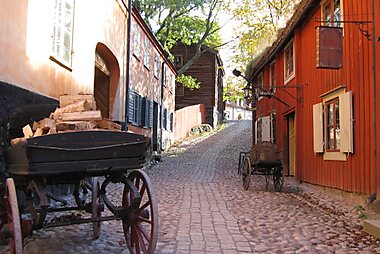
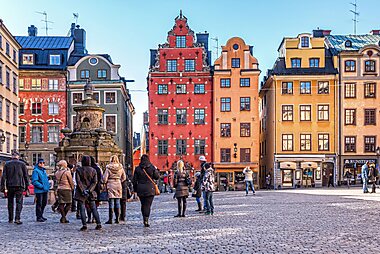
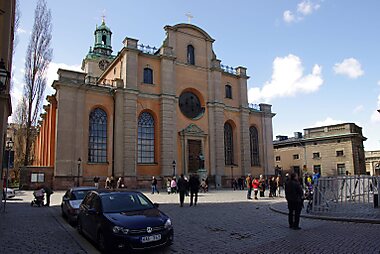
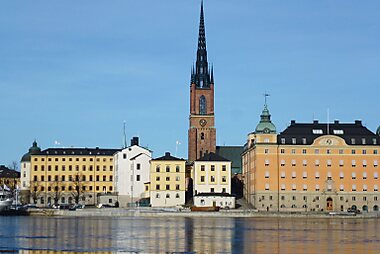
Gamla Stan is Stockholm's old town, a tight grid of cobbled lanes, ochre-colored buildings, and small squares that dates back to the 13th century. Set aside at least half a day to wander it on foot.
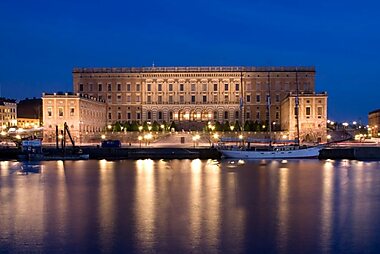
The Swedish royal family's official residence, Royal Palace, sits right at the edge of the old town. It's open to visitors most days, and the Royal Apartments and Treasury are the highlights inside. Next door, Stockholm Cathedral is Stockholm's oldest church, where Swedish monarchs have been crowned and married for centuries.
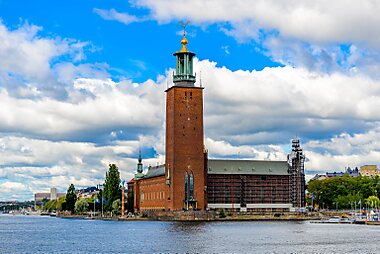
Stockholm City Hall is where the Nobel Prize banquet is held every December, and its brick tower is one of the most recognizable buildings on the waterfront — climb it in summer for a view over the city.
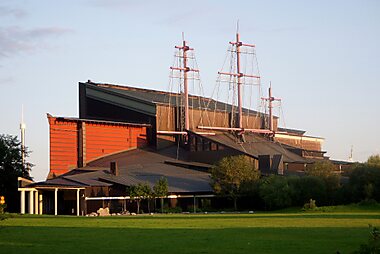
On the island of Djurgården, Vasa Museum houses a nearly intact 17th-century warship. It sank on its maiden voyage in 1628 and was raised from the harbor more than 300 years later. Nearby, Skansen is one of the world's oldest open-air museums, with historic houses moved here from across Sweden and a small zoo of Nordic animals.
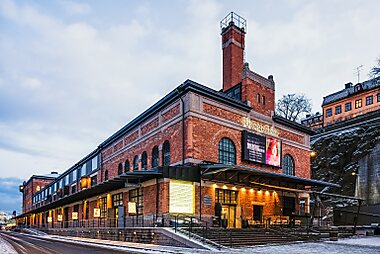
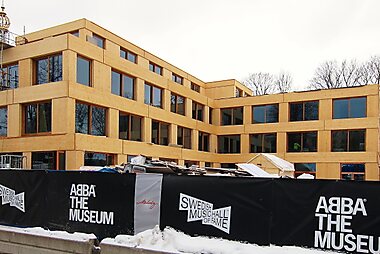
Also on Djurgården, ABBA The Museum covers a Swedish pop group's rise from a local act to global stardom in the 1970s. For something more contemporary, Fotografiska shows large-scale photography exhibits in a converted industrial building. Its top-floor café has sweeping harbor views.
Featured Lists


Stockholm Art & Sculpture
Stockholm’s urban landscape serves as an open-air gallery, featuring works ranging from the late medieval wooden masterpiece of Saint George and the Dragon to modern bronze monuments. This collection includes the city’s smallest public statue, Iron Boy, and significant memorials like La Mano, dedicated to volunteers of the Spanish Civil War. Many pieces, such as those by renowned sculptors Carl Milles and Carl Eldh, are strategically placed in public squares and waterfronts, reflecting Sweden's cultural history and artistic evolution.
15 places


Audio Guides – Stockholm
Explore on foot with a self-guided audio tour that narrates each stop as you reach it.


Hear Stockholm's audio tours
1 walk in Audio Guides by Tripomatic


What to experience
- Watch the sun set over the water from Monteliusvägen, a walkway along a cliff on Södermalm with one of the best views in the city.
- Ride the T-Centralen metro station, where the rock walls are painted and carved into one continuous underground artwork — one of the most photographed stops on the network.
- Join the crowds at Kungsträdgården for free outdoor concerts in summer or an open-air ice rink in winter.
- Take a summer boat trip into the Stockholm archipelago — even a short two-hour cruise gives a real sense of the thousands of islands that start just past the harbor.
Tours & Activities
Stockholm — Map

 Open the interactive map
 Day trips
Stockholm's setting makes for some of the easiest day trips in Europe — the archipelago and several historic towns are all within a couple of hours.
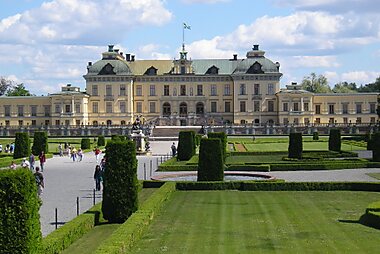
- Drottningholm Palace — ≈40 min by metro and bus, or by boat in summer. A UNESCO World Heritage royal palace still used by the royal family, with an 18th-century Chinese pavilion and formal gardens.
- Uppsala — ≈40 min by train. A university city with Scandinavia's largest cathedral and a hilltop castle; the fast connection makes it an easy half-day add-on.
- Vaxholm — ≈45 min by bus, or up to an hour by ferry, from the city center. The main gateway to the Stockholm archipelago, with a 19th-century fortress and a small-town harbor feel.
- Sigtuna — ≈50 min by train and bus. Sweden's oldest town, with a single main street lined with wooden houses and Viking-era rune stones.
Getting there
- By air: Stockholm Arlanda Airport (ARN) is the main international gateway, about 40 km north of the center. The Arlanda Express train reaches Central Station in 18 minutes; airport buses take about 45 minutes and cost less. Stockholm Arlanda Airport Bromma Airport (BMA), 7 km west, handles mostly domestic and short European routes, with a bus transfer of about 20 minutes.
- By train: High-speed trains link Stockholm Central Station with Gothenburg (about 3 hours) and other major Swedish cities, plus overnight sleeper trains north into Lapland. SJ (Swedish Railways)
- By bus: Long-distance coaches from other Swedish and Nordic cities arrive at Cityterminalen, next to Central Station.
Getting around
- Public transit: The SL network covers metro (Tunnelbana), buses, trams, and commuter ferries. Tap a contactless bank card or phone directly at the metro gates or on buses and trams. No app or account is needed, and it's the easiest option for a short visit. The SL app is useful if you want a day pass instead of single fares. SL
- Taxi: Metered taxis and ride-hailing apps both operate; agree on or confirm the fare before longer trips, since some taxi firms set their own rates.
- On foot / cycling: The center is compact and flat enough to walk between most sights. Dedicated cycle lanes cover much of the city, and bike-share stations are common in summer.
Driving
- Is a car worth it?: No — the center is compact, walkable, and well served by public transit. A car becomes useful only for exploring the wider archipelago or countryside beyond day-trip range.
- Parking: Street parking in the center is metered and monitored closely; pay through the EasyPark app or at curbside machines. Park-and-ride lots at outer metro stations are cheaper for a day in town.
- Restrictions: A congestion charge applies to most vehicles entering the center on weekdays; rental cars are billed automatically through the rental company.
Food & drink
Stockholm's food scene runs from traditional Swedish home cooking to some of Scandinavia's most inventive fine dining. Fika — a coffee break with a cinnamon bun or another pastry — is a genuine daily ritual here, not just a tourist activity. Most cafés expect you to sit down rather than take it to go.
For a taste of Swedish home cooking, look for a dagens lunch (daily lunch special) at any casual restaurant on a weekday. It's the best-value hot meal in the city. Södermalm and Östermalm both have dense clusters of cafés and restaurants worth wandering between rather than picking one address in advance.
Safety & health
Stockholm is a safe city for visitors, with violent crime rare in the areas travelers typically go. The main risk is pickpocketing on crowded transit lines and around major sights like Gamla Stan, so keep valuables in a front pocket or zipped bag.
Pharmacies (apotek) are well signed and stock most common medication; look for the green cross. Emergency services respond quickly, and hospital care is high quality if needed.
History
Stockholm grew up around a fortified trading post founded in the 1250s by the regent Birger Jarl. It sat at the narrow strait where Lake Mälaren meets the Baltic Sea — a chokepoint that let the city control and tax trade passing through. That defensive core is still visible in the street plan of Gamla Stan.
The city's darkest day came in 1520, when the Danish king had dozens of Swedish nobles executed at Stortorget. The event became known as the Stockholm Bloodbath, and it helped trigger the revolt that made Sweden fully independent three years later. Swedish monarchs are buried at Riddarholm Church, whose spire is visible across the old town.
Stockholm became the capital of a genuine European power in the 17th century, when Sweden controlled territory across the Baltic. Much of that wealth built the grand buildings still standing around Royal Palace today.
Country facts
Quick practical facts for Sweden at a glance:
- Currency
- Swedish Krona SEK kr · Card payments · Widely accepted
- Emergency numbers
- 112
- Electricity
- 230 V · 50 HzType C / Type F
- Languages
- Swedish
- Tap water
- Safe to drink
- Driving side
- Right
- Calling code
- +46


Stockholm – Plan Your Days
Turn the places from this guide into a real itinerary, with smart routing, time estimates, and everything you need for a perfect trip.




