



Sweden
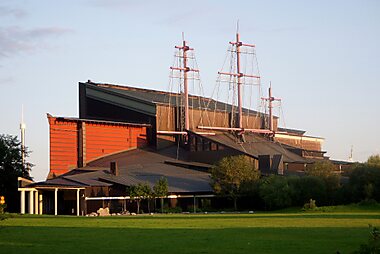
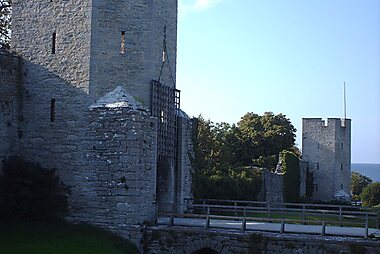
Sweden offers a rare combination of accessible wilderness and sophisticated city culture. The country is Schengen, English is spoken almost everywhere, and infrastructure is reliable. Stockholm — the capital, built across 14 islands where the Baltic Sea meets Lake Mälaren — is home to notable museums including Vasa Museum. Gothenburg anchors the west coast, and the medieval walled city of Visby lies offshore in the Baltic. Far north, Swedish Lapland draws visitors for the Northern Lights, reindeer safaris, and the midnight sun.
Summers (June–August) are the peak season, with long, bright days and mild temperatures across most of the country. Winters are cold, and the north sees only a few hours of daylight in December — but this is also when Northern Lights viewing and winter sports are at their best. The Allemansrätten (right of public access) lets you walk, cycle, and camp on open land without permission, making independent outdoor exploration easy.


Sweden – Planning a Trip?
Build your day-by-day itinerary in the Tripomatic app.


Money & payments
Sweden is one of the world's most cashless countries. Most shops, cafes, restaurants, and transport services accept cards and mobile payments (Swish). Many places in cities no longer accept cash. ATMs exist but are far fewer than in most European countries.
Sweden is expensive compared to most of Europe. Budget travelers can expect to spend around 700–900 SEK per day on hostel accommodation, grocery food, and public transport. A comfortable mid-range day — hotel, restaurant meals, a museum — costs 1,500–2,500 SEK.
Featured Lists


Tours & Activities
Sweden — Map

 Open the interactive map
 Tipping
Tipping is not required in Sweden and is entirely optional. For restaurant meals, rounding up the bill or adding around 10% for good service is common and appreciated. In cafes and bars no tip is expected. Taxi drivers do not expect tips; hotel porters and housekeeping may be tipped at your discretion.
round up or 10%
Electricity
Sweden uses Type C and Type F plugs at 230 V / 50 Hz — the standard European outlet. Visitors from North America, the UK, and countries using different standards need a plug adapter.
Language
Swedish (svenska) is the official language. English is spoken widely across the country, including in smaller towns and rural areas. Restaurant menus, museum information, and signs in tourist areas are usually available in English. No script adaptation is needed for navigation.
Staying connected
Sweden has reliable mobile coverage including 5G in cities. EU roaming rules apply for EU visitors — no extra charges. Non-EU visitors can buy a prepaid SIM or eSIM at airports, major supermarkets (ICA, Coop), and electronics stores. Prepaid SIMs require ID or passport registration at point of purchase. There are no internet access restrictions.
Safety & emergencies
Sweden is a safe country for tourists. Violent crime is rare. The most common tourist risks are pickpocketing and bag theft in busy areas of Stockholm and Gothenburg, particularly around central train stations, ferries, and crowded summer festivals. If hiking or traveling in remote northern areas, inform someone of your route and check weather conditions before departing.
Health
Tap water is safe to drink throughout Sweden. Pharmacies (apotek) are available in towns and cities; the chain Apoteket operates during normal retail hours, with some 24-hour locations in major cities. No vaccinations are required for Sweden beyond standard travel preparation. Healthcare is excellent; EU citizens with a European Health Insurance Card (EHIC) are entitled to care on the same terms as Swedish residents. Travel insurance covering medical costs is recommended for all visitors.
Visas & entry
Sweden is a Schengen member. Citizens of EU and EEA countries and Switzerland may enter and stay without a visa or time limit. Citizens of many other countries — including the US, Canada, UK, Australia, New Zealand, Japan, and South Korea — may visit without a visa for up to 90 days in any 180-day period. Since 2026, most non-EU visitors to the Schengen Area are also required to obtain an ETIAS travel authorisation before travel (a one-time online application, approximately €7, valid for three years). Other nationalities require a Schengen visa.
Visa and entry requirements change frequently. Verify current requirements with the official immigration authority or your country's embassy before travel.
Etiquette
Swedes value personal space and tend to be reserved with strangers in public. Queueing is taken very seriously — always wait your turn. It is customary to remove shoes when entering a Swedish home. Photography is generally unrestricted in public spaces but ask before photographing individuals at close range. Environmental awareness is strong; Swedes recycle diligently and expect the same from visitors. Smoking is prohibited in all indoor public spaces and near building entrances.
Holidays & opening hours
Swedish public holidays see most shops, banks, and some restaurants close or operate on reduced hours. Midsummer (late June) is the country's biggest celebration; expect widespread closures and reduced transport on Midsummer Eve. In July, many Swedes take their annual summer holiday and some smaller businesses in cities may close for weeks. Shops typically open Monday to Friday 10:00–18:00 and Saturday 10:00–16:00; Sunday opening is common in cities. Grocery stores open earlier and close later than other shops.
Getting around
- By train: Sweden has an extensive rail network. Long-distance trains between Stockholm, Gothenburg, and Malmö run frequently and are fast. Book in advance for best prices via SJ – Swedish Railways.
- By bus: Inter-city coaches (Flixbus, Vy) serve routes not well covered by rail and are a cheaper alternative. Useful between smaller cities.
- By air: Domestic flights save significant travel time to the north. Stockholm Arlanda is the main hub; Gothenburg and Malmö also have international airports. Internal flights to Kiruna and other northern towns take around 1.5–2 hours from Stockholm.
Driving
- Speed limits: 30–50 km/h in urban areas (posted signs specify; many residential areas are 30 km/h), 70–100 km/h on rural roads depending on road quality, 110–120 km/h on motorways.
- Alcohol: The BAC limit is 0.2 g/L — effectively zero tolerance. Random roadside tests are common.
- Winter tyres: Mandatory from 1 December to 31 March when winter road conditions exist. Studded tyres are permitted 1 October to 15 April.
- Tolls: Sweden has no motorway vignette. Congestion charges apply in Stockholm and Gothenburg; rental cars and foreign-registered vehicles are billed automatically by camera. The Öresund Bridge to Denmark is tolled year-round (pay by card at the barrier or register for electronic billing). No cash payment option exists for congestion charges.
- Parking: Paid parking is standard in city centers, via meters or the EasyPark app. Blue-zone free parking requires a parking disc (available at petrol stations). Time restrictions apply even where parking looks free.
- Fuel: Self-service at most stations, open 24 hours with card payment at the pump. Pumps are labelled Bensin 95 / Bensin 98 for petrol and Diesel for diesel.
- EV charging: Sweden has a dense charging network. IONITY, Recharge (Circle K), and Vattenfall InCharge cover motorways and cities. Payment by card at the charger is standard; an app is not always required.
Food & drink
Swedish cooking centers on husmanskost — warming, unpretentious home-style food. The most iconic dish is köttbullar: small meatballs served with cream sauce, mashed potato, and lingonberry jam. Other staples include gravlax (salt-cured salmon), pickled herring (sill) in preparations ranging from mustard to matjes, and Janssons frestelse, a baked gratin of potato and sprats. In August, crayfish parties (kräftskiva) are a national ritual: boiled crayfish eaten cold with dill, cheese, and aquavit under paper lanterns.
Fika is central to Swedish social life — a deliberate mid-morning or mid-afternoon coffee break with something sweet. Cinnamon buns (kanelbullar) and cardamom buns are the classics. Lunch is the main hot meal of the day; most restaurants offer a dagens lunch (daily lunch special) for around 120–160 SEK including main dish, salad bar, bread, and coffee — the best value for a hot meal (prices are higher in Stockholm, often 150–185 SEK). Major cities have a strong New Nordic dining scene, using Swedish seasonal ingredients at a higher level. Dinner is eaten early by southern European standards; most restaurants are busy by 18:00.
Where to explore
Sweden's most visited destinations span capital culture, island history, and arctic wilderness.
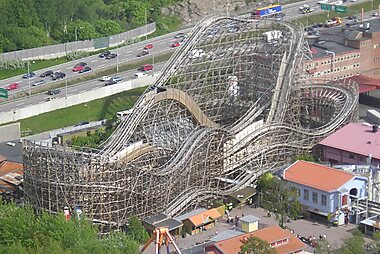
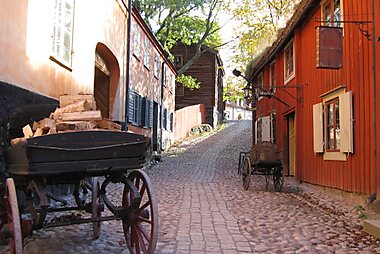
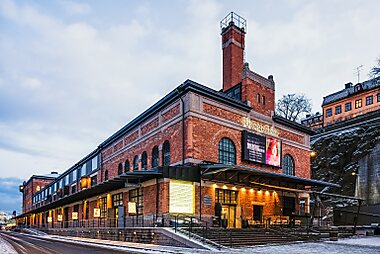
Cities: Stockholm is the capital and the country's main entry point, spread across 14 islands with museums like Skansen and Fotografiska. Gothenburg is the second city and gateway to the rocky west coast, known for its seafood, harbor districts, and Liseberg. In the south, Malmö is connected to Copenhagen by the Öresund Bridge and offers bold modern architecture alongside a diverse food scene. Lund lies nearby with a Romanesque cathedral and the atmosphere of a university town.
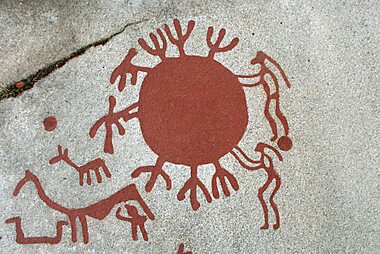
History and islands: Uppsala, about 40 minutes north of Stockholm by train, has Scandinavia's largest cathedral and a Viking burial site at Old Uppsala. On the island of Gotland in the Baltic, Visby is a UNESCO World Heritage medieval walled city — best visited in summer when both the sea and town are at their liveliest.
North and mountains: Kiruna in the far north is the gateway to Swedish Lapland and the base for reindeer safaris, dog-sled tours, and Northern Lights viewing from September to March. The Icehotel at Jukkasjärvi, 20 km east of Kiruna, rebuilds a new structure from ice and snow each winter. Åre in Jämtland is Sweden's premier ski resort, with a ski season running roughly December to May and marked mountain hiking trails accessible on foot in summer.
Sweden – Plan Your Trip
Pick the places you want to see and Tripomatic turns them into a day-by-day route, with smart routing, time estimates, and everything you need for a perfect trip.




