


Uppsala
Uppsala sits on the Fyris River about 35 km north of Stockholm, an easy day trip or a relaxed overnight stay. It has been Sweden's religious and academic centre for close to a thousand years. The city is home to Scandinavia's oldest university, founded in 1477, and the country's largest cathedral. Cobbled streets, student life, and a slower pace than Stockholm give Uppsala its own character.
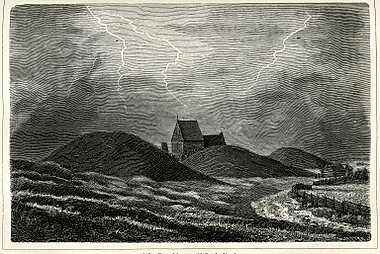
The city's roots run even deeper than the university. A few kilometres north, the burial mounds of ancient kings mark the site of Gamla Uppsala, a pagan religious centre from over a thousand years ago. The naturalist Carl Linnaeus taught and lived here, and his restored gardens are still open to visitors. Uppsala suits travelers who want history and culture without big-city crowds.

Uppsala – Planning a Trip?
Build your day-by-day itinerary in the Tripomatic app.


When to visit
Summers (June to August) are mild and bright, with long daylight hours ideal for walking the old town. Spring and autumn are cool, and winters are cold and dark with occasional snow.
Plan around Valborg (Walpurgis Eve) on 30 April, Uppsala's biggest annual event. Thousands of students celebrate the arrival of spring with a river rafting race, choir singing at the castle, and a citywide party atmosphere.
Best time to visit: June, August
Rain is possible in any month, so pack a light waterproof layer even in summer.
Top sights
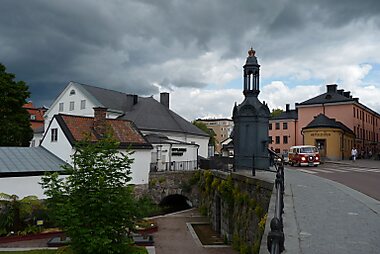
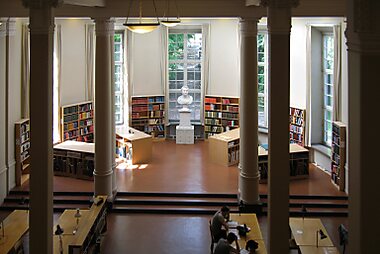
Uppsala Cathedral towers over the old town and is the largest cathedral in the Nordic countries. Its twin towers have marked the skyline since the 15th century, and it holds the tombs of King Gustav Vasa and the botanist Carl Linnaeus.
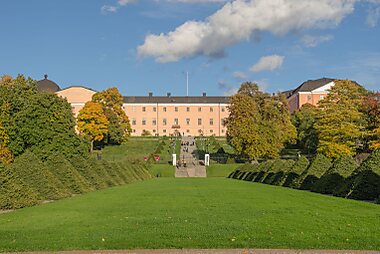
Just south of the cathedral, Uppsala Castle was built by Gustav Vasa in the 1540s and later expanded into a Renaissance palace. Its terrace gives one of the best views over the rooftops to the river.
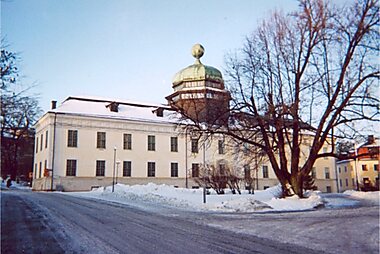
Gustavianum is the university's oldest surviving building, put up in the 1620s. Inside is a restored 17th-century anatomical theatre, once used for public dissections attended by curious townspeople.
Carolina Rediviva is the university's main library and one of the largest in Scandinavia. Its reading rooms hold the Codex Argenteus, a rare 6th-century silver-lettered Bible.
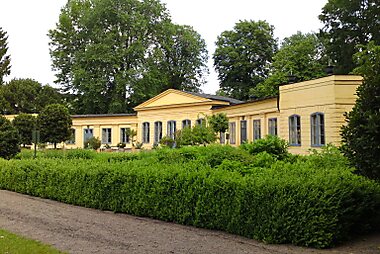
Carl Linnaeus designed The Linnaeus Garden and Museum himself in the 1740s, arranging the plants by his own classification system. The small house where he lived with his family is furnished as it was in his lifetime.
North of the centre, Old Uppsala marks the site of Uppsala's original settlement. Three huge burial mounds, raised for Iron Age kings, sit beside a museum on the area's Viking-era history.
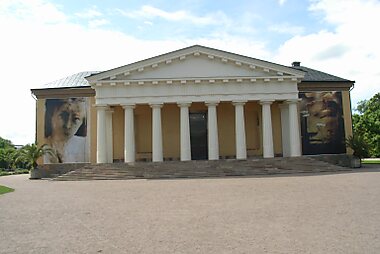
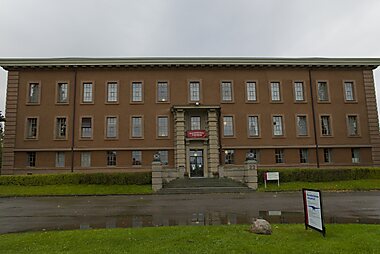
Museum of Evolution holds Scandinavia's largest fossil collection, including dinosaur bones gathered by Swedish scientists in China in the 1920s.
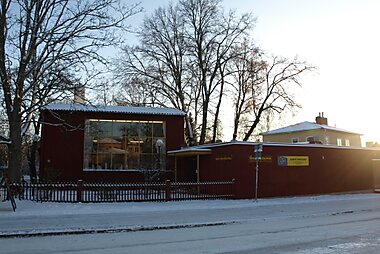
For a different side of Uppsala, visit Bror Hjorth's House, the studio-home of sculptor Bror Hjorth, filled with his colourful wood carvings and paintings.
Featured Lists


Churches & Places of Worship
Beyond its famous cathedral, Uppsala’s spiritual landscape includes a range of historic parish churches and modern community spaces. This selection highlights the city's denominational diversity, from the medieval Holy Trinity Church to the central Roman Catholic Sankt Lars. It also features several influential free churches affiliated with Equmeniakyrkan and local Church of Sweden parish buildings located in residential districts like Luthagen, Eriksberg, and Kungsgärdet.
8 places

What to experience
A few things happen here that you won't find anywhere else in Sweden:
- Watch the white student caps come out across the city on Valborg (30 April) — Uppsala's biggest student tradition, marking graduation and the start of spring.
- Paddle a canoe or kayak along the Fyris River in summer, gliding past Uppsala Castle and Uppsala Cathedral from the water.
- Ask about visiting a student "nation" (studentnation) for an evening. These historic student clubs run pubs and formal dinners, and many welcome outside guests for a small fee — a tradition unique to Uppsala and Lund.
Tours & Activities
Uppsala — Map

 Open the interactive map
 Day trips
A lakeside nature reserve, Sweden's oldest town, the capital, and a Baroque castle are all within easy reach for a day out, closest first.
- Fjällnora — about 20 minutes by car, a lakeside nature reserve on Lake Ekoln with sandy beaches, trails, and a summer café. Popular with locals for a swim or a picnic.
- Sigtuna — Sweden's oldest town, about 40 minutes by bus or car. Wander lanes lined with centuries-old rune stones and the ruins of medieval churches.
- Stockholm — Sweden's capital is about 40 minutes away by direct train from Uppsala Central. It's an easy add-on for travelers who want to combine the two cities in one trip.
- Skokloster — around 45 minutes by car. This 17th-century Baroque castle sits on a peninsula in Lake Mälaren and holds the largest private collection of 17th-century weapons in the world, alongside period furniture and art.
Getting there
- By air: Stockholm Arlanda Airport (ARN) is the closest airport, about 35 km south of Uppsala. Regional trains connect Arlanda directly to Uppsala Central in around 18 minutes; airport buses take about 35–40 minutes.
- By train: Uppsala Central Station sits on Sweden's main north–south line. Frequent trains reach Stockholm Central in about 40 minutes, with InterCity and long-distance services continuing north along Sweden's east coast.
- By bus: Long-distance coaches, including FlixBus, stop at Uppsala's bus terminal next to the train station, with connections to Stockholm and other Swedish cities.
Getting around
- Public transit: UL (Upplands Lokaltrafik) runs the city's buses. Tap a contactless debit or credit card directly on board to pay, or buy a ticket in advance through the UL app; buses are cash-free. UL journey planner
- Taxi / ride-hailing: Regular taxis wait at the station; ride-hailing app coverage is limited outside the Stockholm area.
- On foot / cycling: The historic centre is small enough to walk across in under half an hour. Uppsala is one of Sweden's most bike-friendly cities, with wide dedicated lanes and rental bikes available near the station.
Driving
- Is a car worth it?: No, not for the city itself — central Uppsala is compact and walkable, and parking is limited. A car helps mainly for reaching Skokloster, the countryside, or other day trips outside the train and bus network.
- Parking: Pay-and-display zones and a few multi-storey car parks serve the centre, including near Uppsala Resecentrum; pay by app or at the machine, typically by the hour.
- Restrictions: A handful of streets around the cathedral and main square are pedestrian-only. Uppsala has no congestion charge, unlike Stockholm and Gothenburg.
Food & drink
Uppsala's food scene centers on its café culture — the city has one of Sweden's highest concentrations of students, and cafés built around fika (a coffee and pastry break) are everywhere.
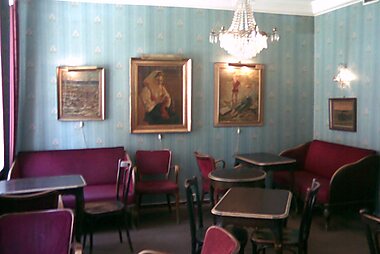
For something historic, stop at Ofvandahls, Uppsala's oldest continuously running café, serving pastries in the same 19th-century rooms since 1878. For a wider choice of restaurants and bars, head to the streets around Svartbäcksgatan and Dragarbrunnsgatan, just north of the cathedral, or the riverside terraces along Östra Ågatan in summer.
Safety & health
Uppsala is a safe city with very low crime; violent crime against tourists is rare. Watch for pickpockets during Valborg, when tens of thousands crowd the riverside for the city's biggest event.
Cyclists ride fast and expect the right of way on shared paths. Look both ways before stepping into a bike lane, even one marked for pedestrians.
History
Uppsala's story starts a few kilometres north of today's centre, at Old Uppsala. From around the 5th century, this was a royal seat and pagan religious centre, where kings were buried under the mounds still visible today and, according to old sources, a great temple once stood.
Christianity shifted the city's centre south in the 13th century, when the cathedral chapter moved to the site of today's Uppsala Cathedral, then under construction. The cathedral has crowned Swedish coronations and holds the tomb of Gustav Vasa, the king who broke Sweden away from Danish rule in the 1520s and founded the modern Swedish state.
The university, founded in 1477, made Uppsala Scandinavia's centre of learning. A generation later, Uppsala Castle, built by Gustav Vasa, became the seat of royal and later university power, and student life has shaped the city's character ever since.
Country facts
Quick practical facts for Sweden at a glance:
- Currency
- Swedish Krona SEK kr · Card payments · Widely accepted
- Emergency numbers
- 112
- Electricity
- 230 V · 50 HzType C / Type F
- Languages
- Swedish
- Tap water
- Safe to drink
- Driving side
- Right
- Calling code
- +46


Uppsala – Plan Your Days
Turn the places from this guide into a real itinerary, with smart routing, time estimates, and everything you need for a perfect trip.