



Trondheim
Trondheim is Norway's third-largest city and its historic religious capital, founded around 997 AD by the Viking king Olav Tryggvason at the mouth of the Nidelva river. For centuries it was known as Nidaros, the burial place of King Olav II and one of medieval Europe's great pilgrimage destinations. That layered history is still visible in the compact old center: a Gothic cathedral, colorful wooden warehouses leaning over the river, and a grid of 17th-century streets.
Today Trondheim pairs that medieval core with a young, energetic feel driven by NTNU, one of Norway's leading technical universities. Students fill the cafes and bike lanes, and the city has a strong music and tech scene alongside its heritage sites. It suits travelers who want a walkable, easy-going city with real history, good hiking and fjord access nearby, and none of the crowds of Oslo or Bergen. The violinist Arve Tellefsen, born and raised in Trondheim, is still a local point of pride.

Trondheim – Planning a Trip?
Build your day-by-day itinerary in the Tripomatic app.


When to visit
Summers (June–August) are mild with very long daylight hours, while winters are cold, dark, and often snowy, though the city stays lively indoors. The biggest annual event is the Olavsfestdagene (St. Olav Festival), a week of concerts and markets around St. Olav's Day on 29 July, worth timing a summer trip around.
July and August are the warmest months, with highs typically in the high teens Celsius, while the darkest winter days barely reach freezing and get only a few hours of daylight.
Top sights
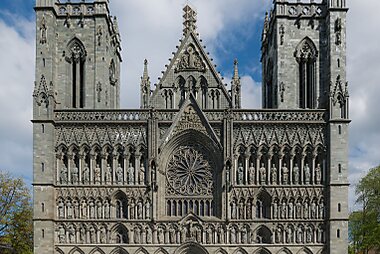

Nidaros Cathedral is Trondheim's centerpiece, a Gothic cathedral built over roughly 230 years starting in 1070 above the burial site of King Olav II. It is still the traditional site for the consecration of new Norwegian kings.
Just south of the cathedral, Archbishop's Palace was the seat of the Archbishop of Nidaros for centuries and today holds a museum of medieval stonework and archaeology, along with a display of the Norwegian crown jewels.
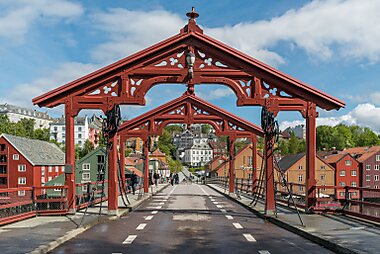
Old Town Bridge, a red wooden bridge over the Nidelva, gives the best view of the old warehouses lining the riverbank and passes through the ornamental Lykkens Portal, the Gate of Happiness.
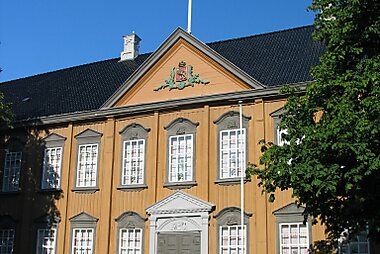
Stiftsgården is the royal residence in the city center, one of the largest wooden buildings in northern Europe at around 4,000 square meters, and has been used by the Norwegian royal family since 1800.
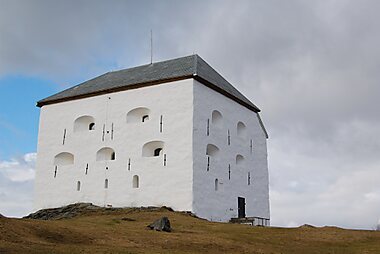
For city views, climb to Kristiansten Fortress, a fortress built on a hilltop after the great fire of 1681.
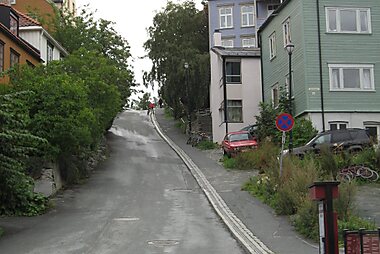
Trondheim is also home to Trampe Bicycle Lift, the world's first bicycle lift, which still carries cyclists up a steep street on the way to the student district.
A short ferry ride from the harbor reaches Munkholmen, a small island that has served in turn as an execution ground, monastery, and fortress, and now has a summer cafe and swimming spots.
Music lovers should also make time for Ringve Museum, a historic manor and botanical garden holding the national collection of musical instruments.
Featured Lists


Historic Churches & Temples
Trondheim’s religious landscape is anchored by the Nidaros Cathedral, a Gothic masterpiece and national shrine built over the burial site of Saint Olav. The city preserves medieval stone structures like Lade Church alongside unique wooden heritage, including the 12th-century Haltdalen Stave Church. More recent additions, such as the octagonal Hospitalskirken and contemporary Hindu and Buddhist temples, reflect the city's architectural evolution and cultural diversity.
10 places
Scenic Nature Walks
Trondheim’s landscape offers a diverse mix of formal city parks and rugged outdoor terrain. This collection features the historic Stiftsgårdsparken in the city center alongside coastal spots like Grilstadstranda and Ringvebukta. Higher elevations in Bymarka and Estenstadmarka, including the Burmaklippen cliff and Gråkallen peak, provide panoramic views of the Trondheimsfjord and surrounding mountains. Many locations are accessible via established hiking trails or city infrastructure.
11 placesWhat to experience
- Walk the final stretch of the Pilegrimsleden. Trondheim is the historic end point of Norway's medieval pilgrim route to St. Olav's grave; even a short final walk into Nidaros Cathedral along the marked path gives a sense of what drew pilgrims here for centuries.
- Ride the Gråkallbanen tram up to Lian for a lake swim in summer or a snowy walk in winter, then catch the sunset over the fjord from the hillside above the city.
- Soak in a floating sauna at the Brattøra harbor/fjord waterfront. Community-run floating saunas moored there are a popular local ritual, especially in colder months, and several can be booked for an hour at a time.
- Watch for the northern lights on a clear winter night. Trondheim is far enough north that aurora displays are occasionally visible on clear, dark nights between autumn and early spring, though sightings are less reliable than farther north.
Tours & Activities
Trondheim — Map

 Open the interactive map
 Day trips
Trondheim sits close to both forested hills and the wider Trøndelag region, so day trips range from a short tram ride to a half-day train journey.
- Bymarka & Lian — a short ride on the Gråkallbanen tram from the city center. This forested hill area has lakes, marked trails, and in winter cross-country ski tracks; Lian is the classic stop for a swim, a hike, or the view back over the fjord.
- Hell — about 35 minutes by train or car, near the airport. A small village whose English-sounding name and railway sign make it a popular quick photo stop.
- Stiklestad — around 1 hour 20 minutes by car northeast of the city. The site of the 1030 battle where King Olav II died, now home to a museum and open-air theater telling the story of Norway's conversion to Christianity.
- Oppdal — about 2 hours by train south. A mountain town on the edge of Dovrefjell National Park, popular for hiking in summer and skiing in winter.
- Røros — about 2.5 hours by train southeast. A UNESCO World Heritage former copper-mining town with wooden houses that look much as they did centuries ago.
Where to explore
Trondheim is the gateway to the wider Trøndelag region, and two nearby towns are worth knowing about beyond a single day trip. Røros is a former mining town on the UNESCO World Heritage list, with a well-preserved wooden townscape and a distinctive stone church; it makes a good overnight stop if time allows. Oppdal is a mountain gateway town on the Dovrefjell plateau, popular with hikers in summer and skiers in winter, and a natural stop for anyone continuing south toward Oslo.
Getting there
- By air: Trondheim Airport, Værnes (TRD), is about 35 km northeast of the city near Stjørdal and is the main gateway, with direct flights from other Norwegian cities and several European hubs. The Værnesekspressen airport bus and the Trønderbanen train both run into the city center in around 35–40 minutes.
- By train: The Dovrebanen line connects Trondheim to Oslo (around 6.5–7 hours), and the Nordlandsbanen continues north to Bodø (around 10 hours). Both arrive at Trondheim Central Station in the city center.
- By bus: Long-distance coaches connect Trondheim with other major Norwegian cities and are usually cheaper than the train, though slower.
Getting around
- Public transit: AtB operates the city's buses and the Gråkallbanen tram. Buy tickets in advance through the AtB Mobillett app, which is the easiest option for visitors; drivers do not sell tickets on board.
- Taxi: Standard metered taxis are widely available; ride-hailing apps have limited presence compared to larger Norwegian cities.
- On foot / cycling: The old center is compact and easy to explore on foot. Trondheim also has an extensive network of bike lanes and the Trampe bicycle lift for the steepest hill, making cycling a genuinely practical way to get around.
Driving
- Is a car worth it?: Not for the city itself — the center is compact and walkable, and parking is limited. A car becomes useful for exploring Trøndelag's coast and mountains beyond the day trips reachable by train.
- Parking: Paid parking houses and metered street parking cover the center; look for blue "P" signs and pay by app or machine.
- Restrictions: An automatic toll ring (AutoPASS) surrounds the city center; there are no barriers or tickets, and charges are billed automatically to the vehicle's registered account.
Food & drink
Trondheim sits on a fjord known for cod and other whitefish, so fresh seafood and fish soup are easy to find and worth seeking out. The city's brown cheese and cured meats also draw on the dairy and farming traditions of the surrounding Trøndelag countryside.
For a concentrated stretch of restaurants and bars, head to Solsiden, a former shipyard on the waterfront that has been rebuilt into the city's main dining and nightlife district, with options ranging from casual to upscale.
Safety & health
Trondheim is a very safe city by international standards, with low rates of violent crime. As in any city, keep an eye on bikes and bags in busy areas and around the train station, since bike theft is the most common complaint. In winter, sidewalks and the cobbled streets of the old town can turn icy; sturdy footwear helps avoid a fall.
History
Trondheim's story begins around 997 AD, when the Viking king Olav Tryggvason founded a trading settlement at the mouth of the Nidelva and named it Nidaros. It served as Norway's capital for roughly two centuries. The turning point came in 1030, when King Olav II died at the Battle of Stiklestad and was later declared a saint; his grave became the object of pilgrimage across medieval Europe, and Nidaros Cathedral was built over it to house his shrine.
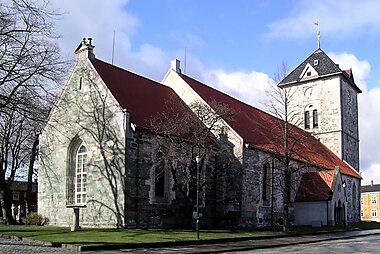
As seat of the Archbishop of Nidaros, Archbishop's Palace was the administrative center of the Norwegian church until the Reformation reorganized religious life in 1537. A catastrophic fire in 1681 destroyed much of the wooden city, after which it was rebuilt on the wide, straight streets still visible in the center today, with Kristiansten Fortress added on the hill above to defend against future attack. The medieval parish church Vår Frue Church, dating to the late 1100s, is one of the few buildings that predates the fire.
Country facts
Quick practical facts for Norway at a glance:
- Currency
- Norwegian Krone NOK kr · Card payments · Widely accepted
- Electricity
- 230 V · 50 HzType C / Type F
- Languages
- Norwegian Bokmål, Norwegian Nynorsk
- Tap water
- Safe to drink
- Driving side
- Right
- Calling code
- +47


Trondheim – Plan Your Days
Turn the places from this guide into a real itinerary, with smart routing, time estimates, and everything you need for a perfect trip.

