


Turku
Turku is Finland's oldest city, founded in the 13th century where the Aura River meets the Archipelago Sea. It was the country's capital until 1812, and the medieval Turku Castle and Turku Cathedral still anchor the historic centre.
Today Turku feels compact and easy-going. The riverbanks are lined with cafés, museums, and permanently moored restaurant boats, and the old university city has a relaxed, youthful energy. It suits travelers who want a walkable dose of history and Baltic island scenery without the crowds of Helsinki.
The champion runner Paavo Nurmi, one of the most decorated Olympians in history, was born here and is still a local point of pride.

Turku – Planning a Trip?
Build your day-by-day itinerary in the Tripomatic app.


When to visit
Summers (June to August) are mild and the easiest time to visit, with long daylight hours and outdoor life along the river. Spring and autumn are cooler but pleasant for walking. Winters are cold and dark, though the Christmas markets and the Old Great Square's Christmas Peace ceremony give the season its own charm.
Plan around Ruisrock, one of Europe's oldest rock festivals, held on Ruissalo island every July — book accommodation well ahead if visiting then.
Best time to visit: June, July, August
July afternoons are the warmest and sunniest of the year, though rain showers are common. Midwinter days get only a few hours of daylight, so plan for a short sightseeing window.
Top sights
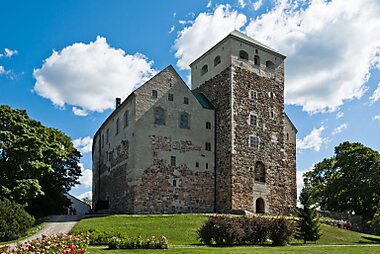
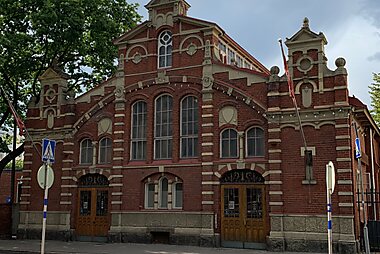
Turku Castle is Finland's largest surviving medieval building, founded in the late 13th century on the banks of the Aura River. It served as an administrative and military stronghold for centuries and today holds a large historical museum.
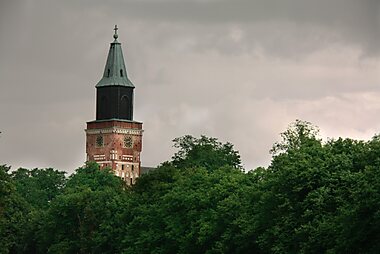
Turku Cathedral is Finland's only medieval basilica and the country's most important Lutheran church. Its noon bells are broadcast on national radio every day.
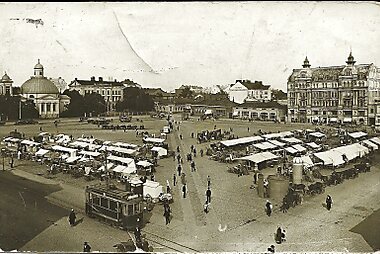
Market Square is the city's central square and has hosted its market since the Middle Ages. Weekday mornings still bring farmers selling fresh produce and flowers.
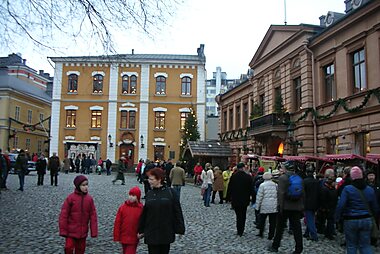
Next to the cathedral, Old Great Square was Turku's administrative and commercial heart from the city's founding until the Great Fire of 1827. Its surviving mansions now house cultural venues.
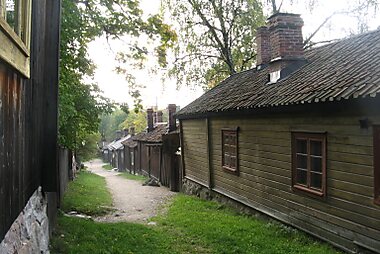
Luostarinmäki is an open-air museum of wooden houses and workshops that survived the 1827 fire, giving a rare look at how the whole city once looked.
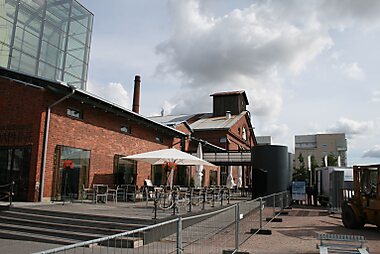
Forum Marinum covers Finland's maritime history and includes historic ships moored on the river that visitors can board.
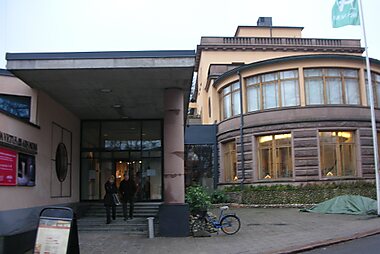
Aboa Vetus & Ars Nova combines a medieval archaeological site, excavated on the spot, with a contemporary art museum in the same building — a striking pairing of old and new.
Turku Art Museum is one of Finland's leading art museums, set in a Jugendstil building on a hill above the centre.
Featured Lists


Turku's Sacred Sites
Turku's religious landscape spans over seven centuries, anchored by the medieval Turku Cathedral, the Mother Church of Finland. This collection includes significant Lutheran landmarks like the 14th-century St. Mary’s Church and the neo-Gothic St. Michael’s. Modern architecture is represented by Erik Bryggman’s Resurrection Chapel and the copper-clad Ecumenical Art Chapel. Beyond Christian sites, the list features the Liên Tâm Monastery, the first Buddhist monastery inaugurated in Finland, highlighting the city's diverse spiritual and architectural heritage.
12 places

What to experience
- Have a drink or dinner on one of the permanently moored restaurant boats lining the Aura River — a Turku tradition found nowhere else in Finland quite like this.
- Join the crowd at Old Great Square on 24 December to hear the centuries-old Christmas Peace declared from the Brinkkala Mansion balcony, broadcast live across the country.
- Walk the riverside promenade at sunset between the castle and the cathedral, when the old warehouses and church towers catch the evening light.
- If visiting in July, spend a day at Ruisrock on Ruissalo island, one of the longest-running rock festivals in Europe.
Tours & Activities
Turku — Map

 Open the interactive map
 Day trips
Turku sits at the gateway to Finland's Archipelago Sea, so several of its best day trips are close by water or a short drive away.
- Naantali — about 20 minutes by bus or car, this small spa town has a wooden Old Town, a working convent church, and Moomin World, a theme park based on the beloved Finnish books.
- Parainen and the village of Nagu, on the Archipelago Trail — roughly 45–75 minutes by car or ferry, these island communities give an easy taste of the Archipelago Sea's thousands of islets, with cottages, cafés, and coastal views.
- Rauma — about 1.5 hours by train or car, Old Rauma is a UNESCO World Heritage wooden town with cobbled streets and colourful 18th-century houses, still lived in today.
- Helsinki — about 2 hours by train, Finland's capital is a worthwhile longer trip for travelers with an extra day, with frequent direct connections from Turku's main station.
Getting there
- By air: Turku Airport (TKU) has scheduled flights mainly to Stockholm and a handful of domestic routes; it is 8 km from the centre, a 15–20 minute bus or taxi ride. Most international travelers instead fly into Helsinki-Vantaa Airport (HEL) and continue to Turku by train or bus, about 2 hours.
- By train: Direct trains connect Turku's main railway station with Helsinki roughly every hour, about 2 hours each way.
- By bus: Long-distance coaches link Turku with Helsinki, Tampere, and other Finnish cities from the bus station next to the railway station.
- By ferry: Turku is one of Finland's main ferry ports to Sweden, with large overnight ships sailing daily to Stockholm from the passenger harbour a few kilometres southwest of the centre.
Getting around
- Public transit: Föli operates Turku's city buses. Tickets can be bought with a contactless bank card or phone directly on board, or through the Föli app, which is usually cheaper. Föli journey planner
- Taxi / ride-hailing: Regular taxis are easy to find in the centre; a national ride-hailing app also operates in the city.
- On foot / cycling: The historic centre is small and flat, so most sights are within easy walking distance of each other. Cycling is popular and the city has a public bike-share system for the warmer months.
Driving
- Is a car worth it?: Not for the city itself — the centre is small and walkable. A car becomes useful for exploring the Archipelago Trail and smaller islands at your own pace.
- Parking: Paid street parking and multi-storey car parks are available around the centre; pay by app or at machines, and rates are highest on weekdays.
- Restrictions: The Market Square and some central streets are pedestrian-only during market hours; watch for signage rather than assuming full vehicle access.
Food & drink
Turku sits on the coast, so fresh Baltic fish — herring, salmon, and vendace — appears on menus across the city, especially in autumn during the traditional herring market on the Market Square.
For a distinctive spot, browse Market Hall, the second-oldest market hall in Finland, where small stalls sell local delicacies and light meals under one roof. For a more general answer, the restaurant boats and terraces along the Aura River are the easiest place to find a good meal with a view.
Safety & health
Turku is a safe city for travelers by any standard. Petty theft can happen around the railway station and busy nightlife areas late at night, so keep an eye on bags and phones as you would anywhere. Winter brings icy pavements, so wear shoes with grip if visiting between November and March.
History
Turku grew up around the Turku Castle and the Turku Cathedral in the 13th century and quickly became the political and religious centre of medieval Finland, then a province of Sweden. For centuries it was the country's largest city and its capital.
Russia annexed Finland in 1809, and the capital moved to Helsinki in 1812. The Great Fire of 1827 then destroyed most of the wooden city centre, including large parts of the old Old Great Square, and Turku's university relocated to Helsinki soon after — cementing the new capital's rise while Turku rebuilt in stone.
Despite the fire, pockets of the old wooden city survived, preserved today at Luostarinmäki. Turku remains Finland's religious capital: the Archbishop of the Evangelical Lutheran Church still has his seat at Turku Cathedral.
Country facts
Quick practical facts for Finland at a glance:
- Currency
- Euro EUR · Card payments · Widely accepted
- Emergency numbers
- 112
- Electricity
- 230 V · 50 HzType C / Type F
- Languages
- Finnish, Swedish
- Tap water
- Safe to drink
- Driving side
- Right
- Calling code
- +358


Turku – Plan Your Days
Turn the places from this guide into a real itinerary, with smart routing, time estimates, and everything you need for a perfect trip.