


Valencia
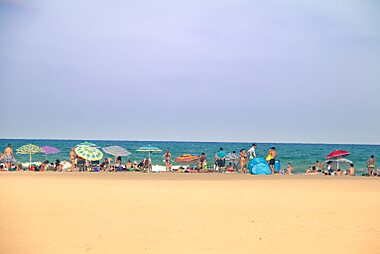
Valencia is Spain's third-largest city, where a compact medieval old town sits beside striking modern architecture. A 1957 flood pushed the city to reroute its river outside the center. The dry riverbed became a nine-kilometer park that now threads the old town together with a futuristic arts-and-science complex. A Mediterranean beach is a short tram ride from the cathedral. Valencia suits travelers who want history, architecture, and coastline without long transfers between them.
Valencia is smaller and easier to navigate than Madrid or Barcelona, so a few days here reach the highlights without long journeys. It is the hometown of the painter Joaquín Sorolla. Each March its Las Fallas festival turns the streets into one of Europe's largest fireworks and bonfire celebrations.

Valencia – Planning a Trip?
Build your day-by-day itinerary in the Tripomatic app.
When to visit
Spring (March–May) and autumn (October–November) are the most pleasant times to visit, with warm days and little rain. Summer is hot, and winter stays mild but sees more rain than the shoulder seasons.
Time a trip around Las Fallas, Valencia's biggest festival, held every March. Neighborhoods build giant satirical sculptures that burn in citywide bonfires, and daily fireworks displays fill Plaza del Ayuntamiento with noise and smoke. Book accommodation well ahead if visiting during the festival.
Best time to visit: February, March, April, May, June, September, October, November
July and August are the hottest, most humid stretch of the year; the shoulder seasons stay comfortably mild.
Top sights
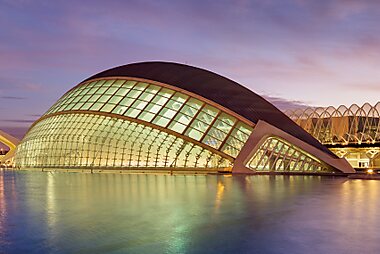
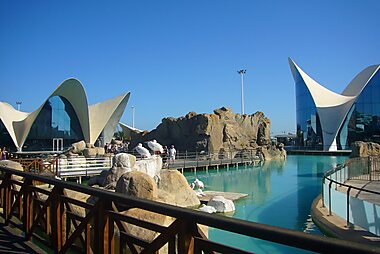

City of Arts and Sciences is Valencia's signature sight, a futuristic complex of museums, an opera house, and an aquarium built along the old riverbed. Budget at least half a day to see more than one building.
Inside the same complex, Oceanogràfic is Europe's largest aquarium, with belugas, sharks, and a walk-through underwater tunnel.
For a different kind of wildlife encounter, Bioparc València recreates African savanna and jungle habitats with no visible bars or fences between visitors and the animals.
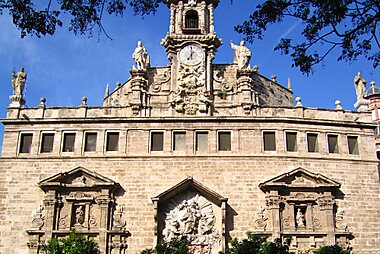
In the old town, Silk Exchange is a UNESCO-listed Gothic hall built for the silk trade in the 15th century, when Valencia was one of the wealthiest cities in the Mediterranean.
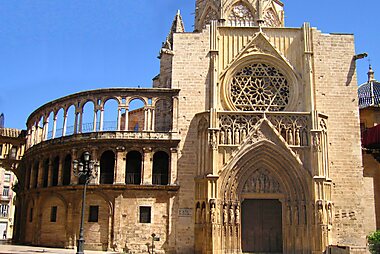
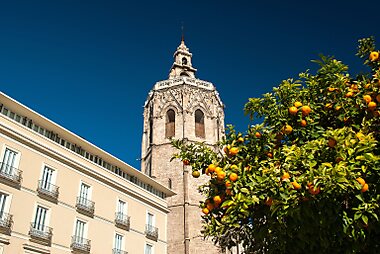
Valencia Cathedral mixes Romanesque, Gothic, and Baroque styles from centuries of rebuilding, and its chapel displays a chalice many Catholics believe is the Holy Grail. Climb the attached Miguelete Tower for a view over the old town's rooftops.
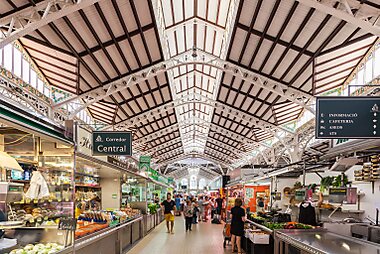
Central Market is a landmark Art Nouveau iron-and-glass market hall, with stalls selling fresh seafood, produce, and jamón.
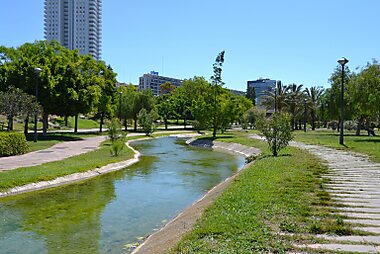
Turia Gardens follows the old Turia riverbed for nine kilometers through the city, with gardens, sports courts, and cycling paths where the river used to flow.
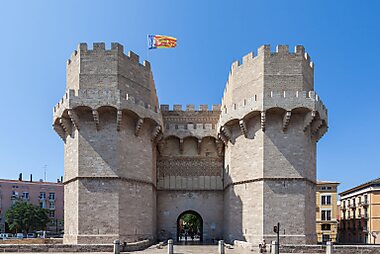
Serranos Towers is a fortified Gothic gate from 1392, one of the last surviving pieces of the medieval city wall.
Featured Lists


Historic Churches of Valencia
This collection highlights the diverse religious architecture found across Valencia and its surrounding municipalities, such as Moncada and Foios. The list spans several centuries, from the 13th-century Gothic foundations of San Esteban to the grand 18th-century Baroque 'Cathedral of the Huerta' in Foios. These parishes and hermitages showcase traditional Valencian features, including blue-tiled domes, Neoclassical facades, and deep connections to local maritime and agricultural traditions.
9 places
Historic Squares
Valencia’s historic squares serve as architectural landmarks and community hubs. This collection highlights the city's evolution, from the monumental Porta de la Mar—a 1940s replica of an 18th-century gate—to the Renaissance courtyard of the Patriarch. Explore traditional neighborhood centers like the historic core of Campanar and the pedestrian-friendly plazas of surrounding districts, where religious architecture and local commerce define the urban landscape. These sites offer a mix of high-end shopping, monumental gates, and quiet, church-adjacent spaces.
7 places
Parks and Gardens
Valencia's green landscape ranges from the historic Jardins de la Glorieta, famous for its ancient ficus trees, to the futuristic L'Umbracle sculpture garden within the City of Arts and Sciences. The Turia Gardens host the massive Gulliver climbing structure, while the Parc de Capçalera offers a large lake with boat rentals at the riverbed's western edge. Visitors can also explore the 19th-century neoclassical grounds of Jardins d’Aiora and the biodiversity of Parc de la Rambleta, which features a restored Mediterranean wetland ecosystem.
8 places
Audio Guides – Valencia
Explore on foot with a self-guided audio tour that narrates each stop as you reach it.


Hear Valencia's audio tours
1 walk in Audio Guides by Tripomatic


What to experience
- Watch the mascletà, a daytime fireworks show built around rhythm and noise rather than color, set off daily in Plaza del Ayuntamiento during Las Fallas.
- Rent a bike and ride the length of Turia Gardens, the old riverbed park, from the science complex to the beach.
- Cross l'Albufera by traditional wooden boat at sunset, then walk back through the rice paddies to the fishing village of El Palmar.
- Join the evening paseo along the Malvarrosa beach promenade, especially on Sunday evenings when it fills with local families.
Tours & Activities
Valencia — Map

 Open the interactive map
 Day trips
Valencia sits close to castle towns, wine country, and a dramatic stretch of coastline, so a rental car or the regional train network opens up easy day trips.
- Sagunto — about 35 minutes by train. A hilltop castle with Roman, Moorish, and medieval layers, plus a restored Roman theater still used for summer performances.
- Xàtiva — about 1 hour by train. A walled hilltop castle above a handsome old town, with sweeping views over the surrounding orchards.
- Requena–Utiel wine country — about 1 hour by car (the direct train takes over two hours). Known for bold reds made from the native Bobal grape, with cellar visits and tastings among vineyards on a high plateau.
- Peñíscola — about 1.5–2 hours by car or bus. A walled old town on a rocky peninsula, crowned by a 13th-century castle with Mediterranean views on three sides.
Where to explore
Just south of the city, l'Albufera is a shallow freshwater lagoon ringed by rice paddies, and the birthplace of paella. Boats leave from the fishing village of El Palmar for short trips across the water, and the surrounding wetlands are one of the best bird-watching sites near the city.
Getting there
- By air: Valencia Airport (VLC) is 8 km west of the center. Metro line 3 or 5 reaches the old town in about 25 minutes (around €4.90); a taxi takes about 20 minutes.
- By train: High-speed AVE trains connect Madrid (around 1 h 40) and reach Barcelona in around 3 hours; book via Renfe. Regional trains link the wider region, including Alicante and Castellón.
- By bus: Long-distance coaches arrive at the Estación de Autobuses, with routes across Spain and into France.
Getting around
- Public transit: Metrovalencia runs the metro and tram network; buy single tickets or a rechargeable Mobilis card from station machines. EMT city buses accept contactless bank card or phone payment directly on board. See EMT Valencia or Metrovalencia for routes and maps.
- Bicycle: Valencia's flat terrain and protected bike lanes citywide make cycling practical; the Valenbisi bike-share system covers short trips.
- On foot: The old town, Ruzafa, and the riverbed park are all walkable; the beach and City of Arts and Sciences are farther out and easier by tram or bike.
Driving
- Is a car worth it?: Skip it in the city. The old town is compact and largely pedestrianized, and parking is scarce. A car is useful mainly for day trips to Sagunto, Xàtiva, or wine country.
- Parking: Use a signposted underground car park near the center rather than the street; much of the old town is a restricted zone for residents only.
- Restrictions: Valencia's low-emission zone covers most of the city center. Check your rental's emissions sticker (distintivo ambiental) before driving in, since older diesel and petrol cars can be barred on high-pollution days.
Food & drink
Paella originated in the rice paddies around Valencia. The authentic version uses chicken, rabbit, and green beans, not the seafood mix served elsewhere. For a classic sit-down paella, look to the restaurants lining La Malvarrosa Beach, many of which have cooked it over wood fires for generations.
For something to drink, try horchata de chufa, a cold, sweet tiger-nut milk unique to the region, served with a fartón pastry for dipping at horchaterías across the old town. Colon Market is a good spot to combine a meal with modernist architecture, its stalls set inside a 1916 iron-and-glass market hall.
Safety & health
Valencia is one of Spain's safer big cities for tourists, but stay alert for pickpocketing on crowded buses, at Central Market, and during Las Fallas, when the streets are packed. Keep bags zipped and in sight at the beach, and do not leave valuables visible in parked cars near tourist sites.
History
The Romans founded the city as Valentia in 138 BC. It then passed through Visigothic, Moorish, and Christian hands before King James I of Aragon captured it in 1238. Under Christian rule Valencia became one of the wealthiest trading cities in the Mediterranean; Silk Exchange was built in the 15th century as a monument to that silk-trading wealth, and construction on Valencia Cathedral spans the centuries in between.
Serranos Towers once guarded the city's northern approach and is one of the few gates to survive the demolition of the medieval walls in the 19th century. The most visible turning point in modern Valencia came in 1957, when the Turia river flooded the city center; engineers rerouted it around the city and turned the dry riverbed into the park that now runs through the center as Turia Gardens.
Country facts
Quick practical facts for Spain at a glance:
- Currency
- Euro EUR € · Card payments · Widely accepted
- Emergency numbers
- 112
- Electricity
- 230 V · 50 HzType C / Type F
- Languages
- Spanish
- Tap water
- Safe to drink
- Driving side
- Right
- Calling code
- +34


Valencia – Plan Your Days
Turn the places from this guide into a real itinerary, with smart routing, time estimates, and everything you need for a perfect trip.




