



Spain
Spain covers most of the Iberian Peninsula and reaches south to Africa across the Strait of Gibraltar. Seventeen autonomous communities give the country its defining characteristic: regions that feel like distinct countries, with their own languages, cuisines, and identities. Catalonia, Andalusia, the Basque Country, and Galicia are each dramatically different from the Castilian heartland.
The country suits almost every kind of traveler. City visitors find major art collections in Madrid and the architecture of Antoni Gaudí in Barcelona. History seekers explore Moorish palaces in Granada and medieval streets in Toledo. Beach travelers head south to the Costa del Sol or out to Mallorca and the Canary Islands.



Spain – Planning a Trip?
Build your day-by-day itinerary in the Tripomatic app.


Money & payments
Spain uses the euro. Cash is still expected at smaller bars, rural guesthouses, and outdoor markets; ATMs are easy to find in cities and larger towns but rare in small villages.
Featured Lists


Tours & Activities
Spain — Map

Tipping
Tipping is not obligatory but is appreciated for good service.
5–10% for good service; not expected
leaving small change is a friendly gesture
round up to the nearest euro
€1–2 per bag for porters
€5–10 per person for a full-day tour
- Restaurants: rounding up or leaving 5–10% is normal for sit-down meals.
- Bars: not expected; leaving small change is a friendly gesture.
- Taxis: rounding up to the nearest euro is standard.
- Hotel porters: €1–2 per bag is customary.
- Tour guides: €5–10 per person for a full-day tour.
Electricity
Spain uses Type C and F plugs at 230 V / 50 Hz — standard European outlets; most modern chargers work without an adapter.
Language
Spanish (Castilian) is the national official language. Catalan is co-official in Catalonia, Basque in the Basque Country, and Galician in Galicia — locals in those regions often use their regional language in daily life.
English is widely spoken at hotels, tourist sites, and restaurants in major cities and coastal resorts, and is less common away from tourist areas. Basic Spanish phrases are appreciated everywhere.
Staying connected
Spain falls under EU free-roaming rules, so EU/EEA SIM cards work at no extra charge. Visitors from outside the EU can buy prepaid SIMs from Movistar, Orange, Vodafone, or Yoigo at airports and phone shops. No internet restrictions apply.
Safety & emergencies
Health
Tap water is safe to drink throughout Spain, though some areas (particularly in Andalusia) have a noticeable chlorine taste; bottled water is cheap and widely available. Pharmacies (farmacias) are marked with a green cross, are common in cities and towns, and many stay open until 10pm. A rotating after-hours pharmacy (farmacia de guardia) is always on call. No special vaccinations are required for most travelers.
Visas & entry
Spain is a Schengen member. EU and EEA citizens enter freely with a national ID card or passport. Citizens of the US, Canada, Australia, Japan, and most Latin American countries may stay up to 90 days in any 180-day period without a visa; from 2026, an ETIAS pre-travel authorisation is also required for non-EU/EEA visitors. Citizens of other countries should check Spain's official immigration authority for their specific requirements.
Visa and entry requirements change frequently. Verify current requirements with the official immigration authority or your country's embassy before travel.
Etiquette
- Lunch is the main meal of the day, typically served from 2pm to 4pm. Dinner is rarely eaten before 9pm.
- Many shops close on Sundays. Smaller towns may also close midday from around 2pm to 5pm.
- August is peak holiday season for Spaniards — some local businesses close for the full month.
- Dress modestly in churches and cathedrals. Bare shoulders and shorts above the knee may not be permitted.
- Between friends, the standard greeting is two air-kisses (dos besos). Handshakes are common in formal settings.
- Bargaining is not customary in shops or markets.
Holidays & opening hours
Public holidays close most banks, government offices, and many shops. Tourist-facing businesses usually stay open, but hours may be reduced.
Many shops close on Sundays. Smaller businesses outside major cities often keep a midday break. August sees reduced hours or full closures as locals take their annual leave.
Getting around
- By train: Spain's high-speed AVE network connects Madrid, Barcelona, Seville, and Valencia — Madrid to Barcelona in around two and a half hours. Book through Renfe. Regional Cercanías trains cover city-to-suburb routes.
- By bus: Long-distance coaches (ALSA, Avanza) connect towns and cities that trains don't reach and are often the cheapest option.
- By air: Domestic flights make sense for the Canary or Balearic Islands, or long mainland distances where AVE doesn't run. Vueling, Iberia, and Ryanair dominate domestic routes.
Driving
- Tolls: Main autopistas (toll motorways) charge at point-to-point booths — there is no national vignette. The parallel autovías are toll-free. Budget €10–30 for a typical cross-country drive on the toll network.
- Alcohol limit: 0.5 g/L; stricter at 0.3 g/L for drivers with less than two years of experience.
- Required equipment: Reflective vests (one per occupant) are mandatory. Since January 2026, Spain-registered vehicles must carry a connected V16 emergency beacon; visitors driving a non-Spanish-registered vehicle may still use two traditional warning triangles. Carry spare glasses if you need them to drive.
- Low-emission zones: Madrid and Barcelona have city-centre Zonas de Bajas Emisiones that restrict older or more polluting vehicles. Check local restrictions before driving in.
- Parking: Blue zones (zona azul) are paid by meter or app; green zones are resident-priority. Underground car parks are available in most city centres.
- Fuel: Petrol is labeled Gasolina 95 or Gasolina 98; diesel is Gasóleo. Most stations are self-service with card payment at the pump.
- Electric vehicles: Charging is well covered on major motorways and in cities; coverage is patchier in rural areas. Main providers include Iberdrola, Repsol Waylet, and Endesa X.
Food & drink
Spanish food culture centers on fresh, seasonal ingredients and the social act of eating together. Breakfast is light — coffee with a tostada (toasted bread rubbed with tomato and olive oil) or churros dipped in thick hot chocolate. Lunch (2–4pm) is the main meal, often three courses at a set-price menú del día. Dinner, after 9pm, is typically lighter.
The tapa — a small portion served alongside a drink — is central to Spanish eating. Essential dishes include jamón ibérico (cured acorn-fed pork), tortilla española (potato and egg omelette), gazpacho (cold tomato soup from Andalusia), and patatas bravas (fried potatoes with spicy sauce). In the Basque Country, pintxos (small snacks on bread) replace tapas; in Valencia, paella is the local specialty — the traditional Valenciana version uses chicken, rabbit, and beans rather than seafood, and is best eaten at lunchtime. For drinks: Rioja and Ribera del Duero produce the best-known red wines; Cava is the local sparkling wine from Catalonia. Beer is usually ordered as a small caña (draught).
Where to explore
Spain's destinations range from medieval hilltop cities to modern coastal capitals, each with a distinct character.
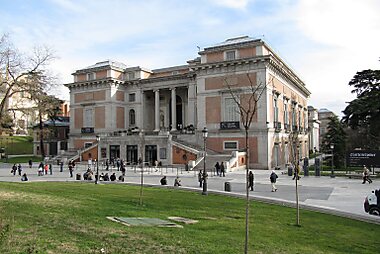
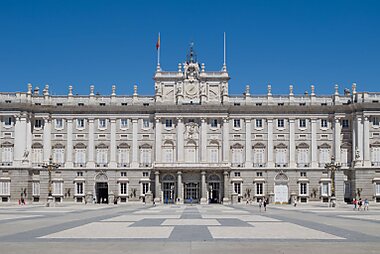
Madrid is the capital and largest city, home to the "Golden Triangle" of art museums — the Prado, Thyssen-Bornemisza, and Reina Sofía — and the gateway to nearby Toledo, a perfectly preserved medieval city perched above the Tagus River.
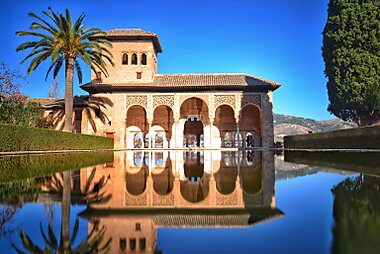
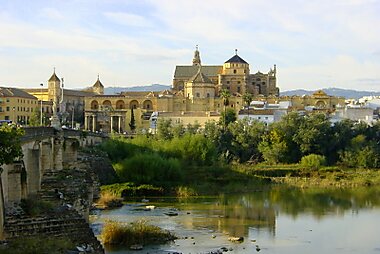
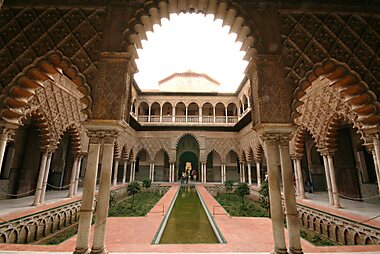
Barcelona draws visitors for the Gaudí architecture of Sagrada Família and Park Güell, and for one of Europe's most celebrated food scenes. To the south, Andalusia holds the country's greatest concentration of Moorish heritage: Seville has Alcázar of Seville, Seville Cathedral, and the birthplace of flamenco; Granada is home to Alhambra, Spain's most visited monument; and Córdoba preserves the extraordinary Mosque-Cathedral of Córdoba.
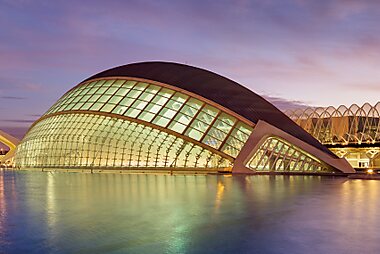
Valencia pairs a well-preserved historic quarter with the futuristic City of Arts and Sciences and easy access to the Mediterranean coast. Bilbao reinvented its industrial past around the Guggenheim Museum Bilbao and is the gateway to the dramatic Basque coast. For beaches and island scenery, Mallorca offers clear Mediterranean water and a well-preserved old town in Palma.
Spain – Plan Your Trip
Pick the places you want to see and Tripomatic turns them into a day-by-day route, with smart routing, time estimates, and everything you need for a perfect trip.




