



Vilnius City Municipality
Vilnius is Lithuania's capital, a compact Baroque city built around a UNESCO-listed Old Town of church towers, courtyards, and narrow cobbled lanes. It grew wealthy as the capital of the Grand Duchy of Lithuania, once one of Europe's largest states, and that history still shows in its skyline of red rooftops and church spires. The city rewards slow walking: a few days are enough to cover the historic core, and the compact center makes it easy to combine sightseeing with quiet cafés and green riverside parks.
Vilnius suits travelers who want history and architecture without the crowds of larger capitals. Grand Duke Gediminas, who founded the city in the 14th century, and the poet Czesław Miłosz, who studied at Vilnius University here, are both closely tied to the city's story.

Vilnius City Municipality – Planning a Trip?
Build your day-by-day itinerary in the Tripomatic app.


When to visit
Spring and autumn are mild, summer is warm with long daylight hours, and winter is cold with snow and short days. The city's biggest annual draw is the Christmas season, when Cathedral Square fills with a large fir tree, market stalls, and lights from late November through early January.
Best time to visit: August
July and August bring the warmest, driest weather and the longest evenings for outdoor cafés. January and February are the coldest months, with highs often below freezing.
Top sights
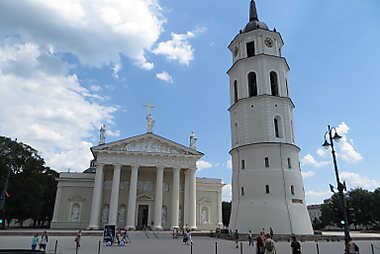
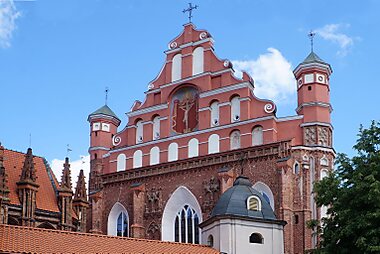
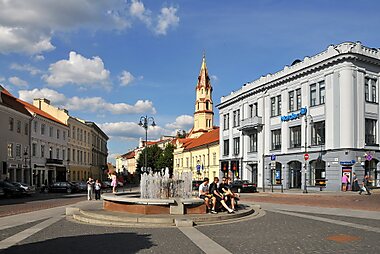
Vilnius Cathedral anchors Cathedral Square and is Lithuania's main Catholic church, rebuilt in its current neoclassical form in the 18th century after a long line of earlier churches on the same site.
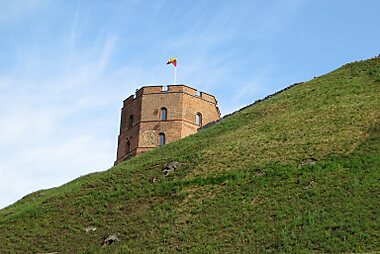
Next to it, Gediminas' Tower is the last surviving part of the medieval Upper Castle and the city's clearest symbol, with a small museum and a viewing platform over the Old Town's rooftops.
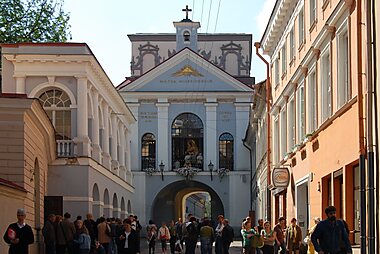
Gate of Dawn is the only surviving gate of the old city wall and holds a revered icon of the Virgin Mary, drawing pilgrims from across the region.
St. Anne's Church is a small Gothic brick church so admired that, according to local legend, Napoleon wanted to carry it back to Paris stone by stone.
Vilnius University traces its roots to 1579, making it one of the oldest universities in Eastern Europe; its courtyards and the Church of St. Johns are open to visitors.
Vilnius Town Hall anchors the Old Town's main square and now hosts art exhibitions and city events.
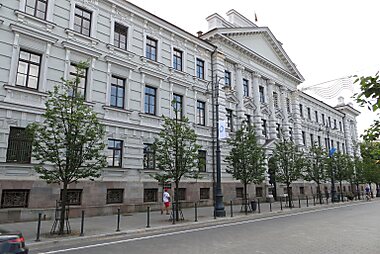
Museum of Occupations and Freedom Fights, housed in the former KGB headquarters, documents Soviet-era repression and deportations, with cells and an execution room preserved as they were found.
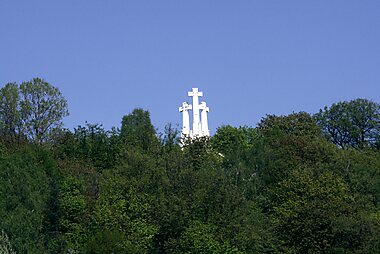
For a wider view, climb to The Hill of the Three Crosses, a hilltop monument rebuilt after Soviet authorities demolished the originals in the 1950s.
Featured Lists


Vilnius Historical Sites
This collection traces the evolution of Vilnius from prehistoric settlements to the modern era. It features defensive Iron Age hillforts like Pūčkoriai and Staviškės, alongside the 16th-century ruins of Rokantiškės Castle. The list highlights significant necropolises, including the 18th-century Rasos Cemetery and the historic Orthodox grounds at Liepkalnis. It also includes somber sites of remembrance, such as the Paneriai memorial and the Našlaičių cemetery, offering a comprehensive look at the city's archaeological and cultural heritage.
18 places
What to experience
Vilnius offers a few rituals that go beyond sightseeing:
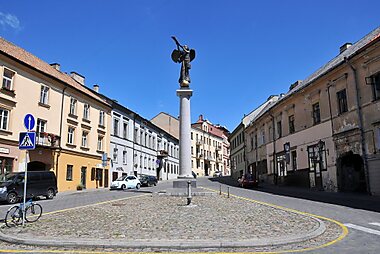
- Read the tongue-in-cheek Constitution of the self-declared Republic of Užupis, posted on a wall in dozens of languages near Angel of Užupis.
- Take a hot air balloon ride over the Old Town's red rooftops on a calm summer evening — a well-loved local tradition, since Vilnius permits balloon flights directly over its historic center.
- Have dinner in the slowly revolving restaurant at the top of Vilnius TV Tower for a 360-degree view of the city while you eat.
- Browse the Christmas market stalls and skate near the tree in Cathedral Square on a winter evening.
Tours & Activities
Vilnius City Municipality — Map

 Open the interactive map
 Day trips
Several worthwhile day trips lie within reach of Vilnius, from a sculpture park in the forest to a lakeside castle and a UNESCO hillfort site.
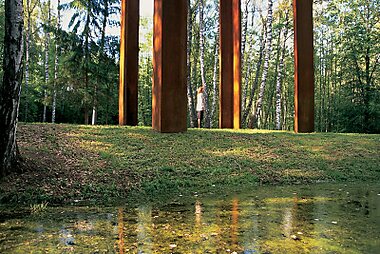
- Europos Parkas (~25 min by car): An open-air museum of large-scale contemporary sculpture spread across 50 hectares of forest.
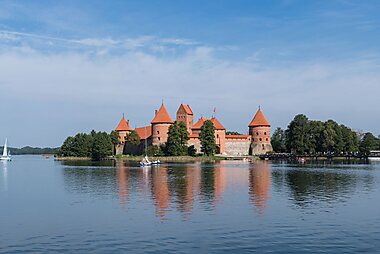
- Trakai (~35 min by car or train): The lakeside Trakai Island Castle sits on an island in Lake Galvė, reached by a wooden footbridge. Trakai is also home to the Karaim community, a Turkic minority settled here in the 14th century, known for a distinct savory pastry called kibinai.
- Kernavė Archaeological Site (~45 min by car): A UNESCO World Heritage site with five wooded hillforts marking the site of Lithuania's medieval capital before Vilnius.
- Kaunas (~1 hour 10 min by express train): Lithuania's second-largest city has a well-preserved interwar center from when it briefly served as the country's capital, plus the somber Ninth Fort, a former prison and mass-execution site now a museum.
- Aukštaitija National Park (~1.5 hours by car): Lithuania's oldest national park, with more than a hundred lakes, dense pine forest, and traditional wooden villages — good for hiking or canoeing.
Getting there
- By air: Vilnius Airport (VNO) is the country's main international gateway, about 6 km south of the center. Bus 88 takes about 20 minutes downtown; a dedicated airport train (railbus) is faster, around 7 minutes to the main railway station. A taxi costs roughly 12–18 €.
- By train: Vilnius railway station has direct connections to Kaunas (about 1 hour 10 minutes by express train) and international routes toward Poland and Latvia; high-speed links to Western Europe are still limited.
- By bus: The central bus station, next to the railway station, runs long-distance coaches across the Baltics and to major Western European cities.
Getting around
- Public transit: Buses and trolleybuses cover the city; buy a ticket by tapping a contactless bank card or phone directly on the vehicle's validator, or use the mobile app. Vilnius Public Transport
- Taxi / ride-hailing: Bolt and Uber both operate widely and are usually cheaper than hailing a street taxi.
- On foot / cycling: The Old Town is flat and compact enough to explore entirely on foot; a city bike-share network covers the wider center, though cobblestones make cycling less comfortable there.
Driving
- Is a car worth it?: Skip a car for the Old Town — narrow streets, limited parking, and everything is walkable. A car is useful only if you're heading out to Trakai, Kernavė, or the national parks.
- Parking: Metered street parking (via the m.parking app or SMS) covers the center; multi-story car parks near the Old Town are the easiest option for a full day.
- Restrictions: Cathedral Square and much of the Old Town's core is pedestrian-only or heavily traffic-calmed.
Food & drink
Vilnius cooking leans hearty: expect potato dishes, rye bread, and dumplings alongside a growing wave of modern Lithuanian restaurants reinterpreting the same ingredients. Local specialties worth seeking out include cepelinai (stuffed potato dumplings) and cold beet soup served chilled in summer.
For a concentrated area to eat, head to the restaurant terraces along Vokiečių gatvė in the Old Town, or the stalls at Halės Turgus market hall near the train station for cheaper, faster options. Tipping follows the country norm — round up or leave about 10% for good service.
Safety & health
Vilnius is one of the safer European capitals for visitors, with violent crime against tourists rare. The main risks are pickpocketing on public transit and around crowded tourist spots in the Old Town, and overpriced taxis hailed on the street rather than booked through an app. Tap water is safe to drink.
History
Vilnius grew from a hillfort founded, according to legend, after Grand Duke Gediminas dreamed of an iron wolf howling on a hill and was told by a pagan priest to build a city there — the spot is now marked by Gediminas' Tower. The city became capital of the Grand Duchy of Lithuania, which at its height stretched from the Baltic to the Black Sea, and Vilnius University grew into a major center of learning after its founding in 1579.
Vilnius had one of Europe's largest Jewish communities before the Second World War, when it was known as the "Jerusalem of the North." Nearly all of that community was murdered during the Nazi occupation; Museum of Occupations and Freedom Fights documents the later decades of Soviet repression that followed. The city returned to independent Lithuania only in 1990, after five decades of Soviet rule.
Country facts
Quick practical facts for Lithuania at a glance:
- Currency
- Euro EUR € · Card payments · Widely accepted
- Emergency numbers
- 112 Police · Ambulance · Fire brigade
- Electricity
- 230 V · 50 HzType C / Type F
- Languages
- Lithuanian
- Tap water
- Safe to drink
- Driving side
- Right
- Calling code
- +370


Vilnius City Municipality – Plan Your Days
Turn the places from this guide into a real itinerary, with smart routing, time estimates, and everything you need for a perfect trip.

