


Kaunas
Kaunas is Lithuania's second-largest city, built where the Nemunas and Neris rivers meet. For two decades between the world wars it served as the country's temporary capital, and the architects who worked here left one of Europe's largest collections of Art Deco and early modernist buildings, recognised by UNESCO in 2023.
Today Kaunas has the relaxed pace of a big university town rather than a capital. Vytautas Magnus University fills the streets around Laisvės alėja with students, and the compact Old Town sits an easy walk from the modernist New Town. The painter and composer M. K. Čiurlionis is closely tied to the city; its main art museum carries his name and holds the largest collection of his work. Kaunas suits a traveler who wants substantial history and architecture without the crowds of Vilnius.

Kaunas – Planning a Trip?
Build your day-by-day itinerary in the Tripomatic app.


When to visit
Spring and autumn are mild, summer is warm with long daylight hours, and winter is cold with regular snow. Plan around Kaunas Jazz, one of Eastern Europe's oldest jazz festivals, held every April with concerts across the city's historic venues.
Best time to visit: August
Summer brings the driest, warmest days for walking the Old Town; a December visit adds a Christmas market to the mix.
Top sights
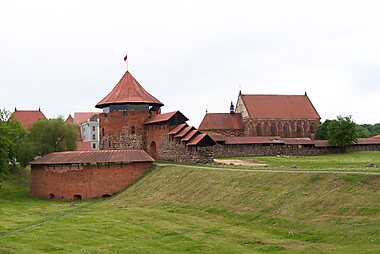
Kaunas Castle is the oldest stone castle in Lithuania and marks the point where the city's story begins; only one round tower and a stretch of wall survive from the original medieval fortress.
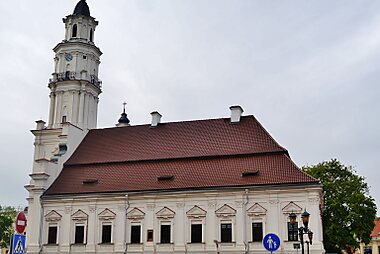
Walk from the castle into the Old Town and Town Hall of Kaunas anchors the main square with its long white facade, nicknamed the "White Swan." Just off the square, Kaunas Cathedral Basilica is Lithuania's largest Gothic church, rebuilt many times over six centuries.
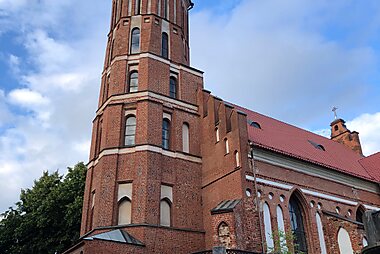
Nearby, Vytautas Magnus Church is one of the oldest brick buildings in the country, founded by Grand Duke Vytautas the Great around 1400.
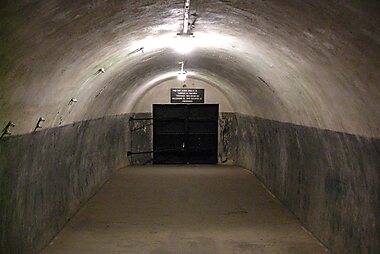
For a deeper look at the 20th century, Vytautas the Great War Museum covers Lithuanian military history from medieval times through both world wars, and Ninth Fort confronts the darkest chapter: a former Tsarist fort turned Nazi and Soviet execution site, now a memorial and museum.
Art lovers should visit M. K. Čiurlionis National Art Museum, home to the country's largest collection of work by the painter and composer M. K. Čiurlionis.
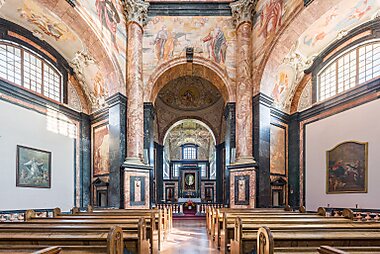
A short drive from the centre, Pažaislis Monastery is one of the largest Baroque monastery complexes in the Baltics, still home to a working convent.
Featured Lists


What to experience
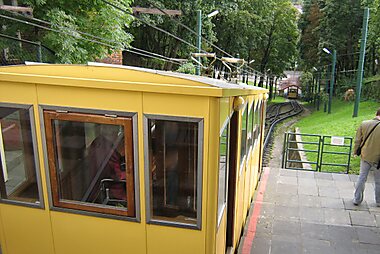
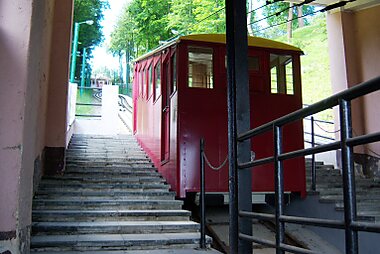
- Ride both of Kaunas's historic funiculars — Žaliakalnis Funicular and Aleksotas Funicular — built in the 1930s and among the oldest still running in Europe.
- Catch a game at Žalgirio Arena, home of Žalgiris Kaunas. Basketball is Lithuania's national sport, and a match here is loud and full of local pride.
- Walk or cycle out to Nemuno ir Neries santaka, where the Nemunas and Neris rivers meet, and watch the two currents run side by side before mixing.
- On a warm day, join locals at one of the sandy river beaches along the Nemunas for a swim.
Tours & Activities
Kaunas — Map

 Open the interactive map
 Day trips
Kaunas sits at the heart of Lithuania, so several worthwhile trips are within easy reach.
- Rumšiškės Open-Air Museum — ≈25 min by car or bus. Lithuania's largest open-air museum, with farmsteads and windmills moved here from across the country.
- Nemunas Loops Regional Park — ≈30 min by car. Viewpoints over dramatic bends in the Nemunas River, best at sunset.
- Birštonas — ≈45 min by car or bus. A small spa town built around mineral-water springs, with walking paths along the river.
- Vilnius — ≈1 h by train. Lithuania's capital, with its own UNESCO-listed Old Town.
- Trakai — ≈1.5–2 h by car or bus, often via Vilnius. A red-brick island castle on Lake Galvė, one of Lithuania's most photographed sights.
Where to explore
Birštonas is the closest resort town, known for its mineral-water spas and a wide bend in the Nemunas River. It makes an easy half-day trip or a relaxed overnight stay outside the city.
Getting there
- By air: Kaunas Airport (KUN) is Lithuania's main budget-airline hub, about 14 km north of the centre. Bus 29 reaches the centre and railway station in around 30–40 minutes.
- By train: Kaunas railway station has frequent trains to Vilnius (around 1 hour).
- By bus: the Kaunas bus station has long-distance coaches to Vilnius, Klaipėda on the coast, Riga, and Warsaw — the bus is faster than the train for reaching the coast.
Getting around
- Public transit: an extensive bus and trolleybus network covers the city. Tap a contactless bank card or phone directly on the validator when boarding, or buy a ticket through the Žiogas app.
- Taxi / ride-hailing: Bolt operates throughout the city.
- On foot / cycling: the Old Town and Freedom Avenue corridor are flat and easy to cover on foot; the hillside Žaliakalnis district is best reached by one of the city's two historic funiculars rather than on foot.
Driving
- Is a car worth it?: skip it for the city centre — the Old Town and Freedom Avenue are easily walkable — but a car is useful for reaching Pažaislis, Rumšiškės, or the Nemunas Loops in a single day.
- Parking: the centre has paid parking zones, payable by SMS or a mobile app; multi-storey car parks sit just outside the pedestrian core.
Food & drink
Kaunas's café and restaurant scene clusters along Laisvės alėja and around Rotušės aikštė in the Old Town, where outdoor terraces fill up on warm evenings. This is the easiest place to find a good meal without seeking out a specific address.
Safety & health
Kaunas is a safe city for travelers, with low rates of violent crime. Take the usual precautions against pickpocketing in crowded spots like the bus and train stations and around Laisvės alėja on weekend nights.
History
Grand Duke Vytautas the Great founded Vytautas Magnus Church around 1400 in thanks for surviving the disastrous Battle of the Vorskla River, and the church remains one of the oldest brick buildings in Lithuania.
Kaunas's defining chapter came between the world wars, when Vilnius fell under Polish control and Kaunas served as Lithuania's temporary capital from 1920 to 1939. The city gained embassies, government buildings, and hundreds of new structures in the Art Deco and early modernist styles that still line Laisvės alėja and the streets around it — inscribed on the UNESCO World Heritage List in 2023 as "Modernist Kaunas: Architecture of Optimism, 1919–1939."
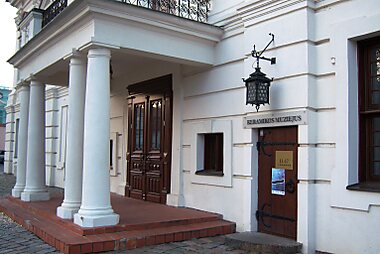
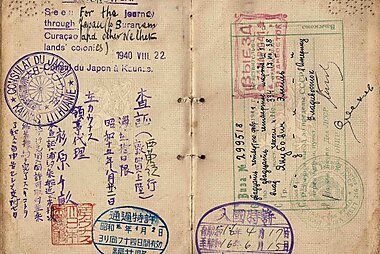
That same period produced one of the era's great acts of humanity: in 1940, Japanese vice-consul Chiune Sugihara worked from House of Chiune Sugihara to issue thousands of transit visas to Jewish refugees fleeing the Nazis, defying orders from Tokyo.
The following years were far darker. Ninth Fort, originally built as a Tsarist-era fortress, became a mass execution site under Nazi occupation and later a Soviet prison — a history the museum there confronts directly.
Country facts
Quick practical facts for Lithuania at a glance:
- Currency
- Euro EUR € · Card payments · Widely accepted
- Emergency numbers
- 112 Police · Ambulance · Fire brigade
- Electricity
- 230 V · 50 HzType C / Type F
- Languages
- Lithuanian
- Tap water
- Safe to drink
- Driving side
- Right
- Calling code
- +370


Kaunas – Plan Your Days
Turn the places from this guide into a real itinerary, with smart routing, time estimates, and everything you need for a perfect trip.