


Okinawa
Okinawa is Japan's subtropical island, far south of the main islands. It has beaches, coral reefs and a warm climate. It also has its own culture from the Ryukyu Kingdom, which ruled here until 1879. Food, music and festivals differ from mainland Japan.
The island suits beach days, snorkelling, castle ruins and coastal drives. Most visitors stay in Naha, the capital. The north is wilder. The Yanbaru forest there is a UNESCO natural World Heritage Site. Plan at least four nights to see the south and the north.

Okinawa – ¿Estás planeando un viaje?
Crea tu itinerario día a día en la app de Tripomatic.


Cuándo viajar
March to April and October to November are the best months for sightseeing. Winter is mild, but sea swimming is most comfortable from April to October. The rainy season runs from about mid-May to late June. Typhoons are most likely from July to September, and storms can disrupt travel.
The biggest event is the Naha Giant Tug-of-War. It takes place on a Sunday in October on Route 58 in central Naha. It is free to watch.
Lugares destacados
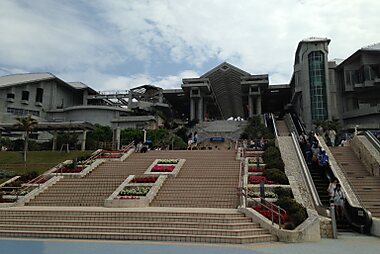

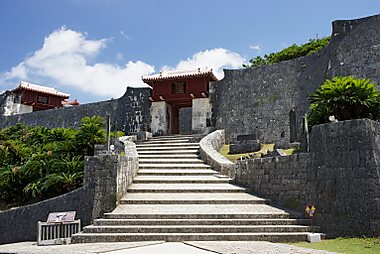
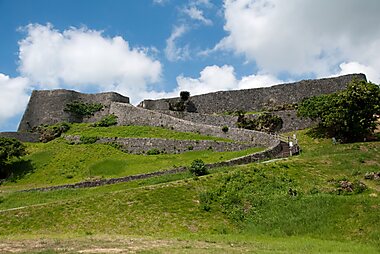
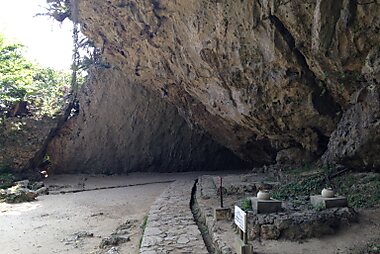
- Shuri Castle was the palace of the Ryukyu kings. The main hall was rebuilt after a 2019 fire and opens to visitors from 23 November 2026. Entry to the hall interior needs an advance timed reservation.
- Okinawa Churaumi Aquarium has the huge Kuroshio tank. It sits inside the seaside Ocean Expo Park, which has free parking.
- Nakijin Castle is a hilltop castle ruin. It was the capital of the Hokuzan kingdom and is a World Heritage Site. It is about 20 minutes by car from the aquarium.
- Sefa-utaki is a sacred forest site of the Ryukyuan religion. It faces Kudaka Island and is part of the same World Heritage listing. Access beyond the entrance is limited from 2 November 2026 to 5 January 2027 (tentative) because of drainage work.
- Katsuren Castle is a World Heritage castle ruin in Uruma, on the east side of the island.
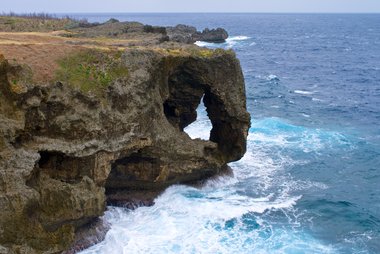
- Cape Manzamo is a coral cliff with a rock shaped like an elephant trunk. It is a popular spot at sunset.
- Cape Hedo is the northern tip of the island. On a clear day you can see Yoron Island on the horizon.
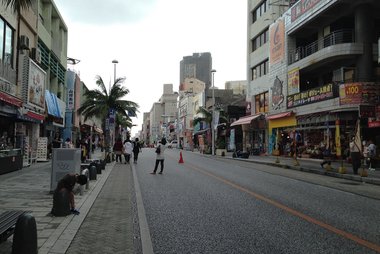
- Kokusai Dori is the main shopping and dining street of Naha. It is about 1.6 km long and is closed to cars for part of Sunday.
Listas destacadas


Qué experimentar
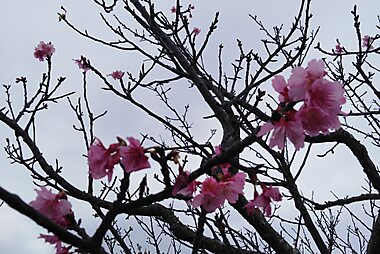
- Cherry blossoms in January: Hikan cherry trees flower here from January, earlier than anywhere else in Japan. The Nakijin Gusuku Cherry Blossom Festival runs from late January to early February, with night lighting at Nakijin Castle.
- Whale watching: Humpback whales visit the Kerama Islands from January to March. Boat tours leave from Naha.
- Eisa dance: Groups of drummers and dancers perform in late summer. The Okinawa Zento Eisa Festival gathers groups from across the island in early September.
- Summer fireworks: Ocean Expo Park holds a fireworks festival in July.
- Shuri Castle Festival: A procession in costume of the Ryukyu royal court is held in autumn.
Tours y actividades
Okinawa — Mapa

Excursiones de un día
Three islands are worth a day out. Check ferry times before you go.
- Kudaka Island: A sacred island off the south-east coast. The ferry from Azama Port takes 15 minutes on the high-speed boat and 25 minutes on the regular ferry. You can combine it with a visit to Sefa-utaki.
- Kerama Islands: Clear water for snorkelling and diving. Boats leave from Tomari Port in Naha. The high-speed ferry to Zamami takes about 50 minutes, and the regular ferry about 2 hours. Humpback whales visit from January to March.
- Kouri Island: A small island joined to the main island by a free bridge, 1,960 m long, which opened in 2005. It lies near Nakijin Castle in the north, so it fits well on a day in the north.
Qué explorar
- Naha is the capital and the base for most trips.
- Miyakojima, Ishigaki Island and Sakishima Islands are island destinations farther to the south-west, for a longer trip.
Cómo llegar
- By air: Naha Airport (OKA) is the main gateway. A nonstop flight from Tokyo Haneda takes about 2 hours 25 minutes to 2 hours 45 minutes. The monorail station is reached from the 2nd floor of the domestic terminal. Monorail from the airport to Kenchomae takes 13 minutes, to Makishi 16 minutes and to Shuri 27 minutes. Official site: Naha Airport.
- To the north: An express bus from the airport to the Churaumi Aquarium takes about 3 hours. By car it takes about 2 hours via the Okinawa Expressway.
Cómo desplazarse
- Monorail: The Yui Rail line has 19 stations and runs from Naha Airport to Shuri in about 27 minutes and to the terminus, Tedako-Uranishi, in about 37 minutes. IC cards such as OKICA and Suica work on it. Official site: Yui Rail.
- Buses: Four companies run the main routes. Board at the front door. On distance-based routes, take a numbered ticket when you board and pay when you leave. OKICA cards work on local buses. For cash, carry coins and 1,000-yen notes. Bills of 5,000 and 10,000 yen are not accepted.
- Outside Naha: Buses are rare. The Yanbaru Express bus runs direct to Nakijin Castle. The direct bus to Sefa-utaki is very infrequent. A rental car is easier for the north and the east.
- Taxis: Plentiful in urban areas. Sightseeing taxis offer guided tours.
- On foot: Central Naha is compact. Outside it, sights are far apart.
Tourism board: Visit Okinawa Japan.
Conducción
- Licence: Japan accepts only an International Driving Permit under the 1949 Geneva Convention. A 1968 Vienna Convention permit is not valid. As an alternative to the permit, licences from Switzerland, Germany, France, Belgium, Monaco and Taiwan can be used with an official Japanese translation, which JAF issues online only. You can drive for up to one year after entering Japan.
- Is a car worth it? Yes for the north, the east coast and the castle sites. You do not need one if you stay in Naha. Reserve a rental car in advance.
- Traffic: Cars drive on the left.
- Tolls: The Okinawa Expressway runs from Naha to Nago. The toll is about 1,000 yen one way. Ask the rental company for an ETC card.
- Parking: Free at Ocean Expo Park.
Gastronomía
Okinawan food is different from the mainland. Try Okinawa soba, a wheat noodle soup often topped with pork ribs. Goya champuru is a stir-fry with bitter melon. Rafute is pork belly stewed in soy sauce. Taco rice came from American influence after World War II. Awamori is a local rice spirit.
For where to eat, go to areas rather than single restaurants. In Naha, go to the Makishi Public Market near Kokusai Dori. You can buy fish on the first floor and have it cooked in a second-floor restaurant for a small fee. Food stalls in the alleys around it sell tempura and goya juice.
Seguridad y salud
Take normal precautions and keep valuables in sight. The main risks here are natural.
- Box jellyfish: Peak season is June to September. Swim inside the netted area of a beach and cover your skin. If you are stung, leave the water, pour vinegar on the sting and see a doctor. Do not rinse it with fresh water.
- Habu snakes: They are venomous and live mostly in rural areas, near tombs, sugarcane fields, caves and stone walls. Do not put your hands where you cannot see.
- Sea life: Do not touch lionfish, sea snakes or cone shells.
- Typhoons: The risk is highest from July to September. Follow Japan Meteorological Agency warnings. The Japan Visitor Hotline is +81 50 3816 2787, open 24 hours, in English.
- Earthquakes: Japan is in an earthquake zone. Follow the instructions in your hotel room.
Historia
From 1429 to 1879 Okinawa was the centre of the Ryukyu Kingdom. The kings ruled from Shuri Castle. Their royal tomb Tamaudun Mausoleum was built in 1501 near the castle. Shikinaen Royal Garden is a royal garden south of the castle.
Before the kingdom was united, the island had three states. Nakijin Castle was the capital of the northern one. Other castle ruins you can visit are Katsuren Castle, Zakimi Castle and Nakagusuku Castle Ruins. In 2000, these castles and other sites were listed together as a UNESCO World Heritage Site.
In 1945, the Battle of Okinawa almost completely destroyed Shuri Castle. The castle was rebuilt from 1992 and burned again in 2019. Okinawa returned to Japan in 1972.
Datos del país
Here are the essentials for traveling in Japan:
- Moneda
- yen japonés JPY ¥ · Pago con tarjeta · Habitualmente aceptado
- Electricidad
- 100 VTipo A / Tipo B
- Idiomas
- japonés
- Agua del grifo
- Potable
- Sentido de la circulación
- Izquierda
- Prefijo telefónico
- +81


Okinawa – Planifica tus días
Convierte los lugares de esta guía en un itinerario real, con rutas inteligentes, estimaciones de tiempo y todo lo que necesitas para un viaje perfecto.


Destinos relacionados
Data: © OpenStreetMap contributors, Wikidata, Wikipedia, Tripomatic, Official websites. Tours by GetYourGuide. We earn commission from bookings. Travel guide generated with AI.
Planifica tu viaje con Tripomatic
- Planificación con IAConsigue un día listo con un solo toque, deja que la IA distribuya tu lista de deseos a lo largo de tu viaje o planifícalo todo chateando.
- Alertas de viajeAvisos oficiales, alertas meteorológicas, huelgas y desastres naturales para los lugares de cada día de tu viaje.
- Festivos y eventosConsulta festivos, festivales y cierres durante los días de tu viaje, y qué implican para tus planes.
- Estimación de costesDesgloses de costes de viaje con IA para saber qué presupuesto necesitas antes de salir.
- Tours y entradasReserva tours, entradas sin colas y actividades directamente desde tu plan.