


Distrito de Saint-Malo
Saint-Malo is a walled port town on the Brittany coast, facing the English Channel. Its old centre, called intra-muros, sits inside granite ramparts that you can walk on top of. For centuries the town was home to privateers, sailors and explorers, and the sea still shapes daily life.
The town suits a short break of two to four nights. Visitors come for the ramparts, the beaches, the seafood and the very large tides. It also works as a base for Mont-Saint-Michel, Dinan and the Emerald Coast. Jacques Cartier, Robert Surcouf and the writer Chateaubriand all have links to the town.

Distrito de Saint-Malo – ¿Estás planeando un viaje?
Crea tu itinerario día a día en la app de Tripomatic.


Cuándo viajar
Late spring and early autumn are mild and quieter. July and August are the warmest months, but also the busiest, and rooms fill early. Winter is cool, wet and windy. Storm days are popular for watching waves hit the walls.
The biggest annual event is Étonnants Voyageurs, an international festival of books, travel and film. It has run since 1990 and usually takes place in early June. Book hotels well ahead if you visit then.
Mejor época para viajar: junio, julio, agosto
Lugares destacados
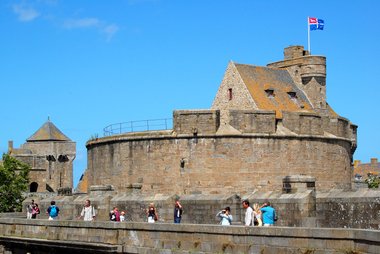
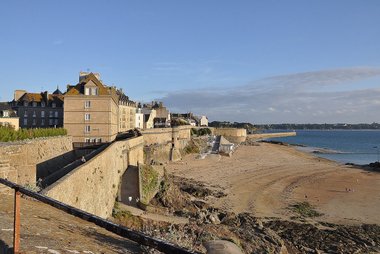
- Remparts de Saint-Malo circle the old town and are about 1.7 km long, with nine gates. A walk on top gives views of the beaches, the islets and the harbour. Start here, ideally at high tide or sunset.
- Château de Saint-Malo guards the main gate of the old town. It dates from the 15th century. Its towers and walls give views over the town.
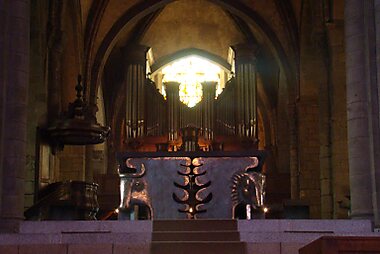
- Cathédrale Saint-Vincent mixes Romanesque and Gothic styles. It was badly damaged in 1944 and rebuilt over many years. Look for the modern stained glass and the tomb of Jacques Cartier.
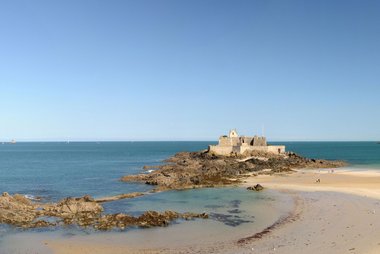
- Fort National is a small island fort just off the beach. It dates from the late 17th century. You can walk to it at low tide, and there are good views back to the town.
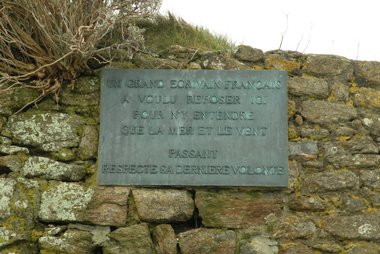
- Tombeau de François René de Chateaubriand stands on the tidal island of Grand Bé, which you can walk to at low tide. The writer is buried here with open views of the sea. The walk is short but depends on the tide.
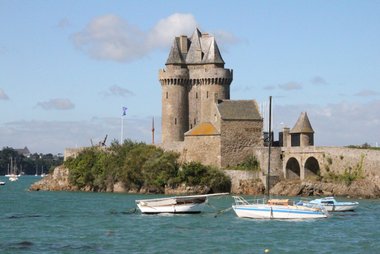
- Tour Solidor is a 14th-century tower in the Saint-Servan district. It stands at the mouth of the Rance river. The walk there from the old town passes the harbour and small beaches.
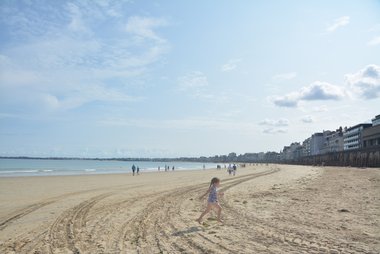
- Plage du Sillon is the long town beach below the sea wall, east of the old town. It is good for walking at low tide, when a wide area of sand appears.
- Grand Aquarium - Saint-Malo is a large aquarium south of the centre. It is a good choice on a rainy day, especially with children.
Listas destacadas


Parks & Nature
This collection highlights the diverse natural landscapes of the Emerald Coast and the Ille-et-Vilaine interior. It includes the rugged sea caves of Pointe du Grouin, the expansive sandy beaches of Saint-Malo and Cancale, and the 18th-century gardens of Parc de Caradeuc. Inland, the list features bird-watching observatories in the Bay of Mont Saint-Michel and the canal-linked wetlands of Hédé-Bazouges, offering a mix of coastal geological formations and managed heritage parks.
15 lugaresQué experimentar
- Walk to the island of Grand Bé at low tide. The walk is short, but tides here are among the largest in Europe, so check the tide table first.
- Watch a big spring tide from the ramparts. At high tide the water reaches the foot of the walls and the beaches almost disappear.
- Swim in the sea pool at Bon Secours beach. It fills with the tide, is free to use and has lifeguards in July and August.
- Walk along the long Sillon beach at low tide, when a very wide area of sand is open.
- Take the sea bus to Dinard for a day at the beach and a walk on the seafront path.
- Time a trip for the Route du Rhum, a solo sailing race to Guadeloupe that starts here every four years in November.
Tours y actividades
Distrito de Saint-Malo — Mapa

 Abrir el mapa interactivo
Excursiones de un día
Saint-Malo has good day trips by boat, bus, train and car. The close ones are listed first.
- Dinard: about 10 minutes by sea bus from the old town in season. It has a seaside promenade, sandy beaches and fine villas from the 19th century.
- Cancale: about 25 minutes by car. This fishing port is famous for its oysters, which you can eat at the harbour stalls.
- Dol-de-Bretagne: about 30 minutes by car. It has a large Gothic cathedral, the Cathédrale Saint-Samson, and a small old centre.
- Dinan: about 40 minutes by car. It is a medieval town with timber houses, ramparts and a steep street down to the Rance river port.
- Combourg: about 40 minutes by car. The Château de Combourg stands over a lake. Chateaubriand spent part of his childhood here.
- Mont-Saint-Michel: about 1 hour by car. The abbey on its tidal island is a UNESCO World Heritage site and one of the most visited places in France.
- Cap Fréhel: about 1 hour by car. These tall coastal cliffs have a lighthouse and walking paths along the Emerald Coast.
- Rennes: about 45 minutes to 1 hour by train. It is the capital of Brittany, with a historic centre and good restaurants.
Qué explorar
Cómo llegar
- By air: The main airport is Rennes Bretagne Airport, about 70 km south. Take a bus into Rennes, then the train to Saint-Malo. Many international visitors fly to Paris and continue by train.
- By train: Direct TGV trains from Paris take about 2 hours 15 minutes. Local TER trains from Rennes take about 45 minutes to 1 hour. The station is about 1 km from the old town. Book at SNCF Connect.
- By ferry: The port has ferries to Portsmouth in England and to the Channel Islands. The ferry terminal is close to the old town.
- By bus: Regional coaches and local buses connect Saint-Malo with nearby towns such as Dinard, Dinan and Cancale. Check current timetables before you travel.
Cómo desplazarse
- On foot: The old town is small and car-free for most of the day. Most sights, beaches and the ramparts are within a 20-minute walk.
- Public transport: The MAT bus network covers the town and nearby places. A single ticket costs 2 € and is valid for 1 hour 30 minutes. You can pay by tapping a contactless bank card or phone on the validator when you board. More information: MAT bus network.
- Sea bus: Boats cross to Dinard in about 10 minutes. They run from spring to autumn and are a pleasant alternative to the bus or car.
- Cycling: The coast has flat paths and bikes can be rented in town. The old town has narrow cobbled streets.
Conducción
- Is a car worth it?: Not for the old town. A car is useful for Mont-Saint-Michel, Cap Fréhel and the villages inland.
- Parking: The old town is mostly pedestrian and parking inside the walls is very limited. Use the paid car parks just outside the gates, near the Esplanade Saint-Vincent.
- Tides: Do not park on beach edges or on the Sillon dike during very high tides.
Gastronomía
Saint-Malo is a good place for seafood and Breton food. Look for oysters from nearby Cancale, mussels, shellfish platters and fresh fish. Buckwheat pancakes (galettes) and sweet crêpes are the local fast meal, and are often served with Breton cider. Butter-rich pastries and salted-butter caramel are also local.
For eating, go to the old streets and squares inside the walls. Crêperies and seafood restaurants cluster around Rue Jacques Cartier and the market squares. The fish market square and the vegetable market square are good for local products. Reserve ahead in summer, especially for dinner.
Seguridad y salud
Saint-Malo is a safe town for visitors. In summer, crowds around the old town gates and beaches attract pickpockets. Keep bags closed and phones out of back pockets.
The main risk is the sea. Tides rise fast and the range is very large. Check tide times before you walk to Grand Bé, Fort National or any beach cove. Do not swim in red-flag conditions.
Historia
The first town in the area stood on the Aleth headland, in today's Saint-Servan district. In the 12th century the bishop moved to the rock that is now the old town. The Cathédrale Saint-Vincent dates from this time.
From the 16th to the 18th century, Saint-Malo became rich through sea trade and privateering. Privateers were sailors licensed to attack enemy ships. Jacques Cartier sailed from here to Canada, and René Duguay-Trouin captured Rio de Janeiro in 1711. The town declared itself a republic from 1590 to 1594. The defences in Château de Saint-Malo and Fort National protected this wealth.
In August 1944 most buildings inside the walls were destroyed in the fighting. The town was rebuilt in the old style between 1948 and 1960. The ramparts survived, so today's old town looks historic, but most houses are reconstructions.
Datos del país
Quick practical facts for France at a glance:
- Moneda
- euro EUR € · Pago con tarjeta · Ampliamente aceptado
- Teléfonos de emergencia
- 112
- Electricidad
- 230 V · 50 HzTipo C / Tipo E
- Idiomas
- francés
- Agua del grifo
- Potable
- Sentido de la circulación
- Derecha
- Prefijo telefónico
- +33


Distrito de Saint-Malo – Planifica tus días
Convierte los lugares de esta guía en un itinerario real, con rutas inteligentes, estimaciones de tiempo y todo lo que necesitas para un viaje perfecto.


Destinos relacionados

Data: © OpenStreetMap contributors, Wikidata, Wikipedia, Tripomatic, Official websites, geoBoundaries (CC BY 4.0). Tours by GetYourGuide. We earn commission from bookings. Travel guide generated with AI.
Planifica tu viaje con Tripomatic
- Planificación con IAConsigue un día listo con un solo toque, deja que la IA distribuya tu lista de deseos a lo largo de tu viaje o planifícalo todo chateando.
- Alertas de viajeAvisos oficiales, alertas meteorológicas, huelgas y desastres naturales para los lugares de cada día de tu viaje.
- Festivos y eventosConsulta festivos, festivales y cierres durante los días de tu viaje, y qué implican para tus planes.
- Estimación de costesDesgloses de costes de viaje con IA para saber qué presupuesto necesitas antes de salir.
- Tours y entradasReserva tours, entradas sin colas y actividades directamente desde tu plan.