



Australie
Australia is a continent-sized country, and distances between its highlights are much bigger than they first look on a map. Most trips center on a handful of very different regions: the cosmopolitan cities of Sydney and Melbourne, the red desert landscapes around Alice Springs and Uluru, and the tropical coast near Cairns, gateway to the Great Barrier Reef. Wildlife is a big part of the appeal, from kangaroos and koalas to the reef's marine life.
Australia suits travelers with time to cover ground, since flights or long drives connect most highlights. First-timers often split a trip between one or two cities, a few days on the reef or a coastline, and a short trip inland to see the outback. Road-trippers gravitate to coastal drives like the Great Ocean Road, while wildlife and diving fans plan around Queensland's coast or Western Australia.



Australie – Tu prépares un voyage ?
Crée ton itinéraire jour par jour dans l'application Tripomatic.


Argent et paiements
Australia is a highly cashless society — contactless card and phone payment work almost everywhere, including taxis, markets, and small cafes. Carry a little cash for some regional towns, national park entry booths, and cash-only market stalls, but it's rarely a necessity.
Listes recommandées


Australia's Hidden Gems
Australia’s diverse landscape features geological rarities and historical landmarks. This selection includes the Pinnacles’ limestone formations in Western Australia and Burning Mountain’s 5,500-year-old underground coal fire. Heritage sites like Brisbane’s 1828 Old Windmill and the Fremantle Markets offer glimpses into colonial and commercial history. Natural coastal highlights include the granite-sheltered waters of Greens Pool and the Eden Killer Whale Museum, which documents the unique maritime history of orcas and whalers on the New South Wales coast.
6 lieux
Best Beaches
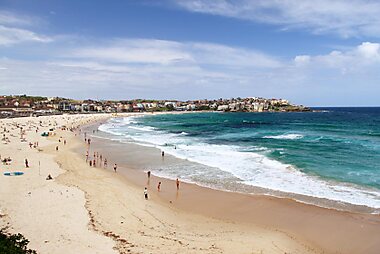
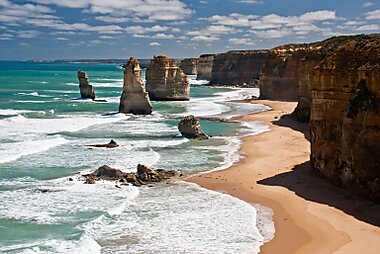
Australia's coastline spans diverse environments, from the tropical shores of Port Douglas to the rugged limestone cliffs of the Great Ocean Road. This collection includes urban icons like Melbourne's St Kilda and Brighton’s historic bathing boxes, alongside Western Australia’s unique Shell Beach, formed entirely of white cockle shells. Visitors can find calm swimming conditions at north-facing Noosa Main Beach, surf-heavy breaks at Scarborough, and the sheltered lagoon of Wattamolla within the Royal National Park. The list also highlights remote Tasmanian stretches and the turquoise coves of Albany.
15 lieux


Historic Sites
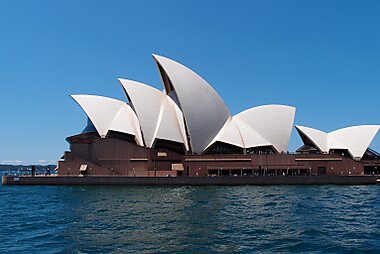
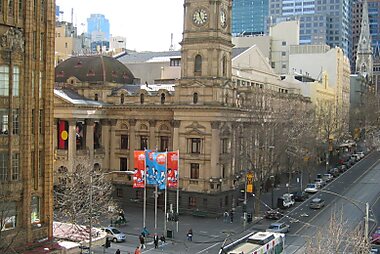
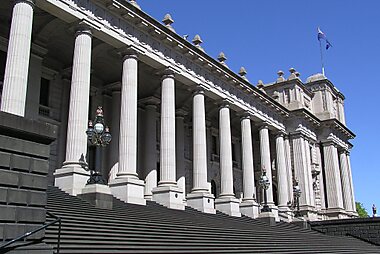
This collection spans Australia's architectural and civic history, from the UNESCO-listed Sydney Opera House to the 19th-century colonial designs of Melbourne and Perth Town Halls. It features Victorian-era landmarks like the Queen Victoria Building and Flinders Street Station, alongside solemn sites like the Shrine of Remembrance. The list includes the 1821 St Mary’s Cathedral, the Victorian Gothic Government House, and the State Library of Victoria. Scientific and industrial heritage is represented by Brisbane’s Old Windmill and the Sydney Observatory, showcasing the nation's development through the centuries.
13 lieux
Visites et activités
Australie — Carte

 Ouvrir la carte interactive
 Pourboires
Tipping isn't part of Australian culture the way it is in some countries — service staff are paid a full wage, so tips are optional rather than expected.
- Restaurants: around 10% for great service is a nice gesture, not an obligation.
- Cafes and bars: tipping is uncommon; a coin in a tip jar is enough if you want to.
- Taxis and ride-hailing: rounding up the fare is appreciated but not expected.
- Tour guides: a small tip for an excellent multi-day tour is welcome but optional.
10% for great service
round up / tip jar
round up
small note for porters
small tip for multi-day tours
Électricité
Australia uses Type I plugs (flat three-pin, different from the UK/EU/US) at 230 V / 50 Hz. Bring an adapter — this plug type isn't shared with most other regions.
Langue
English is Australia's national language, spoken everywhere, so navigation and menus are never a barrier. Local slang and abbreviations are common in everyday speech — don't be surprised by shortened words like "arvo" (afternoon) or "servo" (petrol station).
Rester connecté
A local SIM or eSIM from Telstra, Optus, or Vodafone is easy to buy at the airport or any phone shop, with strong coverage in cities and along the coast. Coverage drops off fast once you head inland — plan for long stretches with no signal at all on outback drives, and consider a satellite messenger for remote trips.
Sécurité et urgences
Australia is a very safe country for tourists, and violent crime is rare. The bigger risks are environmental: strong sun and high UV levels, ocean currents, and — depending on where you go — wildlife such as sharks, saltwater crocodiles, snakes, and box jellyfish. Swim only between the flags on patrolled beaches, follow all crocodile-warning signs in the tropical north, and take bushfire warnings seriously in summer.
Santé
Tap water is safe to drink across the country. Pharmacies (called chemists) are widespread and can handle most minor ailments. The sun is much stronger than it looks — wear sunscreen, a hat, and sunglasses even on overcast days, since sunburn and heat exhaustion are the most common health issues for visitors.
Visas et formalités d'entrée
Most visitors need to arrange a visa before arrival, but for many nationalities this is quick and done online. Travelers from around 30 countries (including the US, Canada, Japan, and several in Europe and Asia) can apply for the ETA (subclass 601) through the official app, and around three dozen mostly European nationalities qualify for the free eVisitor (subclass 651). Anyone else applies for a standard visitor visa (subclass 600).
Visa and entry requirements change frequently. Verify current requirements with the official immigration authority or your country's embassy before travel.
Savoir-vivre
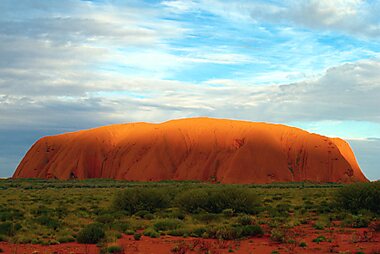
Australians are informal — first names, casual greetings, and relaxed dress are the norm almost everywhere. Queuing is taken seriously; wait your turn. Many restaurants are BYO (bring your own alcohol), sometimes for a small corkage fee — check before assuming a place serves alcohol. At beaches, always swim between the marked flags. Uluru is sacred to the Anangu people, who ask visitors not to climb it (climbing has been banned since 2019); walking around its base with a guide is the respectful way to experience it.
Jours fériés et horaires
Public holidays vary by state — some, like Melbourne Cup Day, only apply in one state. Shops and restaurants generally stay open on public holidays, with reduced hours on Christmas Day, Good Friday, and Anzac Day morning. Trading hours are longer in city centers than in small towns, where shops can close early or skip Sundays entirely.
Se déplacer
- By air: given Australia's size, domestic flights are the practical way to cover long distances — between Sydney, Melbourne, Cairns, Perth, and Uluru, flying often beats a multi-day drive.
- By train: intercity rail exists but is limited and slow compared to flying; scenic long-distance trains like The Ghan or Indian Pacific are a trip in themselves rather than practical transport.
- By car: self-driving or a campervan is a popular way to see coastal routes and national parks; distances between towns can be huge, so plan fuel stops carefully in remote areas.
- By bus: long-distance coaches connect most towns and are cheaper than flying, if slower.
City public transport runs on contactless cards or tap-to-pay — Opal in Sydney, myki in Melbourne, and similar systems elsewhere. Australia drives on the left — a detail worth remembering if you're renting a car.
Conduite
- Speed limits: generally 50 km/h in built-up areas, 100 km/h on rural roads, and 100–110 km/h on motorways — a few remote Northern Territory highways post a higher 130 km/h limit.
- Key rules: drink-driving limits are strict and strictly enforced, mobile phone use while driving carries heavy fines, and seatbelts are mandatory for all occupants.
- Tolls: Australia's toll roads are 100% electronic — there are no cash booths. Charges are billed via an e-tag or by number-plate recognition (mostly through the Linkt network); rental cars usually come with this pre-arranged, so check with the rental company rather than worrying about payment yourself.
- Remote driving: on outback routes, fuel stops can be hundreds of kilometers apart — carry extra water and fuel, and tell someone your route on longer trips.
- Parking: metered street parking and parking apps are standard in cities; multi-story car parks are common near major sights.
- Fuel: stations are self-serve, pay after fueling; unleaded petrol (91/95/98 octane) and diesel are both widely available, though remote outback stations can be pricier and further apart.
- Electric vehicles: a growing fast-charging network runs along the main coastal highways, but the outback interior still has long gaps — plan fuel-range carefully for a self-drive EV trip beyond the coast.
Gastronomie
Brunch is a genuine institution in Australian cities — smashed avocado on toast and a flat white (an Australian coffee style) are everyday staples, and cafes are often busier at 10am than any other time. Barbecuing ('having a barbie') is a common way to socialize, especially with sausages, steak, and seafood.
Meat pies, sausage rolls, and fish and chips are classic casual food, while Vegemite — a salty yeast spread — is a genuine national quirk best tried in small amounts on buttered toast. Thanks to Australia's multicultural population, cities also have excellent Asian, Middle Eastern, and Mediterranean food, often better and more varied than the 'Australian' dishes themselves.
Many restaurants are BYO, letting you bring your own wine or beer for a small fee. Wine regions like the Barossa Valley, Hunter Valley, and Margaret River are worth visiting for tastings, and local beer (ordered as a schooner or a pint) is standard in pubs.
Où s'aventurer
Major cities: Sydney and Melbourne are Australia's two largest and most-visited cities, each with a distinct character. Brisbane, Perth, Adelaide, and the capital, Canberra, each anchor their own region.
The Gold Coast: Gold Coast is Australia's biggest beach resort strip, known for surf beaches and theme parks.
Tropical north and the reef: Cairns is the main gateway to the Great Barrier Reef and Daintree Rainforest.
The Red Centre: Alice Springs is the base for visiting Uluru and Kata Tjuta in the desert interior.
Tasmania: Hobart is the gateway to Tasmania's wilderness, historic sites, and cool-climate food scene.
The Top End: Darwin is the tropical capital of the Northern Territory, close to Kakadu National Park's wetlands and Aboriginal rock art.
Australie – Planifie ton voyage
Choisis les lieux que tu veux voir et Tripomatic les transforme en un itinéraire jour par jour, avec des itinéraires intelligents, des estimations de temps et tout ce dont tu as besoin pour un voyage parfait.




