


Hakone
Hakone is a mountain and hot-spring area about 90 minutes from Tokyo. It lies inside Fuji-Hakone-Izu National Park. The area is built around Lake Ashi, an active volcanic valley and many onsen towns. On a clear day you can see Mount Fuji from the lake and the ridges.
Hakone suits a one- or two-night break from Tokyo. Many visitors stay in a ryokan (traditional inn) with a hot-spring bath. The main sights are spread along a loop of train, cable car, ropeway and boat. Art museums, forest walks and the old Tokaido road add variety.

Hakone – Tu prépares un voyage ?
Crée ton itinéraire jour par jour dans l'application Tripomatic.


Quand partir
Autumn and spring are the most comfortable seasons. Late autumn has clear air and good colour in the hills. Winter is cold but dry, and gives the best chances of a clear view of Mount Fuji. June and July are rainy and humid, but hydrangeas bloom along the mountain train. Summer in the valley is hot, while the lake and upper areas are noticeably cooler.
The biggest event is the Hakone Daimyo Procession on 3 November in Hakone-Yumoto. Costumed actors re-enact a feudal lord's journey along the Tokaido road. Autumn weekends are also the busiest time on all transport.
Sites incontournables
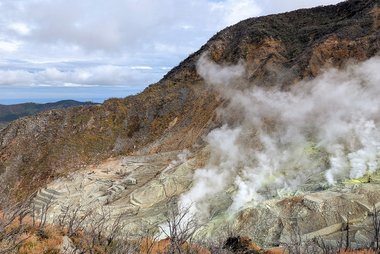
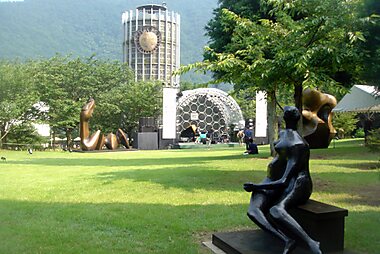
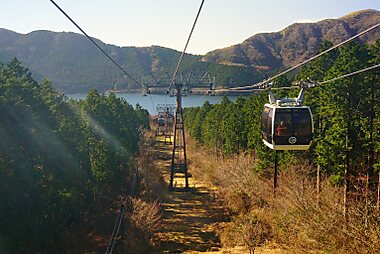
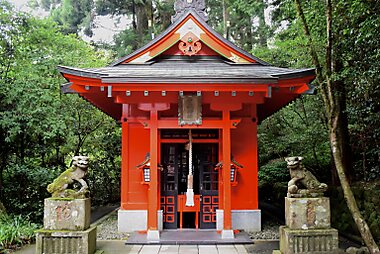

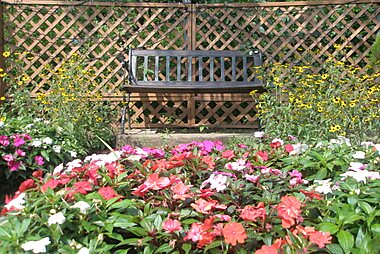
- Hakone Open-Air Museum opened in 1969 and is an early open-air museum in Japan. Sculptures stand in a mountain garden, and a hall inside holds many works by Pablo Picasso.
- Ōwakudani is a volcanic valley with steam and sulphur vents. Visitors eat black eggs boiled in the hot water. Tradition says each egg adds seven years to your life.
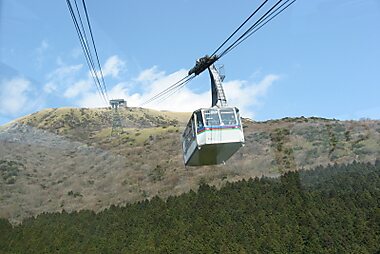
- Hakone Ropeway runs from Sounzan past the valley to Togendai on the lake. The whole line takes about 30 minutes and has wide views of Mount Fuji on clear days. Service can stop when volcanic gas levels rise. Sections also close for planned maintenance in winter, with replacement buses.
- Lake Ashi is the centre of Hakone. The Hakone Sightseeing Cruise runs across the water between Togendai and Moto-Hakone.
- Hakone Shrine stands on the lake shore among tall cedars. Tradition dates it to 757. Its red torii gate stands in the water near the shore.
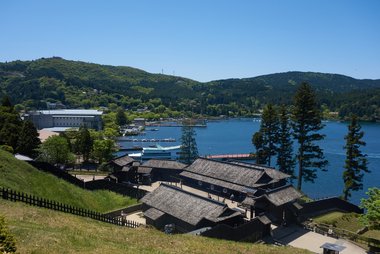
- Hakone Checkpoint is a rebuilt barrier from the Edo period. Guards once checked travellers on the Tokaido road here. A small museum explains how it worked.
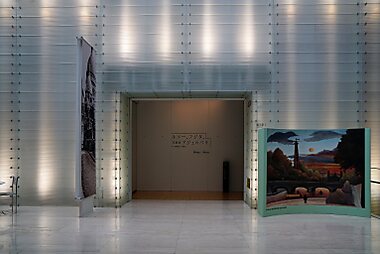
- Pola Museum of Art is a forest museum in Sengokuhara with French Impressionist paintings. The building was designed by Nikken Sekkei and opened in 2002.
- Hakone Gora Park is a French-style garden near Gora station, with roses and a tropical greenhouse.
Listes recommandées


Expériences à vivre
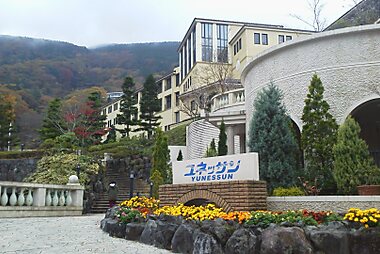
- Stay in a ryokan with its own hot-spring bath and a multi-course dinner. At the large spa resort Hakone Kowakien Yunessun you wear a swimsuit and can try wine and coffee baths.
- Ride the mountain train in mid-June to mid-July. Hydrangeas bloom along the track, and special evening trains run.
- Walk a stone-paved section of the old Tokaido road near Moto-Hakone. Stop at the old teahouse for amazake, a sweet rice drink.
- Take the Hakone Mount Koma Ropeway to the summit of Mount Komagatake for views of Lake Ashi and Mount Fuji.
- See the silver Sengokubara pampas grass fields in Sengokuhara from late summer to autumn.
- Watch the Hakone Ekiden on 2 and 3 January. University teams run a two-day relay between Tokyo and Hakone.
Visites et activités
Hakone — Carte

Excursions à la journée
Most day trips start from Odawara, the rail hub at the foot of the mountains. They are listed from closest to farthest.
- Odawara: about 15 minutes by train from Hakone-Yumoto. It has a rebuilt castle and is known for fish cakes and dried fish.
- Atami: about 1 hour from Hakone-Yumoto via Odawara. It is a seaside hot-spring town.
- Yokohama: about 1 hour by train via Odawara. It has a harbour, Chinatown and museums.
- Gotemba: about 1 hour by bus. It is a base for outlet shopping with views of Mount Fuji.
- Kamakura: about 1.5 to 2 hours by train. It has temples, the Great Buddha and beaches.
- Tokyo: about 1.5 hours by Romancecar, or about 35 minutes from Odawara to Tokyo Station by Shinkansen. A day trip works, but Tokyo is better as a separate stay.
- Fujikawaguchiko and the Fuji Five Lakes: about 2.5 hours or more by bus, with a change at Gotemba. This is a long day, so plan it only for a clear day.
Où s'aventurer
S'y rendre
- By air: Most visitors land at Tokyo Haneda (HND) or Narita (NRT) and continue by train through Tokyo or Shinjuku. Allow about 2.5 to 3.5 hours in total.
- By train from Shinjuku: The Odakyu Romancecar reaches Hakone-Yumoto in about 80 minutes. It needs a reserved-seat supplement of ¥1,200. Slower Odakyu trains run to Odawara, where you change.
- By Shinkansen: Odawara is on the Tokaido Shinkansen line, about 35 minutes from Tokyo Station. From Odawara, take the Hakone Tozan line to Hakone-Yumoto in about 15 minutes.
- By bus: Buses link Odawara, Gotemba and the lake area. They are useful when coming from the Mount Fuji side.
- Pass: The Odakyu Hakone Freepass costs about ¥7,100 for 2 days from Shinjuku. It covers the train, cable car, ropeway, boat and most buses in Hakone, plus the Odakyu return fare between Shinjuku and Odawara.
Se déplacer
- Standard loop: Take the mountain train from Hakone-Yumoto to Gora in about 40 minutes. Change to the cable car to Sounzan, then the ropeway via Ōwakudani to Togendai. Finish with the boat to Moto-Hakone and a bus back. The Hakone Freepass covers the whole loop.
- Buses: Tozan buses serve the lake, Sengokuhara and Moto-Hakone. Services are less frequent in the evening.
- Delays: The ropeway can stop for volcanic gas or weather. Sections also close for planned maintenance in winter. Replacement buses run, and the Freepass is valid on them. Check the status before you go.
- Mountain train: Trains are often full at weekends and in the rainy and autumn seasons. Go early.
Conduite
- Is a car worth it? Not for the main loop. Public transport covers the main sights. A car helps for Sengokuhara, remote hotels and a trip to Gotemba. Traffic is heavy on weekends and in autumn.
- Side of the road: Traffic drives on the left.
- Parking: Most sights and hotels have paid car parks, and spaces fill early on busy days.
Gastronomie
Local food is simple mountain and sea cooking. Look for soba noodles, tofu dishes and Odawara fish cakes and dried fish. Many ryokan serve a multi-course dinner (kaiseki) that is part of the room price.
Eating clusters around the shopping street outside Hakone-Yumoto station, in Gora and around Moto-Hakone on the lake. Many small restaurants close early, so plan dinner before 8 pm.
Sécurité et santé
Hakone is very safe. Petty crime is rare.
- Volcanic gas: Visitors with asthma, heart disease or a pacemaker should not enter the Ōwakudani valley. Pregnant women should consider skipping it. Follow all closure signs and do not walk near the vents. Check for closures before you go.
- Weather: Mist, rain and cold are common on the high ground. Bring a warm layer even in summer.
- Onsen rules: Wash before you enter the bath. Many baths restrict visitors with tattoos. Ask first or choose a private bath.
Histoire
Hakone lay on the Tokaido, the main road between Edo (now Tokyo) and Kyoto. Hakone-juku was a post town for travellers on this road. In the early 1600s the Tokugawa shogunate set up a barrier on the lake shore. Guards checked for weapons going toward Edo and for women leaving it. The Hakone Checkpoint is a reconstruction of that barrier.
Faith also shaped the area. Tradition says Hakone Shrine was founded in 757. The mountain was a place of worship long before tourism. Hot springs drew travellers from Edo for centuries, and the railway made trips easier from the late 1800s.
Infos pays
Here are the essentials for travelling in Japan:
- Devise
- yen japonais JPY ¥ · Paiements par carte · Couramment acceptées
- Électricité
- 100 VType A / Type B
- Langues
- japonais
- Eau du robinet
- Potable
- Sens de conduite
- À gauche
- Indicatif téléphonique
- +81


Hakone – Planifie tes journées
Transforme les lieux de ce guide en un véritable itinéraire, avec des itinéraires intelligents, des estimations de temps et tout ce dont tu as besoin pour un voyage parfait.


Destinations associées


Data: © OpenStreetMap contributors, Wikidata, Wikipedia, Tripomatic, Official websites, geoBoundaries (CC BY 4.0). Tours by GetYourGuide. We earn commission from bookings. Travel guide generated with AI.
Planifie ton voyage avec Tripomatic
- Planification avec l'IAObtiens une journée prête à l'emploi en un geste, laisse l'IA répartir ta liste de souhaits sur ton voyage ou planifie tout en discutant.
- Alertes de voyageAvis officiels, météo extrême, grèves et risques naturels pour les lieux de chaque jour de ton voyage.
- Jours fériés et événementsConsulte les jours fériés, festivals et fermetures durant ton voyage, ainsi que leur impact sur tes projets.
- Estimation des coûtsDétails des coûts de voyage générés par l'IA pour savoir quel budget prévoir avant de partir.
- Visites et billetsRéserve des visites, des billets coupe-file et des activités directement dans ton planning.