



Minorque
Menorca is the quietest of the Balearic Islands. It is a small island with a long coast of white-sand coves, rocky cliffs and pine woods. The whole island is a UNESCO Biosphere Reserve, and building along the shore is limited.
It suits beach holidays, easy hiking and slow sightseeing. Two historic towns sit at opposite ends: Maó in the east and Ciutadella in the west. Between them are farmland, stone walls and prehistoric sites. Most visitors rent a car and stay a week.

Minorque – Tu prépares un voyage ?
Crée ton itinéraire jour par jour dans l'application Tripomatic.


Quand partir
Late spring and early autumn are the best times. The weather is warm, the sea is swimmable and the beaches are less crowded. July and August are the busiest and most expensive months, and car parks at the best coves fill early. In winter the island is quiet, and many hotels, beach bars and restaurants close.
The biggest event is the Sant Joan festival in Ciutadella, around 23 and 24 June. Riders on decorated horses parade through the old town, and the streets are packed. Book a room well in advance.
Meilleure période pour visiter: mai, juin, juillet, août, septembre, octobre
Sites incontournables
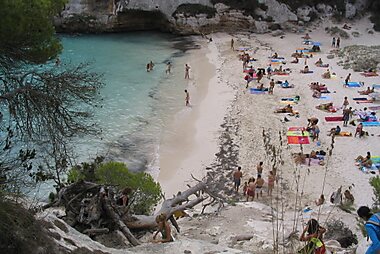
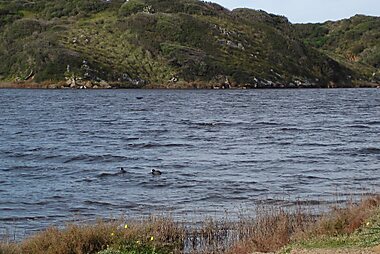
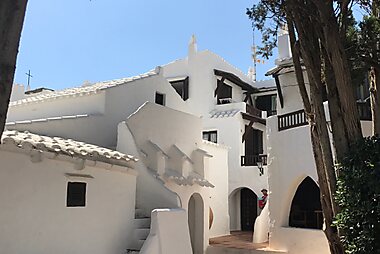

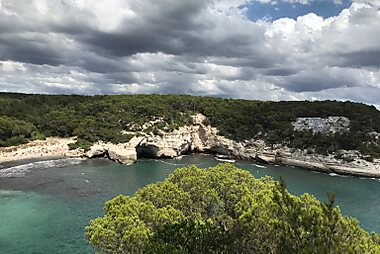
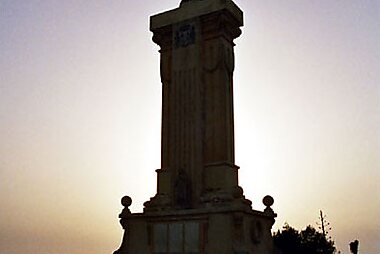
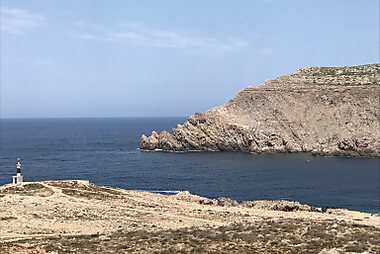
- Cala Macarella is a sheltered cove with pale sand and pine trees. It is among the most popular beaches on the south coast. Nearby are Cala en Turqueta, Cala Galdana and Cala Mitjana, all reachable by road and short walks.
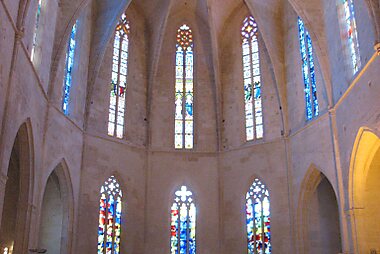
- The old town of Ciutadella has a Gothic cathedral, Catedral de Santa María de Ciudadela, and a lively harbour. Many visitors come here for the evening.
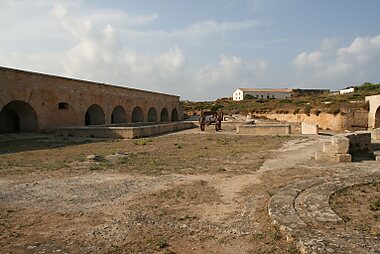
- Fortaleza de Isabel II is a 19th-century fortress on the La Mola peninsula, at the entrance to the Maó harbour. Its tunnels and walls give wide views over the harbour mouth.
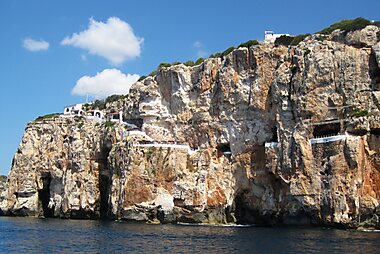
- Cova d'en Xoroi is a cave in the southern cliffs that is now a bar. It has sea views from the terraces.
- S'Albufera des Grau is a coastal lagoon and nature park in the northeast. It has walking trails and bird life.
- Far de Favàritx stands on a bare, dark rocky coast in the northeast. The landscape feels very different from the sandy south.
- Far de Cavalleria marks the northern tip of the island. The cliffs and open land around it are good for a sunset drive.
- Naveta des Tudons is a Bronze Age burial chamber near Ciutadella, shaped like an upturned boat. It is part of the island's prehistoric heritage.
- El Toro is the island's highest point, with views across the whole of Menorca.
- Binibeca Vell is a whitewashed fishermen's-style village on the south coast, built in the 1970s. It is pretty but busy in summer.
Listes recommandées


Minorca Essentials
Minorca’s landscape is defined by its Talayotic heritage and strategic coastal defenses. This selection features the 14th-century Pont de Sant Roc and the Taula de Torralba, a massive prehistoric megalith. Explore early Christian history at the 5th-century Son Bou and Fornells basilicas, or visit the British-built Torre de Fornells. Natural landmarks include the rock arch of Pont d’en Gil and the red-sand beach of Cala del Pilar, alongside the 18th-century Xoriguer Gin factory in Mahón.
13 lieux
Coastal Lighthouses & Ancient Ruins
Minorca’s coastline is defined by its diverse geological formations and historical maritime structures. This collection features 19th-century lighthouses like Favàritx and Punta Nati, built to navigate the island's rugged northern cliffs. The list also includes significant archaeological sites, such as the Roman city of Sanisera and the Talayotic settlement of Talatí de Dalt. Natural landmarks include the Cova des Coloms, a massive limestone cavern, and Cova d’en Xoroi, a series of caves integrated into a cliffside.
12 lieux
Megalithic Wonders
Minorca hosts an exceptional density of prehistoric sites belonging to the Talayotic culture, dating from the Bronze Age through the Roman conquest. This collection highlights the island’s unique architectural heritage, including the iconic Naveta d'Es Tudons burial chamber, the massive T-shaped stone sanctuaries known as taulas, and extensive fortified settlements like Son Catlar. These well-preserved structures offer insight into ancient religious rituals, funerary practices, and community organization within one of the Mediterranean's most significant megalithic landscapes.
15 lieux
Best Beaches
Menorca’s coastline is defined by the stark contrast between its southern and northern shores. The south features sheltered coves like Cala Macarella and Cala en Turqueta, characterized by limestone cliffs, turquoise waters, and Aleppo pine forests. In contrast, the northern coast offers rugged, wind-sculpted landscapes with reddish sands at Cala Pregonda and Platja de Cavalleria. This selection includes the island's longest stretch of sand at Son Bou and secluded bays like Cala Escorxada, accessible only by foot or boat.
17 lieux
Lighthouses & Coastal Towers
Minorca’s coastline is defined by a network of historic maritime signals and defensive structures. This list features 19th-century lighthouses like Favàritx and Cavalleria alongside British and Spanish military towers dating from the 14th to 18th centuries. These structures, including the masonry Torre de Fornells and the striped Artrutx, served as vital communication links and defense points against Mediterranean incursions. Many are situated on significant geological sites, ranging from the rugged slate cliffs of the north to the limestone headlands of the south.
11 lieuxExpériences à vivre
- Walk a short stretch of the Camí de Cavalls between two coves, such as the path between Cala Galdana and Cala Mitjana. Bring water and sun protection.
- Take a boat tour of the Maó harbour. The harbour is long and deep, with forts, old villas and islands along its shores.
- Visit the Hauser & Wirth gallery on Illa del Rei, a small island in the Maó harbour reached by a short boat trip. It is open in the warmer months.
- Watch the sunset from the lighthouse at Punta Nati on the northwest coast, where the land is open and the horizon is wide.
- Snorkel in the calm, clear water of a south-coast cove in summer.
Visites et activités
Minorque — Carte

 Ouvrir la carte interactive
Où s'aventurer
Menorca has two main bases:
- Maó is the capital, on a long natural harbour in the east.
- Ciutadella is the old capital, in the west, with a small stone-built harbour.
For another island, Mallorca is the nearest and the easiest to reach.
S'y rendre
- By air: Menorca Airport (MAH) is near Maó, on the southeast side of the island. It has seasonal flights from many Spanish and European cities, with the most choice in summer. Taxis and buses serve the airport. Menorca Airport
- By sea: Ferries link Menorca with Mallorca and with ports on the Spanish mainland. Maó and Ciutadella both have ferry ports. Check the season, as some routes run only in summer.
- Onward travel: Most visitors fly to the island. Flying via Palma de Mallorca or Barcelona is also common.
Se déplacer
- Car: This is the easiest way to see the island. Roads are good, and the distances are short. Book a rental car early for July and August.
- Bus: Public buses link Maó, Ciutadella and the main towns. Service to the beaches is limited and mostly runs in summer.
- Taxi: Taxis wait at the airport and in the main towns. They are useful for evenings out, as many coves have no night transport.
- On foot and by bike: The Camí de Cavalls is a coastal trail of about 185 km around the whole island. Walk it in short sections between coves. Cycling suits quiet back roads rather than the busy main road.
Conduite
- Is a car worth it?: Yes. Many of the best coves are on narrow side roads with no buses. A car also lets you cross the island between the two main towns easily.
- Parking: Car parks at popular coves are small and fill by late morning in summer. Arrive early, or walk in from a farther car park. Some are paid in season.
- Roads: One main road crosses the island from Maó to Ciutadella. The roads to the coves are narrow and often have stone walls on both sides. Drive slowly.
Gastronomie
Menorca has its own food traditions. Look for Mahón-Menorca cheese, a firm cow's-milk cheese, and for caldereta de langosta, a lobster stew served in Fornells and on the north coast. The local gin, made on the island since the British period, is often mixed with lemonade as pomada, the drink of the Ciutadella festivals. Mayonnaise is said to come from Maó, though the story is a legend.
For where to eat, go to areas rather than single places. The waterfront in Maó has many seafood restaurants. Ciutadella's small harbour is lined with restaurants on both sides. Fornells is the place for the lobster stew.
Sécurité et santé
Menorca is very safe for visitors. Petty theft is the main risk, especially from parked cars at remote beaches. Do not leave valuables in a car.
- The summer sun is strong, so use sun protection and carry water on coastal walks.
- Strong northern winds can make the north coast rough. Check the sea conditions before swimming at open beaches.
- Wear shoes with grip on rocky coves, as the stone is often sharp or slippery.
- In an emergency, call 112.
Histoire
Menorca has more prehistoric sites than most islands of its size. The Talayotic culture built stone towers, settlements and burial chambers here over three thousand years ago, and the site is now on the UNESCO World Heritage List as Talayotic Menorca (2023). The Bronze Age Naveta des Tudons is one of its best-known monuments. Torralba d'en Salort, near Alaior, shows the settlement and the T-shaped stone altar typical of the culture.
Ciutadella was the capital for centuries. Britain held the island for much of the 18th century and moved the capital to Maó, which explains the Georgian-style houses and the gin. In the 19th century Spain built Fortaleza de Isabel II to guard the harbour. Today the island's old walls, forts and farms show this layered past.
Infos pays
Quick practical facts for Spain at a glance:
- Devise
- euro EUR € · Paiements par carte · Largement acceptées
- Numéros d'urgence
- 112
- Électricité
- 230 V · 50 HzType C / Type F
- Langues
- espagnol
- Eau du robinet
- Potable
- Sens de conduite
- À droite
- Indicatif téléphonique
- +34


Minorque – Planifie tes journées
Transforme les lieux de ce guide en un véritable itinéraire, avec des itinéraires intelligents, des estimations de temps et tout ce dont tu as besoin pour un voyage parfait.




