


Hirosima
Hiroshima is a modern city of about 1.2 million people on the delta of the Ota River. Most visitors come for the Peace Memorial Park and the story of the atomic bombing on 6 August 1945. The park, the museum and the ruined dome are serious and moving, and they are the main reason to visit.
The city is also easy and pleasant to explore. It has wide streets, trams, riverside walks and a relaxed pace. Local food is a draw too, especially Hiroshima-style okonomiyaki and oysters. Hiroshima suits a trip of two nights, often combined with a day on nearby Miyajima island.

Hirosima – Utazást tervezel?
Állítsd össze a napi útvonalad a Tripomatic alkalmazásban.


Mikor érdemes utazni
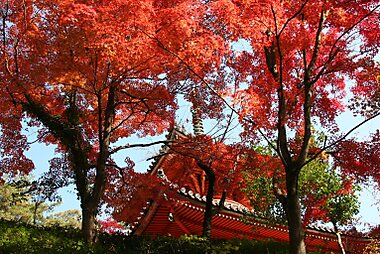
Spring and autumn are the best seasons. Days are mild and dry, and the maples at temples such as Mitaki-dera turn red in November. The rainy season in June and July is humid. August is hot and muggy, and typhoons can arrive in late summer. Winter is cold but quiet, and light snow is possible but does not last.
The biggest event is the Peace Memorial Ceremony on 6 August. It starts at 8:00 in the morning in the park, with a minute of silence at 8:15. In the evening, people float paper lanterns with peace messages on the river. Expect large crowds and book hotels well ahead.
A legjobb időszak a látogatásra: május, október
Főbb látnivalók
Most sights are in or near Peace Memorial Park, so you can see them on foot in one day.
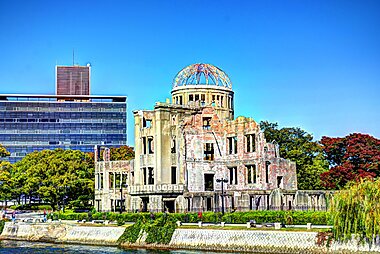
- Atomic Bomb Dome is the ruined building that stood almost under the bomb. It was finished in 1915 and designed by the Czech architect Jan Letzel. It is a UNESCO World Heritage Site and is kept as a ruin on purpose.
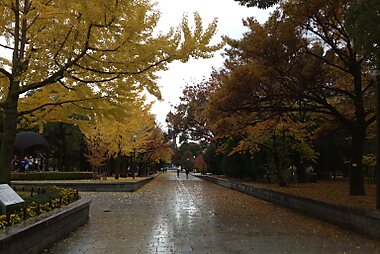
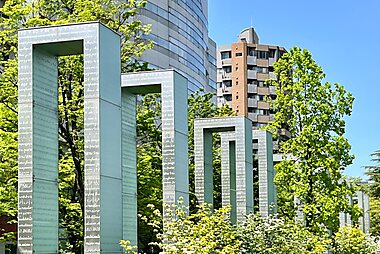
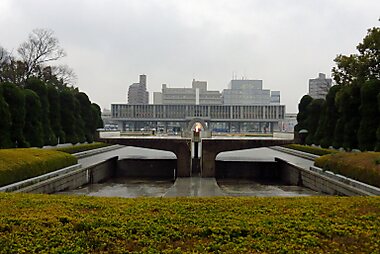
- Hiroshima Peace Memorial Park is a long green park on the site of the old city centre. It holds memorials, a pond and the Flame of Peace. The Children's Peace Monument, based on the story of Sadako Sasaki and her paper cranes, is also here.
- Hiroshima Peace Memorial Museum explains the bombing and its effects with personal objects and photographs. Plan about two hours. Some displays are hard to see.
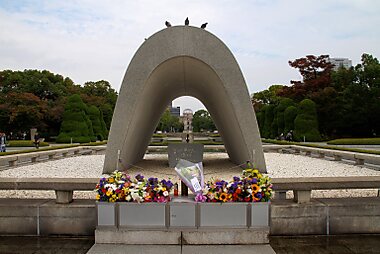
- Cenotaph for the A-bomb Victims is a saddle-shaped monument with the names of the victims. It frames the Flame of Peace and the dome in one line.
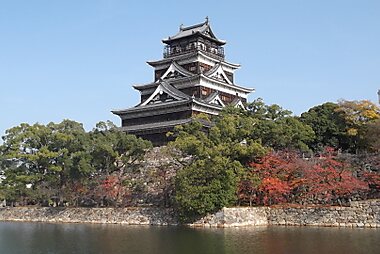
- Hiroshima Castle was built in the 1590s and destroyed in 1945. The present keep is a 1958 reconstruction. Inside is a museum of the city's history.
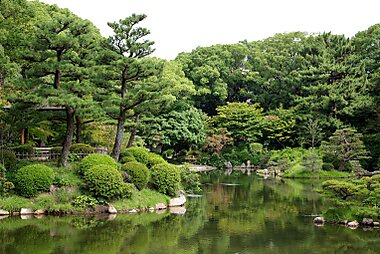
- Shukkeien Garden is a garden with a pond and small islands, laid out from 1620. It was damaged in 1945 and reopened in 1951. It is a calm break from the memorial sites.
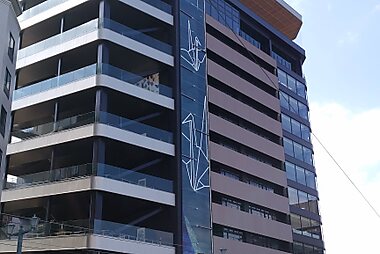
- Orizuru Tower is a viewpoint tower beside the park. The rooftop gives a wide view of the delta and the city.
- Mitaki-dera is a hillside temple in the north-west of the city, founded in 809. It has three waterfalls and a pagoda, and it is known for autumn colours.
Kiemelt listák


Élmények
- Watch a Hiroshima Toyo Carp baseball game at the stadium next to the station. The fans are loud and wear red. The season runs from spring to autumn.
- Join the lantern floating on the Motoyasu River on the evening of 6 August.
- Visit the Hiroshima Flower Festival in the park each May.
- Take a late-afternoon ferry to Miyajima after most day visitors have left. The island is calmer in the evening.
Túrák és tevékenységek
Hirosima — Térkép

 Interaktív térkép megnyitása
Egynapos kirándulások
Hiroshima has a popular day trip right next door: the island of Miyajima. Times are one way from Hiroshima Station.
- Itsukushima: about 30 minutes by JR train to Miyajimaguchi, then a 10-minute ferry. The island is also called Miyajima. It has the Itsukushima Shrine and its famous torii gate in the water, a UNESCO World Heritage Site. Wild deer walk the streets, and a ropeway goes up toward Mount Misen, the highest point at 535 m. A 100-yen visitor tax is included in the ferry fare. Check tide times, because the gate stands in water only at high tide.
- Kure: about 40 minutes by train. This is a naval port city. The Yamato Museum (Kure Maritime Museum) tells the story of Japanese shipbuilding.
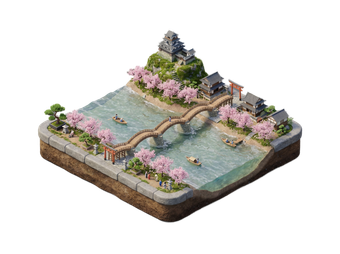
- Iwakuni: about 45 minutes by train. The main sight is Kintai Bridge, a wooden arch bridge over the river, with a castle on the hill above.
- Onomichi: about 1 to 1.5 hours by train. It is a port town with steep hillside temples and a pedestrian path along the sea. It is also the start of the Shimanami Kaido cycling route to Shikoku.
Odajutás
- By train: Hiroshima Station is on the Sanyo Shinkansen. The direct Nozomi from Tokyo takes about 4 hours. Osaka is about 1.5 hours away and Fukuoka about 1 hour. Book on the JR West site or at the station. The Japan Rail Pass requires a supplement on the Nozomi. Verify before travel.
- By air: Hiroshima Airport (HIJ) is about 50 km east of the city. The airport bus to Hiroshima Station takes about 50 minutes. The airport has domestic flights and some regional flights in Asia. Most overseas visitors arrive via Tokyo, Osaka or Fukuoka.
- By bus: Long-distance buses connect Hiroshima with Osaka, Kyoto, Tokyo and Fukuoka. They are slower than the train and cheaper.
Közlekedés
- Trams: Trams reach most sights (six city lines plus the Miyajima line). The fare is a flat 240 yen. You can board by any door and pay when you get off, in cash or with a Suica, ICOCA or other major IC card. Trams leave from the second floor of the station. The Japan Rail Pass does not cover them. See Hiroden for routes and day passes.
- Meipuru-pu bus: A JR loop bus runs to the main sights. A ride costs 240 yen and a one-day pass costs 600 yen. The Japan Rail Pass covers it.
- Miyajima: A direct tram goes to Miyajima-guchi, where the ferries leave.
- On foot: The centre is flat. It is about 3 km from the station to Peace Memorial Park. Cycling on the riverside paths is also easy.
Vezetés
- Is a car worth it? No for a city stay. Trams and trains cover the sights. A car helps only for the countryside of Hiroshima Prefecture. Japan drives on the left.
- Parking: Central car parks charge by the hour. Hotels often charge extra for parking.
- Tolls: Expressways charge distance-based tolls. Rental cars often have an ETC card for automatic payment.
Ételek és italok
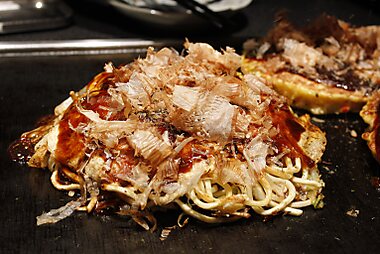
Hiroshima-style okonomiyaki is the dish to try. The ingredients are layered, not mixed, on a hot plate: a thin batter, a lot of cabbage and noodles, topped with egg. Eat it at the counter and watch the cook. Okonomi-mura is a building with many small okonomiyaki restaurants on several floors, near the city centre.
Oysters are the other local speciality. Hiroshima Bay produces most of Japan's oysters, and you will find them grilled, fried, raw and in rice dishes. Hiroshima-style tsukemen, cold noodles with a spicy dipping sauce, is another local favourite. On Miyajima, try momiji manju, maple-leaf cakes filled with red bean paste.
Biztonság és egészség
Hiroshima is very safe for visitors, day and night. Petty crime is rare and scams are uncommon.
- Summer is hot and humid, so drink water and rest in the shade.
- Typhoons can disrupt trains and ferries in late summer and autumn. Check forecasts before you travel to Miyajima.
- Japan has earthquakes. If one happens, follow the instructions of your hotel or local staff.
- Please be quiet and respectful at memorial sites. Do not climb on monuments or the ruin of the dome.
Történelem
The warlord Mori Terumoto founded the city in 1589 on the river delta and built Hiroshima Castle as its centre. Hiroshima grew into a castle town and later a military and port city.
At 8:15 in the morning on 6 August 1945, an atomic bomb was dropped on the city. It destroyed most of the centre. The ruin of Atomic Bomb Dome still stands near where the bomb exploded. After the war the city was rebuilt, and the area around the hypocenter became Hiroshima Peace Memorial Park. The city now presents itself as a centre for peace.
The castle keep was reconstructed in 1958, and Shukkeien Garden reopened in 1951. Both are good places to see how the city recovered.
Országinformációk
Here are the essentials for traveling in Japan:
- Pénznem
- japán jen JPY ¥ · Bankkártyás fizetés · Gyakran elfogadott
- Elektromos hálózat
- 100 VA típus / B típus
- Nyelvek
- japán
- Csapvíz
- Biztonságosan iható
- Közlekedés iránya
- Bal oldali
- Nemzetközi előhívó
- +81


Hirosima – Tervezd meg a napjaidat
Alakítsd át az útikönyvben szereplő helyeket valódi útitervvé okos útvonaltervezéssel, időbecslésekkel és mindennel, ami a tökéletes utazáshoz kell.


Kapcsolódó úti célok

Data: © OpenStreetMap contributors, Wikidata, Wikipedia, Tripomatic, Official websites, geoBoundaries (CC BY 4.0). Tours by GetYourGuide. We earn commission from bookings. Travel guide generated with AI.
Tervezd meg utazásodat a Tripomatic segítségével
- Mesterséges intelligenciával támogatott tervezésKészíts egy kész napot egyetlen koppintással, bízd a kívánságlistád elosztását az utazásodban az AI-ra, vagy tervezz meg mindent csevegve.
- Utazási figyelmeztetésekHivatalos figyelmeztetések, zord időjárás, sztrájkok és természeti veszélyek az utazásod egyes napjain szereplő helyekre vonatkozóan.
- Munkaszüneti napok és eseményekNézd meg az utazásod napjaira eső ünnepeket, fesztiválokat és zárvatartásokat, és hogy mit jelentenek a terveid szempontjából.
- KöltségbecslésAI-alapú költségbontás, hogy már indulás előtt pontosan tudd, mekkora költségvetéssel számolj.
- Túrák és jegyekFoglalj vezetett túrákat, soron kívüli jegyeket és élményeket közvetlenül az útitervedben.