


Burgos
Burgos is a city in northern Castile, in Spain, best known for its great Gothic cathedral, a UNESCO World Heritage Site. It was the home of the medieval hero El Cid, and it is a major stop on the Camino de Santiago.
The old town is compact and easy to walk, with many churches, gates and a hilltop castle. It suits one or two days, and it is close to the Atapuerca archaeological sites.

Burgos – Stai pianificando un viaggio?
Costruisci il tuo itinerario giorno per giorno nell'app Tripomatic.


Quando andare
Late spring to early autumn is the best time, with warm days and cool evenings. Winters are long and cold, with frost and some snow, and the city is often grey.
The main festival is San Pedro y San Pablo in late June, with parades and street events. Holy Week is also marked.
Periodo migliore per la visita: giugno, luglio, agosto, settembre
Attrazioni principali


- Burgos Cathedral is a Gothic masterpiece with tall spires and a rich interior. It holds the tomb of El Cid.
- Museo de la Evolución Humana explains the finds of the nearby Atapuerca sites, which are among the oldest in Europe.
- Monasterio de Las Huelgas is a royal convent with fine Gothic and Moorish details.
- Cartuja de Miraflores is a Carthusian monastery outside the center, with a carved altarpiece.
- Arco de Santa María is a medieval gate on the river, next to the cathedral.
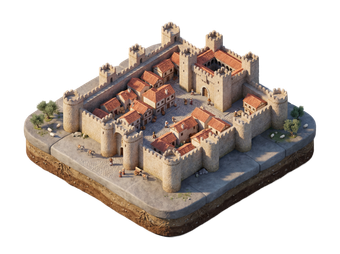
- Castillo de Burgos is a ruined castle on a hill, with views over the city.
- Iglesia de San Lesmes, Iglesia de San Gil, Iglesia de San Nicolás, Iglesia de San Esteban and Iglesia de San Lorenzo are churches in the old town.
Elenchi in evidenza

Burgos Essentials
Burgos is a cornerstone of Castilian history and a major stop on the Camino de Santiago. The city is defined by its 13th-century Gothic cathedral, a UNESCO World Heritage site, and its deep connection to the legendary hero El Cid. Visitors can explore the medieval Arco de Santa María, the royal Abbey of Las Huelgas, and the modern Museum of Human Evolution, which houses world-class archaeological finds from the nearby Atapuerca site.
12 luoghi

Historic Churches of Burgos
Burgos' religious architecture spans from the 13th-century Cistercian Abbey of Santa María la Real de Las Huelgas to the Baroque facade of San Lorenzo el Real. This collection includes the Gothic San Gil Abad, known for its ornate altarpieces, and San Nicolás de Bari, a key stop for pilgrims on the Camino de Santiago. Many of these sites, like the 14th-century San Esteban and the historically significant Santa Gadea, showcase the city's evolution as a major ecclesiastical center in Castile.
13 luoghi
Cosa provare
- Walk the Camino de Santiago through the city, and look for the shell marks on the pavement.
- Climb to the castle for views of the cathedral spires.
- Take a guided visit to the Atapuerca sites.
Tour e attività
Burgos — Mappa

Gite in giornata
- Atapuerca (about 15 km, 20 minutes by car): archaeological sites with guided visits. Book ahead.
- Santo Domingo de Silos (about 60 km, 1 hour by car): a Romanesque monastery known for its cloister.
- Palencia (about 90 km): a quiet provincial capital.
- León (about 180 km, 2 hours by car): a Gothic cathedral city.
- Valladolid (about 120 km, 1.5 hours): a university city.
Cosa esplorare
Other places nearby:
- Old cities: Valladolid, Salamanca, Segovia and Ávila.
- Cathedral cities: León and Palencia.
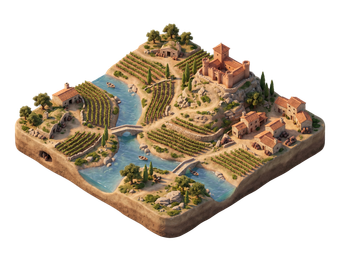
- Wine: Ribera del Duero.
Come arrivare
- By air: Burgos has little commercial air service. Use Bilbao, Valladolid or Madrid airports.
- By train: Trains run to Madrid, Valladolid, León and the Basque Country. Book on Renfe.
- By bus: Coaches serve Madrid, Bilbao and other cities in the north.
Come muoversi
- On foot: The old town is compact and flat. The cathedral, the main squares and the river are all close together.
- Cycling: A riverside path runs through the city. Cycling is practical on the flat parts.
- Public transport: Buses reach the monasteries outside the center.
Guidare
- Is a car worth it?: Not for the old town. A car helps for Atapuerca and the villages.
- Parking: Use an underground car park at the edge of the center.
- Restrictions: Much of the old town is pedestrian only.
Cibo e bevande
Burgos is known for hearty Castilian food. Morcilla de Burgos (rice blood sausage), roast lamb (lechazo) and fresh cheese are the best-known local foods.
Wines from the nearby Ribera del Duero are common in the restaurants.
Sicurezza e salute
Burgos is a very safe city. Winters can be very cold, and the roads can be icy, so pack warm clothes. Summer evenings are cool, so a jacket is useful.
Storia
Burgos was founded in 884 as a fortress and became the capital of Castile. The knight Rodrigo Díaz de Vivar, known as El Cid, lived here in the 11th century.
The cathedral was begun in 1221 and finished in the 15th century, and it was listed by UNESCO in 1984. The city later became a center of the wool trade and the Camino de Santiago.
Informazioni sul paese
Quick practical facts for Spain at a glance:
- Valuta
- euro EUR € · Pagamenti con carta · Ampiamente accettata
- Numeri di emergenza
- 112
- Elettricità
- 230 V · 50 HzTipo C / Tipo F
- Lingue
- spagnolo
- Acqua del rubinetto
- Potabile
- Senso di marcia
- A destra
- Prefisso telefonico
- +34


Burgos – Pianifica le tue giornate
Trasforma i luoghi di questa guida in un vero itinerario, con percorsi intelligenti, stime dei tempi e tutto il necessario per un viaggio perfetto.


Destinazioni correlate

Data: © OpenStreetMap contributors, Wikidata, Wikipedia, Tripomatic, Official websites. Tours by GetYourGuide. We earn commission from bookings. Travel guide generated with AI.