



Burgos Stadt
Burgos is a city in northern Castile, in Spain, best known for its great Gothic cathedral, a UNESCO World Heritage Site. It was the home of the medieval hero El Cid, and it is a major stop on the Camino de Santiago.
The old town is compact and easy to walk, with many churches, gates and a hilltop castle. It suits one or two days, and it is close to the Atapuerca archaeological sites.

Burgos Stadt – Planst du eine Reise?
Erstelle deine Reiseroute Tag für Tag in der Tripomatic-App.


Beste Reisezeit
Late spring to early autumn is the best time, with warm days and cool evenings. Winters are long and cold, with frost and some snow, and the city is often grey.
The main festival is San Pedro y San Pablo in late June, with parades and street events. Holy Week is also marked.
Beste Reisezeit: Juni, Juli, August, September
Top-Sehenswürdigkeiten

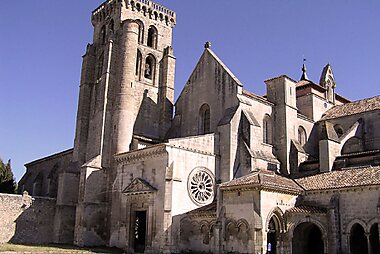
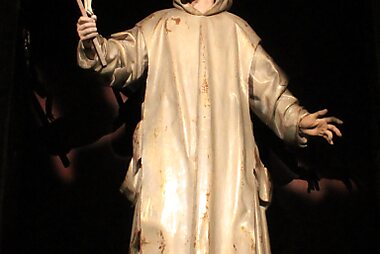
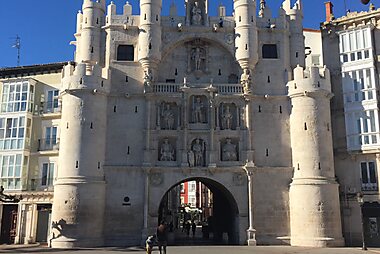
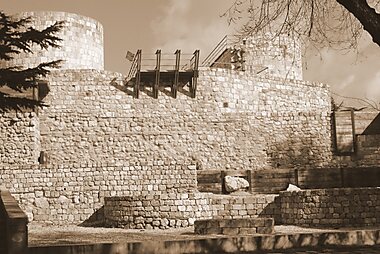
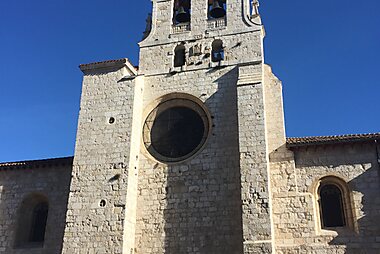
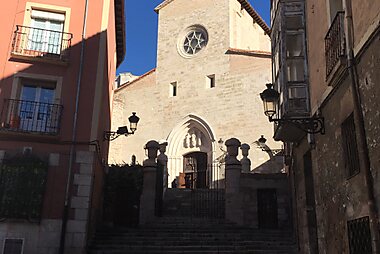
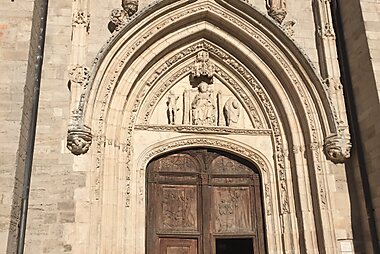
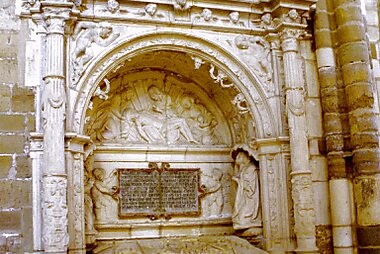
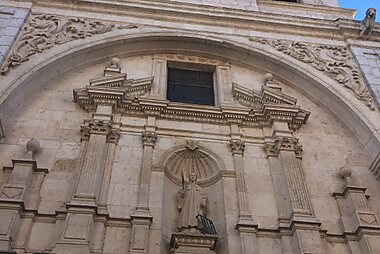
- Burgos Cathedral is a Gothic masterpiece with tall spires and a rich interior. It holds the tomb of El Cid.
- Museo de la Evolución Humana explains the finds of the nearby Atapuerca sites, which are among the oldest in Europe.
- Monasterio de Las Huelgas is a royal convent with fine Gothic and Moorish details.
- Cartuja de Miraflores is a Carthusian monastery outside the center, with a carved altarpiece.
- Arco de Santa María is a medieval gate on the river, next to the cathedral.
- Castillo de Burgos is a ruined castle on a hill, with views over the city.
- Iglesia de San Lesmes, Iglesia de San Gil, Iglesia de San Nicolás, Iglesia de San Esteban and Iglesia de San Lorenzo are churches in the old town.
Empfohlene Listen

Burgos Essentials
Burgos ist ein Eckpfeiler der kastilischen Geschichte und ein wichtiger Halt auf dem Jakobsweg. Die Stadt wird von ihrer gotischen Kathedrale aus dem 13. Jahrhundert, einem UNESCO-Weltkulturerbe, und ihrer tiefen Verbindung zum legendären Helden El Cid geprägt. Besucher können den mittelalterlichen Arco de Santa María, die königliche Abtei Las Huelgas und das moderne Museum für menschliche Evolution erkunden, das archäologische Funde von Weltrang aus der nahegelegenen Stätte Atapuerca beherbergt.
12 Orte

Historische Kirchen von Burgos
Die religiöse Architektur von Burgos reicht von der Zisterzienserabtei Santa María la Real de Las Huelgas aus dem 13. Jahrhundert bis zur Barockfassade von San Lorenzo el Real. Diese Sammlung umfasst die gotische San Gil Abad, bekannt für ihre kunstvollen Altäre, und San Nicolás de Bari, eine wichtige Station für Pilger auf dem Jakobsweg. Viele dieser Stätten, wie die San Esteban aus dem 14. Jahrhundert und die historisch bedeutsame Santa Gadea, zeugen von der Entwicklung der Stadt als wichtiges kirchliches Zentrum in Kastilien.
13 Orte
Erlebnisse & Aktivitäten
- Walk the Camino de Santiago through the city, and look for the shell marks on the pavement.
- Climb to the castle for views of the cathedral spires.
- Take a guided visit to the Atapuerca sites.
Touren & Aktivitäten
Burgos Stadt — Karte

Tagesausflüge
- Atapuerca (about 15 km, 20 minutes by car): archaeological sites with guided visits. Book ahead.
- Santo Domingo de Silos (about 60 km, 1 hour by car): a Romanesque monastery known for its cloister.
- Palencia (about 90 km): a quiet provincial capital.
- León (about 180 km, 2 hours by car): a Gothic cathedral city.
- Valladolid (about 120 km, 1.5 hours): a university city.
Orte zum Entdecken
Other places nearby:
- Old cities: Valladolid, Salamanca, Segovia and Ávila.
- Cathedral cities: León and Palencia.
- Wine: Ribera del Duero.
Anreise
- By air: Burgos has little commercial air service. Use Bilbao, Valladolid or Madrid airports.
- By train: Trains run to Madrid, Valladolid, León and the Basque Country. Book on Renfe.
- By bus: Coaches serve Madrid, Bilbao and other cities in the north.
Unterwegs vor Ort
- On foot: The old town is compact and flat. The cathedral, the main squares and the river are all close together.
- Cycling: A riverside path runs through the city. Cycling is practical on the flat parts.
- Public transport: Buses reach the monasteries outside the center.
Autofahren
- Is a car worth it?: Not for the old town. A car helps for Atapuerca and the villages.
- Parking: Use an underground car park at the edge of the center.
- Restrictions: Much of the old town is pedestrian only.
Essen & Trinken
Burgos is known for hearty Castilian food. Morcilla de Burgos (rice blood sausage), roast lamb (lechazo) and fresh cheese are the best-known local foods.
Wines from the nearby Ribera del Duero are common in the restaurants.
Sicherheit & Gesundheit
Burgos is a very safe city. Winters can be very cold, and the roads can be icy, so pack warm clothes. Summer evenings are cool, so a jacket is useful.
Geschichte
Burgos was founded in 884 as a fortress and became the capital of Castile. The knight Rodrigo Díaz de Vivar, known as El Cid, lived here in the 11th century.
The cathedral was begun in 1221 and finished in the 15th century, and it was listed by UNESCO in 1984. The city later became a center of the wool trade and the Camino de Santiago.
Länderfakten
Quick practical facts for Spain at a glance:
- Währung
- Euro EUR € · Kartenzahlung · Weitgehend akzeptiert
- Notrufnummern
- 112
- Stromnetz
- 230 V · 50 HzSteckertyp C / Steckertyp F
- Sprachen
- Spanisch
- Leitungswasser
- Trinkbar
- Fahrseite
- Rechtsverkehr
- Telefonvorwahl
- +34


Burgos Stadt – Plane deine Tage
Verwandle die Orte aus diesem Reiseführer in eine echte Reiseroute mit intelligenter Routenführung, Zeitschätzungen und allem für eine perfekte Reise.


Ähnliche Reiseziele

Data: © OpenStreetMap contributors, Wikidata, Wikipedia, Tripomatic, Official websites. Tours by GetYourGuide. We earn commission from bookings. Travel guide generated with AI.