


Ptuj
Ptuj is the oldest recorded town in Slovenia. It began as the Roman town of Poetovio, and its first written mention dates from AD 69. Today it is a small, quiet town on the Drava River, with red-tiled roofs, narrow streets and a castle on the hill above. The whole old centre is easy to see on foot in a day.
Ptuj suits travellers who like history, wine and small-town life. It sits at the edge of the Haloze and Slovenske gorice wine hills, it has one of the oldest wine cellars in the country, and a large thermal water park lies just across the river. In late winter the town hosts Kurentovanje, the biggest carnival in Slovenia.

Ptuj – Stai pianificando un viaggio?
Costruisci il tuo itinerario giorno per giorno nell'app Tripomatic.


Quando andare
Late spring and September are the most pleasant times, with warm days and green or harvest-time vineyards. July and August are hot, with frequent afternoon storms, while winters are cold and grey with some snow.
The big event is Kurentovanje, an 11-day carnival that ends on Shrove Tuesday, usually in February. Hundreds of kurents in sheepskin costumes, masks and heavy cowbells fill the streets to chase away winter, and the main parade draws tens of thousands of visitors. Book accommodation early if you plan to come.
Periodo migliore per la visita: maggio, giugno, settembre
Attrazioni principali
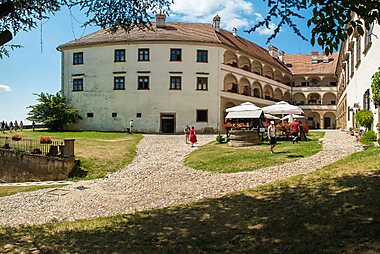
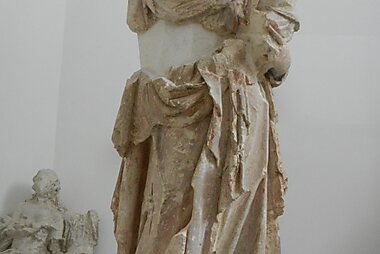
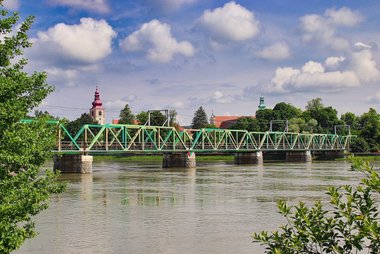
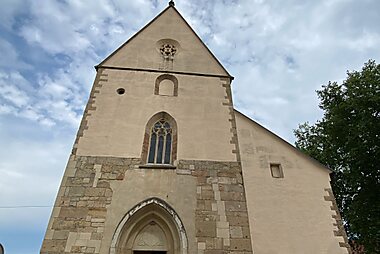
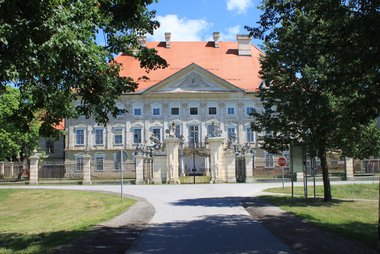
Ptuj Castle stands on the hill above the old town and holds the main collections of the regional museum. Highlights include historical musical instruments, an armoury, carnival masks and furnished noble rooms, and the courtyard gives wide views over the roofs and the Drava.
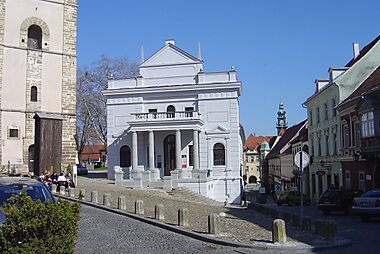
Slovenski trg is the heart of the old town. A free-standing town tower rises in the middle of the square, with ancient stone monuments set into its walls.
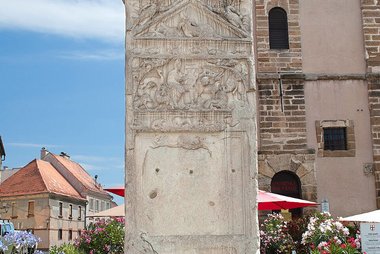
Orpheus Monument, a Roman grave stone nearly 5 metres tall, stands in front of the town tower. In the Middle Ages it served as a pillory, and it is now a symbol of the town.
Church of St George is the main parish church on the same square. Its origins go back to the Middle Ages.
Kurent House is a small interactive museum about the kurent, the shaggy carnival figure of the Ptuj region. Tours start on the hour and last about 40 minutes.
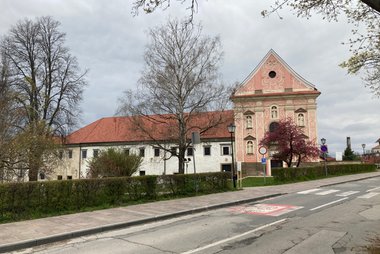
Dominican Monastery was founded in 1230 and now hosts museum exhibitions and concerts. It has a Baroque church facade and a quiet courtyard with a well.
Minorite Monastery of Sts. Peter and Paul has housed Minorite friars for more than 700 years. Its church was destroyed in a bombing raid in 1945 and later rebuilt, and groups can visit the Baroque library and refectory.
Lake Ptuj, just south-east of town, is the largest artificial lake in Slovenia. A 13 km path circles it, and it is one of the best birdwatching spots in the country.
Elenchi in evidenza

Cosa provare
Ptuj is best known for its carnival, its wine and its Roman past.
- Kurentovanje carnival: In the days before Lent, groups of kurents in sheepskin and masks march through town, ringing heavy bells to drive away winter. Their door-to-door rounds are on the UNESCO list of intangible heritage.
- Wine cellar tour: The Ptuj wine cellar under the old town dates back to 1239. Guided tours with tasting end in the archive, which holds the Zlata trta (Golden Vine) wine from 1917, considered the oldest Slovenian wine. Book ahead.
- Thermal water park: Terme Ptuj, across the river, has indoor and outdoor pools with slides, a wave pool and a lazy river, all fed by warm thermal water.
- Roman Mithras shrines: In summer, guided tours visit the Roman sanctuaries of the god Mithras in the Poetovio area. Book through the tourist office.
- Days of Poetry and Wine: In late August, Slovenia's biggest poetry festival fills the town's squares with readings, concerts and wine.
- Birdwatching at the lake: Walk the path around Lake Ptuj to see cormorants, terns and other water birds.
Tour e attività
Ptuj — Mappa

 Apri la mappa interattiva
Gite in giornata
The countryside around Ptuj is full of vineyards, castles and small towns. Most places are close, but a car makes them much easier to reach.
- Dornava: About 6 km east, 10 minutes by car. Dornava Manor is one of the best-preserved Baroque manors in Slovenia, with a formal garden and a restored orangery. The house is still awaiting full restoration and is only partly open, so check before you go.
- Ptujska Gora: About 15 minutes south by car. A hilltop Gothic pilgrimage church holds a famous relief of the Virgin Mary sheltering people under her cloak.
- Haloze: The steep wine hills south of Ptuj, about 20–30 minutes by car. Expect small family wineries, winding roads and wide views.
- Maribor: Slovenia's second city, about 40 minutes by train or bus. Visit the riverside Lent district and the Old Vine, said to be the oldest vine in the world.
- Ormo and Jeruzalem: About 30 minutes east by car. The town has a castle above the Drava, and the Jeruzalem wine hills beyond it have scenic roads and wine cellars.
- Rogaška Slatina: A historic spa town about 45 minutes away by car, known for its mineral water and 19th-century spa buildings.
Cosa esplorare
Ptuj lies in eastern Slovenia, in the Štajerska region, close to the Croatian border.
- Nearby towns: Maribor is the regional city, and Ormo lies downstream on the Drava.
- Spas: Rogaška Slatina is one of the oldest spa towns in the country.
- Further afield: Celje has a large medieval castle, and Prekmurje to the north-east is a flat region of farms, rivers and thermal spas.
Come arrivare
- By air: There is no airport in Ptuj. The closest international airports are Graz in Austria and Zagreb in Croatia, each about 1 to 1.5 hours by car. Ljubljana Airport is about 1.5 hours away. Public transport from all three needs at least one change, so a rental car or pre-booked shuttle is easiest.
- By train: Trains from Maribor take about 40 minutes. From Ljubljana the journey takes about 2 to 2.5 hours, often with a change. The station is a few hundred metres from the old town. Slovenian Railways
- By bus: Frequent buses run from Maribor, and some international coach lines also stop in Ptuj. The bus station is close to the train station. Arriva Slovenia
- By car: Ptuj is about 130 km from Ljubljana, mostly on motorways. Motorways in Slovenia need an e-vignette.
Come muoversi
- On foot: The old town is small and flat, and walking is the best way to see it. The climb to the castle is short but steep.
- Buses: Regional buses link Ptuj with nearby towns and villages. At stops without a ticket office, pay the driver on board, ideally in cash. Arriva Slovenia
- Cycling: The land around Ptuj is mostly flat, and cycling along the Drava and around the lake is pleasant. The wine hills of Haloze are steep.
- Taxis: Useful for reaching the thermal park or wineries outside town. Ask your hotel to call one.
Guidare
- Is a car worth it?: Not for the old town, which is best seen on foot. A car is very useful for the wine hills, manors and villages around Ptuj, where buses are rare.
- Parking: Ptuj has many public car parks, some free and some paid, around the edge of the old town. Park there and walk in.
- Restrictions: Much of the old town is closed to general traffic. During Kurentovanje, extra road closures apply.
Cibo e bevande
Ptuj sits in one of Slovenia's oldest wine regions. Look for white wines from the Haloze hills, such as Šipon (Furmint), Laški rizling and Sauvignon. The local Ptuj onion, ptujski lük, has protected status and appears in many local dishes. Pumpkin seed oil and hearty Štajerska dishes such as sour soups and roast meats are common.
For eating out, the best area is the old town around Slovenski trg and Mestni trg, where restaurants, wine bars and cafés with outdoor seating cluster. Tourist farms and wineries in Haloze serve home-made food with their wines.
Sicurezza e salute
Ptuj is a very safe town, and serious crime against visitors is rare. Normal care with bags is enough.
During Kurentovanje, the streets get very crowded and loud. Keep an eye on your valuables, and expect kurents to bump into you and make noise close up. This is part of the tradition.
Storia
People lived on the castle hill thousands of years ago. The Romans built a military camp here, and in AD 69 the legions in Poetovio declared Vespasian emperor. In 103 Trajan made the town a colony, and it became one of the largest Roman towns in the region. Roman stones are still built into the walls of Ptuj Castle and the town tower, and Orpheus Monument still stands in the main square. Several shrines to the eastern god Mithras survive in the Poetovio area.
In the Middle Ages the town belonged to the archbishops of Salzburg, and the Lords of Ptuj held the castle for about three centuries. The Dominican and Minorite friars arrived in the 13th century and built monasteries that still stand. Ptuj received its town statute in 1376.
From the 17th century the castle was a Baroque home of noble families. In January 1945 a bombing raid destroyed the church of Minorite Monastery of Sts. Peter and Paul. It was rebuilt in stages and completed in 2010.
Informazioni sul paese
Quick practical facts for Slovenia at a glance:
- Valuta
- euro EUR · Pagamenti con carta · Ampiamente accettata
- Numeri di emergenza
- 112
- Elettricità
- 230 V · 50 HzTipo C / Tipo F
- Lingue
- sloveno
- Acqua del rubinetto
- Potabile
- Senso di marcia
- A destra
- Prefisso telefonico
- +386


Ptuj – Pianifica le tue giornate
Trasforma i luoghi di questa guida in un vero itinerario, con percorsi intelligenti, stime dei tempi e tutto il necessario per un viaggio perfetto.


Destinazioni correlate



Data: © OpenStreetMap contributors, Wikidata, Wikipedia, Tripomatic, Official websites, geoBoundaries (CC BY 4.0). Tours by GetYourGuide. We earn commission from bookings. Travel guide generated with AI.
Pianifica il tuo viaggio con Tripomatic
- Pianificazione con IAOttieni una giornata pronta in un tocco, lascia che l'IA distribuisca la tua lista dei desideri lungo il viaggio o pianifica tutto chattando.
- Avvisi di viaggioAvvisi ufficiali, maltempo, scioperi e calamità naturali per i luoghi di ogni giorno del tuo viaggio.
- Giorni festivi ed eventiScopri giorni festivi, festival e chiusure nei giorni del tuo viaggio e cosa comportano per i tuoi programmi.
- Stima dei costiDettaglio dei costi di viaggio calcolato dall'IA per sapere quanto mettere a budget prima di partire.
- Tour e bigliettiPrenota tour, biglietti prioritari e attività direttamente all'interno del tuo piano.