


Boedapest
Budapest sits on both banks of the Danube, where hilly Buda meets the flat boulevards of Pest. The two halves feel different but share one of Europe's most dramatic river settings, with castle ramparts, a neo-Gothic parliament, and grand 19th-century architecture all visible from the water. It suits travelers who want history, thermal baths, and nightlife without the crowds or prices of Western Europe's biggest capitals.
The city has been shaped by Romans, Ottomans, the Habsburgs, and a turbulent 20th century, and that layered past is easy to see: Roman ruins in Óbuda, Ottoman-era baths, Habsburg-era boulevards, and Communist-era monuments all sit within a short walk of each other. Escape artist Harry Houdini was born here in 1874, and composer Franz Liszt gave his name to the city's leading music academy.

Boedapest – Reis plannen?
Stel je dagelijkse reisroute samen in de Tripomatic-app.
Beste reistijd
Spring (April–May) and autumn (September–October) bring mild days and thinner crowds, good for walking and outdoor bathing. Summer is hot and busy, with the riverside and Margaret Island packed for outdoor festivals. Winter is cold but atmospheric, with Christmas markets and steam rising off the outdoor thermal baths.
Sziget Festival, one of Europe's largest music festivals, takes over an island north of the centre for about a week in early August and draws hundreds of thousands of visitors — book accommodation well ahead if visiting then.
Beste reistijd: mei, juni, september
July and August bring the hottest, muggiest days, while spring and autumn offer the best mix of comfortable temperatures and fewer crowds.
Topbezienswaardigheden
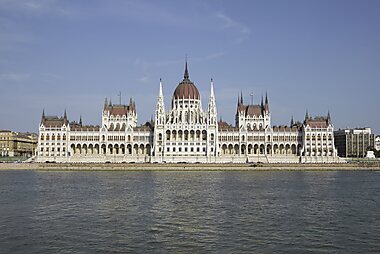
Hungarian Parliament Building is Budapest's most photographed landmark, a vast neo-Gothic riverside building completed in 1904. Guided tours reach the domed central hall, where the Hungarian crown jewels are on permanent display.
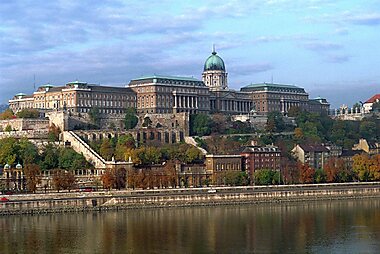
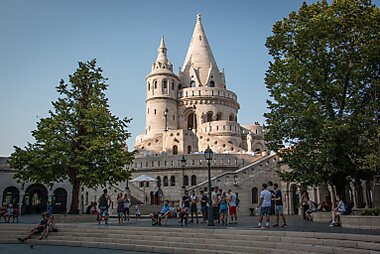
Across the river, Buda Castle crowns Castle Hill with courtyards, museums, and sweeping Danube views. A short walk away, Fisherman's Bastion is a fairy-tale terrace of white turrets built purely for the view over Pest.
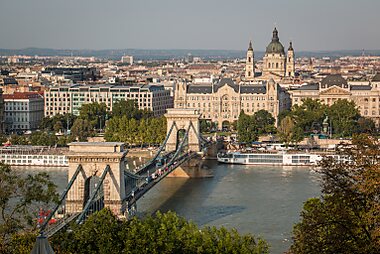
Széchenyi Chain Bridge was Hungary's first permanent bridge across the Danube when it opened in 1849, and it still anchors the classic night photo of Buda and Pest lit up together.
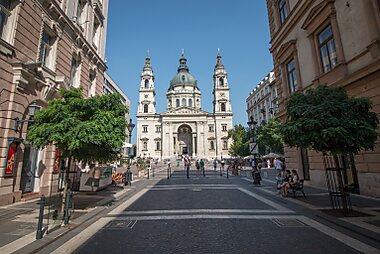
St. Stephen's Basilica is Budapest's largest church. By law, its dome matches the Parliament's height exactly; a climb or elevator ride leads to a panoramic terrace.
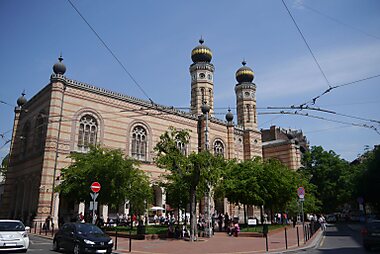
Great Synagogue is the largest synagogue in Europe, built in a Moorish Revival style, with a moving Holocaust memorial garden in its courtyard.
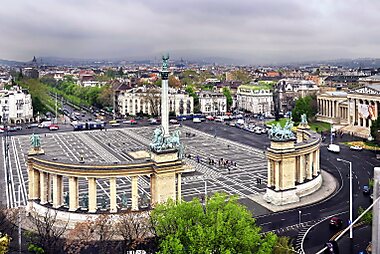
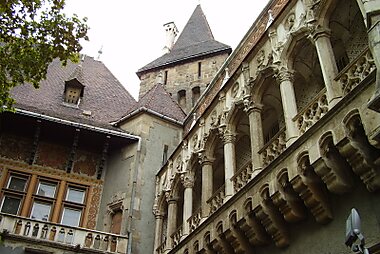
Heroes' Square and the fantastical, mismatched architecture of Vajdahunyad Castle behind it mark the entrance to City Park, built for Hungary's 1896 millennial celebrations.
Along the river, Shoes on the Danube is a simple but powerful memorial: rows of iron shoes recall the Jews shot into the Danube here in the winter of 1944–45.
Aanbevolen lijsten


Panoramic Views
Budapest’s geography offers diverse vantage points from both the historic riverfront and the surrounding Buda Hills. The Pest side features the Neo-Renaissance dome of St. Stephen's Basilica, while the Buda side is home to the Neo-Romanesque Fisherman's Bastion and the high-altitude Citadel on Gellért Hill. Further west, the forest peaks of the Buda Hills host specialized observation towers, including the historic stone Elisabeth Lookout on János Hill and the contemporary timber structures on Hármashatár-hegy and Kis-Hárs-hegy.
10 plaatsen
Historic Cafés & Regional Cuisine
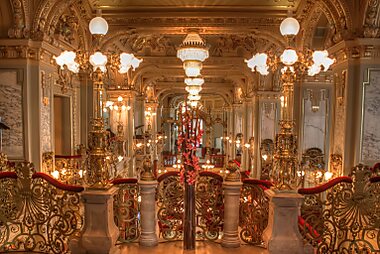
Budapest’s culinary landscape features grand 19th-century coffee houses and vibrant street food hubs. The New York Café and Café Gerbeaud are renowned for their ornate Italian Renaissance and Art Nouveau interiors, while Central Café retains its classic intellectual atmosphere. For local ingredients and regional dishes, the Great Market Hall is a primary destination. In the Jewish Quarter, Gozsdu Courtyard and the Karaván food court offer a variety of international and Hungarian street food in a lively, pedestrian-friendly environment.
7 plaatsenAudiogidsen – Boedapest
Verken te voet met een zelfstandige audiotour die bij elke stop een verhaal vertelt zodra je er aankomt.


Luister naar de audiotours van Boedapest
1 wandeling in Audiogidsen van Tripomatic


Wat te beleven
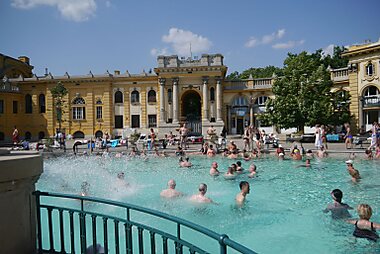
- Soak in an outdoor thermal pool at Széchenyi Thermal Bath, ideally at dusk when steam rises off the water — a genuine local ritual, not just a tourist stop.
- Take an evening river cruise past the illuminated Parliament and Chain Bridge; the view from the water is Budapest's best.
- In winter, skate on the pond at Városligeti Műjégpálya in City Park, one of Europe's largest and oldest outdoor rinks.
- Spend an evening moving between the courtyard ruin bars of the Jewish Quarter, derelict buildings turned into bars filled with mismatched furniture and open-air seating.
- Browse the Christmas market at Vörösmarty Square in December, with mulled wine stalls and a small ice rink.
Tours en activiteiten
Boedapest — Kaart

 Interactieve kaart openen
 Dagtochten
The Danube Bend north of Budapest packs some of Hungary's prettiest riverside scenery and historic towns into a short trip; a wine town in the hills makes for a longer but rewarding day out.
- Szentendre — about 40 minutes by HÉV suburban train from Batthyány tér. A cobbled artists' town with Serbian Orthodox churches and small museums; easy to combine with a riverside walk.
- Visegrád — about 1–1.5 hours by bus or river ferry. A ruined hilltop citadel with the best panoramic view of the Danube Bend below.
- Esztergom — about 1.5 hours by bus or train. Hungary's former royal capital, topped by the country's largest basilica, right on the border with Slovakia.
- Eger — about 2 hours by train. A baroque wine town known for the robust red blend Egri Bikavér, with cellars to visit in the hills just outside town.
Bereikbaarheid
- By air: Budapest Ferenc Liszt International Airport (BUD) is 16 km southeast of the centre. The 100E express bus runs directly to Deák Ferenc tér in about 30–40 minutes; a cheaper regular bus plus metro connection also works. Taxis and ride-hailing pickups wait outside both terminals.
- By train: Keleti, Nyugati, and Déli stations connect Budapest to Vienna (about 2.5 hours), Bratislava, Prague, and other central European cities on frequent international services.
- By bus: Népliget bus station is the main hub for long-distance coaches, including budget international lines to neighboring capitals.
Vervoer ter plaatse
- Public transit: An extensive network of metro (4 lines), trams, and buses run by BKK covers the whole city; the M1 line under Andrássy Avenue is the oldest underground railway in continental Europe. Buy single tickets or a travel pass from machines or the BudapestGO app, which also lets you tap in with a phone on many vehicles — always validate a ticket, since inspectors fine riders without one. BKK journey planner
- Taxi / ride-hailing: Uber operates here through a partnership with local taxi company Főtaxi, with a fixed fare agreed before the ride; Bolt is another widely used app.
- On foot / cycling: The historic core on both riverbanks is compact and walkable. The MOL Bubi bike-share system and marked riverside paths make cycling practical outside rush hour.
Autorijden
- Is a car worth it?: No — parking is scarce and expensive, streets are narrow, and public transit covers the city well. A car only helps for day trips outside Budapest.
- Parking: The centre is divided into paid zones on weekdays; pay by app (BudapestGO or a district-specific app) or at a machine. Underground garages near Deák Ferenc tér and Vörösmarty tér are pricier but easier for a short stay.
- Restrictions: Castle Hill's historic centre is closed to private cars without a resident permit; leave the car below and walk up or take the funicular.
Eten en drinken
Look beyond gulyás for Budapest specialties: try lángos (fried dough topped with sour cream and cheese) from a street stall, chimney cake (kürtöskalács) from a bakery window, and goose liver dishes, since Hungary is one of the world's largest foie gras producers.
For a genuinely distinctive stop, have coffee under the gilded ceiling of New York Café, a lavish 1894 café that once hosted the city's writers and journalists. For everyday eating, head to Great Market Hall, where ground-floor stalls sell fresh produce and the upper floor has lángos and other quick Hungarian food, or to the courtyard bars of the Jewish Quarter for craft beer and street food.
Veiligheid en gezondheid
Budapest is one of Europe's safer capitals for tourists, with violent crime rare. The main risks are petty: pickpockets on crowded trams and around Váci utca, and unmetered taxis that overcharge — book through an app or use a marked city taxi rather than hailing one that approaches you. Around Váci utca and Deák Ferenc tér, be wary of anyone inviting a solo traveler into a bar for a drink; some venues then present hugely inflated bills. Tap water is safe to drink throughout the city.
Geschiedenis
Budapest formed in 1873, when the towns of Buda, Óbuda, and Pest merged on opposite banks of the Danube. Buda's hilltop, now Buda Castle, was already a royal seat by the 13th century, rebuilt repeatedly after Mongol invasion, Ottoman occupation, and the sieges of the Second World War.
Pest grew fastest after the 1867 Compromise gave Hungary self-rule within the Habsburg empire, funding the grand boulevards, Hungarian Parliament Building, and the millennial celebrations of 1896 that produced Heroes' Square.
The 20th century was harsher: a fascist regime deported hundreds of thousands of Hungarian Jews in 1944, memorialized today at Shoes on the Danube, and a 1956 uprising against Soviet rule was crushed by tanks in the city's streets before four decades of Communist rule ended in 1989.
Feiten over het land
Quick practical facts for Hungary at a glance:
- Valuta
- Hongaarse forint HUF Ft · Betalen met kaart · Veelal geaccepteerd
- Noodnummers
- 112
- Elektriciteit
- 230 V · 50 HzType C / Type F
- Talen
- Hongaars
- Kraanwater
- Veilig om te drinken
- Rijrichting
- Rechts
- Landnummer
- +36


Boedapest – Plan je dagen
Zet de plaatsen uit deze gids om in een echte reisroute, met slimme routes, tijdsinschattingen en alles wat je nodig hebt voor een perfecte reis.




