


Montepulciano
Montepulciano is a Renaissance hill town in southern Tuscany, on a long ridge between the Val d'Orcia and the Val di Chiana. Its main street climbs past stone palaces and churches to a broad square at the top of the hill. From the walls, you can see vineyards, olive groves and cypress-lined roads in every direction.
The town is best known for Vino Nobile di Montepulciano, a red wine aged in cellars dug deep under the old palaces. A visit suits travellers who like art, wine and slow days in the countryside. It is also a good base for the Val d'Orcia, Pienza and Montalcino. The Renaissance poet Poliziano was born here, and his name appears all over town.

Montepulciano – Planlegger du en reise?
Bygg reiseplanen din dag for dag i Tripomatic-appen.


Beste reisetidspunkt
Late spring and early autumn are the best times, with warm days and green or harvest-coloured hills. July and August are hot, and the town fills with day visitors. Winter is cold for Tuscany at this height, with frosty nights and occasional snow, and some shops and restaurants close or keep shorter hours.
The biggest annual event is the Bravìo delle Botti, held on the last Sunday of August. Teams from the eight town districts push heavy wine barrels about 1.6 km uphill through the streets to the finish in Piazza Grande. The week before brings costume parades and dinners in each district. In July, the Cantiere Internazionale d'Arte, an arts festival founded by the composer Hans Werner Henze, fills the town with concerts and opera.
Beste tid å besøke: mai, juni, juli, september
Hovedseverdigheter
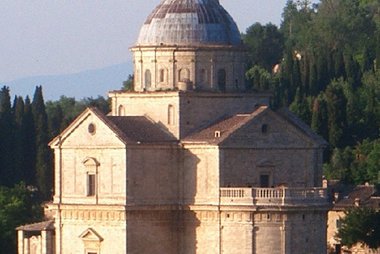

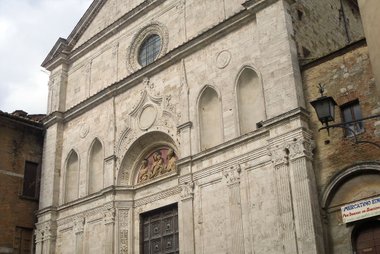
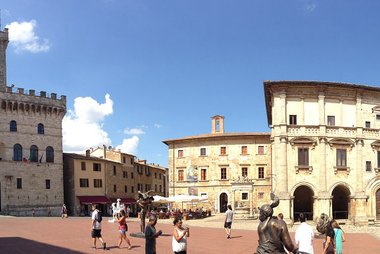
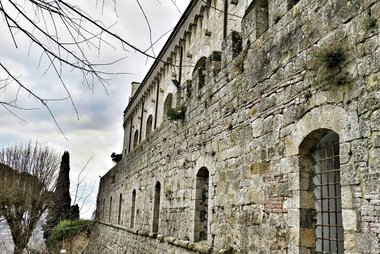
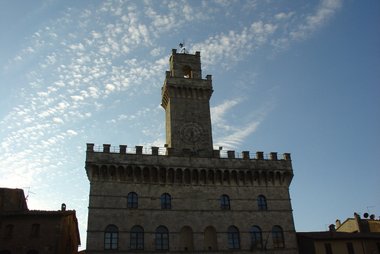
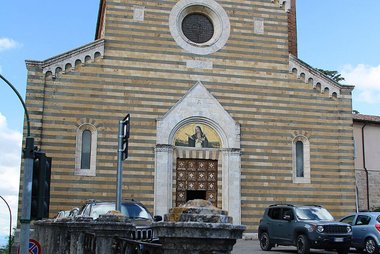
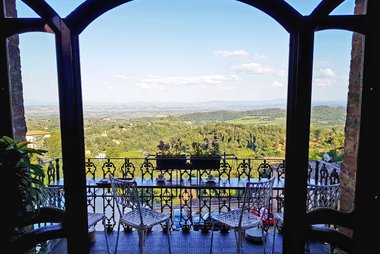
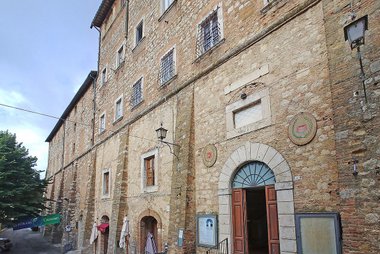
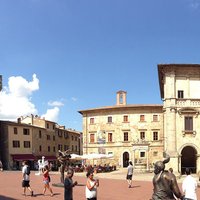
Piazza Grande is the town's main square, at the top of the hill. It is framed by the cathedral, the town hall and Renaissance palaces, with a decorated well of griffins and lions in one corner.
Tempio di San Biagio stands alone on a lawn below the walls, about a 10-minute walk downhill. This domed church in pale travertine was designed by Antonio da Sangallo the Elder and begun in 1518.
Cattedrale di Santa Maria Assunta has a plain, unfinished brick facade. Inside, the main altar holds a large gilded altarpiece of the Assumption by Taddeo di Bartolo, painted in 1401.
Palazzo Comunale is the Gothic town hall on the square, remodelled in the 15th century. Its tower is open to visitors and gives wide views over both valleys.
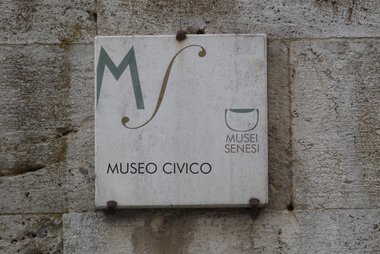
Museo Civico e Pinacoteca Crociani fills a medieval palace near the square. It shows Sienese and Florentine paintings, glazed terracottas and Etruscan finds from the area.
Chiesa di Sant'Agostino is a church on the main street with a Renaissance facade attributed to Michelozzo. Across the small square, a clock tower is topped by a figure of Pulcinella who strikes the hours.
Fortezza Medicea sits at the highest point of the hill. The fortress was first built by Siena and later rebuilt under Florentine rule, and it now hosts events and exhibitions.
Teatro Poliziano is a small horseshoe-shaped theatre completed in 1796. It is the main stage of the town's July arts festival.
Utvalgte lister
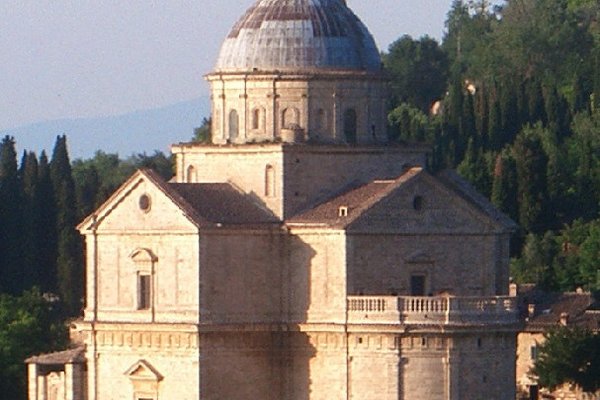

Churches and Sanctuaries
Montepulciano's churches range from the Renaissance Tempio di San Biagio below the walls to the cathedral on Piazza Grande, Michelozzo's Sant'Agostino and the sanctuary of the town's patron saint, Agnes. Two quiet rural sanctuaries in the surrounding countryside complete the list.
6 steder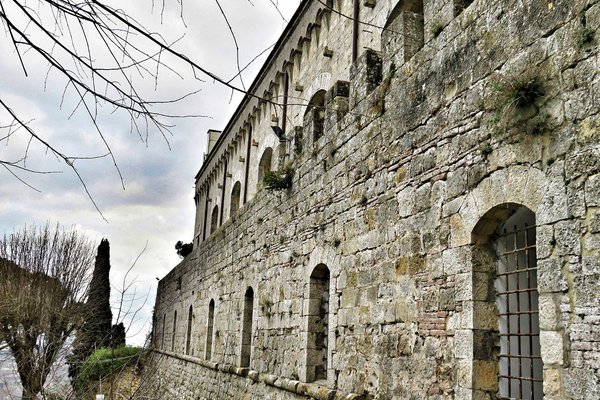

Parks and Viewpoints
This selection covers the diverse landscapes of Montepulciano and its surroundings, from the medieval Palazzo Comunale tower to the lakeside Oasi di Montepulciano. It includes historic thermal parks like Parco Sant'Elena in nearby Chianciano Terme, urban green spaces such as Giardino Don Marcello del Balio, and the birdwatching trails of the local nature reserve. These sites offer a mix of historic architecture, recreational facilities, and natural wetland habitats within the Val di Chiana.
13 steder
Regional Food & Wine
Montepulciano’s culinary landscape is defined by Vino Nobile di Montepulciano and high-quality Chianina beef. This selection features historic cellars carved into the town's volcanic rock, such as the 16th-century Talosa and the ancient Contucci vaults. Regional dining options range from rustic farm-to-table estates like Fattoria Pulcino to specialized artisan pasta shops and renowned wineries like Avignonesi and Poliziano, offering a comprehensive look at the region’s viticulture and traditional Sienese flavors.
13 stederOpplevelser verdt å få med seg
The best moments here are tied to the town's festivals, views and countryside.
- Watch the Bravìo delle Botti: on the last Sunday of August, cheer the barrel pushers on the steep final stretch to Piazza Grande.
- Walk down to San Biagio at sunset: follow the cypress-lined road downhill from the walls to Tempio di San Biagio, when the stone glows gold in the evening light.
- Hear the Pulcinella clock strike: wait in front of Chiesa di Sant'Agostino for the figure on the clock tower to strike the hour.
- Catch a concert at the summer festival: in July, the Cantiere Internazionale d'Arte puts on opera, concerts and theatre in Teatro Poliziano and the squares.
- Hike the wetlands of Lake Montepulciano: a small nature reserve in the valley has boardwalks and birdwatching hides.
Turer og aktiviteter
Montepulciano – Kart

Dagsturer
Montepulciano sits between two of Tuscany's most scenic valleys, so many famous towns are close. A car gives the most freedom, as bus links between the villages are infrequent.
- Pienza — ≈20 min by car. A small Renaissance town planned by Pope Pius II, with views over the Val d'Orcia and shops selling local pecorino cheese.
- Chiusi — ≈30 min by car. An old Etruscan town with a good archaeological museum and painted Etruscan tombs nearby.
- Bagno Vignoni — ≈30 min by car. A tiny spa village whose main square is a large pool of steaming thermal water.
- Castiglione del Lago — ≈30 min by car. A walled town on a headland above Lake Trasimeno, just over the border in Umbria.
- Montalcino — ≈40 min by car. A hilltop town with a fortress, home of the Brunello red wine.
- Cortona — ≈40 min by car. A steep Etruscan and medieval town with wide views over the Val di Chiana.
- Siena — ≈1 hour by car; public transport takes 2 hours or more. The great Gothic city of the Campo square and the Duomo.
Steder å utforske
Montepulciano combines well with other classic Tuscan stops on a longer trip.
- Nearby hill towns: Pienza, Montalcino and Cortona.
- Further afield: San Gimignano, Volterra and the Chianti town of Greve in Chianti.
- Cities: Siena and Florence.
Reise dit
Montepulciano stands on a hilltop with no railway in the old town. Most visitors arrive by car, or by train and bus.
- By air: Perugia Airport (PEG) is the closest, about 1 hour by car. Florence Airport (FLR) is about 1.5 hours by car, and Rome Fiumicino (FCO) just over 2 hours. From Florence or Rome, continue by train and bus as below.
- By train: the most useful station is Chiusi-Chianciano Terme, on the main line between Florence and Rome, served by regional trains. Smaller Montepulciano station, in the valley north-east of town, has a few regional trains on the line from Siena. Buy a combined train and bus ticket to "Montepulciano Centro". Trenitalia
- By bus: Autolinee Toscane buses run from the square in front of both stations up to the old town. Buses to Siena take about 2–2.5 hours, usually with a change at Buonconvento. Autolinee Toscane
- By car: take the A1 motorway to the Valdichiana exit, about 20 minutes from town.
Komme seg rundt
- On foot: the old town is about 1.5 km long, from Porta al Prato at the bottom to the fortress at the top. The main street is steep and paved with stone, so expect a steady climb.
- Buses: Autolinee Toscane buses link the town with its two railway stations and nearby villages. Buy tickets in the at bus app, at a tobacconist or ticket office, or as part of a Trenitalia train and bus ticket. Autolinee Toscane
- Cycling: the old town is too steep for casual cycling. The country roads below suit fit road cyclists and e-bike tours.
Kjøring
- Is a car worth it? Yes. A car is the easiest way to reach the town and to explore the Val d'Orcia and its wineries. You will not need it inside the walls.
- Restrictions: the whole historic centre is a limited traffic zone (ZTL) with camera-controlled gates. Only authorised vehicles may enter, and fines are sent automatically.
- Parking: use the numbered paid car parks around the outside of the walls. Pay at the machines on site. Those near Porta al Prato at the bottom of the main street fill first in summer, so arrive early.
Mat og drikke
Montepulciano is above all a wine town. Vino Nobile di Montepulciano is a red wine made mainly from Sangiovese, called Prugnolo Gentile here, and in 1980 it was one of the first Italian wines to gain DOCG status. Local menus feature thick hand-rolled pici pasta, Chianina beef, pecorino cheese from nearby Pienza and Vin Santo dessert wine.
For something distinctive, visit one of the historic wine cellars carved into the rock under the palaces along the main street and around Piazza Grande. Many offer tastings. For a coffee, Caffè Poliziano has a 19th-century interior and a terrace over the Val di Chiana. The quieter side streets have better value than the busiest stretch of the main street, and the farm restaurants and wineries in the countryside are worth the drive for a long lunch.
Sikkerhet og helse
Montepulciano is very safe, and violent crime is rare. The main nuisances are summer crowds and the occasional pickpocket in busy spots, so keep an eye on bags and phones.
The streets are steep and paved with stone, so wear good shoes and carry water on hot days. If you plan to taste wine in the cellars, do not drive afterwards; Italian drink-driving limits are strict.
Historie
Montepulciano began as an Etruscan settlement, and a local legend says it was founded by Lars Porsenna, king of nearby Chiusi. In the Middle Ages, rich farmland and its position between two valleys made the town a prize for its powerful neighbours, Siena and Florence.
After long struggles, Montepulciano came under Florence for good in the early 16th century. Colonna del Marzocco, topped by the lion of Florence, still marks that change of side. Florentine rule brought a building boom. Architects such as Antonio da Sangallo the Elder designed palaces along the main street and on Piazza Grande, and Sangallo designed Tempio di San Biagio just outside the walls.
Wine has been made here for centuries, and many palaces still have their old cellars underneath. The square also appears in the 2009 film The Twilight Saga: New Moon, where it stands in for Volterra.
Fakta om landet
Quick practical facts for Italy at a glance:
- Valuta
- euro EUR € · Kortbetaling · Allment akseptert
- Nødnumre
- 112
- Elektrisitet
- 230 V · 50 HzType C / Type F / Type L
- Språk
- italiensk
- Kranvann
- Trygt å drikke
- Kjøreside
- Høyre
- Retningsnummer
- +39

Montepulciano – Planlegg dagene dine
Gjør stedene fra denne guiden om til en ordentlig reiseplan, med smart ruteberegning, tidsestimater og alt du trenger for en perfekt reise.


Lignende destinasjoner



Data: © OpenStreetMap contributors, Wikidata, Wikipedia, Tripomatic, Official websites, geoBoundaries (CC BY 4.0). Tours by GetYourGuide. We earn commission from bookings. Travel guide generated with AI.
Planlegg reisen din med Tripomatic
- AI-drevet planleggingLa AI bygge reiseplanen din, svare på reisespørsmål og legge inn bestillingsdokumentene dine i reisen.
- ReisevarslerOffisielle reiseråd, ekstremvær, streiker og naturfarer for stedene på hver dag av reisen din.
- Helligdager og arrangementerSe høytidsdager, festivaler og stengte dager under reisen din, og hva de betyr for planene dine.
- KostnadsberegningAI-drevne kostnadsoverslag for reisen, slik at du har oversikt over budsjettet før du drar.
- Turer og billetterBestill turer, forbi-køen-billetter og aktiviteter direkte i reiseplanen din.