


Monterosso al Mare
Monterosso al Mare is the largest and northernmost of the five villages of the Cinque Terre. It is also the only one with long sandy beaches, which makes it the easiest base for a beach holiday on this steep coast. About 1,300 people live here.
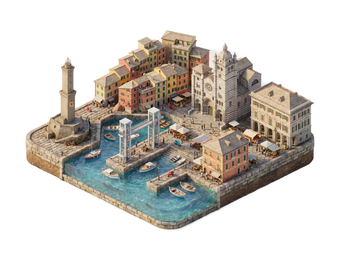
The village has two parts. The old town is a maze of narrow lanes, small squares and pastel houses around its parish church. Fegina, the newer district by the station, has most of the hotels and the long seafront. A short tunnel and a seafront path below San Cristoforo hill link the two. Monterosso is flatter than the other villages and has more hotels and restaurants, so it suits families and visitors who do not want steep climbs. The coastal path to Vernazza starts here, and trains reach the other villages in minutes. The poet Eugenio Montale, winner of the Nobel Prize in Literature, spent the summers of his childhood and youth in his family's villa in Fegina.

Monterosso al Mare – Planlegger du en reise?
Bygg reiseplanen din dag for dag i Tripomatic-appen.


Beste reisetidspunkt
May, June and September are the best months for hiking. The sea is warm enough for swimming from June to September. July and August are hot and humid, the beaches are full and the trains are crowded. October and November are the wettest months, and heavy rain can close the trails. In winter the village is quiet, and many hotels, restaurants and beach clubs close.
The biggest local event is the Lemon Festival on a weekend in mid-May. Shops and lanes are decorated in yellow, stalls sell lemon products, and prizes go to the best lemon cake and the biggest lemon.
Beste tid å besøke: mai, juni, juli, september
Hovedseverdigheter
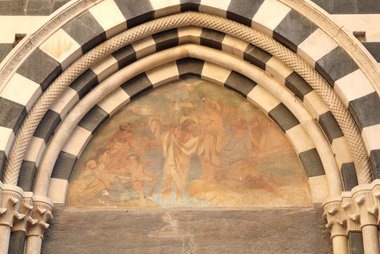
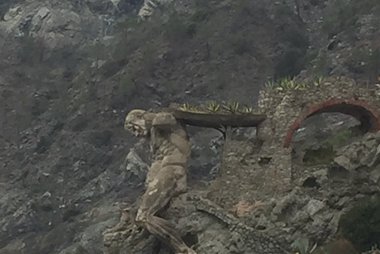
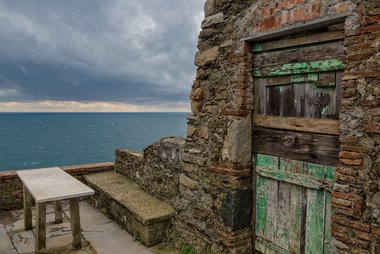
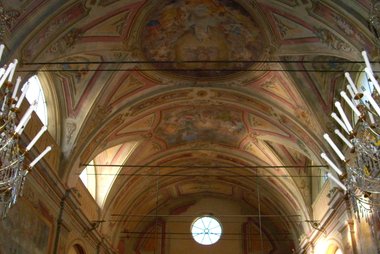
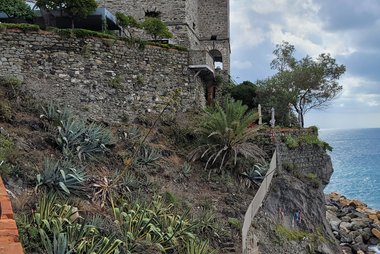
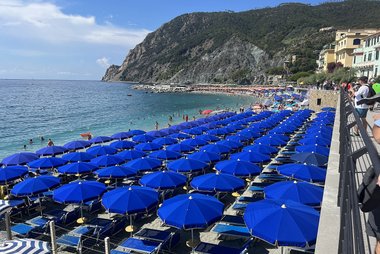
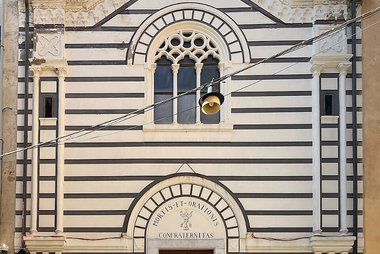
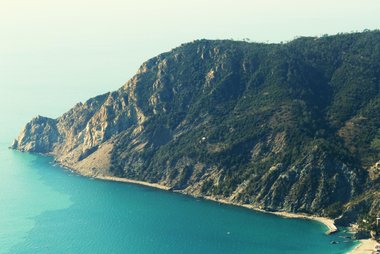
Monterosso's sights are spread between the old town, the hill above the harbour and the beach at Fegina. The sights in the village are within a 15-minute walk of each other. The hermitage and the sanctuary are short hikes into the hills.
Chiesa di San Giovanni Battista is the parish church in the heart of the old town, built between 1282 and 1307. Its facade has bands of white and dark green stone and a marble rose window, and a square bell tower stands beside it.
Oratorio dei Neri stands next to the parish church. It belongs to an old confraternity that cared for the burial of the dead, and skulls and other symbols of death decorate the interior.
Chiesa di San Francesco is the church of the Capuchin convent on San Cristoforo hill, consecrated in 1623. Inside is a Crucifixion attributed to Anthony van Dyck. The walk up the hill gives wide views over the coast.
Torre Aurora is a 16th-century watchtower on the cliff between the old town and Fegina. It was built to watch for pirates, and today it houses a bar with a terrace.
Spiaggia di Fegina is the longest sandy beach in the Cinque Terre. Most of it is lined with paid beach clubs, but there are free sections too.
Statua del Gigante is a 14-metre concrete figure of Neptune at the western end of Fegina beach. It once decorated a seaside villa and was damaged by bombs in the Second World War and by storms.
Eremo di Sant'Antonio del Mesco is the ruin of a medieval hermitage at about 311 metres on the headland of Punta Mesco. The path from Fegina climbs through pine woods, and the view stretches along the whole Cinque Terre coast.
Santuario di Nostra Signora di Soviore is a Marian sanctuary in the hills about 465 metres above the village, first recorded in 1244. A steep old mule track leads up to it from the old town.
Utvalgte lister


Opplevelser verdt å få med seg
Monterosso is the place in the Cinque Terre for a slow day by the sea.
- Hike over Punta Mesco: Climb through the pine woods past the hermitage ruins and walk down to Levanto on the other side. Return by train in 4 minutes.
- See the coast from the sea: Take the seasonal ferry south along the coast, or rent a kayak or small boat from the beach in calm weather.
- Join the Lemon Festival: In mid-May the old town fills with yellow decorations, stalls and prizes for the best lemon cake.
Turer og aktiviteter
Monterosso al Mare – Kart

Dagsturer
Monterosso is at the northern end of the coastal railway through the Cinque Terre, so every village is a short train ride away. Times are one way.
- Vernazza – about 4 minutes by train, or about 2 hours on the coastal path. A tiny harbour with a church on the rocks and a medieval tower.
- Levanto – about 4 minutes by train, or about 3.5 hours on foot over Punta Mesco. A relaxed beach town with a wide beach and a small old centre.
- Corniglia – about 10 minutes by train. The only village high on a cliff, reached from the station by a long flight of steps or a shuttle bus.
- Riomaggiore and Manarola – about 15–20 minutes by train. Colourful houses on steep rocks, and the Via dell'Amore seaside path between the two; book a time slot ahead for it.
- La Spezia – about 15–25 minutes by train. The provincial capital and main rail hub, with a naval museum and a long seafront.
- Porto Venere – about 1.5 hours by seasonal ferry with stops in the villages, or by train and bus via La Spezia. A harbour town at the tip of the gulf, with a church on the rocks.
- Santa Margherita Ligure and Portofino – about 1 hour by train to Santa Margherita, then a short bus or boat ride. Riviera resort towns with yacht harbours.
- Pisa – about 1 hour 10 minutes to 1 hour 45 minutes by train. A few trains run direct; otherwise change in La Spezia. Home of the Leaning Tower.
Steder å utforske
Monterosso is part of the Cinque Terre. For the whole area, its trails and the train, see Cinque Terre.
- Vernazza is the next village to the south, and Corniglia sits on its cliff beyond.
- Riomaggiore is at the southern end of the Cinque Terre.
Farther along the coast:
Reise dit
Most visitors arrive by train. Monterosso is also the easiest Cinque Terre village to reach by car.
- By air: Pisa International Airport and Genoa Airport are the nearest large airports. From Pisa, take the Pisa Mover shuttle to Pisa Centrale, then a train to La Spezia and a local train to Monterosso; allow about 2–2.5 hours. From Genoa, take the airport bus into the city, then a train south; the train takes about 1.5 hours.
- By train: Monterosso station is on the seafront in Fegina. Local trains from La Spezia take about 15–25 minutes, and some Intercity trains on the coastal line between Genoa and La Spezia stop here. From Florence, change in Pisa or La Spezia.
- By ferry: From spring to autumn, boats from La Spezia, Porto Venere, Levanto and the other villages except Corniglia stop at Monterosso. They do not run in bad weather.
- By car: A narrow, winding road leads down from the hills above Levanto. See the driving section for parking.
Komme seg rundt
- On foot: The old town and Fegina are both small and mostly flat. A 10-minute walk along the seafront, or through the tunnel, links them.
- Train: Regional trains link Monterosso with the other villages in a few minutes, and run every 20–30 minutes in the busy season. Buy tickets at the station, in the Trenitalia app or online, and validate a paper ticket before you board. Trenitalia
- Cinque Terre Card: The coastal path from Monterosso to Vernazza is a paid section, checked by park staff. The Trekking Card covers the trails, the Via dell'Amore and the village buses; the Train Card adds unlimited trains between La Spezia and Levanto. Buy it online or at the park office in the station. Cinque Terre Card
- Hiking: Monterosso to Vernazza takes about 2 hours. The park rates it as an expert trail: a narrow path with many steps, and a demanding hike for families. On the busiest spring holiday days, this section can be one-way only, from Monterosso towards Vernazza, until early afternoon. The free path over Punta Mesco to Levanto takes about 3.5 hours.
- Ferry: Seasonal boats leave from the pier below the old town. They are slower than the train, but give the best views of the coast.
- Cycling: Not practical outside the seafront.
Kjøring
- Is a car worth it?: Not for the Cinque Terre itself. The train is faster and easier for every trip along the coast, but Monterosso is the one village where arriving by car is realistic.
- Parking: A large paid car park sits on the seafront in Fegina, near the station. It fills early in summer. You can also park in La Spezia or Levanto and take the train.
- Restrictions: The old town is closed to visitors' cars. Ask your hotel before you arrive if you need to unload.
Mat og drikke
Monterosso follows the Ligurian kitchen: basil pesto with trofie pasta, focaccia and seafood. The village is known for its anchovies, served fresh, fried or marinated, and preserved in salt. Lemons grow on the terraces above the village and go into cakes, jams and limoncino, a lemon liqueur. The steep vineyards produce Cinque Terre white wine and the sweet Sciacchetrà, made from dried grapes.
Restaurants cluster in the lanes and small squares of the old town, and along the seafront in Fegina. For a cheap lunch, buy focaccia or fried seafood in a paper cone and eat it on the beach. Book dinner ahead in summer.
Sikkerhet og helse
Monterosso is very safe, and serious crime is rare. The main risks are practical:
- Crowds: Trains, platforms and the seafront are packed in summer. Keep an eye on bags and phones.
- Trails: The coastal paths are narrow, rocky and steep, with little shade. Flip-flops and smooth-soled shoes are banned on the trails, and fines apply. Carry water and avoid the midday heat.
- Closures: Landslides and storms close sections often. Check the trail status before you leave, and stay off the trails during heavy-rain alerts. Cinque Terre National Park
- The sea: Swim only in calm water and watch for red flags at the beach clubs. Waves can be strong in bad weather.
Historie
Monterosso grew up in the Middle Ages as a fortified village, and by the 13th century it was part of the Republic of Genoa. The wealth of that time shows in Chiesa di San Giovanni Battista, finished in 1307. Pirate raids were a constant danger, so the village built walls, a castle on San Cristoforo hill and lookout towers. Torre Aurora still stands on the headland between the old town and Fegina.
In the 17th century the Capuchin friars built their convent on the hill, where Chiesa di San Francesco still stands. For centuries people lived from fishing, especially anchovies, and from vines, olives and lemons on terraces they built by hand. The railway arrived in the 1870s and ended the village's isolation. In the early 20th century Fegina grew into a seaside resort, and Statua del Gigante was made for one of its villas.
On 25 October 2011 a flash flood hit Monterosso and Vernazza and filled the streets with mud. The village was cleared and rebuilt. Today the whole coast is a national park and a UNESCO World Heritage Site.
Fakta om landet
Quick practical facts for Italy at a glance:
- Valuta
- euro EUR € · Kortbetaling · Allment akseptert
- Nødnumre
- 112
- Elektrisitet
- 230 V · 50 HzType C / Type F / Type L
- Språk
- italiensk
- Kranvann
- Trygt å drikke
- Kjøreside
- Høyre
- Retningsnummer
- +39


Monterosso al Mare – Planlegg dagene dine
Gjør stedene fra denne guiden om til en ordentlig reiseplan, med smart ruteberegning, tidsestimater og alt du trenger for en perfekt reise.


Lignende destinasjoner

Data: © OpenStreetMap contributors, Wikidata, Wikipedia, Tripomatic, Official websites, geoBoundaries (CC BY 4.0). Tours by GetYourGuide. We earn commission from bookings. Travel guide generated with AI.
Planlegg reisen din med Tripomatic
- AI-drevet planleggingLa AI bygge reiseplanen din, svare på reisespørsmål og legge inn bestillingsdokumentene dine i reisen.
- ReisevarslerOffisielle reiseråd, ekstremvær, streiker og naturfarer for stedene på hver dag av reisen din.
- Helligdager og arrangementerSe høytidsdager, festivaler og stengte dager under reisen din, og hva de betyr for planene dine.
- KostnadsberegningAI-drevne kostnadsoverslag for reisen, slik at du har oversikt over budsjettet før du drar.
- Turer og billetterBestill turer, forbi-køen-billetter og aktiviteter direkte i reiseplanen din.