


Tarragona
Tarragona is a port city on the Mediterranean coast of Catalonia, about 90 km southwest of Barcelona. It was a major Roman capital, and its Roman ruins are a UNESCO World Heritage Site.
The city has a hill-top old town, a seaside amphitheatre and sandy beaches close to the center. It suits one or two days of history, with time for the beach.

Tarragona – planujesz wycieczkę?
Stwórz swój plan podróży dzień po dniu w aplikacji Tripomatic.


Kiedy jechać
Late spring and early autumn are the best seasons, with warm days and a sea that is good for swimming. Summer is hot. Winter is mild and mostly dry.
The biggest event is the Santa Tecla festival around 23 September. It has human towers (castells), giant figures and street parties.
Najlepszy czas na wizytę: kwiecień, maj, czerwiec, lipiec, wrzesień, październik
Główne zabytki


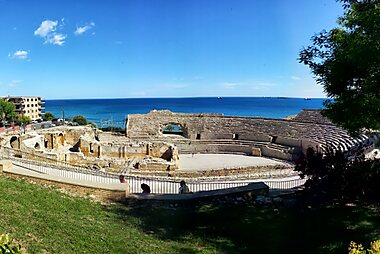


- Amfiteatre Romà stands beside the sea and was used for gladiator fights in Roman times. It is the city's best-known sight.
- Tárraco is the Roman city. Walls, a circus and a forum are spread across the center.
- Museu Arqueològic de Tarragona shows mosaics and objects from Roman Tarraco.
- Catedral de Tarragona is a large church on the highest point of the old town. It mixes Romanesque and Gothic styles and has a cloister.
- Ferreres Aqueduct is a Roman aqueduct bridge a few km north of the city, called the Devil's Bridge.
- Scipio Tower is a Roman tomb tower beside an old road outside the city.
- The Balcó del Mediterrani is a viewpoint at the end of the Rambla Nova, high above the sea.
Polecane zestawienia


Czego warto doświadczyć
- Watch a castells display during the Santa Tecla festival. Teams build human towers several levels high in the city squares.
- Eat seafood at the Serrallo, the old fishermen's quarter by the port.
Wycieczki i aktywności
Tarragona — Mapa

 Otwórz interaktywną mapę
Wycieczki jednodniowe
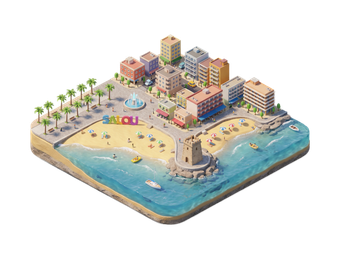
- Salou (about 12 km, 20 minutes by bus or car): a beach resort. The PortAventura theme park is nearby.
- Cambrils (about 20 km, 25 minutes by car): a fishing port known for seafood.
- Poblet Monastery (about 45 km, 50 minutes by car): a large Cistercian monastery in the hills.
- Barcelona (about 1 hour by train): the regional capital.
Gdzie warto się udać
Jak dotrzeć
- By air: Reus airport (REU) is about 12 km away. Barcelona airport (BCN) is about 90 km away.
- By train: Regional trains from Barcelona take about 1 hour 10 minutes to Tarragona station, near the sea. High-speed trains stop at Camp de Tarragona, about 10 km outside the city, so check which station your ticket uses. Book on Renfe.
- By bus: Buses link Tarragona with Barcelona and the coast.
Poruszanie się na miejscu
- On foot: The old town and the Roman sights are compact, but the old town is on a hill.
- Cycling: Cycling is possible along the sea, but the old town is steep.
Prowadzenie samochodu
- Is a car worth it?: Not for the center. A car helps for the aqueduct and for trips along the coast.
- Parking: Use a car park near the Rambla Nova or the port.
- Restrictions: Streets in the old town are narrow, and some are closed to normal traffic.
Jedzenie i napoje
Tarragona is the home of romesco, a sauce of peppers, nuts and garlic served with fish and vegetables. Seafood is very fresh, and rice dishes are common.
Go to the Serrallo district near the port for fish restaurants. The Rambla Nova and the streets of the old town have many bars for tapas.
Bezpieczeństwo i zdrowie
Tarragona is a safe city. Keep your bag closed on the beach and in crowded streets in summer. In hot weather the Roman sites have little shade, so carry water.
Historia
The Romans founded Tarraco in the 3rd century BC, and it became the capital of a large province. The Amfiteatre Romà dates from the 2nd century AD.
After Rome, the city declined and later grew again in the Middle Ages. Catedral de Tarragona was built from the 12th century on the site of a Roman temple area. Today the Roman monuments and the medieval center sit side by side.
Informacje o kraju
Quick practical facts for Spain at a glance:
- Waluta
- euro EUR € · Płatności kartą · Powszechnie akceptowane
- Numery alarmowe
- 112
- Elektryczność
- 230 V · 50 HzTyp C / Typ F
- Języki
- hiszpański
- Woda z kranu
- Zdatna do picia
- Ruch drogowy
- Prawostronny
- Numer kierunkowy
- +34


Tarragona – zaplanuj swoje dni
Zmień miejsca z tego przewodnika w prawdziwy plan podróży z inteligentnym wyznaczaniem tras, szacowanym czasem i wszystkim, czego potrzebujesz na udaną wycieczkę.


Powiązane cele podróży

Data: © OpenStreetMap contributors, Wikidata, Wikipedia, Tripomatic, Official websites. Tours by GetYourGuide. We earn commission from bookings. Travel guide generated with AI.