Tripomatic

Tarragona

City · Catalonia, 🇪🇸 Spain

Tarragona is a port city on the Mediterranean coast of Catalonia, about 90 km southwest of Barcelona. It was a major Roman capital, and its Roman ruins are a UNESCO World Heritage Site.

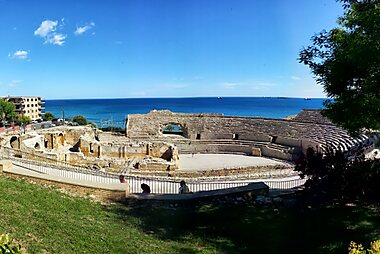
The city has a hill-top old town, a seaside amphitheatre and sandy beaches close to the center. It suits one or two days of history, with time for the beach.

Printable tourist map

Tarragona

Tarragona – Planning a Trip?

Build your day-by-day itinerary in the Tripomatic app.

When to visit

Late spring and early autumn are the best seasons, with warm days and a sea that is good for swimming. Summer is hot. Winter is mild and mostly dry.

The biggest event is the Santa Tecla festival around 23 September. It has human towers (castells), giant figures and street parties.

Best time to visit: April, May, June, July, September, October

Select a month

Typical weather in January

Fair
  • 13° (feels like 9°) · extremes 1°–17°
  • 5° at night
  • 6 rainy days
  • 10 sunny days
  • 5 hours of sunshine per day
  • Dry air
  • Light breeze
  • 14°C · too cold to swim
  • UV index 1 · low

Typical weather in February

Good
  • 14° (feels like 10°) · extremes 1°–19°
  • 5° at night
  • 5 rainy days
  • 13 sunny days
  • 6 hours of sunshine per day
  • Dry air
  • Light breeze
  • 13°C · too cold to swim
  • UV index 2 · low

Typical weather in March

Good
  • 17° (feels like 13°) · extremes 4°–22°
  • 8° at night
  • 7 rainy days
  • 16 sunny days
  • 7 hours of sunshine per day
  • Dry air
  • Light breeze
  • 14°C · too cold to swim
  • UV index 4 · moderate

Typical weather in April

Great
  • 19° (feels like 16°) · extremes 6°–23°
  • 10° at night
  • 8 rainy days
  • 15 sunny days
  • 8 hours of sunshine per day
  • Dry air
  • Calm winds
  • 15°C · too cold to swim
  • UV index 5 · moderate

Typical weather in May

Great
  • 22° (feels like 21°) · extremes 9°–27°
  • 13° at night
  • 7 rainy days
  • 18 sunny days
  • 10 hours of sunshine per day
  • Dry air
  • Calm winds
  • 18°C · too cold to swim
  • UV index 6 · high

Typical weather in June

Great
  • 27° (feels like 26°) · extremes 14°–31°
  • 17° at night
  • 5 rainy days
  • 20 sunny days
  • 11 hours of sunshine per day
  • Comfortable humidity
  • Calm winds
  • 22°C · cool for a dip
  • UV index 8 · very high

Typical weather in July

Great
  • 29° (feels like 30°) · extremes 17°–33°
  • 20° at night
  • 4 rainy days
  • 24 sunny days
  • 12 hours of sunshine per day
  • Humid air
  • Calm winds
  • 25°C · warm for swimming
  • UV index 8 · very high

Typical weather in August

Good
  • 29° (feels like 30°) · extremes 17°–34°
  • 21° at night
  • 7 rainy days
  • 21 sunny days
  • 10 hours of sunshine per day
  • Muggy, humid air
  • Calm winds
  • 26°C · warm for swimming
  • UV index 7 · high

Typical weather in September

Great
  • 25° (feels like 26°) · extremes 14°–29°
  • 18° at night
  • 10 rainy days
  • 16 sunny days
  • 8 hours of sunshine per day
  • Comfortable humidity
  • Calm winds
  • 25°C · warm for swimming
  • UV index 5 · moderate

Typical weather in October

Great
  • 22° (feels like 21°) · extremes 10°–27°
  • 14° at night
  • 9 rainy days
  • 13 sunny days
  • 7 hours of sunshine per day
  • Comfortable humidity
  • Calm winds
  • 22°C · cool for a dip
  • UV index 3 · moderate

Typical weather in November

Good
  • 16° (feels like 13°) · extremes 4°–21°
  • 9° at night
  • 6 rainy days
  • 11 sunny days
  • 5 hours of sunshine per day
  • Dry air
  • Light breeze
  • 18°C · cool for a dip
  • UV index 2 · low

Typical weather in December

Good
  • 13° (feels like 10°) · extremes 1°–17°
  • 6° at night
  • 6 rainy days
  • 9 sunny days
  • 5 hours of sunshine per day
  • Dry air
  • Light breeze
  • 15°C · too cold to swim
  • UV index 1 · low

Climate data: NASA POWER + Copernicus ERA5-Land and ERA5 · 1996–2025

Top sights

  • Amfiteatre Romà stands beside the sea and was used for gladiator fights in Roman times. It is the city's best-known sight.
  • Tárraco is the Roman city. Walls, a circus and a forum are spread across the center.
  • Museu Arqueològic de Tarragona shows mosaics and objects from Roman Tarraco.
  • Catedral de Tarragona is a large church on the highest point of the old town. It mixes Romanesque and Gothic styles and has a cloister.
  • Ferreres Aqueduct is a Roman aqueduct bridge a few km north of the city, called the Devil's Bridge.
  • Scipio Tower is a Roman tomb tower beside an old road outside the city.
  • The Balcó del Mediterrani is a viewpoint at the end of the Rambla Nova, high above the sea.

Featured Lists

What to experience

  • Watch a castells display during the Santa Tecla festival. Teams build human towers several levels high in the city squares.
  • Eat seafood at the Serrallo, the old fishermen's quarter by the port.

Tours & Activities

Tarragona — Map

Tarragona — Map

Day trips

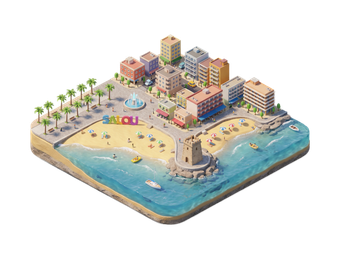
  • Salou (about 12 km, 20 minutes by bus or car): a beach resort. The PortAventura theme park is nearby.
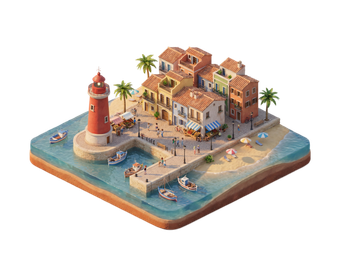
  • Cambrils (about 20 km, 25 minutes by car): a fishing port known for seafood.
  • Poblet Monastery (about 45 km, 50 minutes by car): a large Cistercian monastery in the hills.
  • Barcelona (about 1 hour by train): the regional capital.

Where to explore

Other places nearby:

Getting there

  • By air: Reus airport (REU) is about 12 km away. Barcelona airport (BCN) is about 90 km away.
  • By train: Regional trains from Barcelona take about 1 hour 10 minutes to Tarragona station, near the sea. High-speed trains stop at Camp de Tarragona, about 10 km outside the city, so check which station your ticket uses. Book on Renfe.
  • By bus: Buses link Tarragona with Barcelona and the coast.

Getting around

  • On foot: The old town and the Roman sights are compact, but the old town is on a hill.
  • Cycling: Cycling is possible along the sea, but the old town is steep.

Driving

  • Is a car worth it?: Not for the center. A car helps for the aqueduct and for trips along the coast.
  • Parking: Use a car park near the Rambla Nova or the port.
  • Restrictions: Streets in the old town are narrow, and some are closed to normal traffic.

Food & drink

Tarragona is the home of romesco, a sauce of peppers, nuts and garlic served with fish and vegetables. Seafood is very fresh, and rice dishes are common.

Go to the Serrallo district near the port for fish restaurants. The Rambla Nova and the streets of the old town have many bars for tapas.

Breakfast
Churros  Churros con ChocolateFried dough sticks served with a thick, dark hot chocolate for dipping — a classic Spanish breakfast or late-night snack.
Lunch
Paella ValencianaA saffron-scented rice dish cooked in a wide, shallow pan. The traditional Valencian version uses chicken, rabbit, and green beans — best eaten at midday.
GazpachoA cold, blended soup of raw tomatoes, cucumber, pepper, garlic, olive oil, and vinegar, originally from Andalusia. Served as a drink or a starter, especially in summer.
Dinner
Pulpo a la GallegaBoiled octopus sliced onto a wooden board and dressed with olive oil, coarse salt, and smoked paprika — a signature dish of Galicia.
Snacks & street food
Jamón IbéricoDry-cured ham from acorn-fed Iberian pigs, sliced paper-thin and eaten on its own or with bread. The finest grade, jamón ibérico de bellota, is one of Spain's most prized products.
Tortilla EspañolaA thick potato and egg omelette, served warm or at room temperature, found in virtually every bar in Spain. Often eaten as a tapa or a quick meal.
Patatas BravasFried potato chunks served with a spicy tomato sauce or aioli — one of the most common tapas across the country.
PintxosSmall snacks anchored to slices of bread with a toothpick, the Basque Country's answer to tapas. Found in bar counters across San Sebastián and Bilbao, often with elaborate toppings.
CroquetasCrispy breaded cylinders with a creamy béchamel filling, typically made with jamón, bacalà (salt cod), or mushrooms.
Drinks
Rioja Wine  Vino de RiojaSpain's best-known wine region produces full-bodied reds from Tempranillo grapes, aged in oak. The crianza, reserva, and gran reserva labels indicate increasing age and complexity.

Safety & health

Tarragona is a safe city. Keep your bag closed on the beach and in crowded streets in summer. In hot weather the Roman sites have little shade, so carry water.

History

The Romans founded Tarraco in the 3rd century BC, and it became the capital of a large province. The Amfiteatre Romà dates from the 2nd century AD.

After Rome, the city declined and later grew again in the Middle Ages. Catedral de Tarragona was built from the 12th century on the site of a Roman temple area. Today the Roman monuments and the medieval center sit side by side.

Country facts

Quick practical facts for Spain at a glance:

Currency
Euro EUR € · Card payments · Widely accepted
Emergency numbers
112
Electricity
Type C / Type F
230 V · 50 Hz
Languages
Spanish
Tap water
Safe to drink
Driving side
Right
Calling code
+34
Learn more
Archaeological Ensemble of Tarraco
Walk
Roman Amphitheater
Walk
Tarragona Cathedral

Tarragona – Plan Your Days

Turn the places from this guide into a real itinerary, with smart routing, time estimates, and everything you need for a perfect trip.


3M+ downloads · 4.6 stars · 15 years of trip planning
QR code
Scan to download the app

Related destinations

Data: © OpenStreetMap contributors, Wikidata, Wikipedia, Tripomatic, Official websites. Travel guide generated with AI.