



Valletta
Valletta is Malta's capital, built on a narrow peninsula between two natural harbours. The Knights of St John founded the city in 1566, right after surviving the Great Siege of 1565, and packed it with churches, palaces and fortifications in barely 55 hectares. The whole city is a UNESCO World Heritage Site, and it shows: almost every street holds a Baroque facade or a limestone monument.
Valletta suits a traveler who wants history and architecture close together and easy to reach on foot. Most sights sit within a 20-minute walk of each other, so a single full day covers the highlights, though the city rewards a second, slower visit. The Knights' Grand Master Jean de Valette, who led the defence during the siege and gave the city his name, is buried in the crypt of St. John's Co-Cathedral.

Valletta – planujesz wycieczkę?
Stwórz swój plan podróży dzień po dniu w aplikacji Tripomatic.


Kiedy jechać
Spring (April–May) and autumn (September–October) are mild and the most comfortable for walking the city's steep streets. Summer is hot and dry with little rain, and winter is mild but brings occasional storms.
Plan around Notte Bianca, Malta's largest annual arts festival, held on a single Saturday night each October. Valletta's palaces, museums and squares stay open until late with free music, dance and street performances, and the whole city turns into an open-air stage.
Najlepszy czas na wizytę: kwiecień, maj, czerwiec, lipiec, sierpień, wrzesień, październik
July and August bring the heat and the crowds; the shoulder months keep the same sunshine with a more comfortable pace for sightseeing.
Główne zabytki
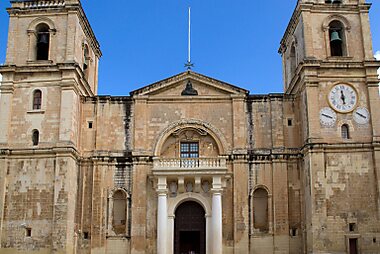


St. John's Co-Cathedral looks plain from the street, but its interior is one of the richest Baroque spaces in Europe, covered floor to ceiling in carved and gilded stone. It also holds two paintings by Caravaggio, including his only signed work.
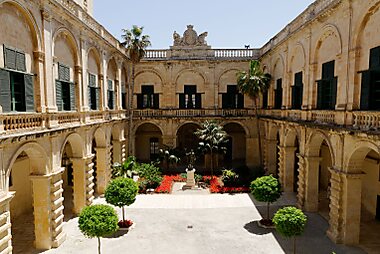
Grandmaster's Palace was the Grand Master's residence and is now the office of Malta's President. Part of it is open as a museum, with State Rooms and an armoury of Knights-era weapons and armor.
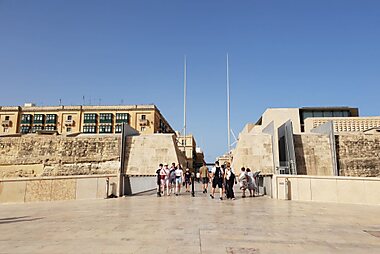
Valletta's entrance is a lesson in three centuries of design at once: the current City Gate and the Parliament Building beside it, both completed in 2014–2015 to designs by Renzo Piano, sit next to the ruins of the old opera house and centuries-old bastion walls.
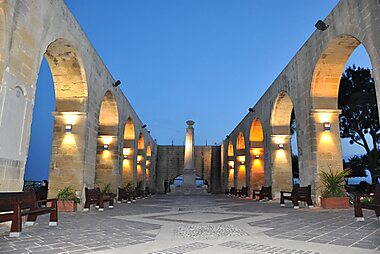
Upper Barrakka Gardens sits on the bastions above the Grand Harbour, with sweeping views across the water to the Three Cities. A saluting battery here still fires a cannon at noon and at 4 pm every day.
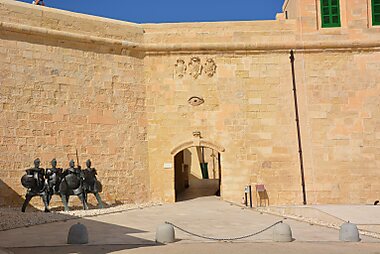
Fort St. Elmo guards the tip of the peninsula and was the site of the fiercest fighting in the 1565 siege. It now houses the National War Museum, covering Malta's military history through both World Wars.
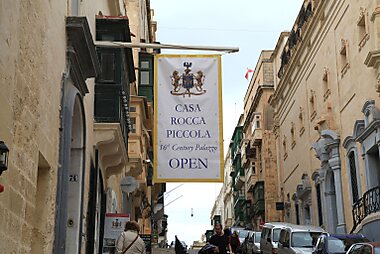
Casa Rocca Piccola is a lived-in 16th-century noble house, still home to a Maltese family, with a costume collection and a set of air-raid shelters cut into the rock below.
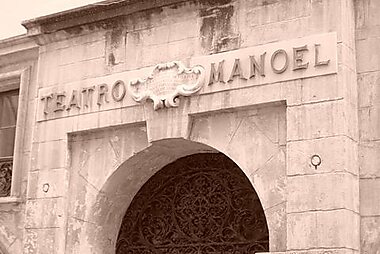
Manoel Theatre is one of Europe's oldest working theatres, built in 1731 in an oval auditorium of gilded wood. It still hosts opera and concerts today.
Lascaris War Rooms is a tunnel complex carved beneath the bastions that served as Britain's secret Second World War command centre for the defence of Malta. Guided tours walk through the original map rooms.
Polecane zestawienia


Czego warto doświadczyć
- Watch the noon gun fire from the historic Saluting Battery below Upper Barrakka Gardens, a tradition that has marked midday in the harbour for over a century; it fires again at 4 pm.
- Take the short ferry across the Grand Harbour to the Three Cities at sunset, when the fortifications and Valletta's skyline turn gold from the water.
- Join Notte Bianca in October, when Valletta's palaces and streets stay open through the night for free music, theatre and art.
- Catch a performance at Manoel Theatre, still an active opera and concert venue nearly 300 years after it opened.
Wycieczki i aktywności
Valletta — Mapa

 Otwórz interaktywną mapę
 Wycieczki jednodniowe
Malta is small enough that most of the island is a realistic day trip from Valletta.
- Mdina and Rabat — Malta's former capital, a walled hilltop town nicknamed the "Silent City" for its quiet, car-free streets. About 30–40 minutes by bus or car.
- Marsaxlokk — a working fishing village known for its harbour full of colorful traditional boats and a lively Sunday fish market. About 30–40 minutes by bus or car.
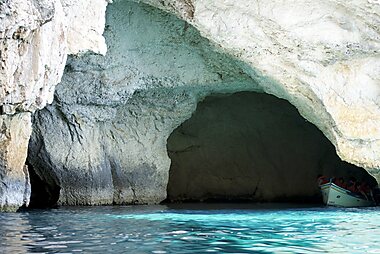
- Blue Grotto — a set of sea caves on the south coast, best seen on a short morning boat trip when the light turns the water bright blue. About 20–25 minutes by car, or up to 45 minutes by bus.
- Gozo — Malta's quieter sister island, with the citadel of Victoria and the prehistoric Ġgantija temples. Reachable by a 25-minute ferry from Ċirkewwa, roughly 1.5–2 hours total each way including the transfer across Malta — worth the full day.
Gdzie warto się udać
Several historic neighbours sit within a short walk or a quick ferry ride of Valletta and are easy to combine with a visit.
Right outside the bastions, Floriana is a planned garrison town with wide gardens and parade grounds built to defend Valletta's landward approach.
Across the Grand Harbour, a short ferry crossing away, are the Three Cities: Birgu, the Knights' original fortified base before Valletta existed, with the waterfront Fort Saint Angelo; Isla, a narrow fortified spur with sweeping harbour views; and Bormla, with its own dockside promenade.
Further around the harbour, Kalkara is a quieter waterside town, and Paola is home to the Ħal Saflieni Hypogeum, an underground Neolithic burial complex (book tickets well ahead — daily visitor numbers are strictly limited).
Jak dotrzeć
- By air: Malta International Airport (MLA) in Luqa is the island's only commercial airport, about 8 km from Valletta. Bus X4 runs directly to Valletta's bus terminus in around 25–30 minutes for a €2 ticket; a taxi takes about 20 minutes.
- By ferry: international fast ferries connect Valletta directly to Sicily (Pozzallo and Catania); Grand Harbour's Pinto Wharf also serves as Malta's main cruise terminal, putting cruise passengers within walking distance of the city gate.
- By bus: there is no railway in Malta. Valletta's bus terminus, just outside City Gate, is the hub of the entire island's bus network, with direct routes from every major town.
Poruszanie się na miejscu
- Public transit: Valletta's bus terminus outside City Gate is the starting point for buses across Malta. Buy a tallinja card or, on busy routes, tap a contactless bank card or phone directly when boarding — Malta Public Transport.
- Ferry: passenger ferries cross Marsamxett Harbour to Sliema and the Grand Harbour to Birgu (Vittoriosa), a scenic and often faster alternative to the bus for short hops.
- On foot: the historic core is compact and largely pedestrianized, but very hilly, with long staircase streets running down to both harbours. The Barrakka Lift connects the waterfront to Upper Barrakka Gardens in seconds and saves a steep climb.
- Cycling: not practical — the steep terrain, stairs and narrow streets rule out cycling within the city.
Prowadzenie samochodu
- Is a car worth it?: not inside Valletta. The city is small, largely pedestrianized and hard to navigate by car; rent one only if you plan to explore the rest of Malta beyond a single day trip.
- Parking: park outside the bastions — Floriana's Park and Ride or the MCC car park are the easiest options — and walk in through City Gate.
- Restrictions: Valletta enforces a camera-based Controlled Vehicular Access charge for cars entering the peninsula on weekdays from 08:00 to 14:00; it applies to hire cars as well as local ones, so factor it in if you are driving a rental into the city during those hours.
Jedzenie i napoje
Valletta's dining leans toward small, family-run spots serving Maltese staples like fenkata (rabbit) and pastizzi, alongside a growing number of upscale restaurants in restored palazzos.
For a single stop that covers a wide range of options, head to Valletta Food Market, a restored 19th-century iron market hall now packed with food stalls and small kitchens. Otherwise, the streets around Strait Street — once the city's rowdy sailors' quarter — now cluster bars and casual restaurants, and are a good area to wander for dinner.
Bezpieczeństwo i zdrowie
Valletta is a safe city for tourists day and night, with petty theft and pickpocketing in busy tourist spots the main thing to watch for, as in any capital city. Keep bags closed and phones out of back pockets around Republic Street and the bus terminus.
Tap water is heavily desalinated and carries a strong taste, so most residents and visitors drink bottled or filtered water instead.
Historia
The Knights of the Order of St John built Valletta after their narrow victory over an Ottoman invasion fleet in the Great Siege of 1565, in which Fort St. Elmo bore the brunt of the fighting and fell after weeks of bombardment. Grand Master Jean de Valette, who led the defence, laid the city's first stone in 1566 and gave it his name; architect Francesco Laparelli designed its strict grid of streets, unusually modern for the time.
The Knights ruled from Valletta for over two centuries until Napoleon's forces took Malta in 1798. The British followed in 1800 and stayed until independence in 1964, using the Grand Harbour as a major naval base. That role made Valletta a target again during the Second World War: the underground Lascaris War Rooms directed the island's defence against sustained bombing, and the Siege Bell War Memorial today commemorates those who died in the siege that earned the whole country the George Cross.
Informacje o kraju
Quick practical facts for Malta at a glance:
- Waluta
- euro EUR € · Płatności kartą · Powszechnie akceptowane
- Numery alarmowe
- 112
- Elektryczność
- 230 V · 50 HzTyp G
- Języki
- angielski, maltański
- Woda z kranu
- Zalecana ostrożność
- Ruch drogowy
- Lewostronny
- Numer kierunkowy
- +356


Valletta – zaplanuj swoje dni
Zmień miejsca z tego przewodnika w prawdziwy plan podróży z inteligentnym wyznaczaniem tras, szacowanym czasem i wszystkim, czego potrzebujesz na udaną wycieczkę.




