


Coimbra
Coimbra is a university city on the Mondego River in central Portugal. Its old town climbs a steep hill, with the historic university at the top. Students have shaped the city for centuries. Their black capes, songs and traditions are part of daily life.
The city suits a one- or two-night stop between Porto and Lisbon. It is best for travelers who like history, libraries, churches and slow walks. The old town is compact, but the hills are steep.

Coimbra – A planear uma viagem?
Cria o teu itinerário dia a dia na app Tripomatic.


Quando visitar
April, May and October are the best times. Days are warm and the city is green. Summer is very hot, so plan sightseeing for the morning and evening. Winter is mild but wet.
The biggest event is Queima das Fitas, the student festival in May. It has concerts, parades and the Serenata Monumental on the steps of the old cathedral. Hotels fill early, so book ahead.
Melhor altura para visitar: abril, maio, outubro
Principais atrações
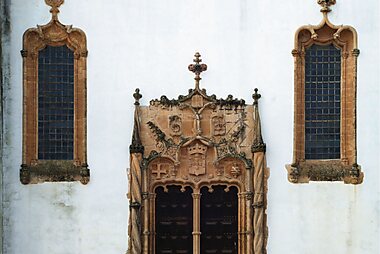
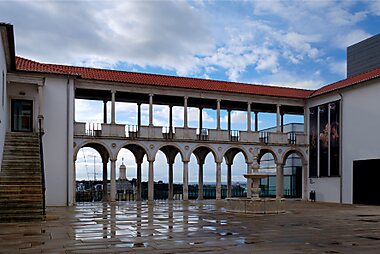
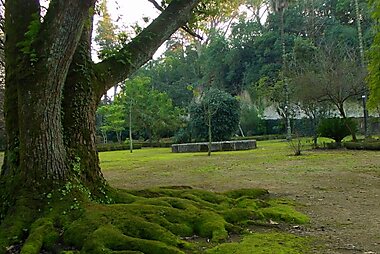
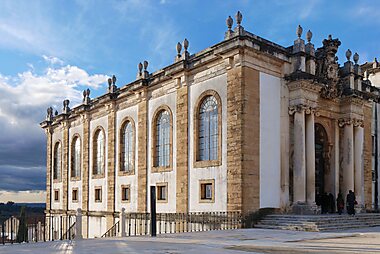
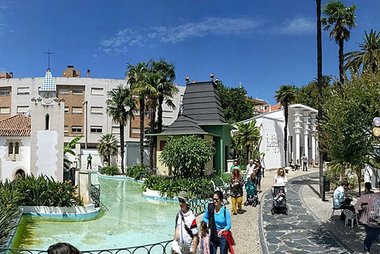
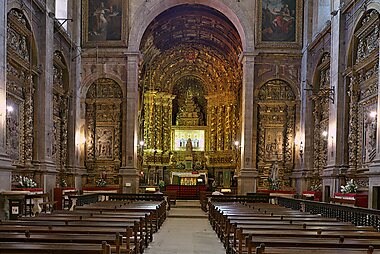
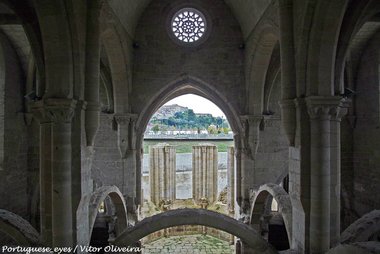
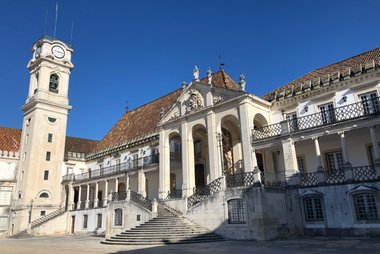
- Universidade de Coimbra is the reason most people come. It sits on the hilltop in the former royal palace and is a UNESCO World Heritage site.
- Biblioteca Joanina is a Baroque library from the 18th century, inside the university. Entry is by timed ticket, so book ahead.
- Torre da Universidade rises above the university courtyard. It is the city's best-known landmark and gives wide views over the roofs.
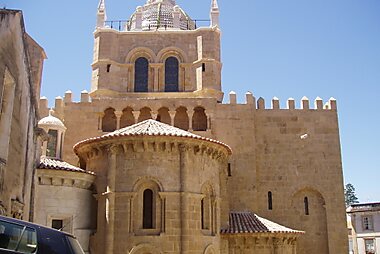
- Igreja da Sé Velha is a solid Romanesque cathedral from the 12th century. It is one of the best-preserved churches of its age in Portugal.
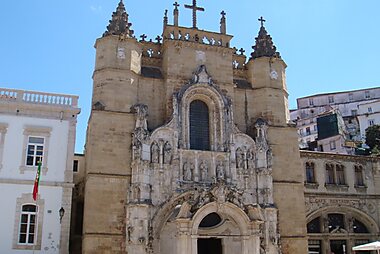
- Igreja de Santa Cruz holds the tombs of the first two kings of Portugal. Its church and cloister are in the lower town.
- Museu Machado de Castro is the main art museum, set in the old bishop's palace. Below it are Roman underground galleries.
- Jardim Botânico da Universidade de Coimbra is a quiet 18th-century garden below the university. It is a good place to rest after the climb.
- Mosteiro de Santa Clara-a-Velha are the ruins of a Gothic monastery. The river flooded them for centuries, and they were excavated in the 1990s.
- Convento de Santa Clara a Nova is the 17th-century convent on the hill across the river. It holds the tomb of Queen Saint Isabel and has a fine view of the city.
- Portugal dos Pequenitos is a park of small-scale Portuguese houses and monuments. It is a good stop for families.
Listas em destaque


Locais Sagrados de Coimbra
O património religioso de Coimbra abrange séculos, desde as fundações românicas do Mosteiro de Santa Cruz, do século XII, à grandiosidade barroca de Santa Clara-a-Nova. Esta coleção destaca a evolução da cidade através da sua arquitetura eclesiástica, incluindo os detalhes manuelinos da Capela de São Miguel da Universidade e a influência renascentista vista na Igreja da Graça. Os visitantes podem explorar locais que abrigam panteões reais, intrincados azulejos e órgãos históricos, refletindo a profunda integração da fé e da academia nesta histórica cidade ribeirinha.
10 lugaresO que experienciar
- Fado de Coimbra: This style of fado is different from Lisbon fado. It grew from student songs. Look for evening concerts in the old town, where singers often wear the black student cape.
- Queima das Fitas: Join the student parades and concerts in May. It is the biggest party of the year.
- Sunset at the viewpoint: Watch the light change over the river from Penedo da Saudade, a hillside garden with poems carved in stone.
- Student traditions in autumn: New students arrive in the first weeks of the academic year. You may see the capes, songs and parades in the streets.
Excursões e atividades
Coimbra — Mapa

 Abrir o mapa interativo
Passeios de um dia
Coimbra is a good base for short trips. These are listed from closest to farthest.
- Conímbriga (about 20 minutes by car): one of the best-preserved Roman sites in Portugal, with mosaics and a small museum.
- Figueira da Foz (about 40 minutes by train): a wide sandy beach town on the Atlantic coast.
- Buçaco Forest and Luso (about 40 minutes by car): a walled forest with a palace hotel, trails and a spa village.
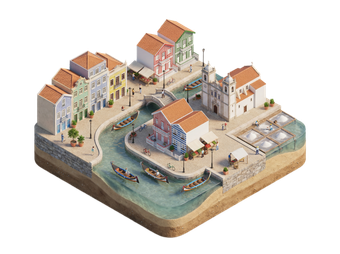
- Aveiro (about 55 minutes by train): canals, colorful boats and Art Nouveau houses.
- Tomar (about 1 hour by car): a Templar castle and convent, also a UNESCO site.
Onde explorar
Como chegar
- By air: Coimbra has no commercial airport. Most travelers fly into Porto (OPO), about 120 km north, or Lisbon (LIS), about 200 km south. Continue by train.
- By train: Fast trains from Porto and Lisbon stop at Coimbra-B, the main station. A short shuttle train links it to the Coimbra station in the city center. Book on CP Comboios de Portugal.
- By bus: Long-distance coaches run from Porto, Lisbon and many Portuguese towns to the central coach station.
Como se deslocar
- Public transit: City buses are run by SMTUC. Buy tickets at SMTUC shops, at sales points near the stations, or in the SMTUC app. See fares on SMTUC.
- Elevator: The Elevador do Mercado links the lower town with the hill. It saves a steep climb.
- On foot: The lower town is flat, but the old town on the hill is very steep. Wear good shoes. Taxis help for the climb to the university.
Conduzir
- Is a car worth it? Not for the city. The old town is steep, narrow and hard to park in. A car helps for Conímbriga and Buçaco.
- Parking: Park outside the center and walk or take a bus. SMTUC runs car parks near Coimbra-B station and at Parque Verde do Mondego.
- Tolls: Many motorways such as the A1 charge tolls. Ask your rental company about the transponder.
Comida e bebida
Look for chanfana, goat stewed in red wine, and leitão da Bairrada, roast suckling pig from the nearby Bairrada region. For a sweet snack, try pastéis de Santa Clara, small pastries made with egg and almond.
For a meal, walk the streets around Praça do Comércio and Rua Quebra Costas in the lower town. Small restaurants and student cafés are close together there.
Segurança e saúde
Coimbra is a safe city. Pickpockets can work in crowded places, so keep your bag closed. The main risk is the terrain. Old stone streets and steps are steep and slippery when wet. Tap water is safe to drink.
História
The Romans called the town Aeminium. In the 12th century it became the capital of the new Kingdom of Portugal. The capital moved to Lisbon in 1255. The first two kings are buried at Igreja de Santa Cruz. The cathedral Igreja da Sé Velha dates from the same time.
The university moved here for good in 1537. It took over the royal palace on the hill, and the city has centered on it since. The Roman remains below Museu Machado de Castro show how old the site is.
The best-known legend is the love of Prince Pedro and Inês de Castro. Inês was killed in 1355 near the Quinta das Lágrimas gardens. Pedro later became king and had her honored as queen.
Factos sobre o país
Quick practical facts for Portugal at a glance:
- Moeda
- Euro EUR € · Pagamentos com cartão · Amplamente aceite
- Números de emergência
- 112
- Eletricidade
- 230 V · 50 HzTipo C / Tipo F
- Idiomas
- português
- Água da torneira
- Própria para beber
- Sentido de condução
- Direita
- Indicativo telefónico
- +351


Coimbra – Planeia os teus dias
Transforma os lugares deste guia num verdadeiro itinerário, com rotas inteligentes, estimativas de tempo e tudo o que precisas para uma viagem perfeita.


Destinos relacionados


Data: © OpenStreetMap contributors, Wikidata, Wikipedia, Tripomatic, Official websites. Tours by GetYourGuide. We earn commission from bookings. Travel guide generated with AI.
Planeia a tua viagem com o Tripomatic
- Planeamento com IAObtém um dia pronto com um toque, deixa a IA distribuir a tua lista de desejos pela tua viagem ou planeia tudo através do chat.
- Alertas de viagemAvisos oficiais, condições meteorológicas adversas, greves e perigos naturais para os lugares em cada dia da tua viagem.
- Feriados e eventosVê feriados, festivais e encerramentos nos dias da tua viagem e o impacto que têm nos teus planos.
- Estimativa de custosDiscriminação de custos de viagem com IA para saberes quanto orçamentar antes de ir.
- Excursões e bilhetesReserva excursões, bilhetes sem filas e atividades diretamente no teu plano.