


Colónia
Cologne sits on the Rhine in western Germany, its skyline dominated by the twin spires of Cologne Cathedral. Founded by the Romans as Colonia in 50 AD, it grew into one of medieval Europe's great trading cities, and its Old Town still holds a dozen Romanesque churches from that era. World War II bombing destroyed most of the historic centre, so today's Cologne is largely rebuilt — a lively mix of remaining medieval landmarks, postwar architecture, and a genuinely relaxed, down-to-earth character.
This is a city that suits a short stay of two or three nights. It works well both as a standalone trip and as a base for day trips along the Rhine, since it sits on fast rail links to Bonn, Düsseldorf, Brussels, and Amsterdam. Locals are famously easygoing and proud of their own beer, Kölsch, and their carnival — both are as central to a visit as the sights themselves. The composer Jacques Offenbach and the painters of the medieval Cologne school were born here. The statesman Konrad Adenauer served as the city's Lord Mayor before becoming West Germany's first postwar chancellor.

Colónia – A planear uma viagem?
Cria o teu itinerário dia a dia na app Tripomatic.
Quando visitar
Spring and autumn are mild and comfortable for walking. Summer is warm with a chance of afternoon storms, and winter is cold and grey but brings the city's Christmas markets to life.
The city's biggest event is Karneval, running from November 11 until Ash Wednesday but concentrated in the days before Lent — usually February or early March. The climax is Rosenmontag (Rose Monday), when costumed parade floats and hundreds of thousands of spectators fill the streets. Book accommodation well ahead if visiting then.
Melhor altura para visitar: junho, agosto, setembro
Winters rarely drop far below freezing in the city centre, and summer afternoons in July and August can turn muggy before a thunderstorm clears the air.
Principais atrações

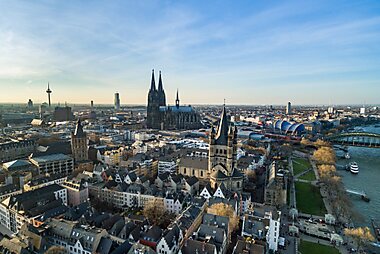
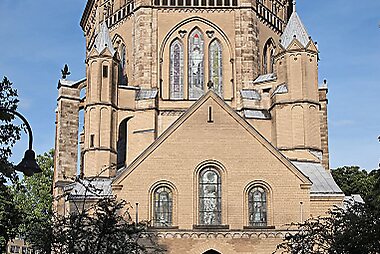
Cologne Cathedral is Germany's most-visited landmark, a Gothic cathedral begun in 1248 and only finished in 1880. Climb its south tower for a view over the Rhine and the old town roofs below.
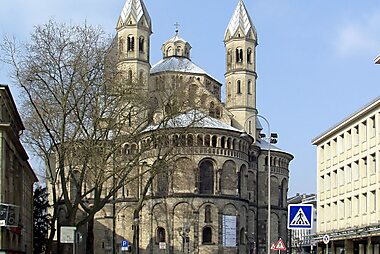
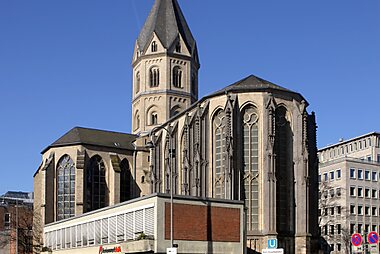
Cologne's Old Town clusters between the cathedral and the river, rebuilt after the war with narrow lanes, pastel facades, and riverside beer gardens. Rising above its rooftops, Groß St. Martin is the best-known of the city's twelve surviving Romanesque churches, with a distinctive clover-leaf east end.
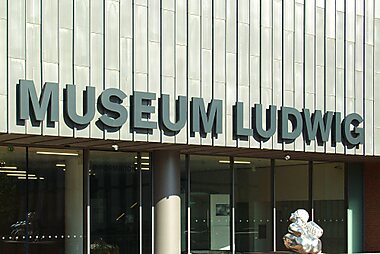
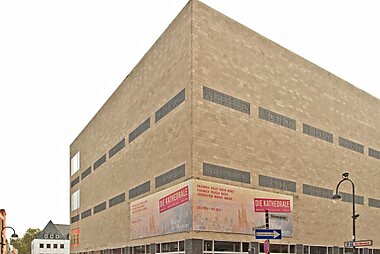
Museum Ludwig holds one of Europe's largest Picasso collections alongside German Expressionist and Pop Art works, right next to the cathedral. For something sweeter, the Chocolate Museum on the Rhine harbour traces cocoa from the tree to the finished bar, with a working chocolate fountain.
Crossing the Rhine, Hohenzollernbrücke carries both trains and pedestrians, its railings covered in tens of thousands of padlocks left by couples. Just downstream, the striking crane-shaped towers of Rheinauhafen mark Cologne's modern waterfront.
West of the centre, the Belgisches Viertel is Cologne's trendiest quarter, filled with independent boutiques, cafés, and street art around a leafy square.
Listas em destaque


Cologne's Hidden Gems
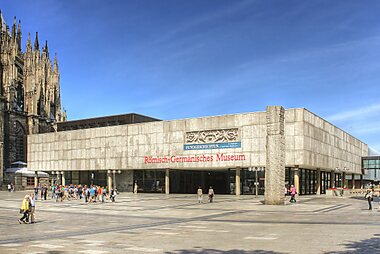
Cologne’s lesser-known sites offer deep insights into its Roman origins and artistic heritage. The Farina Fragrance Museum marks the 1709 birthplace of Eau de Cologne, while St. Mary's in the Capitol stands as a premier example of 11th-century Romanesque architecture. Below the cathedral, the Treasure Chamber houses centuries of ecclesiastical gold work and textiles. For ancient history, the Romano-Germanic Museum displays artifacts from the city's time as a provincial capital, complemented by the Museum of Applied Art’s extensive collection of European decorative objects and modern design.
5 lugares

Guias áudio – Colónia
Explora a pé com um passeio áudio autoguiado que narra cada paragem à medida que chegas.


Ouve os passeios áudio de Colónia
1 passeio na aplicação Guias de Áudio Tripomatic


O que experienciar
A visit here is best planned around Cologne's own rituals, not just its landmarks.
- Join Karneval if the dates line up with your trip — costumed street parties in the weeks before Lent, climaxing with the Rosenmontag parade.
- Browse the Christmas markets, held at several spots across the centre from late November, including one right beside the cathedral.
- Take a Rhine river cruise at sunset for a skyline view of the cathedral and the crane houses from the water.
- Cycle the Rhine promenade in the evening, when locals gather along the riverbank on warm days.
Excursões e atividades
Colónia — Mapa

 Abrir o mapa interativo
 Passeios de um dia
Cologne's location on the Rhine puts several worthwhile day trips within easy reach, from close-by cities to the UNESCO river gorge farther south.
- Bonn — ≈25 min by train. West Germany's former capital, with Beethoven's birthplace and a lively Museum Mile along the Rhine. Bonn
- Brühl — ≈20 min by train. Home to the UNESCO-listed Augustusburg and Falkenlust Palaces, plus the Phantasialand theme park for families.
- Düsseldorf — ≈25 min by train. NRW's stylish capital, known for its Rhine promenade, Altstadt pubs, and fashion shopping. Dusseldorf
- Aachen — ≈40 min by train. Charlemagne's former capital, centred on a UNESCO-listed cathedral holding his marble throne. Aachen
- Middle Rhine Valley — ≈1.5–2 hours by train to towns like Bacharach or Rüdesheim. A UNESCO-listed stretch of river gorge lined with vineyards and hilltop castles, best seen by a slow train or a river cruise.
Onde explorar
Cologne sits in North Rhine-Westphalia, Germany's most populous state, alongside two other major cities and several rewarding countryside regions.
Other cities on the Rhine and Ruhr: Dusseldorf, the stylish state capital, and Bonn, the former West German capital, are both under 30 minutes away by train.
Countryside getaways: the Lower Rhine region to the northwest offers flat, quiet cycling country along the river. The hilly Bergisches Land southeast of the city is known for half-timbered towns and forested valleys, while the Sauerland and Münsterland further afield suit hiking, lakes, and cycling trips of a few days or more.
Como chegar
- By air: Cologne Bonn Airport (CGN) has scheduled flights across Europe; a direct train reaches Köln Hauptbahnhof in about 15 minutes for around 3 €. Düsseldorf Airport (DUS), roughly 45 minutes away by train, offers a wider range of long-haul connections.
- By train: Köln Hauptbahnhof, right beside the cathedral, is a major ICE hub with direct high-speed trains to Frankfurt, Berlin, Brussels, and Amsterdam, plus Thalys/Eurostar services toward Paris.
- By bus: long-distance coaches (FlixBus and others) arrive at the ZOB Breslauer Platz bus station next to the main train station, with frequent links to other German and European cities.
Como se deslocar
- Public transit: the KVB network of trams, light rail (Stadtbahn), and buses covers the whole city. Buy a ticket through the KVB app, the eezy.nrw check-in/check-out app, or a ticket machine at any stop, which also accepts contactless cards. KVB journey planner
- Taxi / ride-hailing: regular taxis and ride-hailing apps both operate in the city.
- On foot / cycling: the city centre is compact and flat, and the Rhine promenade makes for an easy, scenic cycling route; bike-share stations are widespread.
Conduzir
- Is a car worth it?: not for the city itself — the centre is compact and walkable, and trains cover the region well. A car helps for exploring the wider Rhineland at your own pace.
- Parking: use one of the signposted car parks ringing the centre; on-street parking in the centre is metered and often full. Pay by app (EasyPark) or at the machine.
- Restrictions: the whole city centre is a low-emission zone (Umweltzone) requiring a green environmental sticker (Umweltplakette), which most rental cars already carry.
Comida e bebida
Cologne's own beer, Kölsch, is a light, crisp top-fermented style served only here — order one in a traditional Brauhaus and the waiter (Köbes) will keep bringing fresh 0.2 L glasses on a round tray until you put a coaster on top of your glass to stop. Pair it with local dishes like Himmel un Ääd (black pudding with mashed potato and apple sauce) or Halver Hahn, a rye roll with Dutch cheese despite the misleading name ("half a chicken").
For a concentrated stretch of good, casual eating, head to the streets of the Belgisches Viertel, where small bistros, bakeries, and cafés cluster around Brüsseler Platz.
Segurança e saúde
Cologne is a safe city for tourists by international standards. The main risks are ordinary petty crime: pickpockets around the main train station, the cathedral square, and on crowded trams, especially during Karneval and Christmas markets. Keep bags zipped and valuables out of back pockets in these spots.
The area right around Köln Hauptbahnhof and the Ebertplatz district can feel rougher after dark, though violent crime against tourists is rare. Tap water is safe to drink throughout the city.
História
The Romans founded the city in 50 AD as Colonia Claudia Ara Agrippinensium, a name that gave Cologne its own. Roman remains, including a preserved city gate and mosaic floors, surface throughout the centre and fill the Romano-Germanic Museum, built directly over a Roman villa.
By the Middle Ages, Cologne had become one of the largest and richest cities north of the Alps, a free imperial city and a major trading hub — the wealth that built its twelve surviving Romanesque churches, including St. Gereon and St. Aposteln. Work on Cologne Cathedral began in 1248 to house relics of the Three Kings, but stalled for centuries and was only completed in 1880, closely following the original medieval plans.
Allied bombing during World War II destroyed roughly 90 percent of the old town, and the postwar decades saw the city rebuilt largely in a plainer, modern style — which is why so much of central Cologne looks younger than its history.
Factos sobre o país
Quick practical facts for Germany at a glance:
- Moeda
- Euro EUR € · Pagamentos com cartão · Geralmente aceite
- Números de emergência
- 112 Ambulância · Bombeiros
- Eletricidade
- 230 V · 50 HzTipo C / Tipo F
- Idiomas
- alemão
- Água da torneira
- Própria para beber
- Sentido de condução
- Direita
- Indicativo telefónico
- +49


Colónia – Planeia os teus dias
Transforma os lugares deste guia num verdadeiro itinerário, com rotas inteligentes, estimativas de tempo e tudo o que precisas para uma viagem perfeita.




