


Salamanca
Salamanca is a university city in western Spain, about 210 km west of Madrid. Its old town is built of golden sandstone and is a UNESCO World Heritage Site. The university was founded in 1218, and students still fill the streets.
The old town is small and flat, so you can see the main sights on foot in two days. Salamanca suits travelers who like architecture, history and lively evenings. Language students come here from all over the world, so there is plenty of cafe and bar life.

Salamanca – A planear uma viagem?
Cria o teu itinerário dia a dia na app Tripomatic.


Quando visitar
Spring and autumn are the most pleasant seasons. Summer days are hot and dry. Winters are cold, with frost and some fog.
The biggest event is Holy Week (Semana Santa) before Easter. Processions cross the old town for days, and the Plaza Mayor is full. Book rooms well ahead if you plan to come then.
Melhor altura para visitar: maio, junho, julho, setembro
Principais atrações


- Universidad de Salamanca. Escuelas Mayores is the oldest university in Spain still in use. Its famous front is carved in fine detail. Look for the small stone frog hidden among the carvings.
- Catedral Vieja and Catedral Nueva de la Asunción de María stand side by side. The old one is Romanesque from the 12th century. The new one is mainly Gothic and was built in the 16th to 18th centuries.
- Casa de las Conchas is a house from around 1500. Its wall is covered with stone shells.
- Convento de San Esteban is a Dominican convent with a richly carved front. The church is large and decorated in gold.
- Iglesia de la Clerecía is a large Baroque church with two towers. It is part of a former Jesuit college.
- Puente Romano crosses the river Tormes. The first stones were laid by the Romans, and it is still used by walkers.
- The Plaza Mayor is the main square. It is Baroque, surrounded by arches, and is the place where locals meet.
Listas em destaque


O que experienciar
- Search for the frog on the university front. Local tradition says finding it brings luck.
- In the evening, listen for a student tuna in or near the Plaza Mayor. These groups play and sing in traditional black costume.
Excursões e atividades
Salamanca — Mapa

 Abrir o mapa interativo
Passeios de um dia
Salamanca has a few good trips of one day or less.
- Alba de Tormes (about 20 km, 25 minutes by bus or car): a small town where Saint Teresa of Ávila died in 1582.
- Zamora (about 65 km, 50 minutes by car): a quiet city with many Romanesque churches.
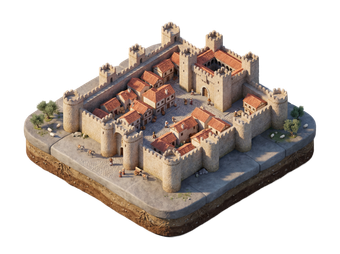
- Ciudad Rodrigo (about 90 km, 1 hour 10 minutes by car): a small town inside complete medieval walls.
- Avila (about 100 km, about 1 hour 15 minutes by car): a city known for its complete medieval wall.
Onde explorar
Other historic cities in Castile and León:
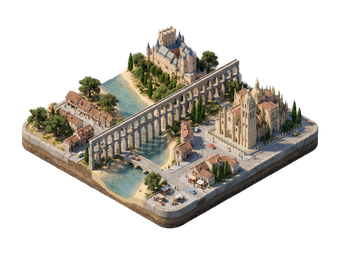
- Nearby: Avila and Segovia.
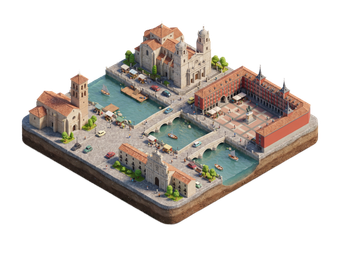
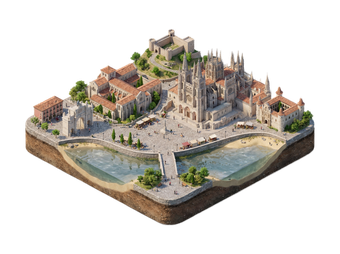
- Further north and east: Valladolid city, Burgos and León.
- Wine and mountains: Ribera del Duero for red wine, and Sierra de Gredos for hiking.
Como chegar
- By air: Most visitors fly to Madrid-Barajas (MAD) and continue to Salamanca by train or bus.
- By train: Trains from Madrid take about 1.5 to 2 hours. Book on Renfe.
- By bus: Direct coaches from Madrid take about 2.5 hours.
- The train and bus stations are outside the old town. Take a taxi or a city bus, or walk.
Como se deslocar
- On foot: The old town is flat and compact. All main sights are within 15 minutes of the Plaza Mayor.
- Cycling: Cycling is possible, but the old town has many pedestrian streets.
Conduzir
- Is a car worth it?: Not for the city. A car helps for day trips to villages.
- Parking: Leave the car in a car park outside the old town and walk in.
- Restrictions: Many streets in the old town are closed to normal traffic.
Comida e bebida
Salamanca is known for ham from the nearby area and for farinato, a spiced pork sausage. Hornazo is a pie filled with pork meat and egg, eaten especially around Easter.
Tapas bars cluster in the streets around the Plaza Mayor. Cafes under the arches of the square are good for a coffee, but the prices are higher.
Segurança e saúde
Salamanca is a very safe city. Watch your bag in crowds, especially in the Plaza Mayor and during Holy Week.
Winter mornings can be icy on the stone streets.
História
Romans built the bridge over the Tormes. In the Middle Ages the city became a center of learning, and the university was founded in 1218.
The golden stone buildings date mainly from the 15th to 18th centuries. Catedral Nueva de la Asunción de María was begun in 1513 next to the older church. The Plaza Mayor was built in the 18th century in the Baroque style.
Factos sobre o país
Quick practical facts for Spain at a glance:
- Moeda
- Euro EUR € · Pagamentos com cartão · Amplamente aceite
- Números de emergência
- 112
- Eletricidade
- 230 V · 50 HzTipo C / Tipo F
- Idiomas
- espanhol
- Água da torneira
- Própria para beber
- Sentido de condução
- Direita
- Indicativo telefónico
- +34


Salamanca – Planeia os teus dias
Transforma os lugares deste guia num verdadeiro itinerário, com rotas inteligentes, estimativas de tempo e tudo o que precisas para uma viagem perfeita.


Destinos relacionados


Data: © OpenStreetMap contributors, Wikidata, Wikipedia, Tripomatic, Official websites, geoBoundaries (CC BY 4.0). Tours by GetYourGuide. We earn commission from bookings. Travel guide generated with AI.