


柏林
Berlin is a city defined by reinvention. Divided by a wall for nearly three decades and rebuilt from ruins twice in the 20th century, it wears its history openly — sometimes as a solemn memorial, sometimes as a canvas for street art. Wide boulevards, Prussian palaces, and Cold War remnants sit side by side with a famously experimental cultural scene.
Germany's capital is also one of Europe's most creative cities, shaped for decades by cheap rent and open space into a hub for art, techno, and food culture drawn from all over the world. It rewards visitors who wander beyond the postcard sights into its distinct, individually flavored neighborhoods.

柏林 – 正在规划旅行?
在 Tripomatic 应用中按天构建您的行程。
最佳旅行时节
Berlin has a temperate climate with warm summers and cold winters. Late spring through early autumn (May–September) brings the mildest, sunniest weather, ideal for exploring parks, open-air markets, and the city's famous Biergarten culture. Winters are cold and grey but atmospheric, especially around the Christmas markets that fill the city in December.
最佳旅行时间: 五月, 六月, 八月, 九月
热门景点
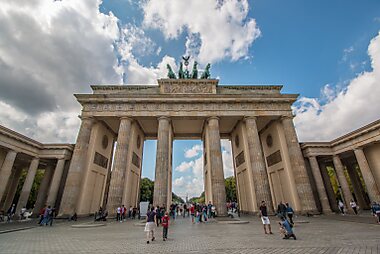
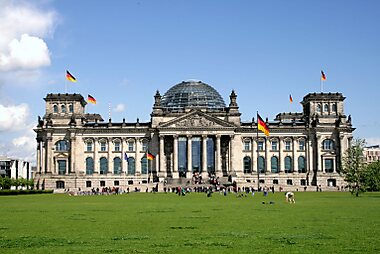
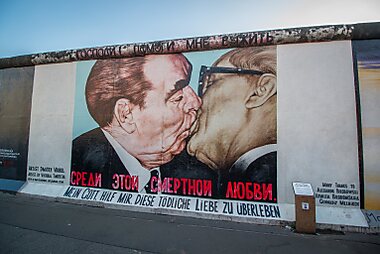
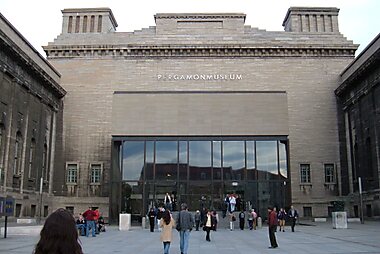
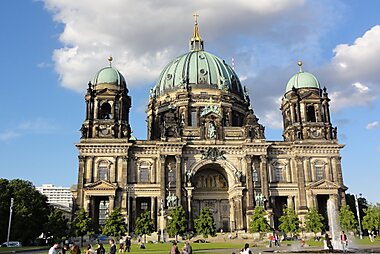
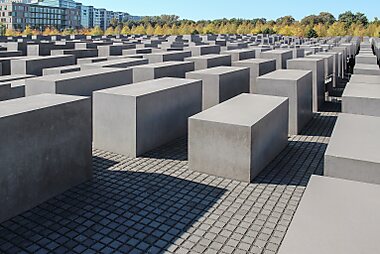
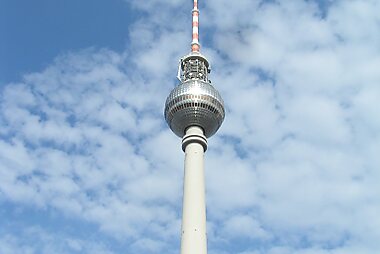
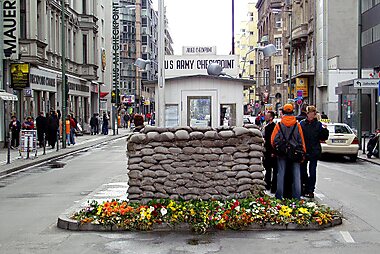
Berlin's landmarks span from Prussian grandeur to Cold War history. Here are the essentials for a first visit:
Brandenburg Gate is the city's defining symbol, a neoclassical monument that stood at the edge of the Berlin Wall's death strip and now marks the boundary between former East and West. 布蘭登堡門
The Reichstag Building houses Germany's parliament beneath a striking glass dome by Norman Foster, open to visitors with advance registration and offering panoramic views over the city. 德国国会大厦
The East Side Gallery is the longest surviving stretch of the Berlin Wall, covered in over a hundred murals painted by artists after 1989. 东侧画廊
The Pergamon Museum on Museum Island holds monumental reconstructed antiquities, including the Ishtar Gate of Babylon, though parts of the museum periodically close for renovation. 貝加蒙博物館
The Berlin Cathedral is a grand neo-Renaissance church on the Spree, with a dome that can be climbed for sweeping views of Museum Island. 柏林大教堂
The Memorial to the Murdered Jews of Europe is a field of over 2,700 concrete slabs near Brandenburg Gate, a stark and widely visited Holocaust memorial. 歐洲被害猶太人紀念碑
The Berlin TV Tower at Alexanderplatz is the tallest structure in Germany, with an observation deck and revolving restaurant offering the best skyline views in the city. 柏林電視塔
Checkpoint Charlie was the best-known crossing point between East and West Berlin during the Cold War, now a small open-air history exhibit. 查理檢查哨
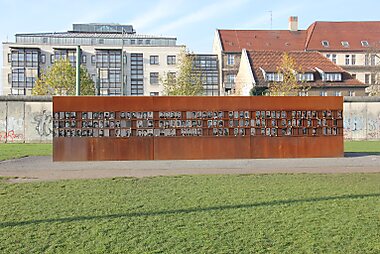
The Berlin Wall Memorial on Bernauer Strasse preserves an original section of the wall and the former death strip, with an outdoor exhibition on the city's division. 柏林墙纪念碑
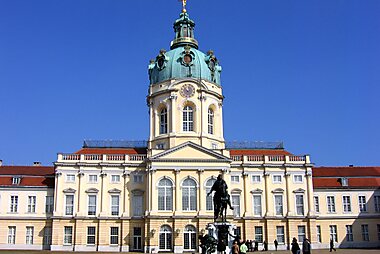
Charlottenburg Palace is Berlin's largest surviving royal residence, a Baroque palace with formal gardens on the western edge of the city center. 夏洛騰堡宮
精选榜单


Berlin's Views & Modern Architecture
Berlin’s skyline is defined by a blend of historic domes and pioneering 20th-century architecture. This collection features iconic structures like the 368-meter Fernsehturm and the glass-domed Reichstag, alongside modernist landmarks designed by Mies van der Rohe and Le Corbusier. The selection also highlights UNESCO-listed housing estates from the Weimar Republic and unconventional vantage points such as the man-made Teufelsberg hill and the Neukölln rooftop garden, Klunkerkranich. These locations provide a detailed perspective on the city's architectural history and urban landscape.
16 个地点


Berlin Wall & Cold War
Trace the legacy of divided Berlin through its most significant Cold War sites. This collection includes the East Side Gallery, the longest surviving stretch of the wall, and the Berlin Wall Memorial, which preserves original fortifications and a watchtower. Explore the mechanics of the GDR state at the Stasi Museum and the former Hohenschönhausen prison. The list also features strategic border crossings like Checkpoint Charlie and the Palace of Tears, alongside the Topography of Terror, where wall remnants stand over former Gestapo cellars.
8 个地点

语音导览 – 柏林
通过自助语音导览漫步探索,每到一个地点即刻为您生动讲述背后的故事。

Cold War Berlin: A Divided City
123 分钟6.8 公里9 个停靠点
Walk the line that once split Berlin in two. This tour begins at the Berlin Wall Memorial on Bernauer Strasse and follows the old Cold War border south through the Palace of Tears border crossing and Checkpoint Charlie, before ending at the Brandenburg Gate and the Reichstag. It tells the story of the Berlin Wall: its construction in 1961, the people who tried to cross it, and its fall in 1989. The walk starts near the Berlin Wall Memorial on Bernauer Strasse and ends at Platz der Republik, near the Bundestag underground and city-train station.

Best of Berlin
107 分钟5.9 公里8 个停靠点
Berlin's essential walk: from the glass dome of the Reichstag and the Brandenburg Gate, past the Holocaust Memorial and rebuilt Potsdamer Platz, along the former line of the Berlin Wall at Checkpoint Charlie, through the elegant twin-cathedral square of Gendarmenmarkt and the UNESCO museums of Museum Island, to the TV Tower at Alexanderplatz.

聆听 柏林 的语音导览
Audio Guides by Tripomatic 中的 2 条徒步路线


特色体验
- Watch the sunset from the dome of the 德国国会大厦, booked in advance for the best light over the city.
- Walk the length of the 东侧画廊, taking in murals painted directly onto a surviving stretch of the Berlin Wall.
- Stand at 布蘭登堡門 at dusk, when the floodlit columns and fewer crowds make it feel far more monumental.
- Ride the elevator up the 柏林電視塔 for a 360-degree view stretching well beyond the city on a clear day.
- Spend an afternoon among the reconstructed antiquities of the 貝加蒙博物館 on Museum Island.
- Explore the courtyards and markets around Kreuzberg and Neukölln for Berlin's contemporary food and nightlife scene.
观光与活动
柏林 — 地图

 打开互动地图
 一日游
Berlin sits within easy reach of several worthwhile excursions:
- Potsdam: About 30–40 minutes by S-Bahn, this former Prussian royal seat is home to Sanssouci Palace and its extensive gardens, along with a well-preserved historic center.
- Sachsenhausen Memorial: Roughly 1 hour by train, this former Nazi concentration camp near Oranienburg is preserved as a memorial and museum, offering a sobering counterpart to Berlin's wartime history.
- Spreewald: About 1.5 hours by train, this UNESCO biosphere reserve is known for its network of canals, best explored by traditional punt boat, and for its pickled gherkins.
- Dresden: Around 2 hours by train, this Saxon capital's rebuilt Baroque old town and art collections make it a worthwhile longer day trip or overnight stay.
如何到达
- By air: Berlin Brandenburg Airport (BER) is the city's main gateway, connected to the center by regional trains (RE/RB) and the S-Bahn in roughly 30–45 minutes.
- By train: Berlin Hauptbahnhof is one of Europe's largest rail hubs, with direct high-speed connections to Hamburg, Munich, Frankfurt, Prague, Vienna, and Warsaw.
- By bus: The Zentraler Omnibusbahnhof (ZOB) handles long-distance coach services from across Germany and neighboring countries.
当地交通
- Berlin's public transport network (BVG) combines U-Bahn (subway), S-Bahn (suburban rail), trams, and buses on a single zoned ticket system. A Tageskarte (day ticket) covering zones AB is usually sufficient for city visits.
- Tickets can be bought from platform machines, the BVG app, or ticket offices; validate paper tickets before boarding.
- The city is large, so combining a metro or tram ride with walking is typical rather than relying on foot travel alone. See BVG for official schedules and route planning.
- Cycling is an excellent way to get around given the flat terrain and extensive bike lane network; bike-share services are widely available.
美食与饮品
Berlin's food scene reflects its history as a magnet for migration, blending hearty German staples with cuisines from Turkey, Vietnam, the Middle East, and beyond. Street food is central to the city's identity: currywurst (sliced sausage in curried ketchup) and the Berlin-style döner kebab are both fiercely defended local inventions, best sampled at long-running stalls rather than tourist-oriented outlets.
Traditional German dishes like Eisbein (pork knuckle), Schnitzel, and Kartoffelsalat (potato salad) remain common on menus, especially in older beer halls. Berlin's beer culture centers on Pilsner-style lagers and the Berliner Weisse, a tart wheat beer traditionally served with a shot of fruit syrup. In summer, outdoor Biergarten fill parks like Tiergarten and along the Spree.
安全与健康
Berlin is generally a safe city for visitors, with violent crime against tourists rare. The main concerns are petty theft and being alert around large crowds.
- Pickpocketing can occur on crowded U-Bahn and S-Bahn trains and around major sights like 布蘭登堡門 and Alexanderplatz.
- Fare inspections on public transport are frequent and unannounced; always validate and carry your ticket, as fines for riding without one are strictly enforced.
- Some neighborhoods have areas known for public drug use, particularly around parts of Görlitzer Park and certain U-Bahn stations late at night; ordinary caution is enough for most visitors.
- Tap water is safe to drink throughout the city.
历史
Berlin's history is inseparable from the upheavals of 20th-century Europe. The city grew into an imperial capital under Prussia, with landmarks like 夏洛騰堡宮 reflecting its royal era, and 布蘭登堡門 built in the late 18th century as a symbol of peace that would later come to represent the city's divisions.
World War II left much of the city in ruins, and its aftermath split Berlin between East and West for over 40 years. The Berlin Wall, erected in 1961, physically divided the city until its fall in 1989; sections survive today at the 东侧画廊 and the 柏林墙纪念碑, while 查理檢查哨 marks one of the most famous former crossing points. The 歐洲被害猶太人紀念碑 stands as a central reminder of the Holocaust. Since reunification, Berlin has rebuilt itself again as a hub for art, technology, and nightlife, with the 德国国会大厦's glass dome — added during the 1990s renovation — symbolizing that transparency and renewal.
国家概况
Quick practical facts for Germany at a glance:
- 货币
- 欧元 EUR € · 刷卡支付 · 普遍接受
- 紧急求助电话
- 112 急救电话 · 火警电话
- 用电规格
- 230 V · 50 HzC 型插头 / F 型插头
- 语言
- 德语
- 自来水
- 可安全饮用
- 行车方向
- 靠右行驶
- 国际区号
- +49



