


Mnichov
Munich is Bavaria's capital and Germany's third-largest city — a place where centuries-old tradition sits comfortably alongside a wealthy, modern metropolis. Grand boulevards, baroque palaces, and beer gardens under chestnut trees give it a relaxed, unmistakably Bavarian character, even as it's home to major tech and automotive companies.
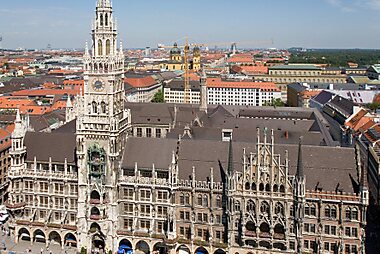
At its heart is Mary's Square, the historic main square, watched over by the neo-Gothic New Town Hall and the twin onion domes of the Frauenkirche. Beyond the old town, Munich offers royal palaces, world-class museums, and easy access to the Bavarian Alps.

Mnichov – Plánuješ výlet?
Sestav si itinerář den po dni v aplikaci Tripomatic.
Kdy navštívit
Munich is a year-round destination, but each season has a distinct character. Late spring through early autumn brings warm, sociable weather — ideal for beer gardens and the English Garden. Late September into early October is Oktoberfest season, when the city fills with visitors; book accommodation well ahead if visiting then. Winters are cold and often snowy, but Munich's Christmas markets (Christkindlmarkt), especially the one on Marienplatz, are a major draw of their own.
Hlavní památky
Munich's must-see list spans royal history, world-class museums, and green space:
Marienplatz is the city's central square and a good first stop — watch the Glockenspiel chime in the New Town Hall tower at 11am (and noon in summer). Mary's Square
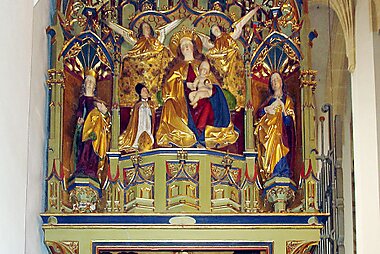
The Frauenkirche, Munich's cathedral with its distinctive twin domes, is visible across the skyline and worth climbing for the view. Frauenkirche
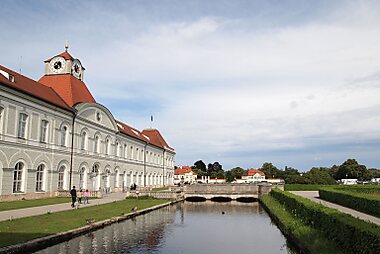
Nymphenburg Palace, the former summer residence of the Bavarian royal family, sits in expansive baroque gardens on the edge of the city. Nymphenburg
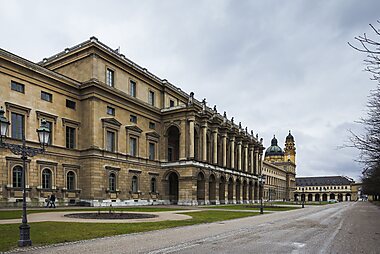
The Residenz, the Wittelsbach dynasty's former royal palace in the city center, houses ornate state rooms and a treasury. Residenzmuseum
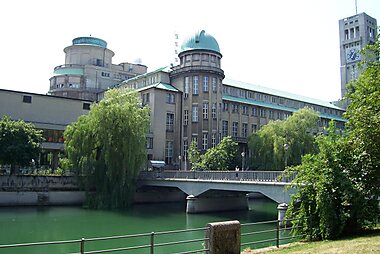
The Deutsches Museum, one of the world's oldest and largest science and technology museums, sits on its own island in the Isar river. Německé muzeum
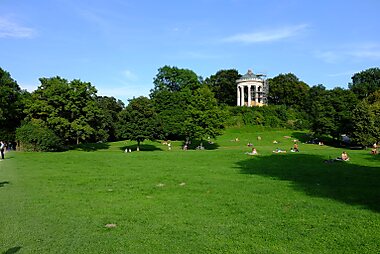
The English Garden, one of the largest urban parks in the world, is famous for its beer gardens, the Chinese Tower, and surfers riding a standing wave on the Eisbach stream. Anglická zahrada
Doporučené výběry


Audioprůvodci – Mnichov
Prozkoumej město pěšky se samostatnou audio prohlídkou, která spustí vyprávění u každé zastávky hned, jak k ní dorazíš.


Poslouchej audioprůvodce pro město Mnichov
1 procházka v aplikaci Audio průvodce Tripomatic


Co zažít
- Spend an afternoon in a beer garden under chestnut trees — the Anglická zahrada has several, including the popular Chinese Tower beer garden.
- Watch surfers ride the permanent standing wave on the Eisbach stream at the southern edge of the English Garden.
- Browse the stalls of Victuals Market, Munich's historic food market, for Bavarian specialties and a beer garden lunch.
- Raise a stein at the historic Hofbräuhaus, one of the world's most famous beer halls, with live oompah music most evenings.
- Tour the futuristic BMW Welt showroom and museum for BMW's design and motorsport heritage.
- Explore the grounds and gardens of Nymphenburg at leisure — the palace park is free to enter.
Prohlídky a aktivity
Mnichov – Mapa

 Otevřít interaktivní mapu
 Jednodenní výlety
Munich's location makes it an excellent base for exploring Bavaria:
- Neuschwanstein Castle: About 2 hours by train and bus, this fairy-tale 19th-century castle commissioned by King Ludwig II is one of Germany's most-visited sights. Book tickets online in advance, as entry is timed. Neuschwanstein
- Dachau Memorial Site: Around 30–40 minutes by S-Bahn and bus, the site of Germany's first Nazi concentration camp is preserved as a memorial and documentation center — a sobering but important visit.
- Zugspitze: Germany's highest peak is reachable by train and cable car in about 2 hours, with panoramic Alpine views from the summit (weather permitting).
- Chiemsee: Bavaria's largest lake, about an hour by train, offers boat trips to King Ludwig II's opulent Herrenchiemsee Palace.
Jak se tam dostat
- By air: Munich Airport (MUC) is one of Germany's busiest, with extensive European and intercontinental connections. The S-Bahn (lines S1 and S8) connects it to the city center in about 40–45 minutes.
- By train: München Hauptbahnhof (Central Station) is a major hub for high-speed ICE trains connecting to Berlin, Frankfurt, Vienna, Zurich, and other European cities.
- By bus: Long-distance buses (FlixBus and others) arrive at the ZOB (Zentraler Omnibusbahnhof) bus station near the Hackerbrücke.
Doprava na místě
- Munich's public transport network (MVV) combines U-Bahn (subway), S-Bahn (suburban rail), trams, and buses, and covers the city and surrounding region efficiently. Tickets cover all modes and can be bought via the MVV app or machines at stations.
- The Altstadt (old town) is very walkable and mostly pedestrianized around Marienplatz.
- Munich is also excellent for cycling, with dedicated lanes throughout the city; bike rental is widely available.
- Taxis and ride-hailing apps operate throughout the city.
Jídlo a pití
Bavarian cuisine is hearty and centered on meat, bread, and beer. Lunch is often the main meal of the day; many locals eat a proper hot meal at midday and something lighter in the evening — traditionally cold cuts and bread, known as Brotzeit.
Signature dishes include Weisswurst (white veal sausage, traditionally eaten before noon with sweet mustard and a pretzel), Schweinshaxe (roasted pork knuckle), and Leberkäse (a baked meatloaf, often served in a bread roll as a quick lunch). Beer gardens are a Munich institution — you can typically bring your own food if you buy drinks there, a long-standing local tradition.
Good places to try local specialties include Victuals Market for market-fresh options and Hofbräuhaus for a classic, touristy but fun beer-hall experience. Munich is also the home of Oktoberfest, and its breweries (Augustiner, Paulaner, Löwenbräu, Hofbräu, Spaten, Hacker-Pschorr) are Bavaria's biggest names.
Bezpečnost a zdraví
Munich is a generally very safe city for visitors, with low rates of violent crime. As with any major city, petty theft can occur in crowded areas.
- Pickpocketing is occasionally reported around Mary's Square, at Oktoberfest, and on crowded public transport — keep valuables secure.
- Oktoberfest crowds: during the festival, watch belongings closely in beer tents and avoid excessive alcohol consumption, which is the most common cause of trouble.
- Tap water is safe to drink throughout the city.
Historie
Munich was founded in 1158 near a Benedictine monastery — its name derives from Munichen, meaning "by the monks." It became the seat of the Wittelsbach dynasty, who ruled Bavaria for over 700 years and shaped much of the city's grand architecture, including Residenzmuseum and Nymphenburg.
The 19th century under King Ludwig I and later Ludwig II brought a wave of building and patronage of the arts, along with the eccentric king's famous castle-building, including Neuschwanstein. Munich suffered heavy bombing in the Second World War, and much of the historic center, including the Frauenkirche, was rebuilt afterward.
In 1972, Munich hosted the Summer Olympics, an event overshadowed by the hostage crisis and massacre of Israeli athletes, but which also left the city with the Olympic Park and modern infrastructure still in use today. Today Munich is one of Germany's wealthiest cities, home to major companies like BMW and Siemens alongside its historic core.
Fakta o zemi
Quick practical facts for Germany at a glance:
- Měna
- euro EUR € · Platby kartou · Běžně přijímány
- Nouzová čísla
- 112 Záchranná služba · Hasiči
- Elektřina
- 230 V · 50 HzTyp C / Typ F
- Jazyky
- němčina
- Voda z kohoutku
- Pitná
- Strana jízdy
- Vpravo
- Předvolba
- +49


Mnichov – Naplánuj si jednotlivé dny
Proměň místa z tohoto průvodce ve skutečný itinerář s chytrým plánováním tras, časovými odhady a vším, co potřebuješ pro bezstarostný výlet.

