
Munich
Munich is Bavaria's capital and Germany's third-largest city — a place where centuries-old tradition sits comfortably alongside a wealthy, modern metropolis. Grand boulevards, baroque palaces, and beer gardens under chestnut trees give it a relaxed, unmistakably Bavarian character, even as it's home to major tech and automotive companies.
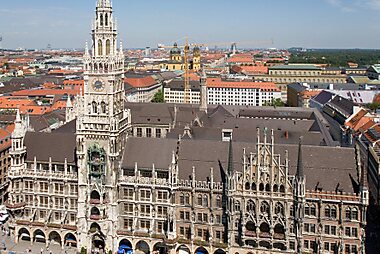
At its heart is Mary's Square, the historic main square, watched over by the neo-Gothic New Town Hall and the twin onion domes of the Church of Our Lady. Beyond the old town, Munich offers royal palaces, world-class museums, and easy access to the Bavarian Alps.
Planning a Trip to Munich?
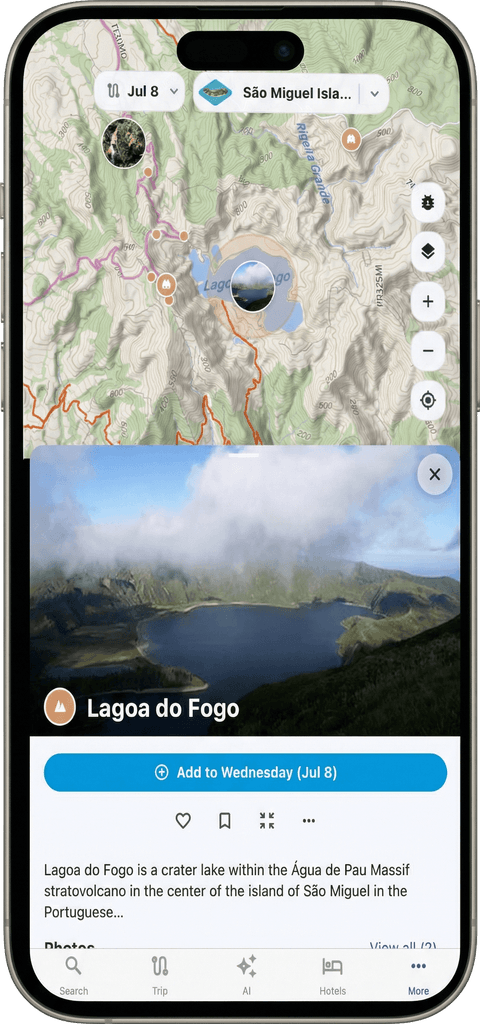
Build your day-by-day itinerary in the Tripomatic app.
When to visit
Munich is a year-round destination, but each season has a distinct character. Late spring through early autumn brings warm, sociable weather — ideal for beer gardens and the English Garden. Late September into early October is Oktoberfest season, when the city fills with visitors; book accommodation well ahead if visiting then. Winters are cold and often snowy, but Munich's Christmas markets (Christkindlmarkt), especially the one on Marienplatz, are a major draw of their own.
Best time to visit Munich: June, July, August, September
Top sights
Munich's must-see list spans royal history, world-class museums, and green space:
Marienplatz is the city's central square and a good first stop — watch the Glockenspiel chime in the New Town Hall tower at 11am (and noon in summer). Mary's Square
The Frauenkirche, Munich's cathedral with its distinctive twin domes, is visible across the skyline and worth climbing for the view. Church of Our Lady
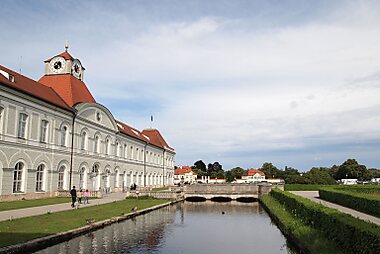
Nymphenburg Palace, the former summer residence of the Bavarian royal family, sits in expansive baroque gardens on the edge of the city. Nymphenburg Palace
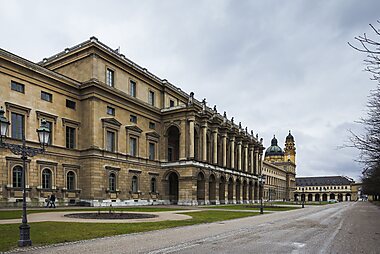
The Residenz, the Wittelsbach dynasty's former royal palace in the city center, houses ornate state rooms and a treasury. Residence Museum and Treasury
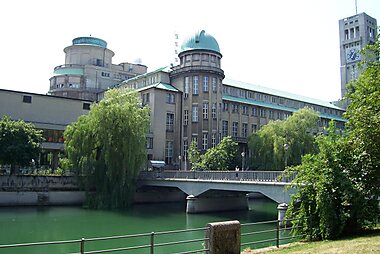
The Deutsches Museum, one of the world's oldest and largest science and technology museums, sits on its own island in the Isar river. German Museum
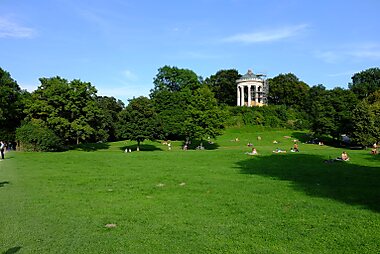
The English Garden, one of the largest urban parks in the world, is famous for its beer gardens, the Chinese Tower, and surfers riding a standing wave on the Eisbach stream. English Garden
Explore Munich
Munich Essentials: A Lifetime Visit
Munich's historic center is anchored by the Neo-Gothic architecture of Marienplatz and the landmark twin domes of the Frauenkirche cathedral. This collection highlights the city's royal legacy at the Munich Residenz and Nymphenburg Palace, alongside world-class technical achievements at the BMW Museum and the Deutsches Museum. Traditional Bavarian culture is represented by the 16th-century Hofbräuhaus brewery and the Viktualienmarkt’s open-air stalls, while the expansive English Garden offers one of Europe’s largest urban green spaces.
14 placesMunich's Editor's Choice
Munich’s cultural landscape is defined by landmarks like the 13th-century Gothic Old Town Hall and the sprawling Baroque Nymphenburg Palace. This collection includes the Deutsches Museum, the world’s largest science and technology institution, and the Alte Pinakothek, which houses Old Master works by Dürer, Rubens, and Da Vinci. Discover the neo-Gothic Maximilianeum, home to the Bavarian State Parliament, and the English Garden, one of the world's largest urban parks featuring traditional beer gardens. Together, these sites showcase the city’s royal history, scientific innovation, and artistic depth.
6 placesMunich's Hidden Gems
Beyond the central squares, Munich offers unique sites like the Eisbachwelle, a standing wave used by urban surfers, and the 25-meter wooden pagoda of the Chinese Tower. Historical landmarks include the Ost-West-Friedenskirche, constructed from World War II rubble, and the Ruhmeshalle, a Doric colonnade honoring prominent Bavarians. Cultural collections range from the Nymphenburg Porcelain Manufactory and royal carriages at the Marstallmuseum to the transport history at the Verkehrszentrum. The Museum of Man and Nature and Hellabrunn Zoo provide specialized focuses on natural history and wildlife.
11 placesMunich Architectural Styles
Munich’s architectural landscape spans centuries, showcasing a blend of historical and avant-garde styles. The city's core features the Gothic Frauenkirche and the Neo-Gothic New Town Hall at Marienplatz. Baroque and Rococo influences are evident in the Nymphenburg Palace and the ornate Asam Church, while Neoclassicism defines the National Theatre and Victory Gate. Modern innovation is represented by the sweeping tensile roof of the Olympic Stadium and the futuristic designs of the BMW Museum and Allianz Arena. This collection highlights the structures that define Munich’s unique skyline and urban character.
19 placesMunich Heritage Highlights
Discover Munich's heritage through its remarkable historic churches like the Frauenkirche and St. Peter's, grand royal palaces including Nymphenburg, and monumental sites such as the Bavaria statue and Ruhmeshalle. This collection highlights architectural styles from Gothic to Rococo and Neo-Gothic, alongside memorials and gardens central to the city's cultural past.
20 placesHistoric Churches & Worship
Discover 17 remarkable churches and places of worship across Munich, featuring architectural styles from Gothic and Baroque to Renaissance and modern designs. This collection highlights historic sites such as the Frauenkirche and St. Peter's Church, alongside lesser-known chapels and religious buildings, each reflecting the city's diverse cultural and religious heritage.
17 placesBavarian Flavors and Local Tastes
Munich’s culinary landscape centers on historic institutions and local traditions. This selection includes the world-renowned Hofbräuhaus, dating to 1589, and Augustiner-Bräu, the city's oldest independent brewery founded in 1328. Beyond the massive beer halls and gardens like Hirschgarten, the list features the Victuals Market with its 140 stalls of fresh regional produce. It also highlights neighborhood bakeries like Hofpfisterei and traditional heritage-listed inns in the Solln district, offering a comprehensive look at Bavarian food culture from street markets to formal dining.
14 placesMunich Castles and Palaces
Munich’s royal history is defined by the Wittelsbach dynasty, whose legacy spans from the sprawling Residenz in the city center to the Baroque Nymphenburg Palace. This collection features grand royal residences, specialized structures like the Amalienburg hunting lodge and the Pagodenburg pavilion, and the medieval Blutenburg Castle. Complementing these are landmark buildings like the Neo-Gothic New Town Hall and St. Peter’s Church, representing the city’s architectural evolution from the 8th century through the late 19th century.
8 placesMunich's Sacred Sites
Munich’s religious landscape spans centuries of architectural evolution, from the 12th-century foundations of St. Peter’s to the ornate Rococo interiors of the Asam Church. This collection highlights significant landmarks like the twin-towered Frauenkirche and the Renaissance-style St. Michael’s, alongside unique sites like the hand-built Ost-West-Friedenskirche. Beyond cathedrals, the list includes serene spaces like the Waldfriedhof cemetery and various parish churches, reflecting the city's diverse spiritual and cultural heritage.
20 placesMunich Museums & Art
Munich's cultural landscape spans centuries of history and technological innovation. The city's royal Wittelsbach legacy is preserved at the Munich Residence and Nymphenburg Palace, while the Old Pinakothek houses significant Renaissance masterpieces. Science and industry are represented by the Deutsches Museum—the world’s largest science museum—and the BMW Museum’s automotive collections. Modern and alternative culture thrive in repurposed industrial spaces like Bahnwärter Thiel and contemporary galleries such as Sammlung Goetz, providing a comprehensive view of Bavarian heritage and modern art.
13 placesMunich Parks and Gardens
Munich’s green spaces range from the sprawling English Garden, famous for its river surfing and beer gardens, to the formal 180-hectare Nymphenburg Palace Park and the Renaissance-style Court Garden. The city also features diverse botanical collections, the Olympic-era Luitpoldpark, and numerous recreational lakes such as Riemer See and the Langwieder district. These areas provide historic architecture, nature reserves like Allacher Lohe, and swimming spots along the Isar river at the Flaucher.
22 placesMunich Shopping Highlights
Munich's retail landscape balances historic charm with modern convenience. The Viktualienmarkt offers over 140 stalls of gourmet food and fresh produce, while the pedestrianized Kaufingerstraße serves as the city's main commercial artery. For luxury, Maximilianstraße features high-end boutiques housed in Neo-Gothic architecture. Modern shopping malls like Olympia-Einkaufszentrum and Mira provide climate-controlled environments with international brands. The city also maintains traditional weekly markets and unique kiosks like Tante Emma Cafe, reflecting a local shopping culture that spans from high-fashion avenues to neighborhood squares.
9 placesMunich Sports & Recreation
Munich offers a diverse range of athletic facilities, anchored by the iconic 1972 Olympic Stadium with its distinctive tent-like roof and the modern, color-shifting Allianz Arena. For swimming, the city features the year-round Dantebad and the Ungererbad outdoor pool. Natural recreation is concentrated in the Langwieder lake district and the Regattasee, while golfers can access several 9-hole and 18-hole courses like GolfCity Puchheim and Golfpark Aschheim on the city's outskirts.
16 placesMunich Theatres & Arts
Discover Munich’s leading theatres and performance venues, from the neoclassical Bayerisches Nationaltheater housing the Bavarian State Opera and Orchestra, to Circus Krone, one of Europe’s largest circuses with a permanent building. The list also features diverse venues like SHOWPALAST MÜNCHEN, Kulturzentrum Messestadt, and teatro, showcasing a broad spectrum of theatrical arts in the city.
5 placesMunich Memorials and Monuments
Munich’s landscape is defined by its commemorative architecture, ranging from the 19th-century neoclassical Siegestor and the colossal bronze Bavaria statue to sobering 20th-century sites. This selection includes the Glockenspiel’s mechanical reenactments on Marienplatz and the Ruhmeshalle’s Doric colonnade. It also features the memorial for the 1972 Olympic victims and the Schuttblume, a monument atop Olympiaberg dedicated to WWII civilian casualties. These sites document the city's royal heritage, wartime history, and modern remembrance culture.
10 placesWhat to experience
- Spend an afternoon in a beer garden under chestnut trees — the English Garden has several, including the popular Chinese Tower beer garden.
- Watch surfers ride the permanent standing wave on the Eisbach stream at the southern edge of the English Garden.
- Browse the stalls of Victuals Market, Munich's historic food market, for Bavarian specialties and a beer garden lunch.
- Raise a stein at the historic Hofbräuhaus, one of the world's most famous beer halls, with live oompah music most evenings.
- Tour the futuristic BMW Welt showroom and museum for BMW's design and motorsport heritage.
- Explore the grounds and gardens of Nymphenburg Palace at leisure — the palace park is free to enter.
Tours & Activities
Map of Munich
Day trips
Munich's location makes it an excellent base for exploring Bavaria:
- Neuschwanstein Castle: About 2 hours by train and bus, this fairy-tale 19th-century castle commissioned by King Ludwig II is one of Germany's most-visited sights. Book tickets online in advance, as entry is timed. Neuschwanstein Castle
- Dachau Memorial Site: Around 30–40 minutes by S-Bahn and bus, the site of Germany's first Nazi concentration camp is preserved as a memorial and documentation center — a sobering but important visit.
- Zugspitze: Germany's highest peak is reachable by train and cable car in about 2 hours, with panoramic Alpine views from the summit (weather permitting).
- Chiemsee: Bavaria's largest lake, about an hour by train, offers boat trips to King Ludwig II's opulent Herrenchiemsee Palace.
Getting there
- By air: Munich Airport (MUC) is one of Germany's busiest, with extensive European and intercontinental connections. The S-Bahn (lines S1 and S8) connects it to the city center in about 40–45 minutes.
- By train: München Hauptbahnhof (Central Station) is a major hub for high-speed ICE trains connecting to Berlin, Frankfurt, Vienna, Zurich, and other European cities.
- By bus: Long-distance buses (FlixBus and others) arrive at the ZOB (Zentraler Omnibusbahnhof) bus station near the Hackerbrücke.
Getting around
- Munich's public transport network (MVV) combines U-Bahn (subway), S-Bahn (suburban rail), trams, and buses, and covers the city and surrounding region efficiently. Tickets cover all modes and can be bought via the MVV app or machines at stations.
- The Altstadt (old town) is very walkable and mostly pedestrianized around Marienplatz.
- Munich is also excellent for cycling, with dedicated lanes throughout the city; bike rental is widely available.
- Taxis and ride-hailing apps operate throughout the city.
Food & drink
Bavarian cuisine is hearty and centered on meat, bread, and beer. Lunch is often the main meal of the day; many locals eat a proper hot meal at midday and something lighter in the evening — traditionally cold cuts and bread, known as Brotzeit.
Signature dishes include Weisswurst (white veal sausage, traditionally eaten before noon with sweet mustard and a pretzel), Schweinshaxe (roasted pork knuckle), and Leberkäse (a baked meatloaf, often served in a bread roll as a quick lunch). Beer gardens are a Munich institution — you can typically bring your own food if you buy drinks there, a long-standing local tradition.
Good places to try local specialties include Victuals Market for market-fresh options and Hofbräuhaus for a classic, touristy but fun beer-hall experience. Munich is also the home of Oktoberfest, and its breweries (Augustiner, Paulaner, Löwenbräu, Hofbräu, Spaten, Hacker-Pschorr) are Bavaria's biggest names.
Safety & health
Munich is a generally very safe city for visitors, with low rates of violent crime. As with any major city, petty theft can occur in crowded areas.
- Pickpocketing is occasionally reported around Mary's Square, at Oktoberfest, and on crowded public transport — keep valuables secure.
- Oktoberfest crowds: during the festival, watch belongings closely in beer tents and avoid excessive alcohol consumption, which is the most common cause of trouble.
- Tap water is safe to drink throughout the city.
History
Munich was founded in 1158 near a Benedictine monastery — its name derives from Munichen, meaning "by the monks." It became the seat of the Wittelsbach dynasty, who ruled Bavaria for over 700 years and shaped much of the city's grand architecture, including Residence Museum and Treasury and Nymphenburg Palace.
The 19th century under King Ludwig I and later Ludwig II brought a wave of building and patronage of the arts, along with the eccentric king's famous castle-building, including Neuschwanstein. Munich suffered heavy bombing in the Second World War, and much of the historic center, including the Church of Our Lady, was rebuilt afterward.
In 1972, Munich hosted the Summer Olympics, an event overshadowed by the hostage crisis and massacre of Israeli athletes, but which also left the city with the Olympic Park and modern infrastructure still in use today. Today Munich is one of Germany's wealthiest cities, home to major companies like BMW and Siemens alongside its historic core.
Country facts
Quick practical facts for Germany at a glance:
- Currency
- Euro EUR € · Card payments · Commonly accepted
- Emergency numbers
- 112 Ambulance · Fire brigade
- Electricity
- 230 V · 50 HzType C / Type F
- Languages
- German
- Tap water
- Safe to drink
- Driving side
- Right
- Calling code
- +49
Plan Your Days in Munich
Turn the places from this guide into a real itinerary, with smart routing, time estimates, and everything you need for a perfect trip.