



Antwerp
Antwerp is Belgium's second city and its main port, built on a bend of the river Scheldt. In its 16th-century golden age it was one of Europe's richest trading cities, and that wealth still shows in its Gothic cathedral, grand guild houses, and art collections. Today it mixes that history with a strong contemporary edge: Antwerp is a global centre for diamond trading and has produced some of fashion's best-known designers.
The city suits travelers who want world-class art and architecture without the crowds of Bruges or Amsterdam, in a compact center that is easy to cover on foot. Peter Paul Rubens lived and worked here, and his student Anthony van Dyck was born in the city — both left their mark on its churches and museums.

Antwerp – Planning a Trip?
Build your day-by-day itinerary in the Tripomatic app.


When to visit
Spring and autumn are mild and pleasant for walking. Summer is warm but rarely uncomfortably hot, and winter is cold and damp with occasional snow.
Consider timing a winter trip around Antwerp's Christmas market, which fills Groenplaats and the Grote Markt with stalls, mulled wine, and an open-air ice rink from late November into early January.
Best time to visit: June, July, August, September
Top sights
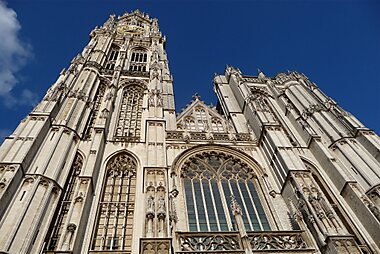

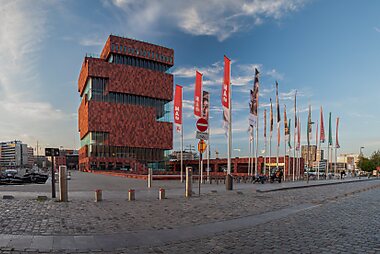
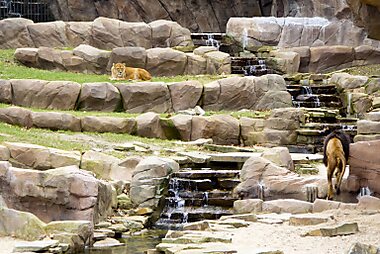
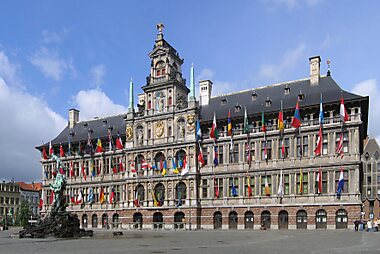
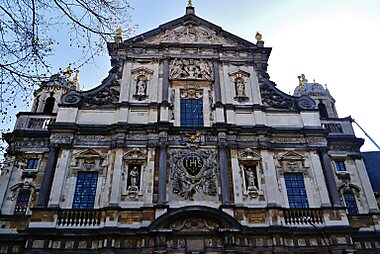
Cathedral of Our Lady is Belgium's largest Gothic church, with a soaring tower and three major altarpieces by Rubens inside.
Just outside it, Great Market Square is ringed by ornate 16th-century guild houses and the city hall, and is the natural starting point for exploring the old town.
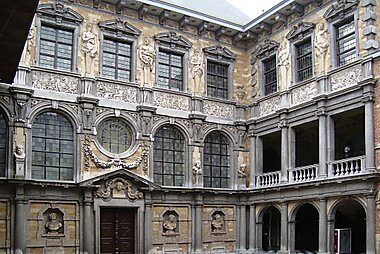
Rubenshuis was Rubens' home and studio, restored with period furniture and several of his paintings on display.
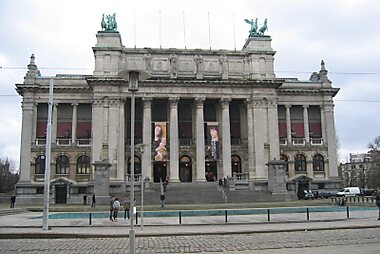
Royal Museum of Fine Arts Antwerp holds a major collection of Flemish Baroque painting, including works by Rubens, van Dyck, and Jordaens.
Plantin-Moretus House-Workshops-Museum Complex preserves the workshop of Europe's leading 16th-century printing house, and is the only museum on the UNESCO World Heritage list.
Museum aan de Stroom is a striking modern museum on the old harbor front, worth visiting as much for the free rooftop panorama over the city and port as for its collections.
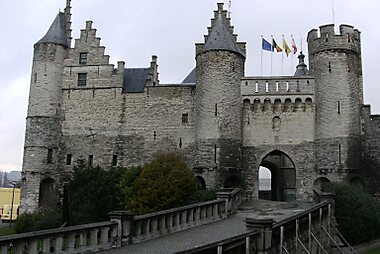
At the river's edge, Het Steen is Antwerp's oldest building, a small medieval fortress that once guarded the Scheldt.
Zoo Antwerpen, right by Centraal Station, is one of the oldest zoos in the world and a good stop for families.
Featured Lists


Antwerp Heritage Treasures
Antwerp’s historical landscape is defined by its architectural diversity and cultural significance. This collection features UNESCO World Heritage sites like the Gothic Cathedral of Our Lady and the Renaissance City Hall. It includes the Plantin-Moretus Museum, the world's only museum on the UNESCO list, and the eclectic Antwerp Central Station. From the medieval fortress of Het Steen to the Baroque elegance of St. Carolus Borromeus Church and the former guildhall of Butcher's Hall, these landmarks trace the city's evolution from a medieval stronghold to a global center of trade and art.
8 places


What to experience
A few things in Antwerp are worth doing rather than just seeing.
- Browse the window displays of the diamond district around Centraal Station, one of the world's leading centers for cutting and trading diamonds.
- Cross the Scheldt through Toegangsgebouw Sint-Annatunnel, a 1933 pedestrian tunnel whose original wooden escalators are still running — among the last of their kind anywhere.
- Browse the vintage and antique shops along Kloosterstraat.
- Window-shop the boutiques around MoMu — Antwerp has produced several internationally known fashion designers, and the area still reflects that.
- In December, skate and browse the stalls of Antwerp's Christmas market on Groenplaats and the Grote Markt.
Tours & Activities
Antwerp — Map

 Open the interactive map
 Day trips
Antwerp sits within easy reach of several of Belgium's best-known towns, so a day trip is simple to plan.
- Mechelen — around 15 minutes by direct train. A small, walkable town with an unfinished Gothic cathedral tower and a well-preserved historic center, with none of the crowds of the bigger cities.
- Brussels — around 45 minutes by direct train. Belgium's capital, with the Grand Place, EU quarter, and a much larger museum and dining scene.
- Ghent — around 50 minutes by direct train. A canal-lined medieval city that many travelers find more relaxed and less touristy than Bruges.
- Bruges — around 1 hour 15 minutes by train, sometimes with a change. Belgium's best-preserved medieval city, worth the longer trip for its canals and Gothic architecture.
Where to explore
A couple of smaller towns just outside Antwerp make an easy half-day out.
Getting there
- By air: Brussels Airport (BRU) is Belgium's main international gateway, about 45 km away. Direct trains run to Antwerpen-Centraal in around 45 minutes. Antwerp's own small airport, Antwerp Airport (Deurne, ANR), has scheduled flights to only a handful of leisure destinations, so most travelers arrive via Brussels.
- By train: Antwerpen-Centraal is a major rail hub, with direct trains to Brussels, Ghent, and Amsterdam (around 1 hour 15–20 minutes), plus connections toward Germany.
- By bus: Long-distance coaches (including Flixbus) serve a bus station near Antwerpen-Centraal, with connections to major European cities.
Getting around
- Public transit: De Lijn runs the trams, buses, and a small underground premetro network covering the city center and suburbs. Tap a contactless bank card or phone directly on the reader when boarding — no advance ticket is needed. De Lijn journey planner
- On foot / cycling: The old town is flat and compact, easily covered on foot. Cycling is common and practical, with bike-share stations across the city.
Driving
- Is a car worth it? No, not for the city itself — the old town is compact and walkable. A car is useful only for exploring the wider Flemish countryside.
- Parking: Use one of the Park & Ride sites on the ring road, or a signposted underground car park in the centre, paid by app or machine.
- Restrictions: Antwerp has a Low Emission Zone covering most of the city. Foreign-registered vehicles must register online in advance, which is free for compliant cars; non-compliant vehicles can buy a one-day pass instead.
Food & drink
Look out for Antwerpse handjes, hand-shaped chocolates and biscuits tied to a local legend, and Elixir d'Anvers, a bitter-sweet herbal liqueur made in the city since the 19th century.
For a genuinely distinctive spot, Brouwerij De Koninck is Antwerp's own historic brewery, best known for its "Bolleke" amber ale. For a wider choice, head to the streets around Kloosterstraat and Het Zuid, which cluster with restaurants, bars, and cafés popular with locals.
Safety & health
Antwerp is a safe city for tourists by international standards. The main risks are petty theft and pickpocketing in crowded spots such as Centraal Station, busy shopping streets, and public transit at rush hour. The diamond district is well monitored and poses no particular risk to visitors just passing through.
History
Antwerp's golden age began in the 16th century, when merchants from across Europe settled around Handelsbeurs, opened in 1531 as the world's first purpose-built commodity exchange. That wealth funded the guild houses around Great Market Square, rebuilt after Spanish troops sacked the city in 1576, and drew Peter Paul Rubens back from Italy to found his workshop at what is now Rubenshuis. Rubens is buried in Sint-Jacobskerk, under an altarpiece he painted himself.
The 20th century was harder. In the winter of 1944–45, occupying German forces fired more V-2 rockets at Antwerp's port than at any other target, including London, killing thousands of civilians in what the press at the time called the "city of sudden death."
Country facts
Quick practical facts for Belgium at a glance:
- Currency
- Euro EUR € · Card payments · Widely accepted
- Emergency numbers
- 112
- Electricity
- 230 V · 50 HzType C / Type E
- Languages
- Dutch, French, German
- Tap water
- Safe to drink
- Driving side
- Right
- Calling code
- +32


Antwerp – Plan Your Days
Turn the places from this guide into a real itinerary, with smart routing, time estimates, and everything you need for a perfect trip.




