



Belgium
Belgium is a small country wedged between France, Germany, and the Netherlands, with a short North Sea coast of its own. It packs medieval city centers, strong museums, and a rich food and beer culture into short travel distances. Most major cities sit less than two hours apart by train. The country splits into Dutch-speaking Flanders in the north, French-speaking Wallonia in the south, and bilingual Brussels, the capital and home to the European Union's main institutions.
Centuries of trade wealth from cloth and later diamonds left behind some of Europe's best-preserved Gothic architecture and Flemish Renaissance art. Belgium suits travelers who want walkable historic centers, don't mind changeable weather, and enjoy eating and drinking well without needing to plan far in advance.


Belgium – Planning a Trip?
Build your day-by-day itinerary in the Tripomatic app.


Money & payments
Belgium uses the euro. Cash is rarely needed — pay by card or phone almost everywhere, including small shops, markets, and public transport. ATMs are common in every city and town.
A budget traveler can get by on modest daily spending by staying in hostels, eating at bakeries and frituurs, and using public transport. A mid-range trip with hotels and sit-down meals costs noticeably more, especially in Brussels, Bruges, and Antwerp, where accommodation prices run highest.
Featured Lists


Belgian Cultural Treasures
This collection highlights Belgium's diverse museums and historic sites, from medieval art at the Groeningemuseum and industrial heritage at Bois du Cazier and Bois-du-Luc, to unique thematic museums like the Frietmuseum and Choco-Story. It also includes castles, war memorials, and natural landmarks such as the Caves of Han-sur-Lesse.
16 places


Historic Wind & Watermills
This collection features 13 windmills and watermills across Belgium, highlighting operational mills and protected heritage sites. The list includes diverse types such as undershot watermills, pivot mills, and post mills, many of which date back several centuries and remain important examples of regional milling traditions and engineering.
13 placesTours & Activities
Belgium — Map

Tipping
Tipping is not expected in Belgium. Restaurant and cafe bills already include service, so leaving a bit of extra change for good service is appreciated but not required. Rounding up a taxi fare is common. Hotel porters and tour guides may appreciate a small tip for good service, but it is optional.
round up
round up
1-2 EUR per bag
2-5 EUR
Electricity
Belgium uses Type C/E plugs at 230 V / 50 Hz, the standard European outlet — most phone and laptop chargers work without an adapter.
Language
Dutch, French, and German are all official languages, split by region: Dutch in Flanders (north), French in Wallonia (south), and German in a small eastern area near the German border. Brussels is officially bilingual Dutch-French. English is widely spoken in tourist areas, hotels, and by younger people nationwide, though less so in small towns outside the main circuit.
Staying connected
Prepaid SIM and eSIM plans are available from Proximus, Orange, and Base at airport kiosks, phone shops, and supermarkets. Activating a SIM requires showing a passport or ID — a foreign passport is accepted, no Belgian ID is needed. Coverage is strong nationwide, including on trains.
Safety & emergencies
Belgium is generally safe for travelers. The most common issues are pickpocketing and bag theft in crowded tourist spots and on public transport, especially around Brussels Central Station, the Grand-Place area, and busy trams. Keep valuables secured in crowds and be alert at ATMs.
Health
Tap water is safe to drink everywhere in Belgium. Pharmacies (marked with a green cross) are widely available in cities and towns; most keep standard business hours, and a rotating on-call pharmacy stays open nights and weekends in each area, with the schedule posted on the door. No special vaccinations are required to visit.
Visas & entry
Belgium is part of the Schengen Area. Citizens of the EU/EEA can enter with a valid ID card or passport and stay without restriction. Citizens of the US, UK, Canada, Australia, and many other countries can enter visa-free. The limit is 90 days within any 180-day period. Travelers from countries without a visa-free agreement need a Schengen visa, applied for through a Belgian embassy or consulate before travel.
Visa and entry requirements change frequently. Verify current requirements with the official immigration authority or your country's embassy before travel.
Etiquette
Greetings between people who know each other often involve one to three cheek kisses, depending on the region. A handshake is standard for first meetings and business settings. Dress modestly when visiting churches and cathedrals — cover shoulders and knees. Photography is generally fine in public spaces and most museums, though flash photography and photos inside some churches during services are discouraged. Belgians tend to be reserved and polite; loud behavior in public draws attention. Bargaining is not customary outside flea markets.
Holidays & opening hours
Public holidays can close shops, banks, and some restaurants, and reduce public transport schedules, especially in smaller towns. Check ahead if traveling on a holiday.
Most shops open Monday to Saturday and close on Sundays, though many stay open Sunday in central Brussels, Bruges, and Antwerp's main shopping streets. Supermarkets often close early on Sundays and stay open later one evening midweek.
Getting around
- By train: the rail network run by SNCB/NMBS connects all major cities frequently and reliably, usually the fastest way to travel between them. Book via SNCB/NMBS – Belgian Railways.
- By bus and tram: regional operators (De Lijn in Flanders, TEC in Wallonia, STIB/MIVB in Brussels) cover routes trains don't reach. Contactless bank card or phone payment works directly on board in most cities.
- By bike: Belgium has an extensive cycling infrastructure, especially in Flanders, with dedicated lanes and long-distance cycling routes between towns.
Driving
- Key rules: a warning triangle, reflective safety vest, and first-aid kit are required equipment in every car. The legal blood alcohol limit is 0.5 g/l, dropping to 0.2 g/l for drivers licensed less than two years and for professional drivers.
- Tolls: there is no general road toll or vignette for cars — most highways are free to use. Trucks pay a distance-based charge, and a toll applies at the Liefkenshoektunnel near Antwerp.
- Low-emission zones: Brussels, Antwerp, and Ghent all operate low-emission zones (LEZ) that restrict or charge older, more polluting vehicles, including some rental cars. Register or check eligibility online before driving into these cities.
- Parking: paid parking is standard in city centers, managed by meters or apps like 4411.be; many cities also have well-signed underground car parks.
- Fuel: stations are mostly self-service and accept cards at the pump. Petrol is labeled Essence (French) or Benzine (Dutch); diesel is Diesel in both.
- Electric vehicles: Belgium has a dense charging network in cities. Most stations require an app or charge card to start a session.
Food & drink
Belgians eat a light breakfast of bread or pastries, a substantial lunch, and dinner in the early evening, often around 7 pm. Fries (frites/frieten), twice-fried and served in a paper cone with a wide range of sauces, are a national staple sold from dedicated frituurs rather than fast-food chains. Mussels with fries (moules-frites) are a classic restaurant dish, alongside stews like carbonade flamande (beef braised in beer) and waterzooi (a creamy chicken or fish stew).
Belgium is famous for chocolate, best bought from small specialist shops rather than supermarkets. Waffles are another specialty. The dense Liège waffle and the lighter, crisper Brussels waffle are different things, worth trying separately. Beer culture runs deep, from Trappist ales brewed by monasteries to sour lambics found mainly around Brussels; most cafes offer beer menus running into the dozens.
Where to explore
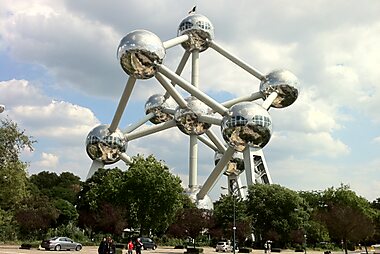
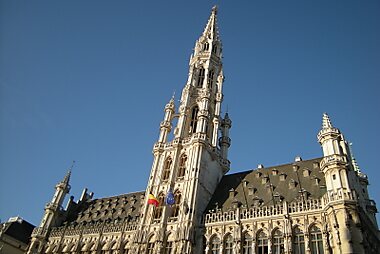
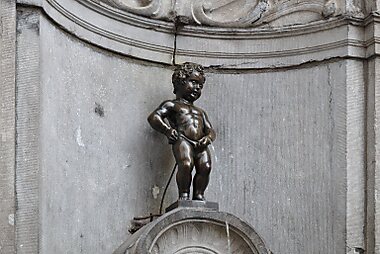
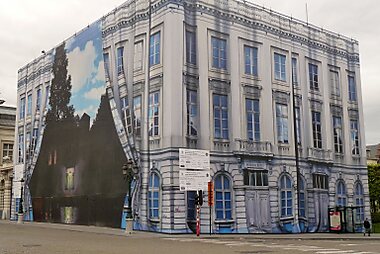
Brussels is the capital and a natural starting point, home to the Grand-Place, EU institutions, and a strong museum scene.
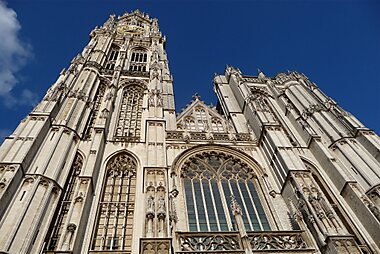
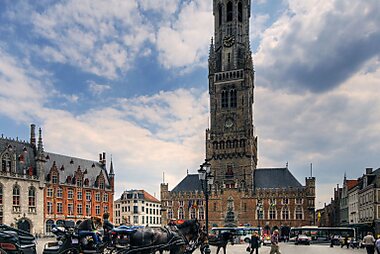
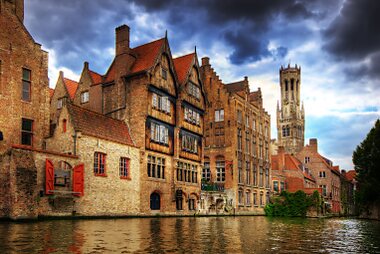
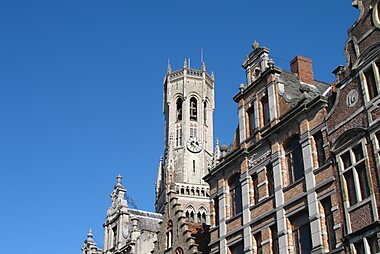
In Flanders, Bruges is the best-preserved medieval city, built around canals and a UNESCO-listed historic center. Ghent offers similar Gothic architecture with fewer crowds, and Antwerp adds a fashion and diamond-trade edge alongside its cathedral and Rubens connections. Leuven is a compact university town with an easy day-trip distance from Brussels.
In Wallonia, Liège is a lively riverside city known for its nightlife and Sunday market, and Namur sits at the meeting of two rivers below a hilltop citadel, a gateway to the Ardennes region. Dinant is a striking small town on the Meuse River, overlooked by a citadel carved into a cliff.
Ypres is the center for visiting World War I battlefields and memorials in the surrounding Flanders Fields region.
Belgium – Plan Your Trip
Pick the places you want to see and Tripomatic turns them into a day-by-day route, with smart routing, time estimates, and everything you need for a perfect trip.




