



Brussels
Brussels is Belgium's capital and, informally, the capital of the European Union. Grand Place anchors a compact old town of narrow lanes, chocolate shops, and beer cafes, while the glass towers of the EU quarter show the city's other side as an international political center.
The city suits a short stay of two or three nights. Its highlights sit close together and are easy to see on foot, and it works well as a base for day trips to Bruges, Ghent, or Antwerp. Brussels was also home to the surrealist painter Rene Magritte, whose work still shapes the city's identity.

Brussels – Planning a Trip?
Build your day-by-day itinerary in the Tripomatic app.


When to visit
Spring and autumn are mild and good for walking the old town. Summers are warm with the occasional shower, and winters are cold and grey, brightened by Christmas markets around Grand Place.
Time a visit for the Ommegang, a historical pageant on Grand Place in late June or early July. Thousands of performers in Renaissance costume reenact a 16th-century royal procession, with knights, giants, and a royal court parading past the guildhalls.
Best time to visit: June, July, August, September
Rain is possible year-round, so pack a light jacket regardless of season.
Top sights
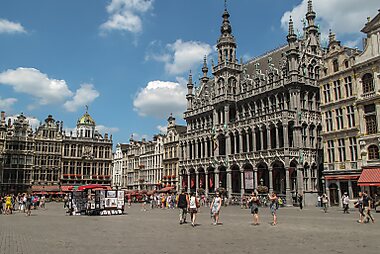
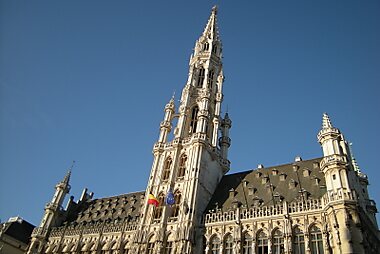
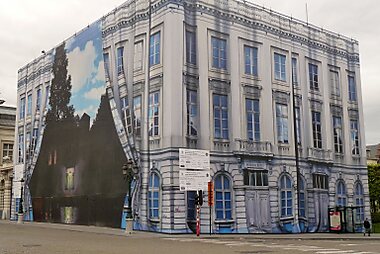
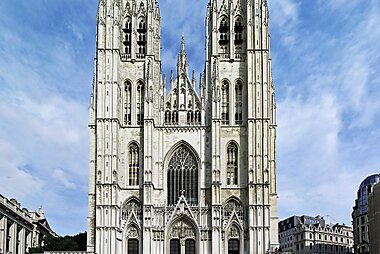
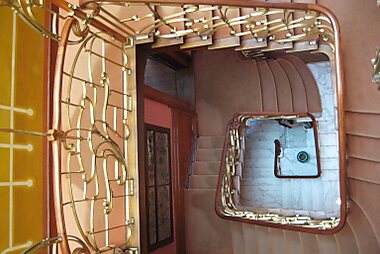
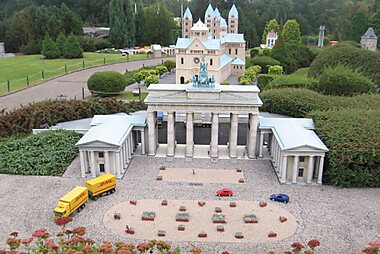
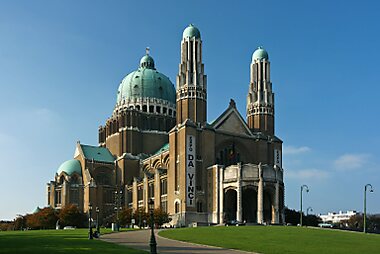
Grand Place is Brussels' historic heart, a UNESCO-listed square ringed by gilded guildhalls and the Gothic town hall. Come at night when the facades are lit, or in August during the biennial flower carpet.
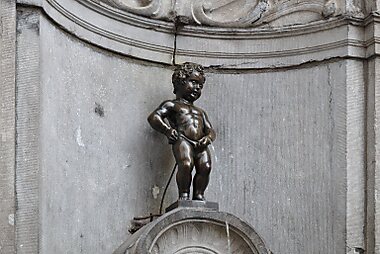
The nearby Manneken Pis is a small bronze statue with an outsized reputation: locals dress it in costumes for holidays and events, and it has its own wardrobe of hundreds of outfits.
Saint Michael and Gudula Cathedral rises above the city center with twin Gothic towers and stained glass dating back centuries; it has hosted royal weddings and state funerals.
Royal Museums of Fine Arts of Belgium holds Belgium's national art collection, including the world's largest gathering of works by the surrealist Rene Magritte.
Horta Museum, the architect's own former home and studio, is one of the finest examples of Art Nouveau anywhere and a UNESCO World Heritage Site in its own right.
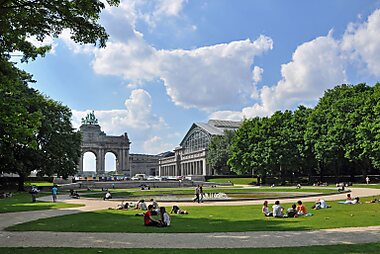
North of the center, Cinquantenaire Park spreads out around a triumphal arch and houses several of the city's museums, from classic cars to military history.
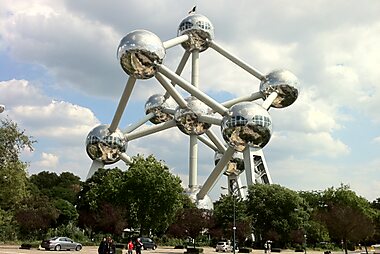
On the edge of town, Atomium is a 102-metre steel model of an iron crystal built for the 1958 World's Fair, with an observation deck and a restaurant in its top sphere. Right next door, Mini-Europe lets you tour scaled-down versions of Europe's landmarks in an afternoon.
Featured Lists


Brussels Comic Book Route
Brussels honors its legacy as a comic book capital with over 50 large-scale murals scattered across the city center and Laeken. Initiated in 1991 by the city authorities and the Belgian Comic Strip Center, this route features iconic Franco-Belgian characters. The murals are painted directly onto building gable ends, often integrating architectural elements like windows and pipes into the artwork. Key highlights include scenes from Tintin, Lucky Luke, and Asterix and Obelix.
16 places


Brussels Culinary Delights
Brussels' culinary landscape centers around the UNESCO-listed Grand-Place, where historic architecture meets traditional Belgian flavors. This selection features world-renowned chocolatiers like Godiva and Pierre Marcolini alongside local institutions such as Fritland, famous for traditional fries. The list spans diverse dining options, from Neapolitan-style pizzas at NONA to Art Nouveau brasseries like Falstaff. These establishments represent the city's blend of heritage and international gastronomy, offering everything from artisanal pralines to regional Belgian specialties.
10 places
What to experience
- Follow the Comic Book Route, a self-guided trail of large building-side murals depicting Tintin, Lucky Luke, and other Belgian comic characters scattered through downtown streets.
- Browse the weekend antiques market on Place du Grand Sablon, held every Saturday and Sunday morning.
- In December, browse Winter Wonders, the Christmas market that fills Grand Place and the surrounding streets with stalls, an ice rink, and a light show.
- Catch sunset from the Mont des Arts terrace, looking out over the old town rooftops toward the town hall spire.
Tours & Activities
Brussels — Map

 Open the interactive map
 Day trips
Several worthwhile day trips are within easy reach by train.
- Leuven - about 25 minutes by train. A lively university town with an elaborately carved Gothic Stadhuis and the historic Stella Artois brewery.
- Waterloo - about 45 minutes by train and local bus. The site of Napoleon's final defeat in 1815; climb the Lion's Mound for a view over the battlefield.
- Ghent - about 35-50 minutes by train. A canal city with a medieval castle and belfry, quieter and less touristy than Bruges.
- Bruges - about 1 hour by train. Belgium's best-preserved medieval city, with cobbled canals and Gothic guildhalls; the best-known of the group and worth the extra travel time.
- Antwerp - about 45 minutes to 1 hour by train. Belgium's fashion and diamond capital, with a Gothic cathedral holding major works by Rubens.
Getting there
- By air: Brussels Airport (Zaventem, BRU) is the main gateway, about 14 km northeast of the center. The Airport Express train reaches Bruxelles-Central in around 20 minutes. Brussels South Charleroi Airport (CRL), used by some budget carriers, is about 55 km south; a shuttle bus to Bruxelles-Midi takes roughly an hour.
- By train: Bruxelles-Midi/Zuid station has direct high-speed connections: Eurostar to London, Paris, and Amsterdam, and ICE services to Cologne.
- By bus: Long-distance coaches generally arrive at Bruxelles-Nord station.
Getting around
- Public transit: STIB/MIVB runs the metro, tram, and bus network covering the whole city. Tap a contactless bank card or phone directly on the validators for single rides - no ticket machine required. STIB-MIVB
- Taxi / ride-hailing: Uber and Bolt both operate normally alongside metered taxis.
- On foot / cycling: The historic center is compact and walkable, though the climb between the lower town and the upper town can be steep. Villo! bike-share stations are widespread and cycling lanes have expanded in recent years.
Driving
- Is a car worth it?: Skip it within the city - traffic is congested and public transit covers the center well. Consider renting one only for day trips beyond the train network.
- Parking: Underground car parks near the center charge a few euros per hour; on-street parking is metered and time-limited, paid via app or meter.
- Restrictions: Brussels enforces a Low Emission Zone across the whole region. Vehicles that don't meet the emission standard must register online in advance or risk a fine — check your vehicle's status before driving in.
Food & drink
Brussels' signature dish is moules-frites: mussels steamed in wine or beer, served with a large portion of fries. Waffles and chocolate are sold everywhere, but quality varies widely near Grand Place; look for a chocolatier with visible workshop production rather than a tourist-strip window display.
For a distinctive stop, Cantillon Brewery brews lambic and gueuze using spontaneous fermentation, a beer style found almost nowhere outside the Brussels region. For everyday eating, the Sainte-Catherine neighborhood around the old fish market is known for seafood, and the streets around Dansaert have a wider mix of casual restaurants.
Safety & health
Brussels is generally safe for visitors. Petty theft and pickpocketing happen around crowded tourist spots, on trams, and especially near Gare du Midi, where international trains arrive - keep bags zipped and valuables out of back pockets there.
Occasional street scams target tourists near busy squares like Grand Place; treat unsolicited requests for money or a signature with caution.
History
Brussels began as a small settlement on an island in the Senne river, according to tradition founded around 979 by Charles, Duke of Lower Lotharingia. It grew into a major cloth-trading town in the Middle Ages, wealthy enough to build the guildhalls that still ring Grand Place today - though most were rebuilt after a French bombardment destroyed the square in 1695.
Brussels became the capital of the newly independent Kingdom of Belgium in 1830. Well over a century later, in 1958, it took on a second role as the headquarters of the European Economic Community, forerunner of the European Union, cementing its status as a genuinely international city.
Country facts
Quick practical facts for Belgium at a glance:
- Currency
- Euro EUR € · Card payments · Widely accepted
- Emergency numbers
- 112
- Electricity
- 230 V · 50 HzType C / Type E
- Languages
- Dutch, French, German
- Tap water
- Safe to drink
- Driving side
- Right
- Calling code
- +32


Brussels – Plan Your Days
Turn the places from this guide into a real itinerary, with smart routing, time estimates, and everything you need for a perfect trip.




