



Armenia
Armenia is a small, landlocked country in the South Caucasus, framed by high mountains and deep gorges. Its east is dominated by Lake Sevan, one of the largest alpine lakes in the world. From Yerevan, the capital, the snow-capped peak of Mount Ararat is visible across the closed border with Turkey. Yerevan itself was founded in 782 BC, older than Rome.
In 301 AD, Armenia became the first nation to adopt Christianity as its state religion, and that history still shapes the landscape. Ancient monasteries sit carved into cliffs and hidden in remote gorges across the country. Away from the capital, travel moves at a slower pace, through wine villages and small towns built around old churches. Armenia suits travelers who enjoy history, mountain scenery, and long meals built around local food and wine. It works well on its own or paired with a trip to neighboring Georgia.



Armenia – Planning a Trip?
Build your day-by-day itinerary in the Tripomatic app.


Money & payments
Cards are accepted in most hotels, restaurants, and shops in Yerevan and other cities. Cash is still useful in villages, small guesthouses, local markets, and for marshrutka (shared minivan) fares. ATMs are common in Yerevan and provincial capitals, but scarce near remote monasteries and mountain villages, so withdraw cash before heading out. Currency exchange offices are widespread and usually offer better rates than hotels.
Featured Lists


Armenia's Historic Treasures
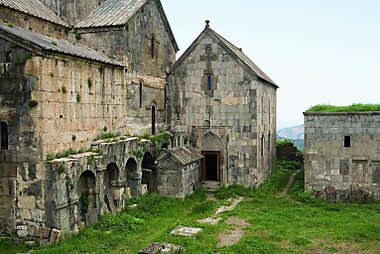
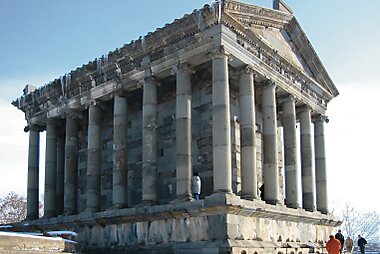
Armenia's landscape is defined by centuries of architectural evolution, from the prehistoric megaliths of Zorats Karer and the 6,000-year-old Areni-1 cave complex to the classical Hellenistic Temple of Garni. The collection features several UNESCO World Heritage sites, including the rock-cut Geghard Monastery and the 7th-century ruins of Zvartnots Cathedral. Medieval defensive architecture is represented by the massive basalt walls of Dashtadem Fortress and the high-altitude ruins of Kakavaberd, while Echmiadzin remains the spiritual center as the world's oldest state-built cathedral.
14 places

Tours & Activities
Armenia — Map

 Open the interactive map
 Tipping
Tipping is not deeply rooted in Armenian tradition, but it has become common in Yerevan's restaurants and with tour guides.
~10%, or round up the bill
round up to the nearest 500 AMD
500-1,000 AMD per bag or per night for staff
5-10% of the tour price
Check your bill before tipping — some tourist-facing restaurants already add a service charge. Outside the capital, tipping is less common and never expected.
Electricity
Armenia uses Type C and F plugs at 220 V / 50 Hz, the standard European two-pin sockets. Most modern phone and laptop chargers work without an adapter.
Language
Armenian, written in its own distinct alphabet, is the official language. Signs and menus in Yerevan are usually shown in Armenian and English, but transliteration varies, so place names can appear spelled several different ways. Russian is widely understood, especially by older generations, and is useful outside the capital. English is common in Yerevan's hotels, restaurants, and tourist sites, but less so in rural villages.
Staying connected
Local SIM cards from Viva-MTS, Beeline, or Ucom are inexpensive and easy to buy at Zvartnots Airport or shops in Yerevan. You will need to show your passport to register a new number, as with any local number. eSIM options are also available and can be set up before you arrive. Coverage is good across the country, though it can drop out in remote mountain valleys. There are no unusual content or access restrictions for travelers.
Safety & emergencies
Armenia is a safe country for travelers, with low rates of violent crime. The most common issues are overcharging by unlicensed taxi drivers and pickpocketing in crowded markets or on public transport, so take the usual precautions with your belongings. Mountain roads can be poorly lit and steep, so drive carefully after dark, especially in winter. Armenia's land borders with Turkey and Azerbaijan are closed to travelers; only the crossings with Georgia and Iran are open. Many governments advise against travel near the border with Azerbaijan, so check current travel advisories before planning a route through Syunik province in the south.
Health
Tap water in Yerevan and most cities is safe to drink, drawn from mountain springs. Look for the pulpulak, Yerevan's public drinking fountains, found on almost every street corner. In rural areas or after heavy rain, bottled water is the safer choice. Pharmacies are common in cities and marked with a green cross, though English-speaking staff are not guaranteed outside Yerevan. No special vaccinations are required to enter Armenia, but routine vaccines should be up to date. Talk to a doctor before your trip if you plan extensive hiking at altitude.
Visas & entry
Entry requirements depend on your nationality. Citizens of many countries, including the EU, UK, and Japan, can enter Armenia visa-free for up to 90 days within a 180-day period. Citizens of Russia and other CIS countries can stay visa-free for up to 180 days a year. Travelers from most other countries can apply for an e-visa online before arrival, or a visa on arrival at Yerevan's Zvartnots Airport if they hold a valid Schengen, US, UK, or similar visa.
Visa and entry requirements change frequently. Verify current requirements with the official immigration authority or your country's embassy before travel.
Etiquette
Dress modestly when visiting churches and monasteries — cover your shoulders and knees; women may want to bring a light scarf for their head, though it is not strictly enforced at most sites. At Blue Mosque, Yerevan's working mosque, remove your shoes before entering the prayer hall.
Armenians greet close friends and family with a light cheek kiss; a handshake is standard for a first meeting. Meals often include a series of toasts led by a designated toastmaster, especially at family gatherings and celebrations — it is polite to wait for a toast before drinking. Photography is generally welcome, but ask before photographing people directly, especially in villages. Bargaining is uncommon in shops but acceptable at open-air markets like Yerevan's Vernissage.
Holidays & opening hours
Public holidays can affect opening hours, especially around New Year (a week-long series of holidays in early January) and Independence Day in September. April 24, Armenian Genocide Remembrance Day, is a solemn day of commemoration, marked by large gatherings and processions in Yerevan. Most shops and restaurants open daily, including Sundays, and there is no strong tradition of a midday closure.
Getting around
- By marshrutka: Shared minivans connect Yerevan to almost every town and village. Fares are cheap and paid in cash on board; departures are frequent on popular routes but can be infrequent on rural ones.
- By train: A limited network connects Yerevan to Vagharshapat, Gyumri, and Lake Sevan, but it is slow and better suited to a scenic ride than a fast connection.
- By taxi and ride-hailing apps: GG Taxi and Yandex Go are widely available in Yerevan and inexpensive by international standards. Agree on a fare in advance for trips outside city limits, where meters are less common.
- By rental car: The most flexible way to reach monasteries and villages that marshrutkas do not serve well. Roads are mostly in good condition, though mountain routes can be narrow and winding.
Armenia is small enough that most major sights can be reached on a day trip from Yerevan.
Driving
- Alcohol limit: Armenia has a zero-tolerance policy for drink driving — the legal limit is 0.0%. Random checks are common.
- Winter driving: Mountain roads in Gegharkunik, Syunik, and Aragatsotn provinces can ice over in winter; snow tires are strongly recommended between November and April.
- Parking: Metered street parking is common in central Yerevan, paid by SMS or app; elsewhere parking is informal and usually free.
- Fuel: Stations are staffed, and most accept cards as well as cash. Look for Բենզին (Benzin) for petrol and Դիզել (Dizel) for diesel on the pump.
- Foreign vehicles: Cars entering on foreign license plates pay a one-time environmental fee at the border.
Food & drink
Armenians eat a hearty breakfast, often with eggs, cheese, herbs, and fresh lavash bread. Dinner is typically the main meal of the day, eaten later than in Western Europe, and meals are usually shared, with a spread of small dishes at the center of the table rather than individual plates. Grilled meat, khorovats, is Armenia's most common way to celebrate, whether cooked at home on weekends or ordered at a restaurant.
Beyond the grill, look for dolma (stuffed grape leaves), khash (a garlicky winter broth, usually eaten early in the morning), and gata, a sweet pastry served with coffee. Armenia is one of the world's oldest wine-producing regions, and the Vayots Dzor valley around Areni produces well-regarded reds from local grape varieties. Armenian brandy, distilled in Yerevan since the late 19th century, is the country's best-known export.
Coffee culture runs deep — Armenian coffee is brewed strong and unfiltered in a small copper pot, then served with the grounds left to settle at the bottom of the cup. Markets, bakeries, and small family-run restaurants are the best places to try everyday Armenian cooking, rather than restaurants aimed mainly at tourists.
Where to explore
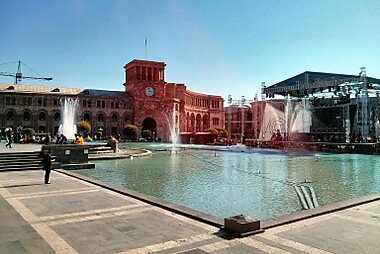
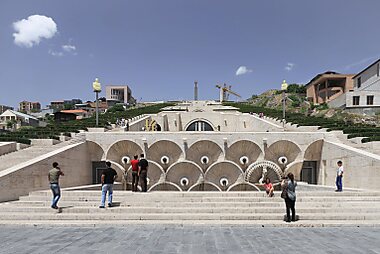
Yerevan is Armenia's capital and largest city, and most visits start and end here. Its center is built around Republic Square, framed by pink volcanic-tuff buildings, and the tiered Cascade art complex that climbs the hillside above. Nearby, Freedom Square anchors the city's theater and opera district. The city's museums include Matenadaran, home to a vast collection of ancient illuminated manuscripts, and History Museum of Armenia. On a hill above the city, Mother Armenia looks out over the skyline, and on its western edge, Armenian Genocide Memorial commemorates the victims of the 1915 genocide.
Just outside Yerevan, a cluster of ancient sites makes for an easy day out: the cliffside Geghard Monastery, the Greco-Roman colonnades of Garni Temple, and Khor Virap, a monastery with sweeping views toward Mount Ararat.
Vagharshapat, often called Echmiadzin, is the spiritual center of the Armenian Apostolic Church. Echmiadzin Cathedral is its mother cathedral, one of the oldest in the world, standing alongside the smaller churches of Saint Hripsime Church and Saint Gayane Church. All three, together with the nearby ruins of Zvartnots Cathedral, form a single UNESCO World Heritage Site.
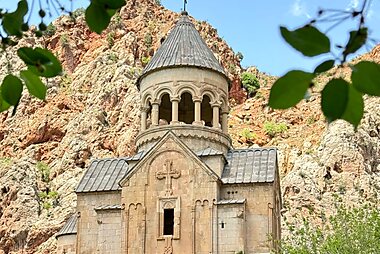
South of Yerevan, the wine region of Vayots Dzor centers on the town of Areni, known for the Areni-1 Cave and the red-cliff monastery of Noravank Monastery. Further south, in Syunik province, Goris is the gateway to Tatev Monastery, reached by the Wings of Tatev cable car, one of the longest aerial tramways in the world. Nearby are the still partly inhabited cave dwellings of Khndzoresk Cave Dwellings and the tiered Shaki Waterfall.
In the north, the Debed Canyon in Lori province holds two UNESCO-listed monasteries, Haghpat Monastery and its twin, Sanahin. Further east, Dilijan National Park is a forested resort town known for hiking trails and the monasteries of Goshavank and Haghartsin Monastery.
To the east, Lake Sevan is one of the highest large lakes in the world, ringed by beaches, guesthouses, and the hilltop Sevanavank, with the shoreline Hayravank Monastery a short drive south. The spa town of Jermuk, further south again, is known for mineral springs and a dramatic waterfall.
Armenia – Plan Your Trip
Pick the places you want to see and Tripomatic turns them into a day-by-day route, with smart routing, time estimates, and everything you need for a perfect trip.




