



Aruba
Aruba is a small island in the southern Caribbean, just north of Venezuela. It sits outside the hurricane belt, so the weather stays dry and sunny almost all year. Aruba is a constituent country of the Kingdom of the Netherlands, with its own government and currency, and two official languages: Dutch and Papiamento.
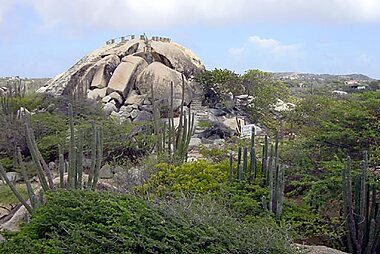
The island suits travelers who want an easy, short beach trip. Direct flights connect Aruba to North America and Europe. English is spoken everywhere in the tourist areas. The whole island can be crossed by car in under an hour. The west coast has calm, white-sand beaches and most of the hotels. The rugged east coast and the interior look different: cactus-covered desert, limestone caves, and Arikok National Park. The park protects about a fifth of the island.


Aruba – Planning a Trip?
Build your day-by-day itinerary in the Tripomatic app.


Money & payments
The official currency is the Aruban florin. US dollars are accepted almost everywhere, including shops, restaurants, and taxis. You can often pay in either currency, so converting money is rarely necessary. ATMs are common in Oranjestad and along the hotel strips, and usually dispense florins.
Most goods are imported, so food, drinks, and rental cars typically cost more than on the US mainland. Resort-area restaurants and shops often price in whichever currency is more convenient for visitors.
Featured Lists


Aruba's Natural Wonders
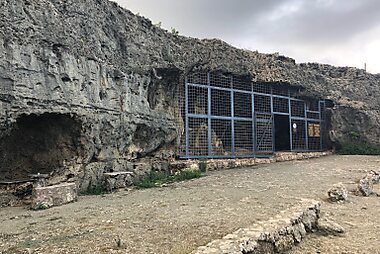
Explore the diverse geological and cultural landmarks within Aruba's Arikok National Park. This collection includes Sero Jamanota, the island's highest point at 188 meters, and Sero Arikok, which offers panoramic views of the rugged coastline. The list also features limestone caves such as Fontein Cave, known for its ancient Arawak petroglyphs, and the Guadirikiri and Huliba caves, the latter famous for its heart-shaped entrance known as the Tunnel of Love.
5 placesTours & Activities
Aruba — Map

 Open the interactive map
 Tipping
Tipping in Aruba is a way to reward good service, not an obligation.
- Restaurants: some add a service charge to the bill, especially for groups. That charge is pooled for staff, not a personal tip for your server. Leave a little extra cash if the service stood out.
- Bars: rounding up or leaving a small amount per round is common, not expected.
- Taxis: a small tip for help with luggage or a friendly driver is appreciated, though not required.
- Hotels: a little cash per bag for porters, and a similar amount per night for housekeeping, is a nice gesture.
- Tour guides: a tip per person for a half- or full-day tour is typical when the guide does a good job.
service charge sometimes added (~15%); extra cash tip for good service is welcome
round up or Afl. 2-4 per round
round up
Afl. 2-4 per bag or per night for housekeeping
Afl. 10-20 per person for a half or full day
Electricity
Aruba runs on 120 V / 60 Hz with American-style plugs, so visitors from Europe, the UK, or most of Asia need only a plug adapter, not a voltage converter.
Language
Dutch and Papiamento are Aruba's official languages. Papiamento is a Creole blend of Portuguese, Spanish, Dutch, and African languages. It is what most Arubans speak at home and on the street. English and Spanish are also spoken very widely in hotels, restaurants, and shops, so getting around without Dutch or Papiamento is easy.
Staying connected
Prepaid SIM cards from Digicel and Setar, Aruba's two mobile carriers, are sold at booths in the airport arrival hall and at shops around Oranjestad. Coverage is reliable island-wide, since Aruba is small and flat.
Safety & emergencies
Aruba is one of the safer Caribbean destinations for tourists. Violent crime against visitors is rare. Petty theft does happen, especially around busy beaches and resort parking lots — items left unattended, or valuables in an unlocked rental car, are common targets. Keep valuables out of sight and use your hotel safe.
Emergency operators are multilingual, so you can reach them in English, Papiamento, Dutch, or Spanish.
Health
Tap water is safe to drink island-wide. Aruba has no natural fresh water. Tap water is desalinated from seawater to a high standard, and many hotels encourage refilling a reusable bottle instead of buying plastic ones.
Pharmacies (called botica in Papiamento) are easy to find in Oranjestad and near the main resort strips, and several stay open late. Dr. Horacio Oduber Hospital, near Oranjestad, runs a 24-hour emergency department. No special vaccinations are required for most travelers. A yellow fever certificate is required only for travelers arriving from a country with a risk of yellow fever transmission.
Visas & entry
Citizens of the Netherlands, the United States, Canada, the UK, and most of the EU and Schengen area can enter Aruba without a visa, typically for up to 30 days. US citizens can stay up to 90 days. Every visitor, regardless of nationality, must complete Aruba's online Embarkation/Disembarkation (ED) Card before arrival. The ED Card also collects the island's sustainability fee for air travelers.
At the border you will also need a valid passport, a return or onward ticket, proof of accommodation, and enough funds for your stay. The final decision on entry rests with the immigration officer at the airport.
Visa and entry requirements change frequently. Verify current requirements with the official immigration authority or your country's embassy before travel.
Etiquette
Beachwear belongs on the beach. Cover up with a shirt or shorts when you head into town, restaurants, or shops. Public nudity is illegal in Aruba, and topless sunbathing is not practiced on the public beaches — a couple of private resort islands offer their own adult beach areas for that.
Greetings are warm and unhurried. A simple "Bon dia" (good morning) is appreciated, even from visitors who don't know any other Papiamento. It's polite to ask before photographing people, especially outside the tourist areas.
Holidays & opening hours
Public holidays affect banks and government offices more than tourist businesses. Most restaurants, shops, and hotels in the resort areas stay open as usual, including Sundays. Smaller local shops and offices tend to close on Sundays and holidays, so plan ahead for errands outside the tourist strip.
Getting around
- By bus: Arubus, the government-owned bus operator, connects Oranjestad, the hotel strips, the airport, and San Nicolas. Pay cash on board, or buy a reloadable smartcard or day pass in advance. Arubus routes and schedules
- By taxi: taxis use fixed zone rates rather than a meter — agree on the fare, or check the official rate list, before you get in.
- By rental car or scooter: this is the easiest way to reach the beaches, rock formations, and Arikok National Park on your own schedule. Most of the island's attractions sit well outside walking distance of the hotel strips.
- On foot: the main hotel strips at Palm Beach and Eagle Beach are walkable between resorts, but the rest of the island is spread out and impractical to explore on foot.
Driving
- Parking: most hotels offer free parking. In Oranjestad, metered street parking covers the shopping district.
- Fuel: attendants pump your gas at almost every station. Self-service is rare. Prices are set by the government, so they are the same everywhere on the island.
- Electric vehicles: charging points are limited to a handful of hotels, so a gas or diesel rental is still the practical choice.
Food & drink
Aruban food blends Dutch, Spanish, Caribbean, and Venezuelan influences, shaped by a trading history and a small island with little farmland. Breakfast tends to be light, often bread or pastechi, a fried turnover filled with cheese or meat. Lunch is usually the main meal of the day.
Hearty stews called stoba, made with goat, beef, or conch, are a home-cooked staple, usually served with funchi, a cornmeal side similar to polenta, or with rice and beans. Keshi yena is the island's best-known dish, a legacy of its Dutch cheese trade: a whole Gouda or Edam cheese, hollowed out, stuffed with spiced meat or chicken, and baked.
For something sweet, look for cocada, a coconut candy traditionally served on a piece of coconut shell. Locals wash meals down with Balashi, the island's own beer, or ponche crema, a spiced, eggnog-like drink served at celebrations. Restaurants range from casual roadside stands to fine dining around Oranjestad and the hotel strips.


Aruba – Plan Your Days
Turn the places from this guide into a real itinerary, with smart routing, time estimates, and everything you need for a perfect trip.


Related destinations
Data: © OpenStreetMap contributors, Wikidata, Wikipedia, Tripomatic, Official websites, geoBoundaries (CC BY 4.0). Tours by GetYourGuide. We earn commission from bookings. Travel guide generated with AI.