


Capri
Capri is a small island in the Bay of Naples. It is a short boat ride from the mainland but feels far from the mainland. Steep limestone cliffs, sea caves, rock stacks and terraced gardens surround two hill towns, the busier Capri town and the quieter Anacapri. Roman emperors, writers and artists have come here for more than two thousand years.
The island suits short trips of a day to three nights, couples and travelers who like views and walks. Most visitors come for the scenery and the boat trips. It is easy to see in a day, but staying overnight gives you the island after the day-trippers leave.

Capri – Planning a Trip?
Build your day-by-day itinerary in the Tripomatic app.


When to visit
Late spring and early autumn are the best times. The weather is warm, the sea is good for swimming and the crowds are smaller than in midsummer. July and August are the hottest and busiest months, with long queues for boats and the chairlift. Many hotels and restaurants close in winter, and rough seas can cancel ferries and Blue Grotto visits.
The island celebrates its patron saint, San Costanzo, on 14 May. There are processions in Capri town.
Best time to visit: May, June, July, August, September, October
Top sights
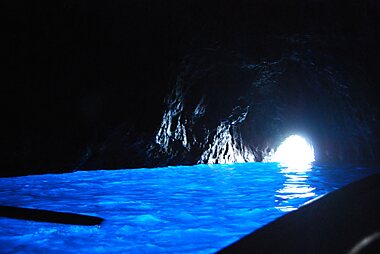

- The cave of Grotta Azzurra glows with an intense blue light. Small rowing boats take visitors inside for about five minutes. The entrance ticket is separate from the boat to the cave, queues can be long in summer, and the grotto closes when the sea is rough.
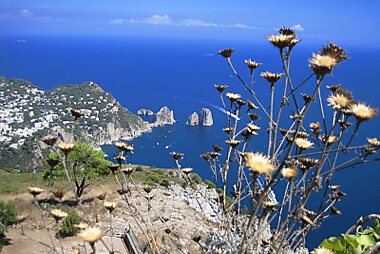
- The three rock stacks of Faraglioni rise from the sea off the southeast coast. They are the symbol of Capri and are best seen from a boat or from the clifftop paths.
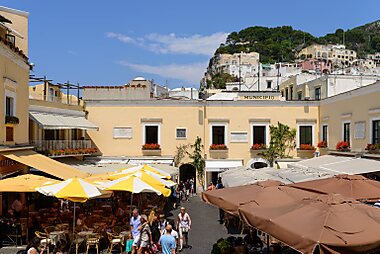
- Piazza Umberto I is the small square in Capri town that everyone calls the Piazzetta. It is the place for a coffee and for watching the crowd.
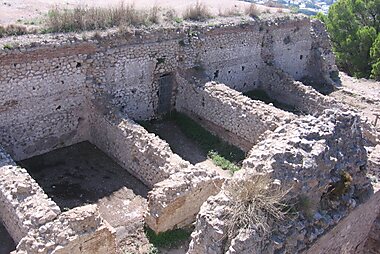
- Villa Jovis is the ruin of the largest Roman villa on the island. The emperor Tiberius ruled the empire from Capri in his later years, and the cliffside views are the reward for the uphill walk.
- Monte Solaro is the highest point on the island. A chairlift from Anacapri takes you up to a wide view over the whole bay.
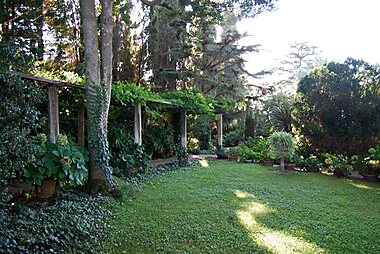
- Villa San Michele in Anacapri was the home of the Swedish doctor Axel Munthe. It has a garden with a famous view and a long terrace above the sea.
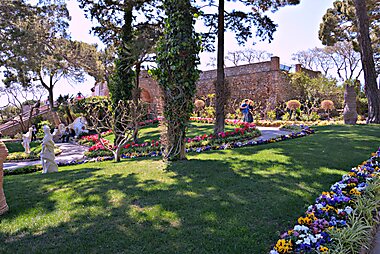
- Giardini di Augusto are terraced gardens above Marina Piccola. They are full of flowers and have a good view of the Faraglioni.
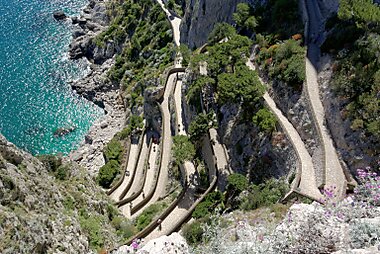
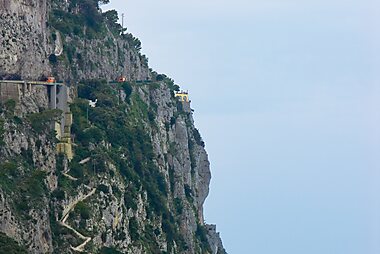
- Via Krupp is a zigzag path cut into the cliff. It links the gardens with Marina Piccola and has been open again since 2023.
Featured Lists


What to experience
- Take a boat trip around the island. You pass the sea caves, the Faraglioni and hidden coves that you cannot reach on foot.
- Ride the chairlift up Monte Solaro for the ride and the view, and stay for sunset when the day-trippers have left.
- Walk down the ancient stairs of Scala Fenicia between Anacapri and Marina Grande. They are steep and tiring on the way back up.
- Swim from the rocky coast at Marina Piccola or from a beach club. The sea is warm enough for swimming from early summer into autumn.
- Watch the sunset at the Punta Carena lighthouse, on the western tip of the island.
- Have an evening drink on the Piazzetta, but check the prices first.
Tours & Activities
Capri — Map

Day trips
Capri is an island, so every day trip starts with a boat. Choose one mainland or island destination, and check the last return boat before you go.
- Sorrento: the closest mainland town, about half an hour by fast boat. It has a pleasant old centre and good onward links along the coast.
- Naples: about 50 minutes by fast boat. It has a large old city, a major archaeological museum and famous pizza.
- Pompei: the Roman town buried by Vesuvius. Reach it by train from Naples or Sorrento.
- Positano and Amalfi: the famous coast with towns built on the cliffs. Boats run mainly in the warmer months, so check the season.
- Ischia and Procida: two other islands in the bay, with spas, beaches and fishing harbors. Procida is the smaller and quieter one.
Where to explore
Getting there
Capri has no commercial airport. Everyone arrives by sea.
- By air: fly to Naples Capodichino (NAP), then take a taxi or bus to the port. This is the usual gateway.
- From Naples: fast boats and slower ferries leave from the city port. The fast boat takes about 50 minutes and the ferry takes longer.
- From Sorrento: frequent boats, about half an hour. This is the shortest crossing.
- From the Amalfi Coast and Salerno: boats run mostly in the warmer months. Check the season before you plan.
- Arrival: all boats arrive at Marina Grande, the main port. From there, take the funicular or a bus up to Capri town.
- Weather: in rough seas the schedule changes, and some boats do not sail. Keep your return plan flexible.
Getting around
The island is small and hilly. Most trips combine buses, the funicular and walking.
- Funicular: runs between Marina Grande port and Capri town. It is the quickest way up from the ferry.
- Buses: local buses link Marina Grande, Capri town, Anacapri and the Blue Grotto road. They are crowded in summer, and tickets are sold at kiosks and shops. Buy your ticket before you board.
- Taxis: open-top taxis are available at the main squares and the port. Check the fare before you start.
- Chairlift: the chairlift in Anacapri goes up to Monte Solaro.
- On foot: the paths are beautiful, with many steps and slopes. Wear good shoes.
Driving
- Is a car worth it? No. The island is small and the roads are narrow and steep. Buses, taxis and your feet cover everything.
- Bringing a car: non-resident vehicles are restricted on the ferries during the tourist season. Check the current rules before you plan, and do not count on bringing a car.
- Parking: parking is very limited. If you drive on the mainland, leave the car near the departure port.
Food & drink
Capri cooking is simple and local. Look for insalata caprese, ravioli caprese filled with cheese and herbs, fresh fish and the chocolate-almond torta caprese. Limoncello, the lemon liqueur, is the local drink.
Prices are high, especially on the Piazzetta and in the best-known restaurants. Eat in the quieter streets of Anacapri or in the small restaurants of Marina Grande for better value. Check the menu prices and the cover charge before you sit down. Many restaurants close in winter.
Safety & health
Capri is very safe for visitors. Violent crime is rare, and petty theft is uncommon, though crowded buses and boats deserve a little care.
- Check the price before you take a boat tour or a drink on the main square.
- Paths are steep and often have no handrail. Take water, a hat and good shoes in summer.
- Sea conditions change quickly. Swim only in calm weather, and respect warning flags.
- Pharmacies and a small hospital are on the island. For serious emergencies, patients are taken to the mainland by boat or helicopter.
History
Capri has been settled since ancient times. The Greeks and then the Romans loved the island. The emperor Augustus made it an imperial property, and his successor Tiberius lived here for his last ten years. The ruins of Villa Jovis are the main surviving trace of that time.
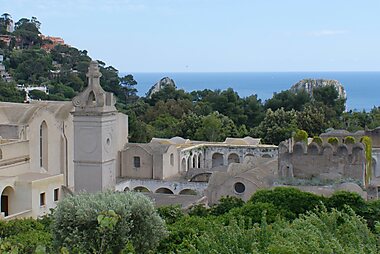
In the early 20th century the island attracted writers, artists and wealthy foreigners. Axel Munthe built Villa San Michele, and the German industrialist Friedrich Alfred Krupp paid for Via Krupp. Earlier, the monks of Certosa di San Giacomo, a Carthusian monastery founded in the 14th century, shaped the island's religious life. The monastery is now a cultural site in Capri town.
Country facts
Quick practical facts for Italy at a glance:
- Currency
- Euro EUR € · Card payments · Widely accepted
- Emergency numbers
- 112
- Electricity
- 230 V · 50 HzType C / Type F / Type L
- Languages
- Italian
- Tap water
- Safe to drink
- Driving side
- Right
- Calling code
- +39


Capri – Plan Your Days
Turn the places from this guide into a real itinerary, with smart routing, time estimates, and everything you need for a perfect trip.