


Cortina d'Ampezzo
Cortina d'Ampezzo sits in a wide, sunny valley high in the Dolomites of northern Italy. Pale rock peaks — the Tofane, the Cristallo, and the Pomagagnon — rise on every side. It is one of Italy's most famous mountain resorts, known for skiing, smart shops, and easy access to dramatic scenery. Cortina hosted the 1956 Winter Olympics and co-hosts the 2026 Games with Milan.
The town itself is small and easy to walk. Its landmark is the parish church of Santi Filippo e Giacomo, whose tall bell tower stands over the pedestrian main street, Corso Italia. Cortina suits travelers who want mountains with comfort — good hotels, cafés, and high mountain huts rather than rough camping. It is busy and stylish in winter and summer, and much quieter in between.

Cortina d'Ampezzo – Planning a Trip?
Build your day-by-day itinerary in the Tripomatic app.
When to visit
Cortina has two main seasons. Winter, from December to March, is for skiing: cold, snowy, and short on daylight. Summer, from late June to September, is mild and green, and best for hiking, cable cars, and the mountain huts. Late spring and late autumn are quiet, when many lifts and huts close and the weather is unsettled. For a headline event, the women's Alpine Ski World Cup races run on the Tofana slopes each January and draw big crowds. Cortina also hosted the February 2026 Winter Olympics, so ski-season demand and prices are high.
Top sights
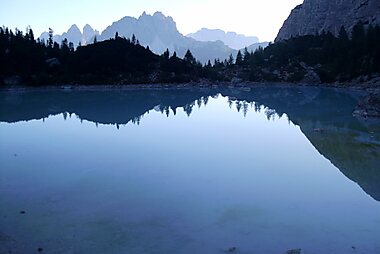
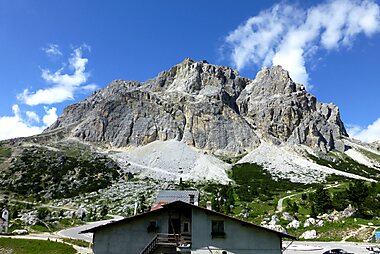
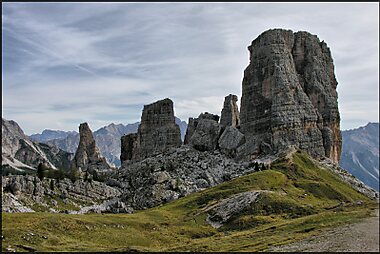
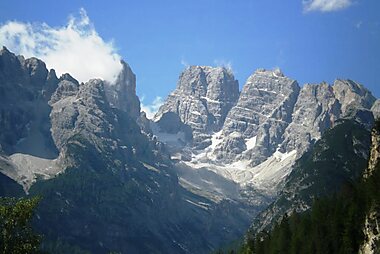
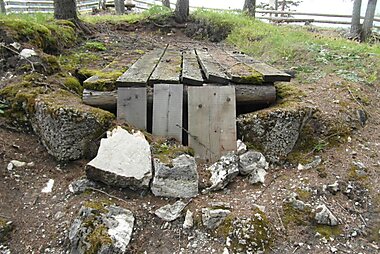
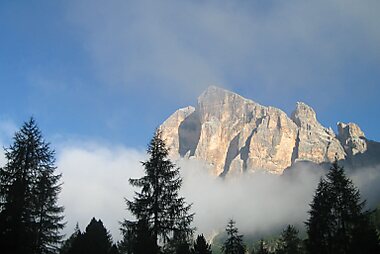
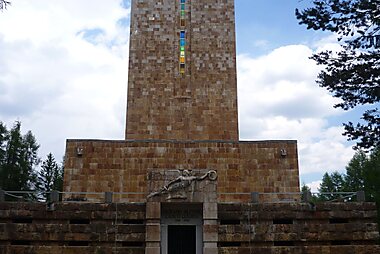
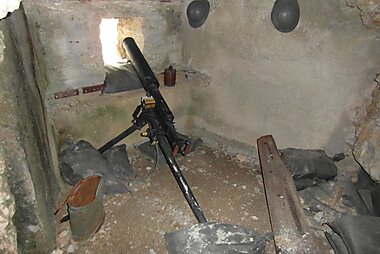
Cortina d'Ampezzo is the heart of it all — a smart resort town with a car-free main street for shopping and people-watching, ringed by ski slopes in winter. West of town, Tofane is reached by the Freccia nel Cielo cable car and has some of the area's best views and ski runs. Lago di Sorapis is a bright turquoise lake below the Sorapis peaks, reached by a popular mountain hike of about two hours each way, with some exposed, cable-secured sections. Cinque Torri is a cluster of rock towers and an open-air World War I museum, with trenches you can still walk. A cable car climbs Lagazuoi, where restored wartime tunnels run through the mountain to a terrace above the passes. Passo Giau is one of the most scenic drives near town, a high pass with wide views of the surrounding peaks. The Museo Etnografico Regole d'Ampezzo explains the Regole d'Ampezzo, the old communal land system that still governs the valley's forests and pastures. Ossario di Pocol is a hilltop war memorial above town, holding the remains of thousands of soldiers and giving a wide view over the valley.
Featured Lists


Audio Guides – Cortina d'Ampezzo
Explore on foot with a self-guided audio tour that narrates each stop as you reach it.


Hear Cortina d'Ampezzo's audio tours
1 walk in Audio Guides by Tripomatic


What to experience
Beyond looking at the peaks, Cortina is a place to get among them:
- Ski the Olympic slopes. In winter, ski the Tofana runs that host 2026 Olympic alpine racing, plus the many other pistes around Cortina on the Dolomiti Superski network.
- Climb a via ferrata. The peaks here hold some of the original iron-rung climbing routes, many built during World War I; guided outings suit fit beginners.
- Walk the mountain war front. Guided routes lead through the tunnels and trenches on Lagazuoi and Cinque Torri, where armies fought at altitude a century ago.
- Watch the enrosadira. On clear evenings the pale rock walls glow pink and red at sunset; the terraces above town give the best view of it.
Tours & Activities
Cortina d'Ampezzo — Map

 Open the interactive map
 Day trips
Cortina makes a good base for exploring the wider Dolomites. Good options, from closest out:
- San Vito di Cadore — about 15 minutes south by car or bus; a smaller, quieter village under Monte Antelao, with lakes and easy walks.
- Lago di Misurina — about 30 minutes by car or bus; a calm alpine lake and the gateway to the Tre Cime di Lavaredo, the area's most famous peaks.
- Tre Cime di Lavaredo — about 1 hour by car to the toll road, then a walk; three iconic rock towers with a classic loop hike around them.
- Alta Badia — about 45 minutes over the Falzarego and Valparola passes; a Ladin-speaking valley with hiking below the Sella group.
- Lago di Braies — about 50 minutes by car; a famous turquoise lake ringed by peaks, best visited early before the crowds.
Getting there
- By air: The nearest airport with regular flights is Venice Marco Polo (VCE), about 160 km away and 2 to 2.5 hours by car or bus. Treviso (TSF) and Innsbruck in Austria are alternatives. Cortina has no airport of its own.
- By train: Cortina has no train station — the old line closed in the 1960s. The nearest railheads are Calalzo di Cadore to the south and Dobbiaco to the north, each linked to Cortina by bus in about an hour.
- By bus: Direct coaches run from Venice, Venice airport, and Bolzano; several are express services aimed at skiers in winter. Long-distance buses stop at the Cortina bus station.
Getting around
- Public transit: The town is small enough to cross on foot. Local buses link the centre with outlying hamlets, cable-car stations, and trailheads; buy tickets on board or at the bus station. In summer, extra hiking buses reach trailheads not served by regular lines. See Dolomitibus for routes.
- Cable cars: The Freccia nel Cielo and Faloria cable cars and several chairlifts carry visitors up to the peaks and ski slopes. In winter a Dolomiti Superski pass covers the lifts.
- Taxi: Taxis and private transfers are available but costly; book ahead in peak weeks.
- On foot and cycling: The centre is flat and walkable. Cycling is popular in summer on the valley path and the mountain passes, though the climbs are demanding.
Driving
- Is a car worth it? Yes, for reaching the passes, lakes, and trailheads around Cortina, where buses are limited. In the town itself you do not need one.
- Mountain passes: The scenic roads over Falzarego, Giau, and Tre Croci are the main way to see the area. They are steep, winding, and busy in peak season, and can need winter tyres or chains in snow.
- Parking: Central car parks and paid street zones sit near Corso Italia and fill in peak weeks. Trailhead and pass car parks charge fees and fill early on summer weekends.
Food & drink
Cooking here is Alpine and Ladin more than classic Italian. Look for casunziei (beetroot- or spinach-filled ravioli with butter and poppy seeds), barley soup, canederli (bread dumplings), and game dishes, followed by strudel. Many mountain huts serve hearty lunches with a view, and a meal at altitude is part of a visit here.
For eating in town, the pedestrian Corso Italia and the streets around it hold most of the restaurants, cafés, and pastry shops — this is where to browse. Cortina is an upscale resort, so prices run high, especially in peak weeks.
Safety & health
Cortina is very safe, with little crime beyond the odd theft in crowded lifts or car parks. The real risks here are mountain ones: fast weather changes, afternoon thunderstorms, cold at altitude, and hard trails. Check the forecast, carry warm and waterproof layers, and start hikes early. For via ferrata and glacier routes, use proper gear or hire a guide. The Europe-wide number 112 covers mountain rescue. Tap water is safe to drink.
History
For centuries the Ampezzo valley governed itself through the Regole d'Ampezzo, a system of shared land and forest that still exists today; the Museo Etnografico Regole d'Ampezzo tells its story. The valley belonged to Austria-Hungary until 1918 and became Italian only after World War I. That war was fought in these mountains: the front ran along the peaks above town, and you can still see tunnels and trenches at Lagazuoi and Cinque Torri. Many of the dead lie at Ossario di Pocol. In 1956 Cortina hosted the Winter Olympics, and the ice stadium and ski jump from those Games still stand; in 2026 the Games returned to the town, seventy years later.
Country facts
Quick practical facts for Italy at a glance:
- Currency
- Euro EUR € · Card payments · Widely accepted
- Emergency numbers
- 112
- Electricity
- 230 V · 50 HzType C / Type F / Type L
- Languages
- Italian
- Tap water
- Safe to drink
- Driving side
- Right
- Calling code
- +39


Cortina d'Ampezzo – Plan Your Days
Turn the places from this guide into a real itinerary, with smart routing, time estimates, and everything you need for a perfect trip.




