



Da Nang
Da Nang sits on Vietnam's central coast, squeezed between the South China Sea and the forested Son Tra Peninsula. It is one of Vietnam's major cities, but it feels calmer and greener than Hanoi or Ho Chi Minh City, with wide beaches a short ride from the center and mountains visible from almost everywhere.
The city works well as a base for a few nights: it has its own beaches, bridges, and a growing food scene, and it sits within easy reach of the ancient town of Hoi An and the imperial capital of Hue. Modern infrastructure and a relaxed pace make it an easy introduction to central Vietnam.

Da Nang – Planning a Trip?
Build your day-by-day itinerary in the Tripomatic app.


When to visit
Da Nang has a warm, tropical climate with two broad seasons: a dry season from roughly February to August, and a wetter, stormier season from September to January that brings the highest chance of typhoons in October and November. The dry months, especially February to May, offer the most reliable beach weather before the summer heat and crowds peak in June and July.
Plan around the Da Nang International Fireworks Festival, held over several weekend nights from late May into July, when international teams compete on a barge on the Han River and the city fills with visitors for the shows. Book accommodation well ahead if visiting during the festival.
Top sights





Ba Na Hills is a hilltop resort reached by a long cable-car ride, built around a recreated French village and a garden of giant stone hands cradling a golden footbridge. It is a full-day outing and one of the most visited sights in the region.
Dragon Bridge arcs across the Han River in the shape of a dragon and is the city's best-known modern landmark, especially when lit up at night.
My Khe Beach is a long stretch of soft sand backed by hotels and seafood restaurants, and a favorite spot for an early swim or a sunrise walk.
Ngu Hanh Son (Marble Mountains) is a cluster of marble and limestone hills riddled with caves and Buddhist sanctuaries, a short trip south of the city center.
Lady Buddha rises on the Son Tra Peninsula as one of the tallest statues in Vietnam, and its viewing terrace looks out over the bay and the city skyline.
Da Nang Cathedral is a pink, neo-Gothic church from the French colonial era, still an active parish and a favorite photo stop in the city center.
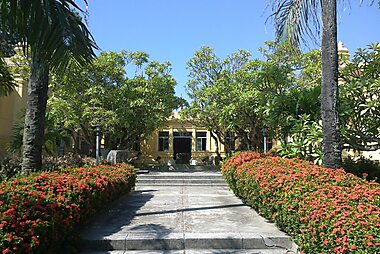
Da Nang Museum of Cham Sculpture holds the world's largest collection of Cham sculpture, giving context to the ancient kingdom that once ruled this coastline.
Featured Lists


Museums & History
Explore the historical evolution of Da Nang through its specialized museums and monuments. This collection features the world's largest assembly of Cham terracotta and sandstone sculptures, dating from the 7th to 15th centuries. Discover Vietnam’s first Buddhist museum located within a pagoda, and learn about regional history at the site of the 19th-century Dien Hai Citadel. The list also includes significant war memorials and exhibits dedicated to the traditional stone carving heritage of the Marble Mountains.
5 places
What to experience
A few things are worth timing your visit around rather than just photographing in passing.
- Watch Dragon Bridge on Saturday and Sunday nights, when the dragon's head breathes fire and then water to a crowd gathered along the riverfront.
- Rent a scooter and ride the loop road around the Son Tra Peninsula, past Nui Son Tra, where red-shanked douc langurs are sometimes spotted in the treetops above the road.
- Get up early for a swim at My Khe Beach before the day heats up, when the beach is at its quietest and the light is best.
Tours & Activities
Da Nang — Map

 Open the interactive map
 Day trips
Da Nang's location makes it an easy base for both quick outings and longer heritage trips.
- Hoi An — ≈45 min by car or taxi. This UNESCO-listed trading port is packed with lantern-lit streets, tailor shops, and riverside cafes; go for the day or stay for the evening lantern displays.
- My Son Sanctuary — ≈1.5 hours by car. A cluster of brick Cham temple ruins set in a jungle valley, the best surviving remains of the ancient Champa kingdom.
- Hue — ≈2.5 hours by car or train over Hai Van Pass, one of Vietnam's most scenic mountain roads. Vietnam's former imperial capital has a walled Citadel, royal tombs, and the Perfume River — worth a full day, or an overnight stay if time allows.
Where to explore
Da Nang anchors central Vietnam's main heritage trail, between two very different neighbors.
- Heading south into Quang Nam, you reach the lantern-lit streets of Hoi An and the Cham ruins further inland — many travelers combine Da Nang with a few nights in Hoi An.
- Heading north over the coastal mountains, Hue offers a completely different side of Vietnam: an imperial capital of citadels, tombs, and a slower, more traditional pace.
Getting there
- By air: Da Nang International Airport (DAD) sits only about 3 km from the city center and handles both domestic flights and a growing number of direct international routes. A taxi or ride-hailing car to downtown hotels takes 10–15 minutes and costs roughly 80,000–120,000 VND.
- By train: Da Nang railway station sits on the North–South Reunification Line, with services to Hanoi, Ho Chi Minh City, and Hue. The stretch over Hai Van Pass toward Hue is one of the most scenic rail journeys in the country.
- By bus: Long-distance coaches connect Da Nang to Hoi An, Hue, and towns further afield; most hotels can book seats directly.
Getting around
- Public transit: City buses exist but run infrequently and mostly serve locals rather than tourist routes. Most visitors get around by ride-hailing apps such as Grab, which is cashless and shows the fare upfront.
- Taxi / ride-hailing: Grab cars and motorbike taxis are widely available and generally cheaper and more transparent than hailing a taxi on the street.
- On foot / cycling: The riverside promenade and the streets around My Khe Beach are pleasant to walk or cycle, but the city is spread out, so plan on a ride for anything further afield.
Driving
- Is a car worth it?: Not for the city itself — traffic is dense and chaotic for unfamiliar drivers, and Grab cars and motorbike taxis cover it easily. A rental car with driver, or a self-driven scooter for confident riders, is popular for day trips to Hoi An, Hue, or the passes above the coast.
- Parking: Most hotels offer free or low-cost parking for cars and scooters. In the center, look for marked motorbike parking lots (attended, small fee) rather than leaving a scooter on the sidewalk.
- Restrictions: No congestion charges or low-emission zones apply to visitors.
Food & drink
Da Nang's kitchen leans on the wider region's specialties: turmeric-yellow mi quang noodles topped with shrimp and pork, and bun cha ca, a fish-cake noodle soup that is a local breakfast staple.
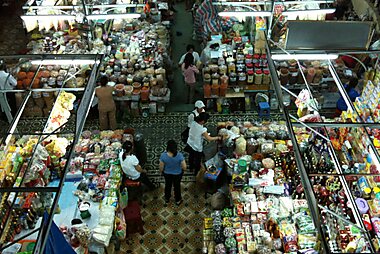
For an easy introduction, head to the stalls and eateries around Han Market near the river, where local dishes are cheap and the choice is wide. Sit-down seafood restaurants line the beachfront near My Khe for a more formal dinner.
Safety & health
Da Nang is one of Vietnam's safer, more orderly cities for tourists, with low rates of violent crime. The main risks are the ordinary ones: watch for bag-snatching by passing motorbikes in busy tourist areas, and take care crossing wide roads, where traffic rarely stops for pedestrians — cross at a steady, predictable pace rather than waiting for a full gap.
Swim only at beach sections with lifeguards and flags, particularly around My Khe, where rip currents can be strong outside the calmer central stretch.
History
Long before Da Nang was a beach city, this coastline was the heart of the Hindu-Buddhist Champa kingdom, whose sculpture and temple carvings are gathered at Da Nang Museum of Cham Sculpture. The nearby Ngu Hanh Son (Marble Mountains) sheltered Cham sanctuaries in their caves for centuries.
The city itself grew under French colonial rule, when it was known as Tourane and developed as a port — a legacy still visible in buildings like Da Nang Cathedral. During the Vietnam War, American forces used the city's beaches as an in-country recreation base, and My Khe was widely known to soldiers as China Beach. Since the 2000s, Da Nang has rebuilt itself around its bridges and waterfront as one of Vietnam's fastest-growing cities.
Country facts
Quick practical facts for Vietnam at a glance:
- Currency
- Vietnamese Dong VND ₫ · Card payments · Commonly accepted
- Electricity
- 220 V · 50 HzType A / Type C / Type F
- Languages
- Vietnamese
- Tap water
- Not safe to drink
- Driving side
- Right
- Calling code
- +84

Da Nang – Plan Your Days
Turn the places from this guide into a real itinerary, with smart routing, time estimates, and everything you need for a perfect trip.


Related destinations


Data: © OpenStreetMap contributors, Wikidata, Wikipedia, Tripomatic, Official websites, geoBoundaries (CC BY 4.0). Tours by GetYourGuide. We earn commission from bookings. Travel guide generated with AI.