



Tallinn
Tallinn's Old Town is one of the best-preserved medieval city centres in Europe. Cobblestone streets, church spires, and merchant houses sit inside intact medieval walls. The city sits on the Gulf of Finland, a short trip from Helsinki, Stockholm, and Riga, so it works well as part of a wider Baltic or Nordic trip.
Estonia is also known for technology — Skype was built here, and most government services run online. Tallinn mixes that modern, digital reputation with its medieval core. It suits a short trip of two to four nights: enough time to walk the Old Town, visit a museum or two, and see the seaside district of Kadriorg.

Tallinn – Planning a Trip?
Build your day-by-day itinerary in the Tripomatic app.


When to visit
Summer (June to August) is mild and the easiest time to visit, with long daylight hours and outdoor cafés on every square. Winter is cold and often snowy, but the Old Town is at its most atmospheric in December, when the Tallinn Christmas Market fills Town Hall Square with wooden stalls, mulled wine, and a lit-up fir tree, and has won awards as one of Europe's best Christmas markets. It runs from late November into early January.
Best time to visit: June
Spring and autumn are quieter and cooler, with fewer crowds around the main sights.
Top sights

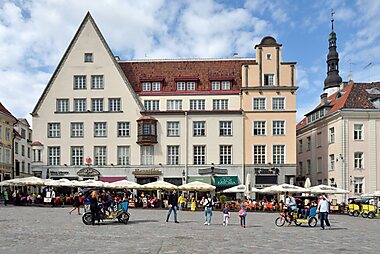
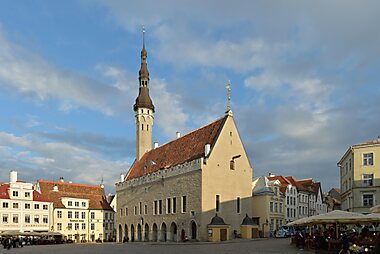
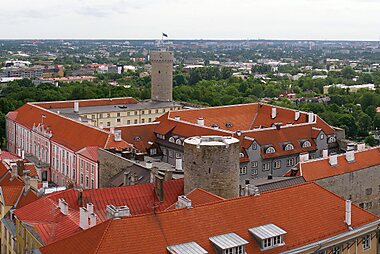
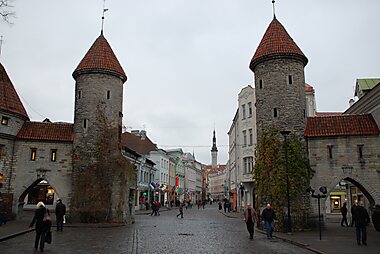

Old Town of Tallinn is a UNESCO World Heritage medieval core, split between the merchants' Lower Town and the hilltop Toompea district, still ringed by much of its original city wall and defence towers.
Town Hall Square is the Lower Town's main square, lined with pastel merchant houses and outdoor cafés, and the site of the Christmas Market every December.
Toompea Castle sits atop Toompea hill and has been the seat of political power in Estonia for over 800 years — it still houses the national parliament today.
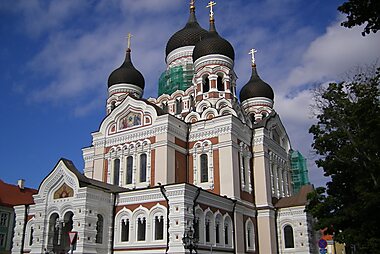
Alexander Nevsky Cathedral is a striking Russian Orthodox cathedral with onion domes, built in 1900 when Estonia was part of the Russian Empire, directly across from the castle.
Viru Gate is the grandest surviving gate into the Lower Town, its twin towers marking the start of Viru street, the busiest route between the Old Town and the modern centre.
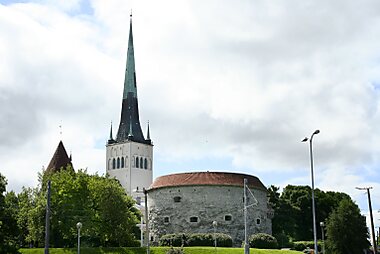
St. Olaf's Church was, for a time in the 16th century, said to be the tallest building in the world — climb the tower for one of the best views over the Old Town's red rooftops.
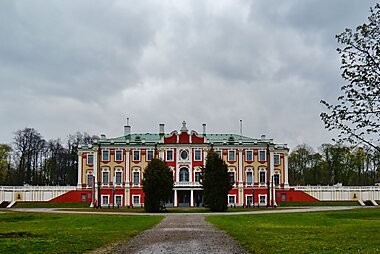
Kadriorg Palace is an ornate baroque palace Peter the Great built as a gift for his wife, Catherine I, set in a formal park east of the centre and now home to the country's foreign art collection.
Seaplane Harbour is a hangar-shaped former seaplane base turned maritime museum, with a full-size submarine and vintage aircraft hanging from the ceiling.
Featured Lists


What to experience
Tallinn has a few things worth doing beyond sightseeing, especially by season.
- Catch sunset from Kohtuotsa Viewing Platform, a viewing platform on the edge of Toompea looking straight down over the Lower Town's rooftops and spires.
- In December, skate on the outdoor rink at Freedom Square and warm up with mulled wine from the nearby Christmas Market stalls.
- Spend a Saturday browsing the food stalls, flea market, and design shops at Telliskivi Creative City — the closest thing Tallinn has to a scene outside the Old Town.
- On a warm summer day, join locals at Stroomi Beach, a sandy city beach a short tram ride from the centre.
Tours & Activities
Tallinn — Map

 Open the interactive map
 Day trips
Tallinn makes a good base for day trips along the coast and even across the water to Finland.
- Paldiski — about 45 minutes by car (longer by bus). A former closed Soviet naval town with dramatic limestone cliffs and an abandoned submarine training centre.
- Lahemaa National Park — about 1 to 1.5 hours by car. Bogs, pine forest, and coastal fishing villages, plus a handful of restored manor houses; the easiest way to see Estonian nature without an overnight stay.
- Haapsalu — about 1.5 hours by bus or car. A seaside spa town with a wooden promenade, a well-preserved castle, and mud-bath traditions going back to the 19th century.
- Helsinki, Finland — about 2 hours by ferry, with several sailings a day. A popular one-day trip across the Gulf of Finland.
Getting there
- By air: Tallinn Airport is only 4 km from the Old Town. Tram line 4 or a bus into the centre takes about 15 minutes, for around 2 €.
- By ferry: this is one of the busiest passenger ferry routes in Europe. Boats from Helsinki, Finland take about 2 hours; overnight ferries also run from Stockholm. Ferries dock at the Old City Harbour, a short walk from the Old Town.
- By train: Tallinn's main station, Balti jaam, has domestic trains to Tartu and other Estonian towns, plus a new coordinated rail connection (with a change of train) toward Riga and on to Vilnius — check Elron for timetables.
- By bus: long-distance coaches are still the faster way to Riga, at around 4.5 hours, arriving at the central bus station a short tram ride from the Old Town.
Getting around
- Public transit: trams, trolleybuses, and buses cover the whole city. Tap a contactless bank card or phone directly when you board — there's no need for a separate transit card or app for a short visit. See Tallinn public transport for routes and maps.
- Taxi / ride-hailing: Bolt is the dominant app and usually cheaper than hailing a taxi on the street.
- On foot: the Old Town is compact and best explored on foot. Most of it is closed to general traffic, and the cobblestones are hard going for wheels of any kind.
Driving
- Is a car worth it?: Skip it in the city — the Old Town is largely closed to private cars and best explored on foot. A car only helps for day trips like Lahemaa National Park or Haapsalu.
- Parking: pay-and-display street parking and multi-storey car parks ring the Old Town; pay through the shared Estonian mobile parking system.
- Restrictions: much of the Old Town is a restricted traffic zone — only permit holders and deliveries can drive in, so park on the edge and walk in.
Food & drink
Estonian food leans hearty and simple: dark rye bread, smoked fish, and root vegetables, with German and Soviet-era influences still visible on menus.
For where to eat, the Old Town's Rataskaevu and Vene streets have the highest concentration of sit-down restaurants, from traditional Estonian kitchens to modern Nordic cooking. For something more local and less touristy, head to Telliskivi Creative City, a former industrial quarter turned food-and-design district with street food stalls and small breweries.
Safety & health
Tallinn is a safe city for tourists by any standard. The main risks are the usual big-city ones: pickpocketing in busy Old Town squares during summer and around the Christmas Market, and overpriced menus at a few restaurants right on Town Hall Square — check prices before sitting down.
Electric scooters are common on Old Town streets and pavements; watch for them when walking, especially at night.
History
Tallinn's name is often traced to "Taani-linn", or "Danish town", from the Danish conquest of 1219, when King Valdemar II built a fortress on Toompea hill. That hill has been the seat of power ever since — Toompea Castle has hosted Danish, German, Swedish, Russian, and now Estonian rulers in turn.
The Lower Town grew as a Hanseatic trading post from the 13th century, and its merchant wealth built the churches and guild halls that still stand today, including St. Olaf's Church, whose spire once made it a landmark for ships far out at sea.
The 20th century was harder: Estonia was occupied first by the Soviet Union, then Nazi Germany, then the Soviet Union again, until independence was restored in 1991. Patarei Sea Fortress, a former sea fortress turned Soviet prison, is one of the most direct places to feel that history, and the Museum of Occupations covers both occupations in detail.
Country facts
Quick practical facts for Estonia at a glance:
- Currency
- Euro EUR € · Card payments · Widely accepted
- Emergency numbers
- 112 Police · Ambulance · Fire brigade
- Electricity
- 230 V · 50 HzType C / Type F
- Languages
- Estonian
- Tap water
- Safe to drink
- Driving side
- Right
- Calling code
- +372


Tallinn – Plan Your Days
Turn the places from this guide into a real itinerary, with smart routing, time estimates, and everything you need for a perfect trip.




