



Kazakhstan
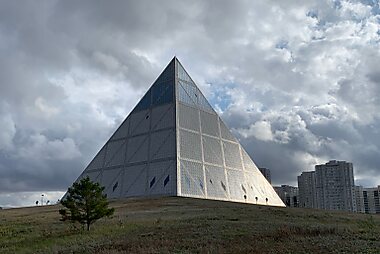
Kazakhstan is the world's largest landlocked country, stretching from the Caspian Sea to the mountains bordering China. Most visits center on two very different cities: Astana, a futuristic capital built almost from scratch after independence, and Almaty, the country's cultural and commercial hub, set against the Tian Shan mountains.
Beyond the two big cities, Kazakhstan suits travelers who enjoy open landscapes and a slower pace — canyons, alpine lakes, and Silk Road cities like Turkestan sit hours apart by road. Kazakhstan declared independence from the Soviet Union in 1991, and much of what visitors see today, from Astana's modern skyline to restored historic monuments, reflects that relatively recent period of nation-building.






Kazakhstan – Planning a Trip?
Build your day-by-day itinerary in the Tripomatic app.


Money & payments
Carry cash for local markets, shared taxis, and small towns outside Astana and Almaty, where card readers are less common. ATMs are common in cities but scarce in rural areas and national parks — withdraw enough cash before a multi-day trip outside the main cities.
Featured Lists


Tours & Activities
Kazakhstan — Map

 Open the interactive map
 Tipping
Tipping is becoming common in Kazakhstan's cities, though it is rarely mandatory. In restaurants and cafés in Astana and Almaty, a small tip is appreciated when service is not already included. Taxi drivers do not expect a tip, but rounding up the fare is common. Hotel staff and tour guides are usually tipped only for particularly good service.
~10%
round up
small amount for porters/housekeeping
10-15% for good service
Electricity
Kazakhstan uses the same plug standard as most of continental Europe, so most modern chargers work without an adapter.
Language
Kazakh and Russian are Kazakhstan's official languages, and Russian is understood almost everywhere. English is spoken at hotels and major sights in Astana and Almaty, but far less elsewhere.
Street signs, menus, and transport information are mostly written in Cyrillic script. Learning to recognize a few Cyrillic letters makes navigation, especially train and bus timetables, much easier.
Staying connected
Prepaid SIM cards are sold at official mobile operator stores in airports and cities; bring your passport, since registration is required. An eSIM from an international provider is a simpler option if you want to skip in-country registration.
Internet access is generally open, but the government has occasionally restricted social media and messaging apps during periods of political unrest. Installing a VPN app before arrival is a useful backup.
Safety & emergencies
Kazakhstan is generally safe for tourists. The most common issues are pickpocketing in crowded markets and train stations, and unlicensed taxi drivers overcharging at airports — use an official taxi app or your hotel's recommended service instead.
Road travel carries more risk than crime: rural roads can be poorly lit and lack shoulders, and winter driving conditions are severe. Political demonstrations occur occasionally in major cities; avoid them as a general precaution.
Health
Tap water is not recommended for drinking in most of Kazakhstan; stick to bottled or filtered water, including for brushing teeth in smaller towns. Pharmacies (apteka) are common in cities and stock most basic medicines, though English-speaking staff are rare outside Astana and Almaty.
No special vaccinations are required for entry, but make sure routine vaccinations are up to date before you travel. Tick-borne encephalitis is a risk for hikers in forested mountain areas between spring and autumn — a vaccination is worth considering if you plan extensive hiking.
Visas & entry
Citizens of many countries, including the EU, UK, USA, and most of Central Asia, can enter Kazakhstan visa-free for stays of up to 30 days. Travelers from countries without visa-free access can apply for an e-visa online before arrival, or a standard visa through a Kazakh embassy or consulate.
Visa and entry requirements change frequently. Verify current requirements with the official immigration authority or your country's embassy before travel.
Etiquette
Dress modestly when visiting mosques and mausoleums, such as the Khoja Ahmed Yasawi Mausoleum in Turkestan — cover your shoulders and knees, and women may be asked to cover their hair. Remove your shoes before entering a mosque's prayer hall.
Kazakhs typically greet with a handshake between men, and a nod or light handshake between men and women depending on the setting. Ask before photographing people, especially in rural areas and at religious sites. Bargaining is expected at bazaars and souvenir stalls, but not in shops with marked prices.
Holidays & opening hours
Public holidays can close shops, banks, and government offices for a day or more, especially around Nauryz in March and Independence Day in December. Transport keeps running, though it can be busier than usual.
Most shops in cities open daily, including Sundays, though smaller stores in rural areas may close for a long lunch break.
Getting around
- By train: Kazakhstan's rail network connects all major cities, including overnight sleeper trains between Astana and Almaty. Book ahead on KTZ e-ticket, especially around holidays.
- By air: Domestic flights link Astana, Almaty, Shymkent, and Atyrau, and are worth the cost given Kazakhstan's size — a flight can save a full day of travel compared to the train.
- By bus: Inter-city coaches connect smaller towns and regional centers not served by rail, though journeys can be long and comfort varies.
Driving
- Key rules: Headlights must stay on at all times, even in daylight. Winter tires are mandatory from 1 December to 1 March.
- Tolls: A handful of highways charge tolls, including the roads linking Astana to Shchuchinsk and Temirtau, and the Almaty–Khorgos road. Pay in cash or by card at the toll gate.
- Parking: Paid parking in city centers is usually metered or app-based; smaller towns are mostly free and unregulated.
- Fuel: Stations are self-service in cities and attendant-served in rural areas. Card payment is common in cities, but carry cash for remote areas.
- Electric vehicles: Charging points are limited to a handful of stations in Astana and Almaty — an EV is not a practical choice for exploring the rest of the country.
Food & drink
Kazakh meals center on meat and dairy, reflecting the country's nomadic heritage. Breakfast is often simple — bread, dairy products, and tea with milk — while lunch and dinner are more substantial, built around lamb, beef, or horse meat. Beshbarmak, boiled meat served over wide noodles, is the national dish and the centerpiece of most celebrations.
Street food and snacks include baursak (fried dough) and samsa (a baked meat pastry), sold at markets and bus stations across the country. Traditional drinks include kumis (fermented mare's milk) and shubat (fermented camel milk), both widely available in summer.
Locals eat at family-run cafés and canteens as often as at restaurants, especially outside Astana and Almaty. Bazaars are also a reliable place to try regional specialties and fresh produce.
Where to explore
Kazakhstan's two biggest cities anchor most visits: Astana, the futuristic capital on the northern steppe, and Almaty, the former capital set against the Tian Shan mountains, with easy access to hiking and alpine lakes.
In the south, Shymkent is one of Kazakhstan's oldest cities, and Turkestan draws pilgrims and history lovers to the Yasawi Mausoleum. The mountains east of Almaty hold Kölsay Lakes National Park, a chain of alpine lakes popular with hikers.
Western Kazakhstan centers on Atyrau, an oil city split by the Ural River where Europe meets Asia, while Qyzylorda in the south is a gateway to the Baikonur Cosmodrome and the Aral Sea region.
Kazakhstan – Plan Your Trip
Pick the places you want to see and Tripomatic turns them into a day-by-day route, with smart routing, time estimates, and everything you need for a perfect trip.


Related destinations


Data: © OpenStreetMap contributors, Wikidata, Wikipedia, Tripomatic, Official websites, geoBoundaries (CC BY 4.0). Tours by GetYourGuide. We earn commission from bookings. Travel guide generated with AI.