



Kristiansand
Kristiansand sits at the southern tip of Norway, where the coastline breaks into islands and sandy beaches known locally as the Norwegian Riviera. King Christian IV founded the city in 1641 and laid it out on a strict grid, still visible today in the old town center known as Kvadraturen.
In summer, Kristiansand becomes Norway's most popular domestic holiday town. Families come for the country's biggest zoo, beachgoers fill the harbor beach, and boats head out to the surrounding skerries. A growing cultural scene, including a major new art museum, gives the city year-round appeal beyond the summer crowds.

Kristiansand – Planning a Trip?
Build your day-by-day itinerary in the Tripomatic app.


When to visit
Summers are mild, and the coast around Kristiansand gets some of Norway's sunniest weather, drawing crowds to the beaches from June through August. Spring and autumn are cool and quiet, and winters are cold but rarely harsh, with short daylight hours. July afternoons average around 19–20°C, with warmer spells reaching the mid-20s — warm enough for swimming in the fjord.
Plan around Palmesus, a beach and music festival held in late June at Bystranda that draws around 40,000 visitors and bills itself as Scandinavia's biggest beach festival.
Top sights
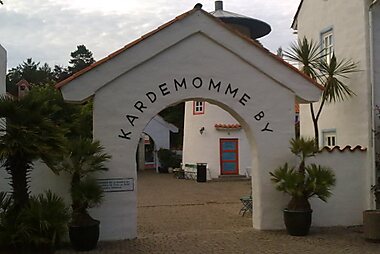


Kristiansand Zoo and Amusement Park is Norway's most visited attraction, a zoo and amusement park with a themed pirate village and a recreation of the town from Thorbjørn Egner's classic children's book. Plan on a full day here.
Kunstsilo opened in 2024 inside a converted 1930s grain silo on the harbor. It holds one of the largest collections of Nordic modernist art in the world.
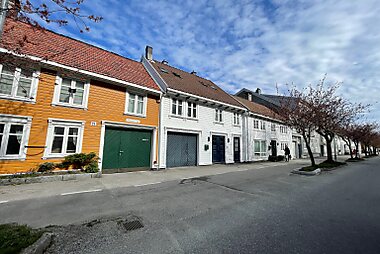
The only part of the city to survive the great fire of 1892, Posebyen is a neighborhood of narrow lanes and preserved wooden houses, worth a slow wander.
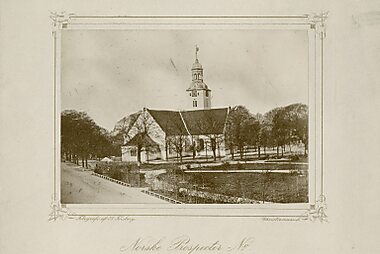
Built in the 1880s, Kristiansand Cathedral is one of Norway's largest churches and the seat of the regional bishop.
Guarding the harbor entrance since the 17th century, Christiansholm Fortress is a round coastal fort now used as a venue for concerts and events.
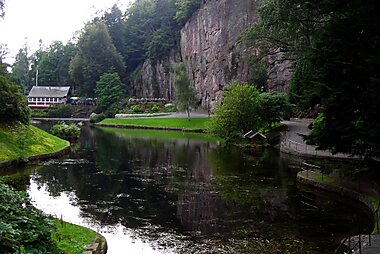
Ravnedalen Park is a landscaped park built into a rocky valley just north of downtown, with walking paths and a small pond.
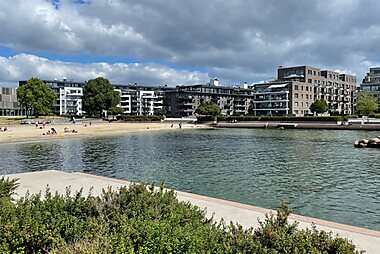
Bystranda is the city's Blue Flag sand beach, right beside the harbor and packed on warm days.
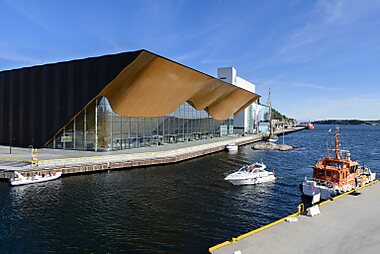
On the island of Odderøya, Kilden Performing Arts Centre is a striking concert hall and theater, home to the local symphony orchestra and opera company.
Featured Lists

Kristiansand Essentials
Explore Kristiansand through its mix of 17th-century fortifications and striking modern architecture. The city features Posebyen, one of Northern Europe’s largest collections of low wooden houses, and the wavy oak facade of the Kilden Performing Arts Centre. Key historical sites include the 11th-century Oddernes Stone Church and the neoclassical Gimle Gård manor, while natural spaces range from the Blue Flag Bystranda beach to the granite fountains of Otterdalsparken.
11 places

What to experience
- Rent a kayak or small motorboat and head out to the skerries — swimming from sun-warmed rocks just offshore is a classic Sørlandet summer ritual.
- Walk or cycle the trails on Odderøya island, past old gun emplacements and artist studios, out toward the tip of the peninsula.
- Take the passenger ferry to Bragdøya, a small car-free island, for a swim and a picnic among old boathouses.
Tours & Activities
Kristiansand — Map

 Open the interactive map
 Day trips
Kristiansand makes a good base for exploring the wider Sørlandet coast and the valleys inland.
- Mandal — about an hour by car or bus, a well-known beach town with the long sandy Sjøsanden beach and a compact old center of white wooden houses.
- Lillesand — around 40 minutes northeast by car, a small coastal town of white clapboard houses built around a sheltered harbor.
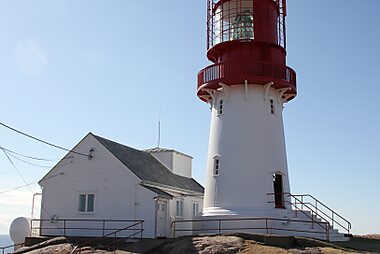
- Lindesnes Lighthouse — roughly an hour southwest, marking the southernmost point of mainland Norway, with dramatic cliffs and a lighthouse museum.
- Grimstad — about an hour northeast, a former shipbuilding town where the playwright Henrik Ibsen lived as a young pharmacy apprentice.
- Setesdal valley — around 1.5 to 2 hours inland by car, known for traditional silverwork and folk music recognized by UNESCO, set among traditional log farmhouses.
Where to explore
Mandal, about an hour southwest, is the destination most often paired with Kristiansand on a Sørlandet coastal trip. It shares the same laid-back beach-town character, on a smaller scale.
Getting there
- By air: Kristiansand Airport, Kjevik (KRS) is about 16 km northeast of the center, with domestic flights plus a few international routes such as Copenhagen and Amsterdam. A bus or taxi to downtown takes around 20–25 minutes.
- By train: The Sørlandsbanen line connects Kristiansand to Oslo (around 4.5 hours) and to Stavanger (around 3 hours).
- By ferry: Color Line runs a car ferry to Hirtshals, Denmark, taking a little over 3 hours — a popular option for visitors driving up from continental Europe.
- By bus: Long-distance coaches run along the E39 coastal highway to Stavanger and Oslo.
Getting around
- Public transit: AKT operates the local bus network. Buy tickets through the AKT mobile app or tap a bank card on board; keep a ticket or app screen ready in case of an inspection. AKT
- Taxi and ride-hailing: Local taxi apps cover the city; major international ride-hailing apps are not widely available in Norway.
- On foot and by bike: The old town grid is compact and flat, easy to cover on foot, and the city has a good network of cycle paths along the waterfront.
Driving
- Is a car worth it?: Not for the city center, which is compact and walkable. A car is useful for day trips along the coast or inland to Setesdal.
- Parking: Paid car parks and street parking cover Kvadraturen; pay by app or at machines.
- Toll ring: Kristiansand has an automatic electronic toll ring around the city center — there is no need to stop, and visiting drivers are billed automatically through AutoPASS.
Food & drink
Fresh shrimp bought straight off a boat and eaten outdoors with bread and mayonnaise is a local summer ritual, along with other simple, seafood-forward dishes.
For the best concentration of waterfront seafood restaurants, head to Fiskebrygga, the old fish quay turned dining area, especially for outdoor tables on a warm evening.
Safety & health
Kristiansand is a safe city for travelers, with low rates of violent crime. The main things to watch for are ordinary petty theft and rowdier crowds around Kvadraturen's bars on weekend nights, especially during summer festivals.
History
Kristiansand was founded in 1641 by King Christian IV, who chose the site for its natural harbor and laid the new town out on a strict grid plan. Christiansholm Fortress followed a few decades later to defend the harbor entrance, and for two centuries it ranked among Norway's most important coastal fortresses.
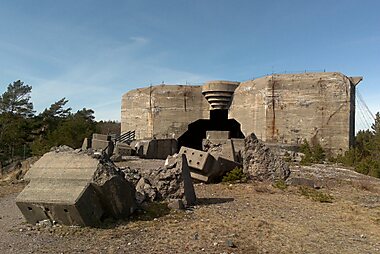
A great fire in 1892 destroyed most of the wooden town; only the Posebyen neighborhood survived. During the Second World War, German forces built major coastal artillery batteries around Kristiansand. One of the largest coastal guns ever installed still stands at Kristiansand Cannon Museum west of the city, built to help block the Skagerrak strait to Allied ships.
Country facts
Quick practical facts for Norway at a glance:
- Currency
- Norwegian Krone NOK kr · Card payments · Widely accepted
- Electricity
- 230 V · 50 HzType C / Type F
- Languages
- Norwegian Bokmål, Norwegian Nynorsk
- Tap water
- Safe to drink
- Driving side
- Right
- Calling code
- +47


Kristiansand – Plan Your Days
Turn the places from this guide into a real itinerary, with smart routing, time estimates, and everything you need for a perfect trip.




