


Stavanger
Stavanger is a compact harbor city on Norway's southwest coast, built around a medieval cathedral and a well-preserved old town of white wooden houses. It is Norway's fourth-largest city, but feels far smaller: most sights sit within a 20-minute walk of the harbor.
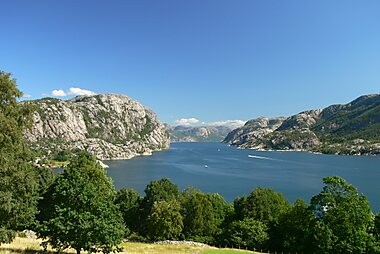
Since oil was discovered in the North Sea in 1969, Stavanger has grown into Norway's energy capital, giving the city an international, prosperous character alongside its fishing-town roots. Most visitors use it as a base and gateway: it is the closest city to Pulpit Rock and the Lysefjord, so plan for a mix of city sightseeing and at least one day trip into the fjords.

Stavanger – Planning a Trip?
Build your day-by-day itinerary in the Tripomatic app.


When to visit
Summer (June to August) is mild and the best season for hiking and fjord trips, with long daylight hours. Spring and autumn are cooler and quieter. Winter is cold with short days, though rarely severe by Norwegian standards.
Rain is frequent here in every season, more so than in most of Norway — pack a waterproof jacket regardless of when you visit.
Time a trip around Gladmatfestival, one of Scandinavia's largest food festivals, held on the harbor front in late July with stalls from Norwegian and international chefs.
Top sights

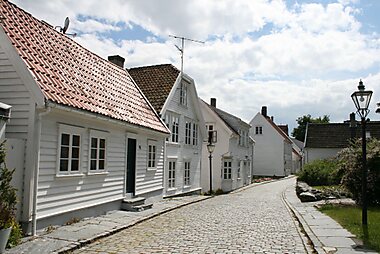



Old Stavanger is the city's postcard image: cobbled lanes lined with around 250 restored 18th- and early 19th-century wooden houses, still lived in today.
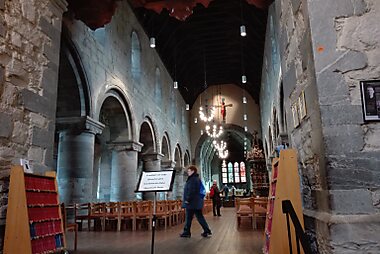
Stavanger Cathedral is Norway's oldest cathedral, consecrated around 1125 and still the seat of the Bishop of Stavanger. Its plain stone exterior hides an interior that mixes Romanesque and Gothic additions.
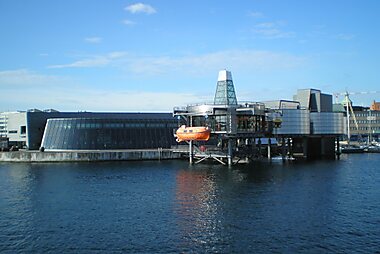
The Norwegian Petroleum Museum explains how a fishing and canning town became Norway's oil capital after the North Sea discoveries of 1969, with full-scale rigs, simulators, and hands-on exhibits that work well for families.
Sverd i fjell, three giant bronze swords driven into solid rock at Hafrsfjord, marks the site of the battle that first united Norway into one kingdom.
Breidablikk is a shipowner's mansion from the 1880s, kept almost exactly as it was, offering a glimpse of the wealth the herring and canning trade brought to the city.
Iron Age Farm is a reconstructed Iron Age farmstead built directly on its original archaeological site, with longhouses, open hearths, and live demonstrations of everyday life around 1,500 years ago.
For a quick detour, the short street of Fargegaten (Øvre Holmegate), just off the harbor, is lined with houses painted in bright, individual colors — a favorite spot for a photo.
Featured Lists


Historic Churches in Stavanger
Stavanger’s religious history is anchored by the 12th-century Stavanger Cathedral, the oldest cathedral in Norway, featuring a blend of Romanesque and Gothic architecture. This selection includes prominent 19th and early 20th-century landmarks, such as the neo-Gothic red brick St. Petri kirke and the wooden Frue kirke. These sites illustrate the city's architectural evolution from medieval stone masonry to the neo-Gothic and wooden structures that characterize the Norwegian parish church tradition.
5 placesHeritage Sites
Stavanger’s history spans from Bronze Age rock carvings to its role as a medieval religious center. This collection includes the 12th-century Stavanger Cathedral, Norway’s oldest, alongside the 18th-century Ledaal manor, which serves as a royal residence. The list also features significant 19th-century brick churches, monuments dedicated to naval history and peace, and ancient archaeological sites like the Rudlå petroglyphs and the Storhaug burial mound, representing the city's evolution over millennia.
8 placesWhat to experience
- Join the crowds sampling seafood, waffles, and street food at Gladmatfestival if visiting in late July.
- Paddle a kayak or stand-up paddleboard across Vågen harbor or out into Hafrsfjord, near Sverd i fjell.
- Follow the coastal path along Solastranden, a long sand beach near the airport, on foot or by bike.
- Try a cold sea swim at one of the city's harbor bathing spots — a genuine local habit, not just a summer one.
Tours & Activities
Stavanger — Map

 Open the interactive map
 Day trips
Stavanger's biggest draw is what lies just outside it — this is Norway's gateway to some of its most famous fjord scenery.
- Flor og Fjære: a subtropical flower garden on a small offshore island, reached by a short boat trip (about 20 minutes each way) from the harbor. An easy half-day out, best in summer.
- Utstein Abbey: Norway's best-preserved medieval monastery, on the island of Mosterøy, roughly 45 minutes from the city by car or bus.
- Lysefjord cruise: boats leave from the city harbor for a 2- to 4-hour round trip along the Lysefjord, passing beneath towering cliffs and waterfalls, with Pulpit Rock visible from the water.
- The hike: Pulpit Rock is Norway's most famous viewpoint, a flat cliff 604 meters above the fjord. Reachable by ferry to Tau and a bus to the trailhead, followed by a roughly 4-hour round-trip; allow a full day.
Getting there
- By air: Stavanger Airport, Sola (SVG) is about 14 km southwest of the center. The Flybussen airport bus and regular public buses both run the route in around 30 minutes.
- By train: The Sørland Railway runs direct to Oslo, a scenic but long journey of around 8 hours, with a night-train option. There is no direct train to Bergen — the usual route combines a train partway with a connecting bus, taking roughly 5 hours in total.
- By bus: Long-distance coaches connect Stavanger to Oslo, Bergen, and Kristiansand for travelers who prefer a single overland ticket.
Getting around
- Public transit: Kolumbus runs the city's buses. Buy tickets in advance through the Kolumbus app or load a Kolumbus travel card — you cannot tap a bank card when boarding, and paying cash on board costs extra. (Kolumbus)
- Taxi / ride-hailing: Uber and Bolt both operate in Norway's biggest cities, but coverage in Stavanger is patchy; a local taxi app such as Taxi Sør is the more reliable option here.
- On foot / cycling: The city center is small and flat enough to explore entirely on foot. Bike rental shops around the center make cycling an easy add-on.
Driving
- Is a car worth it?: No for the city itself — walk or use the bus. Yes if you plan to explore beyond Utstein Abbey or the wider Ryfylke fjord region at your own pace.
- Parking: Paid parking houses cluster around the center (e.g. near Jorenholmen and Byparken); pay by app (EasyPark) or at machines. Street parking is limited and metered.
- Restrictions: Stavanger sits inside the Nord-Jæren toll ring — cameras charge a fee automatically each time you enter, with no barriers or tickets to worry about.
Food & drink
Stavanger calls itself Norway's food capital, and the claim holds up: the surrounding waters supply excellent seafood, from fresh shellfish to the cured and dried fish that built the city's canning industry. Look for fish soup, langoustines, and smoked salmon on menus around town.
For a casual meal, head to the fish market and harborside restaurants around Vågen, where catch comes straight off the boats. For something more special, RE-NAA is a three-Michelin-starred restaurant built around Norwegian coastal ingredients — worth booking ahead if you want a splurge.
Safety & health
Stavanger is a safe city for travelers by international standards. Petty theft such as pickpocketing or bag-snatching can happen in crowded areas and on public transit, so keep valuables close. Violent crime against tourists is rare.
Tap water is safe to drink everywhere in the city.
History
Stavanger's history starts at Hafrsfjord, just southwest of the modern city, where a decisive naval battle around 872 AD is traditionally credited with uniting Norway's petty kingdoms under one king for the first time. The three giant swords of Sverd i fjell mark the site today.
Stavanger Cathedral, consecrated around 1125, made Stavanger a bishopric and one of Norway's oldest towns. For centuries it stayed a modest fishing and trading port, until the herring boom of the 19th century brought merchant wealth — visible today in mansions like Breidablikk — followed by a canning industry that once employed a large share of the city's workforce.
Everything changed again in 1969, when oil was discovered in the North Sea. Stavanger became the operational base for Norway's petroleum industry almost overnight, a transformation covered in detail at The Norwegian Petroleum Museum.
Country facts
Quick practical facts for Norway at a glance:
- Currency
- Norwegian Krone NOK kr · Card payments · Widely accepted
- Electricity
- 230 V · 50 HzType C / Type F
- Languages
- Norwegian Bokmål, Norwegian Nynorsk
- Tap water
- Safe to drink
- Driving side
- Right
- Calling code
- +47


Stavanger – Plan Your Days
Turn the places from this guide into a real itinerary, with smart routing, time estimates, and everything you need for a perfect trip.