



Kuala Lumpur
Kuala Lumpur is Malaysia's capital and largest city, built where the Klang and Gombak rivers meet. It grew from a 19th-century tin-mining boomtown into a modern capital. Today Malay, Chinese, and Indian communities shape its food, architecture, and daily life side by side.
The skyline mixes colonial-era buildings, mosques, Chinese temples, and Hindu shrines with some of the tallest towers in the world. It suits travelers who want a short city break with skyscraper views, street food, and a genuine mix of cultures. Caves, hill resorts, and a historic port town are all easy day trips away.

Kuala Lumpur – Planning a Trip?
Build your day-by-day itinerary in the Tripomatic app.


When to visit
Kuala Lumpur is hot and humid year-round, with no real dry season — expect brief afternoon thunderstorms most days. Rain is somewhat lighter from December through February and again in June and July, though downpours can happen in any month.
Time a visit around Thaipusam, a Hindu festival in late January or February. Over a million pilgrims walk in procession to Batu Caves, carrying ceremonial offerings.
Top sights


Petronas Twin Towers were completed in 1996 and held the title of world's tallest building from 1998 until 2004. Cross the skybridge between the twin towers or ride to the observation deck for city views.
Merdeka 118 is the world's second-tallest building, opened in 2023. It stands beside the historic Stadium Merdeka, where independence celebrations were held in 1957 — echoed in the tower's name, which means "independence."
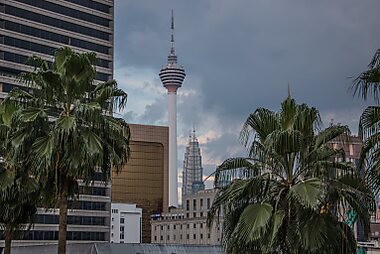
Kuala Lumpur Tower is a telecommunications tower with an observation deck and revolving restaurant, with sunset views over the twin towers.
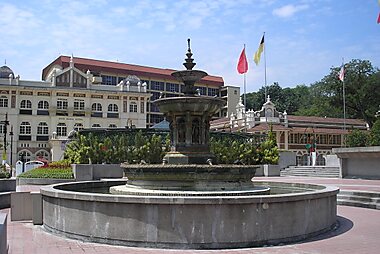
Dataran Merdeka is the square where Malaya's independence was proclaimed on 31 August 1957. It faces Sultan Abdul Samad Building, a Moorish-style former British administrative building with a copper-domed clock tower.
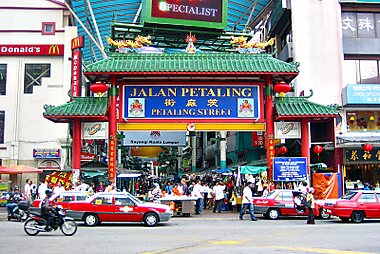
Chinatown is the historic Chinese quarter, packed with street stalls, temples, and a covered night market selling souvenirs and street food.
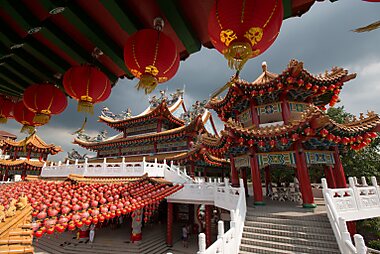
Thean Hou Temple is one of the largest Chinese temples in Southeast Asia, built on a hillside by the Hainanese community with sweeping views over the city.
Sri Mahamariamman Temple is Kuala Lumpur's oldest Hindu temple, known for its colorful Dravidian-style tower rising above Chinatown's rooftops.
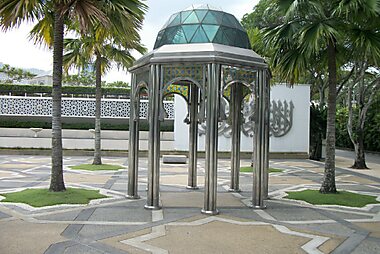
National Mosque is Malaysia's national mosque, built shortly after independence with a distinctive star-shaped roof and space for 15,000 worshippers.
Featured Lists


What to experience
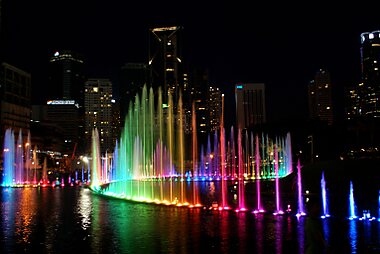
- Watch the nightly fountain and light show at KLCC Park Fountain in front of the twin towers.
- Join local mamak culture: grab teh tarik and roti canai at a 24-hour street-side stall, a Malaysian late-night ritual.
- Walk the illuminated River of Life promenade where the Klang and Gombak rivers meet, near Jamek Mosque.
- Watch the sunset with a drink at Heli Lounge Bar, a rooftop bar with sweeping views of the twin towers.
Tours & Activities
Kuala Lumpur — Map

 Open the interactive map
 Day trips
Kuala Lumpur sits close to caves, hill resorts, and a historic port city — all doable in a single day.
- Batu Caves, about 40 minutes by train or car: limestone caves with Hindu shrines and a 42-metre golden statue at the entrance; busiest (and most spectacular) during the Thaipusam festival.
- Putrajaya, about 45 minutes by car: Malaysia's planned federal administrative capital, with a pink mosque and a landscaped lake.
- Genting Highlands, about 1 to 1.5 hours by cable car or bus: a hill resort with a casino, theme park, and noticeably cooler air.
- Malacca, about 2 hours by bus or car: a UNESCO World Heritage port city with Portuguese, Dutch, and British-era buildings along the Melaka River.
Getting there
- By air: Kuala Lumpur International Airport (KLIA) is the main gateway, about 45 km south of the city. The KLIA Ekspres train reaches KL Sentral in about 28 minutes; a taxi takes 45 to 60 minutes depending on traffic. Budget carriers mostly use the adjacent KLIA2 terminal, served by the same train line.
- By train: KL Sentral is the main rail hub, with Electric Train Service (ETS) connections north to Ipoh and Butterworth (for Penang) and south toward Johor Bahru.
- By bus: Terminal Bersepadu Selatan (TBS) handles long-distance coaches south to Melaka, Johor Bahru, and Singapore.
Getting around
- Public transit: The LRT, MRT, and Monorail (together branded Rapid KL), plus the separately run KTM Komuter commuter rail, cover most of the city. Buy a rechargeable Touch 'n Go card at any station — it also works on buses and toll roads. MyRapid has route planners and fares.
- Taxi / ride-hailing: Grab is the dominant ride-hailing app; metered taxis are widely available but agree on the fare or insist on the meter before setting off.
- On foot: The heat and humidity make walking tiring for more than short stretches, though covered walkways link many malls and stations in the KLCC and Bukit Bintang areas.
Driving
- Is a car worth it?: No — traffic and parking make a car a liability in the city center; public transit and ride-hailing cover it better. Rent one only if continuing to Genting Highlands, Malacca, or beyond.
- Parking: Shopping malls have paid parking (per-entry or hourly); some LRT/MRT stations offer park-and-ride.
- Restrictions: None beyond normal traffic rules; there is no congestion charge in the city center.
Food & drink
Kuala Lumpur's food reflects its Malay, Chinese, and Indian communities side by side. Nasi lemak, satay, and roti canai sit next to dim sum and banana-leaf rice. The Klang Valley's own specialty is bak kut teh, a peppery pork-rib soup brought by Hokkien immigrants.
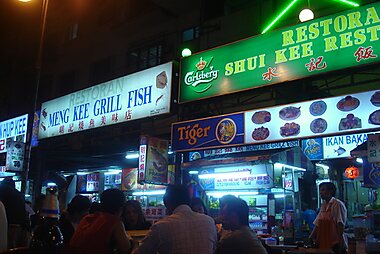
Head to Jalan Alor - Night Market for a night market strip lined with hawker stalls. For banana-leaf rice and South Indian food, try the Brickfields neighborhood.
Safety & health
Kuala Lumpur is generally safe for tourists. The main risks are pickpocketing in crowded markets and bag-snatching by motorcyclists. Carry bags on the side away from the road and keep them zipped. Agree on a taxi fare upfront or use a ride-hailing app to avoid meter disputes.
History
Kuala Lumpur began in 1857 as a tin-mining camp where the Klang and Gombak rivers meet — its name literally means "muddy confluence." Chinese laborers and Malay rulers built the early town, which grew rapidly as tin exports boomed.
Under British colonial rule, it became the capital of the Federated Malay States. Grand buildings like Sultan Abdul Samad Building were built to house the colonial administration. On 31 August 1957, independence from Britain was declared at Dataran Merdeka. The city went on to become the capital of an independent Malaysia, a history echoed in the name of Merdeka 118, which means "independence."
Country facts
Quick practical facts for Malaysia at a glance:
- Currency
- Malaysian Ringgit MYR RM · Card payments · Commonly accepted
- Emergency numbers
- 999 Police · Ambulance · Fire brigade
- Electricity
- 240 V · 50 HzType G
- Languages
- Malay
- Tap water
- Drink with caution
- Driving side
- Left
- Calling code
- +60


Kuala Lumpur – Plan Your Days
Turn the places from this guide into a real itinerary, with smart routing, time estimates, and everything you need for a perfect trip.


Related destinations
Other Destinations
Data: © OpenStreetMap contributors, Wikidata, Wikipedia, Tripomatic, Official websites, geoBoundaries (CC BY 4.0). Tours by GetYourGuide. We earn commission from bookings. Travel guide generated with AI.