


Kyoto
Kyoto was the capital of Japan for more than 1,000 years, from 794 to 1868. It was largely spared from bombing in World War II. Temples, shrines, wooden townhouses and tea houses are still part of daily life here. UNESCO lists 17 monuments in the city as Historic Monuments of Ancient Kyoto.
Kyoto suits first-time visitors who want culture more than nightlife. Come for temples, gardens, tea, seasonal food and traditional crafts. It is also a good base for day trips to Nara, Osaka and Uji. Sights are spread across the city, so plan each day around one or two areas and start early.
Download this guide as a PDFPrintable tourist mapPublic holidays in Japan

Kyoto – Planning a Trip?
Build your day-by-day itinerary in the Tripomatic app.


When to visit
Late March to early April has cherry blossom. Mid-November to early December has autumn leaves. These are the busiest and most expensive weeks, so book hotels early. May is mild and green. June is the rainy season. July and August are hot and humid. Winter is cold and quiet, with the smallest crowds.
The biggest annual event is the Gion Matsuri, which runs through July and is organised by Yasaka Shrine. The two large float processions are on 17 and 24 July. On the three evenings before each one, central streets close to cars and fill with food stalls.
Best time to visit: May
Top sights
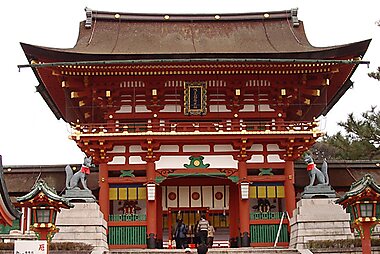

- Fushimi Inari Shrine is known for thousands of red torii gates that line the trails up the mountain behind it. It is open day and night, so go early or after dark to avoid the crowds.
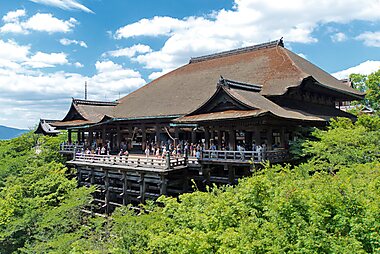
- Kiyomizu-dera Temple sits on a hillside. Its large wooden terrace was built without nails and has wide views over the city.
- Kinkaku-ji is the Golden Pavilion, covered in gold leaf beside a pond. The current building dates from 1955, after a fire in 1950.
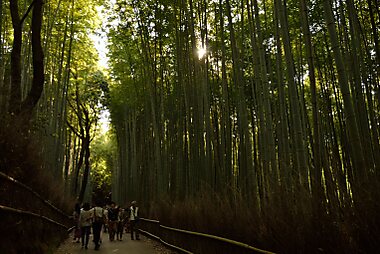
- Arashiyama Bamboo Grove is a path through tall bamboo in western Kyoto. Visit early in the morning, then continue to the temples and river nearby.
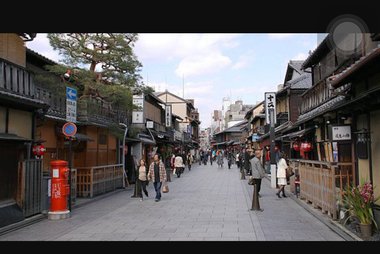
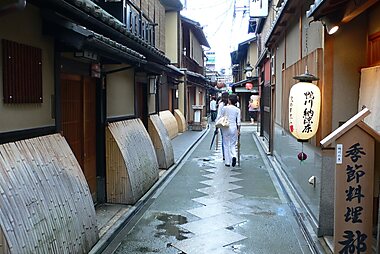
- Gion Quarter is the historic district of wooden teahouses where geisha (geiko and maiko) work. Evening is the best time to walk here.
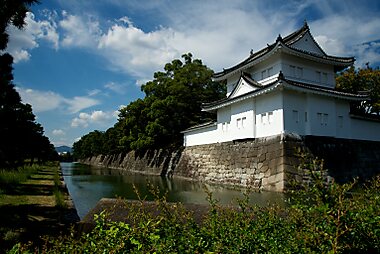
- Nijō Castle was built by the Tokugawa shoguns in the early 17th century. The Ninomaru Palace has painted screens and "nightingale" floors that chirp when you walk.
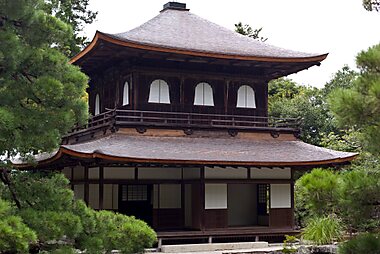
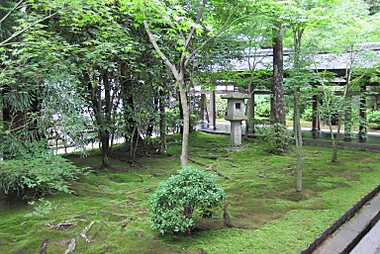
- Ginkaku-ji is the Silver Pavilion, a Zen temple with a moss garden and a sand garden. The Philosopher's Walk canal path starts nearby.
- Ryōan-ji is a Zen temple with a famous rock garden of raked gravel and stones. Sit on the wooden veranda and look at it quietly.
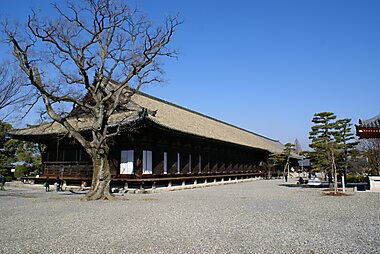
- Sanjūsangen-dō has a very long wooden hall. It holds 1,001 statues of the thousand-armed Kannon.
Featured Lists


Gion, Old Streets & Markets
Stroll through Gion's lantern-lit lanes, Pontochō, the Higashiyama slopes and Nishiki Market.
6 places

What to experience
Experiences that fit Kyoto well:
- Tea ceremony: Join a short ceremony in a temple or townhouse. A host prepares matcha and serves a sweet. Book ahead in busy seasons.
- Kimono rental: Many shops rent kimono for a day. People wear them in the old streets around Higashiyama.
- Riverside dining in summer: From May to mid-October, restaurants along Pontochō build wooden platforms over the Kamo River. Evenings are cooler there.
- Kurama to Kibune hike: A 3.9 km mountain trail (2–3 hours) links Kurama-dera Temple and the village of Kibune in the north. Kifune Shrine is a short walk up the road.
- Seasonal night openings: In spring and autumn, some temples open in the evening with lit gardens. Kiyomizu-dera Temple is one of them.
- Gozan no Okuribi: On 16 August, bonfires in the shape of characters burn on five hills around the city. Many people watch from the Kamo River banks.
Tours & Activities
Kyoto — Map

 Open the interactive map
Day trips
Kyoto is close to several major sights. Travel times below are one way.
- Uji: a short ride by JR train. Byōdō-in has a Phoenix Hall from 1053 and appears on the 10-yen coin. Uji is also famous for green tea, so try matcha sweets.
- Ōtsu and Lake Biwa: a short ride by JR train. Lake Biwa is Japan's largest lake. Temples such as Mii-dera and Ishiyama-dera are in Ōtsu.
- Nara: under 1 hour by Kintetsu or JR train. See the Great Buddha at Tōdai-ji and the free-roaming deer in Nara Park.
- Osaka: about 30 min by JR Special Rapid train. Visit Osaka Castle and eat street food in Dōtonbori.
- Himeji: about 1 hour by Shinkansen. Himeji Castle is a white castle and a UNESCO World Heritage Site.
Getting there
- By air: Most international visitors fly into Kansai International Airport (KIX). The JR Haruka limited express goes to Kyoto Station in about 75–80 min. An airport limousine bus takes about 100 min and carries your luggage. Osaka Itami Airport (ITM) handles domestic flights. A limousine bus to Kyoto takes about 50–55 min.
- By train: The Shinkansen stops at Kyoto Station. From Tokyo the Nozomi takes about 2 h 10 min. From Nagoya it takes about 35 min. From Osaka, JR Special Rapid trains take about 30 min. Hankyu and Keihan trains connect Osaka with central Kyoto.
- By bus: Overnight coaches from Tokyo are cheaper than the train but much slower.
Getting around
- Public transit: The subway has two lines (Karasuma and Tōzai). It is fast but does not reach most temples. City buses reach most sights, but they are slow and crowded in peak seasons. IC cards (ICOCA, Suica, PASMO and similar) work on buses, the subway and trains. A Subway & Bus 1-Day Pass costs 1,100 yen and is sold at the Kyoto Station information centre.
- Trains: JR, Keihan, Hankyu and the small Randen and Eizan lines fill the gaps. The JR Nara Line stops at Inari Station, next to Fushimi Inari. The JR Sagano Line goes to Arashiyama.
- Avoid Kyoto Station buses in peak season: Get off or board at a quieter JR station such as Nijō, Enmachi, Tōfukuji or Yamashina.
- Taxi: Taxis are easy to find. They are good for short trips, early starts and groups of three or four.
- On foot and by bike: The central grid is flat, so cycling is practical. Rental bikes are widely available.
Driving
- Is a car worth it?: No, not for the city. Buses and trains are faster and easier. A car is only useful for the countryside north of Kyoto. Japan drives on the left.
- Licence: Japan accepts only an International Driving Permit under the 1949 Geneva Convention. A 1968 Vienna permit is not valid. Licences from Switzerland, Germany, France, Belgium, Monaco and Taiwan can instead be used with an official Japanese translation from JAF.
- Parking: Coin-operated lots near the centre charge by time and are expensive. Many temples have small paid lots that fill early.
- Restrictions: Streets in Gion and Higashiyama are narrow and often one-way. Traffic is heavy on weekends in April and November.
Food & drink
Kyoto cooking uses seasonal ingredients, tofu, pickles and green tea. Look for kaiseki (a multi-course meal), yudofu (simmered tofu, a speciality near Nanzen-ji), obanzai (small home-style dishes) and matcha sweets. Cash is still useful in small restaurants, market stalls and at many temple ticket counters.
Good areas to eat:
- Nishiki Market is a covered street of about 130 shops. It sells pickles, tofu snacks, seafood and kitchen knives. Go in the morning.
- Pontochō is a narrow lantern-lit alley with many restaurants and bars. It is best for dinner.
- The Fushimi district in the south has sake breweries and tasting rooms.
Safety & health
Kyoto is very safe for visitors. Violent crime is rare, and petty theft is uncommon.
- Crowds: Big sights are very busy in cherry blossom and autumn leaf seasons. Go early.
- Gion etiquette: Photography is banned on the private alleys of Gion, with a fine of ¥10,000. Do not block or follow geiko and maiko to take photos.
- Heat: July and August are hot and humid, so heat stroke is a real risk. Drink water and rest in the afternoon.
- Typhoons and earthquakes: Typhoons are most likely from late summer to autumn. Earthquakes are possible. Follow instructions from your hotel and local alerts.
History
Emperor Kanmu moved the capital here in 794 and named it Heian-kyō. Emperors lived in Kyoto until the court moved to Tokyo in 1868–69.
- East Temple dates from 796, the early years of the city. Its five-storey pagoda, about 55 m high, is the tallest wooden pagoda in Japan.
- In 1397 the shogun Ashikaga Yoshimitsu turned an estate into the retreat that became Kinkaku-ji.
- The Ōnin War (1467–1477) destroyed much of the city. Many temples were rebuilt afterwards.
- At Nijō Castle the last shogun, Tokugawa Yoshinobu, announced in 1867 that he was returning power to the emperor.
- Heian Shrine was built in 1895 to mark the city's 1,100th anniversary.
Country facts
Here are the essentials for traveling in Japan:
- Currency
- Japanese Yen JPY ¥ · Card payments · Commonly accepted
- Electricity
- 100 VType A / Type B
- Languages
- Japanese
- Tap water
- Safe to drink
- Driving side
- Left
- Calling code
- +81


Kyoto – Plan Your Days
Turn the places from this guide into a real itinerary, with smart routing, time estimates, and everything you need for a perfect trip.


Related destinations


Data: © OpenStreetMap contributors, Wikidata, Wikipedia, Tripomatic, Official websites, geoBoundaries (CC BY 4.0). Tours by GetYourGuide. We earn commission from bookings. Travel guide generated with AI.
Plan your trip with Tripomatic
- AI-Powered PlanningGet a ready-made day in one tap, let AI spread your shortlist across your trip, or plan everything by chatting.
- Travel AlertsOfficial advisories, severe weather, strikes, and natural hazards for the places on each day of your trip.
- Public Holidays & EventsSee holidays, festivals, and closures on the days of your trip, and what they mean for your plans.
- Cost EstimationAI-powered trip cost breakdowns so you know what to budget before you go.
- Tours & TicketsBook tours, skip-the-line tickets, and activities directly in your plan.