


Lucerne
Lucerne sits where the Reuss river leaves Lake Lucerne, with mountains on every side. The old town is small and easy to walk. Most visitors see it in one or two days.
The city is also a base for the lake and the nearby peaks. Boats, cogwheel trains and cable cars all start here.
Download this guide as a PDFPrintable tourist mapPublic holidays in Switzerland

Lucerne – Planning a Trip?
Build your day-by-day itinerary in the Tripomatic app.


When to visit
Summer (June to September) is best for boat trips and mountain views. It is also the busiest time. Spring and autumn are quieter and good for walking. Winter is cold and often grey in the city, but the old town has Christmas markets and snow is likely in the mountains. Some mountain lifts and lake boats run less often in winter.
Top sights
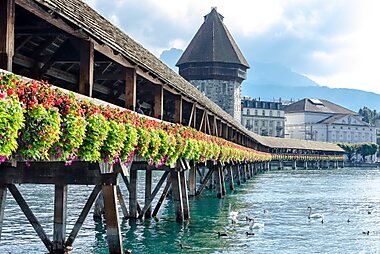
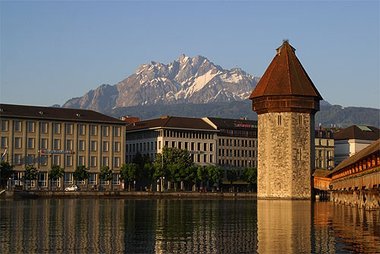
- Chapel Bridge is the wooden covered bridge that is the symbol of Lucerne. Walk across it and look at the painted panels under the roof.
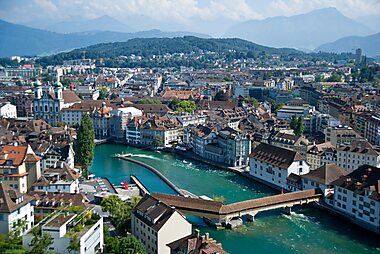
- Spreuerbrücke is a second covered bridge, with painted panels on the Dance of Death.
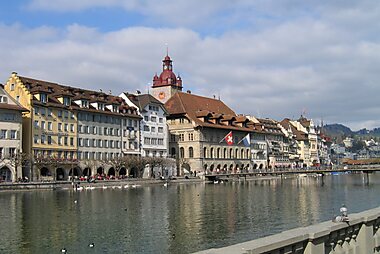
- Old Town Lucerne has painted house fronts, squares and fountains. It is a good area for a slow walk.
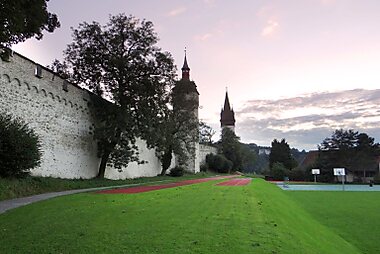
- Museggmauer is the medieval city wall with nine towers. You can climb several of them for views over the roofs.
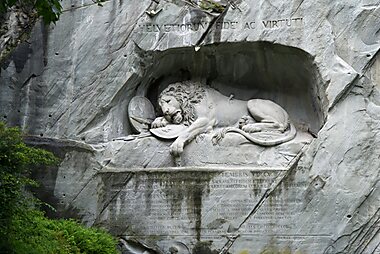
- Löwendenkmal is a large rock carving of a dying lion. It remembers Swiss guards who died in 1792.
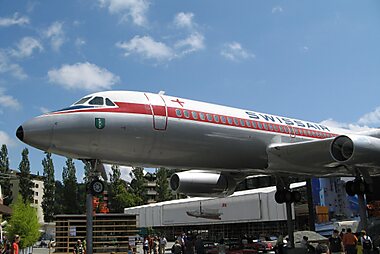
- Swiss Museum of Transport is the biggest transport museum in Switzerland. It suits families.
- Jesuitenkirche is a Baroque church beside the river.
- Glacier garden shows ice age potholes and a small mirror maze.
Featured Lists


What to experience
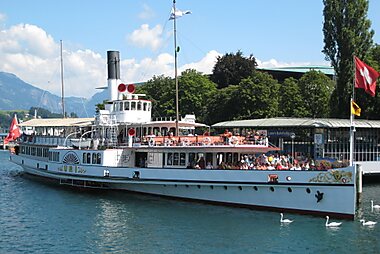
- Take a lake cruise on a historic paddle steamer, see Raddampfer auf dem Vierwaldstättersee.
- Walk the Museggmauer wall at sunset.
- Visit Bourbaki Panorama, a huge round painting from 1881.
- Hear a concert at KKL Kultur- und Kongresszentrum Luzern, the concert hall by the lake.
- See modern art at Rosengart Collection, with works by Picasso and Klee.
- Rent a small boat or a stand-up paddle board on the lake in summer.
Tours & Activities
Lucerne — Map

 Open the interactive map
Day trips
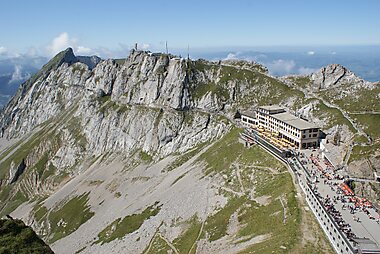
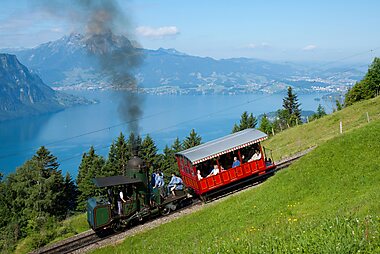
- Mount Pilatus is the mountain above the city. Take the cogwheel train from Alpnachstad and return by cable car.
- Mount Rigi is known as the Queen of the Mountains. Boat to Vitznau, then take the cogwheel train to the top.
- Engelberg is a mountain village with a monastery and lifts to Mount Titlis. The train from Lucerne takes about 45 minutes.
- Zurich is about 45 minutes away by direct train.
Where to explore
- Lake Lucerne has steamboats to lakeside villages such as Weggis. A boat ride is a good half-day or full-day plan.
Getting there
- By air: most visitors fly into Zurich Airport. Trains run from the airport to Lucerne in about 1 hour 15 minutes, usually with one change.
- By train: Lucerne has direct trains from Zurich, Bern and Basel. The station is next to the lake and the old town. Book or check times on SBB.
- By bus: long-distance buses stop near the station.
Getting around
- Most sights in the old town are within a 15-minute walk of the station.
- City buses and trolleybuses cover the rest of the city. You can pay with a bank card or phone on many ticket machines, and with the SBB app.
- Lake boats and mountain trains are separate services. Check their times before you go.
- Hotels in the canton usually give a visitor card with free or cheaper local transport. Ask when you check in.
Driving
- A car is not needed for the city. Parking in the centre is limited and costly.
- Park at a garage near the station or at the edge of the centre and walk.
- A car can help for villages around the lake, but trains and boats are easier for most trips.
Food & drink
Try Luzerner Chögalipastete, a puff pastry filled with veal and mushrooms in cream sauce. Cheese fondue and rösti are common across the region. Lake fish such as perch and whitefish appear on many menus.
The old town has many restaurants along the river. Prices are high, so lunch menus are a good way to save money. Fasnacht, the carnival before Lent, is the main local festival.
Safety & health
- Lucerne is very safe. Pickpocketing can happen on the bridges and in crowds near the station.
- Mountain weather changes fast. Check the forecast and the last lift time before you go up.
- Tap water is safe to drink. Fountains in the old town are drinkable unless marked.
History
Lucerne started around a monastery in the 8th century. It joined the Swiss Confederation in 1332. The wooden Chapel Bridge was built around 1333 as part of the city defences.
In the 19th century writers and painters made the lake and mountains famous. Tourism has been the main industry since then.
Country facts
Quick practical facts for Switzerland at a glance:
- Currency
- Swiss Franc CHF CHF · Card payments · Widely accepted
- Emergency numbers
- 112
- Electricity
- 230 V · 50 HzType C / Type J
- Languages
- German, French, Italian, Romansh
- Tap water
- Safe to drink
- Driving side
- Right
- Calling code
- +41


Lucerne – Plan Your Days
Turn the places from this guide into a real itinerary, with smart routing, time estimates, and everything you need for a perfect trip.


Related destinations


Data: © OpenStreetMap contributors, Wikidata, Wikipedia, Tripomatic, Official websites, geoBoundaries (CC BY 4.0). Tours by GetYourGuide. We earn commission from bookings. Travel guide generated with AI.
Plan your trip with Tripomatic
- AI-Powered PlanningGet a ready-made day in one tap, let AI spread your shortlist across your trip, or plan everything by chatting.
- Travel AlertsOfficial advisories, severe weather, strikes, and natural hazards for the places on each day of your trip.
- Public Holidays & EventsSee holidays, festivals, and closures on the days of your trip, and what they mean for your plans.
- Cost EstimationAI-powered trip cost breakdowns so you know what to budget before you go.
- Tours & TicketsBook tours, skip-the-line tickets, and activities directly in your plan.