


Manchester
Manchester grew rich on cotton in the 19th century and it never lost the restless, inventive energy that came with it. This was the world's first industrial city, and today its red-brick mills and warehouses have been turned into galleries, bars, and apartments rather than knocked down. It is also a city obsessed with football and music: two of the world's biggest football clubs play here, and bands from The Smiths to Oasis came out of its streets.
Manchester suits a traveler who wants a big city with real depth in a compact area, not endless sightseeing. Most of what matters sits within a 20-minute walk of the center, so a long weekend covers the highlights comfortably. Alan Turing worked here at the dawn of modern computing, and Emmeline Pankhurst founded the militant suffragette movement from a house a short walk from the center — reminders that this is a city that has changed the world more than once.

Manchester – Planning a Trip?
Build your day-by-day itinerary in the Tripomatic app.
When to visit
Spring and autumn are mild and the best times to walk the city without heavy rain. Summer is warm but rarely hot, and winter is cold and often wet, with short daylight hours. Rain is possible in any month, so pack a layer regardless of season.
The biggest annual draw is the Manchester Christmas Markets, which fill the streets and squares of the center from mid-November through December with food stalls, mulled wine, and lights — one of the largest Christmas markets in the country and worth timing a winter trip around.
Top sights
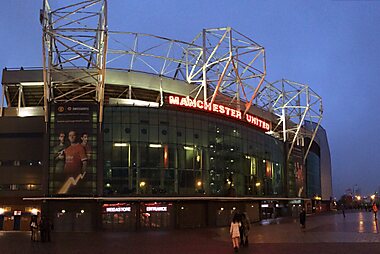
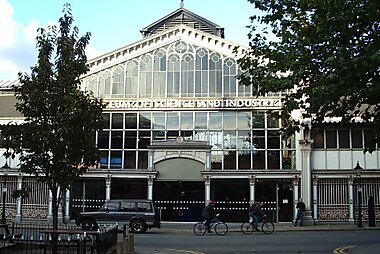
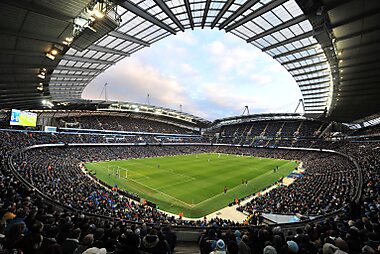

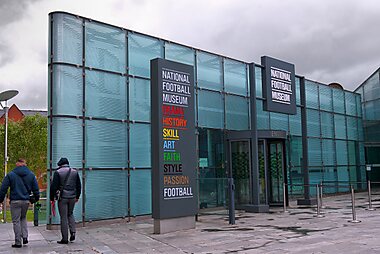
Football runs deep here, and a pilgrimage to one or both of the city's stadiums is a highlight for many visitors. Old Trafford is the home of Manchester United and one of the most famous stadiums in the world, while Etihad Stadium hosts Manchester City. Either can be paired with a visit to National Football Museum, England's national museum of football, in the city center.
Science and Industry Museum traces Manchester's industrial past on the site of the world's first passenger railway station, with vast halls of steam engines, textile machinery, and early computers.
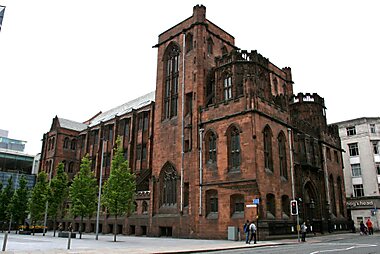
John Rylands Library is a neo-Gothic library built in 1900 that feels more like a cathedral than a reading room, with a collection that includes a Gutenberg Bible.
Manchester Cathedral, a 15th-century Gothic church on the River Irwell, is the city's oldest major building still in everyday use.
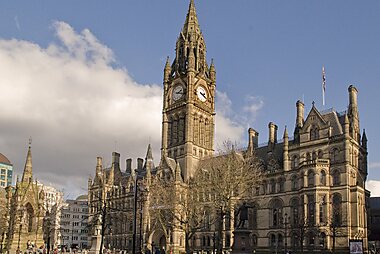
Manchester Town Hall is a Victorian landmark with an ornate clock tower and a Great Hall decorated with murals telling the story of the city.
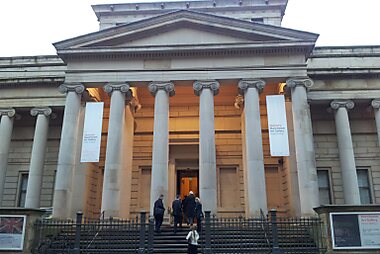
Manchester Art Gallery holds a free collection spanning Pre-Raphaelite paintings to contemporary art in a grand 19th-century building.
Castlefield Urban Heritage Park is the spot where Manchester began: a Roman fort once stood here, and its canals and railway viaducts now form a walkable open-air museum of the city's history.
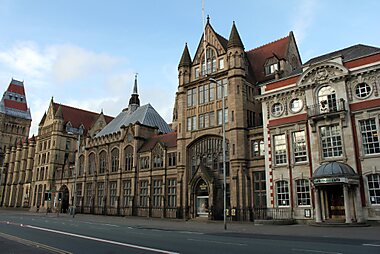
The Manchester Museum is the UK's largest university museum, with collections spanning natural history, archaeology, and world cultures.
Featured Lists


Parks & Recreation
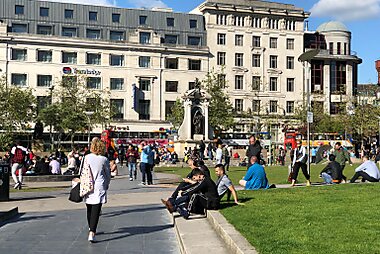
Manchester’s green spaces range from historic Victorian landscapes like Peel Park—one of the first public parks in the UK—to the modern athletic facilities of SportCity, home to the National Cycling Centre. The city features central hubs like Piccadilly Gardens alongside quiet retreats such as St John’s Gardens and the reclaimed urban space of Angel Meadow. These locations provide diverse recreational opportunities, including international-standard cycling tracks, community gardens, and expansive playing fields at Houghend and Platt Fields Park.
11 placesAudio Guides – Manchester
Explore on foot with a self-guided audio tour that narrates each stop as you reach it.


Hear Manchester's audio tours
1 walk in Audio Guides by Tripomatic


What to experience
- Drink with a skyline view — ride the lift up Beetham Tower to Cloud 23, a bar near the top with views across the whole city.
- Catch a show at Manchester's newest stage — Aviva Studios, the striking home of Factory International, hosts theatre, dance, and live music year-round, including the biennial Manchester International Festival.
- See a gig — AO Arena is one of Europe's busiest arenas, and catching a concert here taps into the music scene that produced Oasis, The Smiths, and Joy Division.
- Dig through record shops in the Northern Quarter — this cluster of streets north of the center is Manchester's creative heart, full of independent record stores, vintage clothing shops, and street art.
- Take a canal boat trip through Castlefield — a short cruise on the Bridgewater or Rochdale Canal shows off the Victorian warehouses from the water, the way goods once moved through the city.
Tours & Activities
Manchester — Map

 Open the interactive map
 Day trips
Manchester sits within easy reach of some of England's best countryside and historic towns, making it a good base for day trips as well as city sightseeing.
- Peak District National Park — around 45 minutes by train to Edale or by car, this is the closest proper wilderness to Manchester: gritstone moors, limestone dales, and walking trails for any ability. A classic half-day escape.
- Liverpool — about 50 minutes by train. The Beatles' hometown, with the Albert Dock waterfront, the Cavern Quarter, and two cathedrals worth the trip on their own.
- Chester — around an hour by train. A walled Roman and medieval city with a complete circuit of city walls, black-and-white Tudor buildings, and a well-preserved cathedral.
- Windermere and Bowness and the wider Lake District — about 1.5 hours by car, or around 2 hours by train. England's most famous national park, with mountains, lakes, and walking that ranges from gentle lakeside strolls to serious fell hikes. A longer trip, but the flagship choice for a full day outdoors.
Getting there
- By air: Manchester Airport (MAN) is the main gateway for the north of England, with direct flights from across Europe, North America, the Middle East, and Asia. It sits about 15 km south of the city center. A direct train runs to Manchester Piccadilly in around 20 minutes, and the Metrolink tram Airport Line runs directly into the city center in under an hour.
- By train: Manchester Piccadilly is the main station, with direct trains from London (about 2 hours, arriving at Euston), Liverpool, Leeds, Birmingham, and Edinburgh. Manchester Victoria handles many services to Yorkshire and the northeast.
- By bus: Manchester Coach Station on Chorlton Street has long-distance coach links to London and other major UK cities, generally the cheapest option if travel time isn't a priority.
Getting around
- Public transit: The Metrolink tram network covers the city center and suburbs, and buses fill in the rest under the Bee Network brand. Both accept contactless bank card or phone payment directly when you tap on — buy from a machine or the Bee Network app only if you prefer a travel pass.
- On foot: The city center is compact and flat, and most top sights are within a 20-minute walk of each other.
- Cycling: A growing network of dedicated cycle lanes and a bike-share scheme make short hops across the center practical, though traffic on busier roads can feel intimidating for casual riders.
Driving
- Is a car worth it?: No, for the city itself — the center is compact and well served by trams and buses, and traffic and parking make driving more hassle than help. A car becomes useful only if you're heading out to the Peak District or Lake District for the day.
- Parking: Multi-storey car parks (NCP and others) ring the city center, generally £15–25 for a full day. Park-and-ride sites on the Metrolink network are a cheaper option if you're arriving by car from outside the city.
- Restrictions: Manchester does not currently charge a congestion or low-emission zone fee to enter the center, unlike London — a plan for one was shelved in 2022. Some streets in the center are pedestrianized or bus-and-tram only, so follow signage closely.
Food & drink
Manchester's food scene reflects its immigrant communities as much as its industrial past. For South Asian food, head to the Curry Mile in Rusholme, a stretch of Wilmslow Road lined with Pakistani, Bangladeshi, and Indian restaurants and grocers. For Chinese food, Manchester's Chinatown, centered on Faulkner Street, is one of the largest in the UK outside London.
The Northern Quarter is the best area for an eclectic mix of independent cafes, street food stalls, and bars, and is a good bet any time of day. Locally, look out for the Manchester tart, a shortcrust pastry dessert with jam, coconut, and custard that has been a local favorite for generations.
Safety & health
Manchester is generally safe for visitors, and most trips pass without incident. As in any large city, stay alert to pickpocketing and phone snatching in crowded areas, especially around nightlife spots in the city center and Northern Quarter late at night. Keep valuables out of sight and be cautious with phones near road-facing tables and pavements, where snatch-and-run thefts on bikes or mopeds occasionally occur.
History
Manchester's story starts at Castlefield Urban Heritage Park, where a Roman fort called Mamucium stood guard over a river crossing nearly 2,000 years ago — the name Manchester descends from it. For centuries afterward it stayed a modest market town.
That changed with the Industrial Revolution. Manchester became the world's first industrial city, its mills processing raw cotton into cloth on a scale never seen before, earning it the nickname "Cottonopolis." Science and Industry Museum stands on the site of the Liverpool Road station, terminus of the world's first inter-city passenger railway, opened in 1830.
That industrial-era confidence also produced political change. In 1819, a peaceful rally for parliamentary reform near today's St Peter's Square was violently broken up by cavalry in what became known as the Peterloo Massacre, a turning point in the fight for British democratic rights. Nearly a century later, Pankhurst Centre was the family home of Emmeline Pankhurst, where she founded the Women's Social and Political Union in 1903, launching the militant wing of the suffragette movement.
Manchester's inventive streak continued into the 20th century: the University of Manchester built the world's first stored-program electronic computer here in 1948, work that grew out of Alan Turing's wartime codebreaking research.
Country facts
Quick practical facts for the United Kingdom at a glance:
- Currency
- British Pound GBP £ · Card payments · Widely accepted
- Emergency numbers
- 999 Police · Ambulance · Fire brigade
- Electricity
- 230 V · 50 HzType G
- Languages
- English
- Tap water
- Safe to drink
- Driving side
- Left
- Calling code
- +44


Manchester – Plan Your Days
Turn the places from this guide into a real itinerary, with smart routing, time estimates, and everything you need for a perfect trip.




