


London
London is a city built in layers — Roman foundations, medieval lanes, Georgian squares, Victorian grandeur, and glass-and-steel skyscrapers all sit within walking distance of each other along the Thames. As the capital of the United Kingdom for nearly a thousand years, it is at once a seat of monarchy and government, a global financial centre, and one of the most culturally diverse cities in the world.
From the ceremonial pageantry around Buckingham Palace to the market stalls of Camden and the world-class free museums of Bloomsbury and South Kensington, London rewards visitors who mix its famous landmarks with time spent simply wandering its neighborhoods, parks, and markets.

London – Planning a Trip?
Build your day-by-day itinerary in the Tripomatic app.
When to visit
London is a year-round destination, though the weather and crowds shift noticeably by season. Late spring and summer (May to August) bring the longest days, warmest weather, and the biggest crowds, including major events like Wimbledon and Notting Hill Carnival. Autumn (September to October) offers milder weather and thinner crowds, and is a pleasant time for sightseeing.
Winter (November to February) is cold and often grey or rainy, but the city leans into it with Christmas lights, markets, and ice rinks at major landmarks. Spring (March to April) is unpredictable but often mild, with parks in bloom and fewer tourists than summer.
Best time to visit: June, July, August, September
Top sights
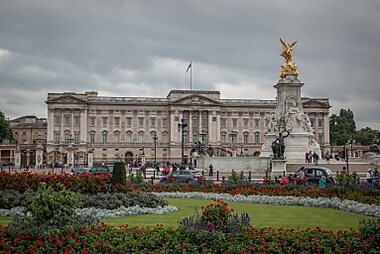
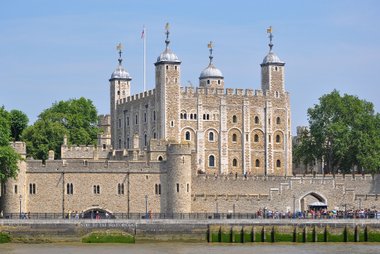
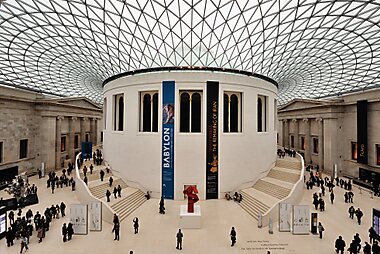

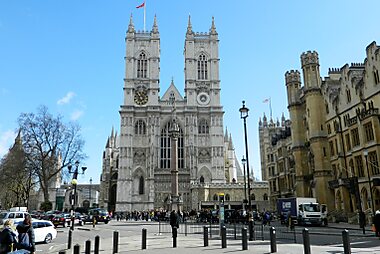
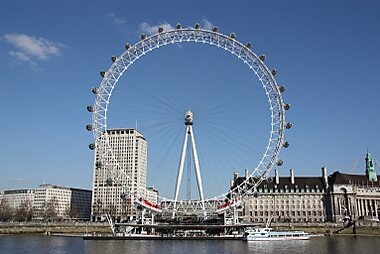

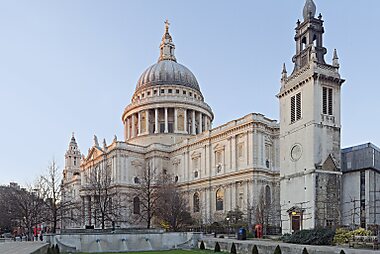
London's sights range from royal ceremony to two-thousand-year-old history. A few essentials for first-time visitors:
Buckingham Palace is the monarch's official London residence, and the Changing of the Guard here remains one of the city's most-watched free spectacles. Buckingham Palace
The Tower of London has served as a royal fortress, prison, and treasury since the 11th century, and today houses the Crown Jewels, guarded by the famous Yeoman Warders ("Beefeaters"). Tower of London
The British Museum holds a vast, free collection spanning human history, from the Rosetta Stone to the Parthenon Sculptures, inside a grand neoclassical building. British Museum
Big Ben, technically the bell inside the Elizabeth Tower, is the defining silhouette of the Palace of Westminster and one of the most photographed landmarks in the world. Big Ben
Westminster Abbey has hosted every coronation since 1066 and is the resting place of numerous monarchs, scientists, and poets, including Isaac Newton and Charles Darwin. Westminster Abbey
The London Eye offers sweeping views over the Thames and the city skyline from its slow-turning 135-metre-high observation wheel. London Eye
Tower Bridge, often mistaken for London Bridge, is a Victorian bascule bridge whose towers house a glass-floored walkway and an engine room exhibit. Tower Bridge
St Paul's Cathedral, Christopher Wren's Baroque masterpiece, is famous for its dome and the Whispering Gallery, and survived the Blitz largely intact. St Paul's Cathedral
Featured Lists


Royal Palaces & Castles
Discover London's royal heritage through six iconic sites, including historic palaces like Buckingham and Saint James's, and landmark castles such as the Palace of Westminster. This collection features UNESCO World Heritage sites and architectural marvels from Tudor to neo-Gothic and Baroque styles, many designed by renowned figures like Sir Christopher Wren. Each location offers insight into Britain's monarchy, governance, and cultural history, with accessible museums, royal residences, and places of worship that have shaped the city's legacy.
6 places


Historic Churches of London
London’s ecclesiastical landscape spans over a millennium of history, featuring architectural milestones from the 7th-century foundations of All Hallows-by-the-Tower to the English Baroque masterpieces of Sir Christopher Wren and Thomas Archer. This collection includes royal coronation sites like Westminster Abbey, the unique 12th-century round church of the Knights Templar, and the neo-Byzantine Westminster Cathedral. Visitors can explore medieval ruins transformed into public gardens at St Dunstan in the East, the "Actors' Church" in Covent Garden, and significant heritage sites representing Methodist and Greek Orthodox traditions.
12 places


Audio Guides – London
Explore on foot with a self-guided audio tour that narrates each stop as you reach it.


Hear London's audio tours
1 walk in Audio Guides by Tripomatic


What to experience
- Watch the Changing of the Guard at Buckingham Palace, held on select mornings throughout the year.
- Ride the London Eye at sunset for panoramic views over the Thames and the city skyline.
- Browse the stalls and canalside food stands at Camden Lock Market, then wander the surrounding lock district.
- Catch a West End show in the Theatreland around Covent Garden, still one of the world's great theatre districts.
- Spend a free afternoon in the British Museum, home to the Rosetta Stone and treasures spanning two million years of history.
- Take a walk or a deck-chair break in Hyde Park, London's largest royal park.
Tours & Activities
London — Map

 Open the interactive map
 Day trips
London's rail network makes it easy to reach a wide range of destinations for a day out. Popular choices include:
- Windsor: About 45 minutes by train, home to Windsor Castle, the oldest and largest inhabited castle in the world and a working royal residence.
- Oxford: Roughly 1 hour away, famous for its historic university colleges, the Bodleian Library, and the Ashmolean Museum.
- Cambridge: About 1 hour by train, offering a similar university-town atmosphere, with punting on the River Cam as a popular activity.
- Bath: Around 1.5 hours by train, known for its Roman baths, Georgian architecture, and the honey-colored stone of the Royal Crescent.
- Stonehenge: A longer trip (around 2 hours plus tour time), usually visited by organized tour or car, to see the prehistoric stone circle on Salisbury Plain.
Getting there
- By air: Heathrow (LHR) is the main hub, connected to central London by the Piccadilly line, Heathrow Express, and Elizabeth line. Gatwick, Stansted, Luton, and City airports also serve London with their own rail links.
- By train: Eurostar trains from Paris, Brussels, and Amsterdam arrive at St Pancras International. Domestic trains from across the UK arrive at various terminals including King's Cross, Paddington, Victoria, and Liverpool Street.
- By bus: Long-distance coaches (National Express, Megabus) arrive at Victoria Coach Station, with connections across the UK and Europe.
Getting around
- The London Underground (the Tube) and Overground cover most of the city; pay with a contactless bank card or an Oyster card, capped daily by zone.
- Buses are extensive and often more scenic, especially the iconic red double-deckers, and use the same contactless/Oyster payment.
- Black cabs and ride-hailing apps like Uber are widely available; black cab drivers famously know the city's streets from memory ("The Knowledge").
- Central London has a Congestion Charge and Ultra Low Emission Zone (ULEZ) for private vehicles, so driving in the centre is rarely worth it for visitors.
Food & drink
London's food scene reflects its status as one of the world's most diverse cities, ranging from classic British pub fare to some of the best South Asian, East Asian, Middle Eastern, and European cooking found outside their countries of origin. Traditional dishes like fish and chips, a Sunday roast, and a full English breakfast remain easy to find, while curry houses, dumpling specialists, and modern European restaurants sit on almost every high street.
Pub culture is central to London life — a proper pub lunch or an evening pint is a genuine local experience, not just a tourist activity. Markets like Borough Market and Camden Lock Market (Camden Lock Market) are excellent for sampling a wide range of cuisines in one place. Tipping in restaurants (10–12.5%) is appreciated but not obligatory, especially where a service charge is already added to the bill.
Safety & health
London is generally safe for visitors, with violent crime against tourists rare, though as a major global city it has its share of petty crime and scams to watch for.
- Pickpocketing occurs in crowded areas such as Trafalgar Square, on the Tube, and around major sights — keep bags zipped and valuables out of back pockets.
- Unlicensed minicabs touting for business, especially outside nightlife areas late at night, should be avoided; use licensed black cabs or a ride-hailing app instead.
- Ticket touts near theatres and stadiums sometimes sell fake or overpriced tickets — buy from official box offices or authorized resellers.
- Weather can turn quickly; a light rain layer is worth carrying even in summer.
History
London's history stretches back nearly two thousand years to Londinium, a Roman settlement founded around AD 47 on the banks of the Thames. Over the following centuries it grew into a major medieval city, with the Tower of London built by William the Conqueror after 1066 to secure his hold on the new capital, and Westminster Abbey established as the site of English coronations from 1066 onward.
The Great Fire of 1666 destroyed much of the medieval city, leading to a rebuilding effort that included Christopher Wren's St Paul's Cathedral, completed in 1710. London expanded enormously during the Industrial Revolution and the height of the British Empire in the 19th century, becoming the largest city in the world by the 1830s, with landmarks like Big Ben and the Houses of Parliament completed mid-century after a fire destroyed the old Palace of Westminster.
The 20th century brought the destruction and resilience of the Blitz during the Second World War, followed by post-war rebuilding and London's emergence as a global financial and cultural capital, a status reflected today in landmarks old and new standing side by side across the city.
Country facts
Quick practical facts for the United Kingdom at a glance:
- Currency
- British Pound GBP £ · Card payments · Widely accepted
- Emergency numbers
- 999 Police · Ambulance · Fire brigade
- Electricity
- 230 V · 50 HzType G
- Languages
- English
- Tap water
- Safe to drink
- Driving side
- Left
- Calling code
- +44


London – Plan Your Days
Turn the places from this guide into a real itinerary, with smart routing, time estimates, and everything you need for a perfect trip.




