



France
France packs an unusual range into one country: Paris's museums and boulevards, Alpine peaks, Atlantic and Mediterranean coastlines, and the vineyards and châteaux of the Loire Valley are all a train ride apart. It is regularly ranked as the world's most-visited country by international arrivals, and the infrastructure for tourism — trains, signage, museum booking systems — reflects decades of practice.
France rewards travelers who slow down: a two-hour lunch, a market visit, an afternoon in a single museum wing tend to leave a stronger impression than a checklist of sights. It works equally well as a Paris city break or a longer trip combining the capital with a region like Provence, the Loire, or the Alps.



France – Planning a Trip?
Build your day-by-day itinerary in the Tripomatic app.


Money & payments
Cards, including contactless, are accepted almost everywhere in cities and larger towns; small rural shops, market stalls, and some cafés still prefer cash. ATMs are widely available. Mobile payment (Apple Pay, Google Pay) works at most contactless terminals.
Featured Lists


UNESCO Heritage Sites
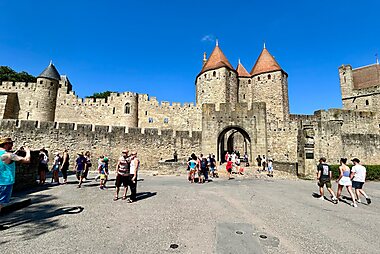
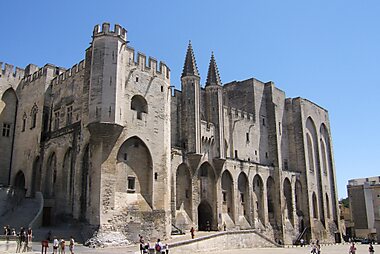
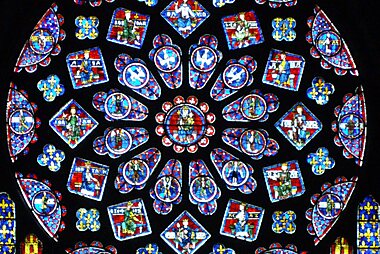
France’s UNESCO World Heritage sites represent over two millennia of architectural evolution and historical significance. This collection highlights Roman engineering marvels such as the Pont du Gard and the Maison Carrée, alongside the medieval fortifications of Carcassonne and the Gothic mastery of Chartres and Reims cathedrals. It encompasses prehistoric cave paintings at Lascaux, the Baroque grandeur of Versailles, and the unique maritime architecture of the Cordouan Lighthouse. These landmarks document the religious, royal, and social shifts that shaped French heritage from antiquity to the Enlightenment.
20 places


Iconic Coastal Landmarks
This collection highlights France’s maritime engineering and natural coastline, from the 16th-century Cordouan Lighthouse to the pink granite shores of Brittany. It features historic harbors like Honfleur’s Vieux Bassin and Marseille’s Old Port, alongside the Belle Époque architecture of Nice’s promenade. The list also includes Europe’s tallest stone lighthouse at Île Vierge and world-renowned sandy stretches like Pampelonne in Saint-Tropez and the turquoise waters of Corsica’s Santa Giulia bay.
8 places
Iconic French Cuisine
This collection highlights historic culinary landmarks across France and Monaco. Explore Montmartre’s artistic heritage at the Moulin de la Galette windmill and the Amélie filming location, or dine in the Belle Époque elegance of Monte Carlo’s Le Louis XV and Café de Paris. The list also features regional architectural gems, including a 16th-century timber-framed tannery in Strasbourg and traditional Lyon cuisine. These establishments range from world-renowned fine dining to authentic brasseries housed in repurposed historic stables and iconic neighborhood cafes.
10 places


Tours & Activities
France — Map

 Open the interactive map
 Tipping
service is included by law; rounding up or leaving a few euros for good service is appreciated but not expected
rounding up to the nearest euro is common
round up the fare
a small note for porters or housekeeping is a nice gesture, not expected
a few euros for a good tour is appreciated
A service charge is built into restaurant and café prices by law, so tipping is a gesture of appreciation rather than an obligation. Leaving loose change or rounding up is common for good service; a written "pourboire" line on the receipt is rare.
Electricity
France uses Type C and E plugs at 230 V / 50 Hz — standard continental European sockets; most phone and laptop chargers are dual-voltage, so non-European visitors need only a plug adapter, not a voltage converter.
Language
French is the official language, and while English is widely understood in Paris and major tourist areas, it's less reliable in smaller towns and rural regions. Starting any interaction with "Bonjour" before switching to English, even in a shop or café, is noticeably appreciated and often changes the tone of the exchange.
Staying connected
Prepaid SIM cards and eSIMs are sold at supermarkets, phone shops, and airport kiosks; a passport is typically requested for registration. Coverage is strong in cities and along main routes, with some gaps in mountainous areas like the Alps and Pyrenees.
Safety & emergencies
France is safe for tourists, with the main risk being pickpocketing on the Paris Métro, around major landmarks like the Eiffel Tower and Sacré-Cœur, and on crowded train platforms. Common scams include petition signers and "gold ring" tricks near tourist sites — a firm no and moving on works best.
Health
Tap water is safe to drink throughout France. Pharmacies (pharmacie), marked with a green cross, are common and can advise on minor ailments; at least one stays open late or overnight in most towns (pharmacie de garde). EU/EEA citizens' EHIC, and UK citizens' GHIC, cover reciprocal state healthcare on the same terms as French residents (not full costs); other visitors should carry travel insurance, as France's public healthcare doesn't automatically cover non-residents.
Visas & entry
France is part of the Schengen Area, so EU/EEA citizens can enter freely, and citizens of the US, UK, Canada, Australia, and many other countries can visit visa-free for up to 90 days within any 180-day period. Citizens of other countries need a Schengen visa arranged in advance.
Visa and entry requirements change frequently — including a planned ETIAS travel authorization for visa-exempt visitors that has been repeatedly delayed. Verify current requirements with the official immigration authority or your country's embassy before travel.
Etiquette
Always greet with "Bonjour" (or "Bonsoir" in the evening) when entering a shop, café, or starting a conversation — skipping it can come across as rude, even to someone who speaks no French. Meals are usually unhurried, especially lunch, and asking for the bill ("l'addition") is expected rather than having it brought automatically.
Dress is generally a notch more polished than casual sportswear, particularly in restaurants and cities.
Holidays & opening hours
Bastille Day (July 14) is the biggest national holiday, marked by fireworks and a military parade in Paris. Many businesses, especially outside Paris, close for part or all of August as owners take their own summer holiday — worth checking ahead if visiting smaller towns then.
Most shops close on Sundays outside tourist areas, and many close Monday mornings as well.
Getting around
- By train: the TGV high-speed network connects major cities quickly — Paris to Lyon in as little as under 2 hours on the fastest direct services (many trains take closer to 2–2.5 hours), Paris to Marseille in about 3 — and booking ahead on the SNCF site or app gets noticeably cheaper fares than buying on the day.
- By air: domestic flights make sense for longer distances, such as Paris to Nice or Toulouse, where the train takes considerably longer.
- By bus: intercity coaches (Flixbus, BlaBlaBus) are the cheapest way to travel between smaller towns not well served by rail.
Within cities, Paris's Métro is extensive and easy to use, while Lyon and Strasbourg rely on efficient tram networks.
Driving
- Key rules: France drives on the right; a warning triangle and a hi-vis reflective vest for every occupant (kept inside the cabin, not the boot) are legally required equipment in the car.
- Tolls and vignettes: no general vignette, but most autoroutes charge tolls via a ticket-and-barrier system — take a ticket on entry and pay by card or cash on exit.
- Low-emission zones: several cities, including Paris, Lyon, and Strasbourg, restrict access by vehicle emissions class and require a Crit'Air sticker displayed on the windshield — order one online before the trip if driving into a city center.
- Parking: metered street parking is common in cities, usually paid via an app or nearby kiosk.
- Fuel: stations are mostly self-service; pay by card at the pump. Petrol is labeled Sans Plomb 95/98; diesel is labeled Gazole.
Food & drink
Meals follow a fairly fixed rhythm: lunch around 12–2pm and dinner from 7:30pm, with many restaurant kitchens closed in between — arriving at 3pm looking for a hot meal often means a closed door outside tourist zones. A proper meal is typically several courses: starter, main, cheese, and dessert, though a lighter version is normal for weekday lunches.
Regional cooking varies more than the stereotypes suggest: butter and cream define Normandy, olive oil and herbs define Provence, and hearty stews and cheese fondue define the Alpine east. Markets (marché) remain a genuine weekly ritual in most towns, and a fresh baguette from a local bakery is a daily habit rather than a tourist photo prop.
Where to explore
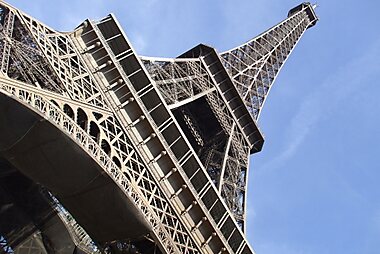
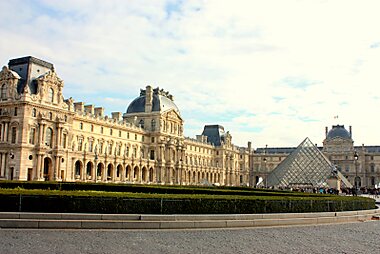
Paris is the natural starting point for most visits, with the Louvre, Eiffel Tower, and Notre-Dame anchoring a city that rewards weeks, not days. Lyon, often called France's food capital, pairs a well-preserved old town with some of the country's best bouchon-style dining.
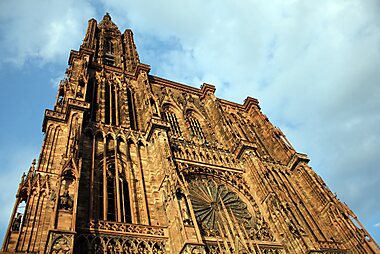
On the coast, Nice is the gateway to the French Riviera's beaches and pastel old town, while Bordeaux anchors one of the country's best-known wine regions. Strasbourg, on the German border, blends French and Alsatian architecture and is especially known for its Christmas markets. Versailles, just outside Paris, and Mont-Saint-Michel, off the Normandy coast, are two of the most popular day trips from those bases.
France – Plan Your Trip
Pick the places you want to see and Tripomatic turns them into a day-by-day route, with smart routing, time estimates, and everything you need for a perfect trip.




